
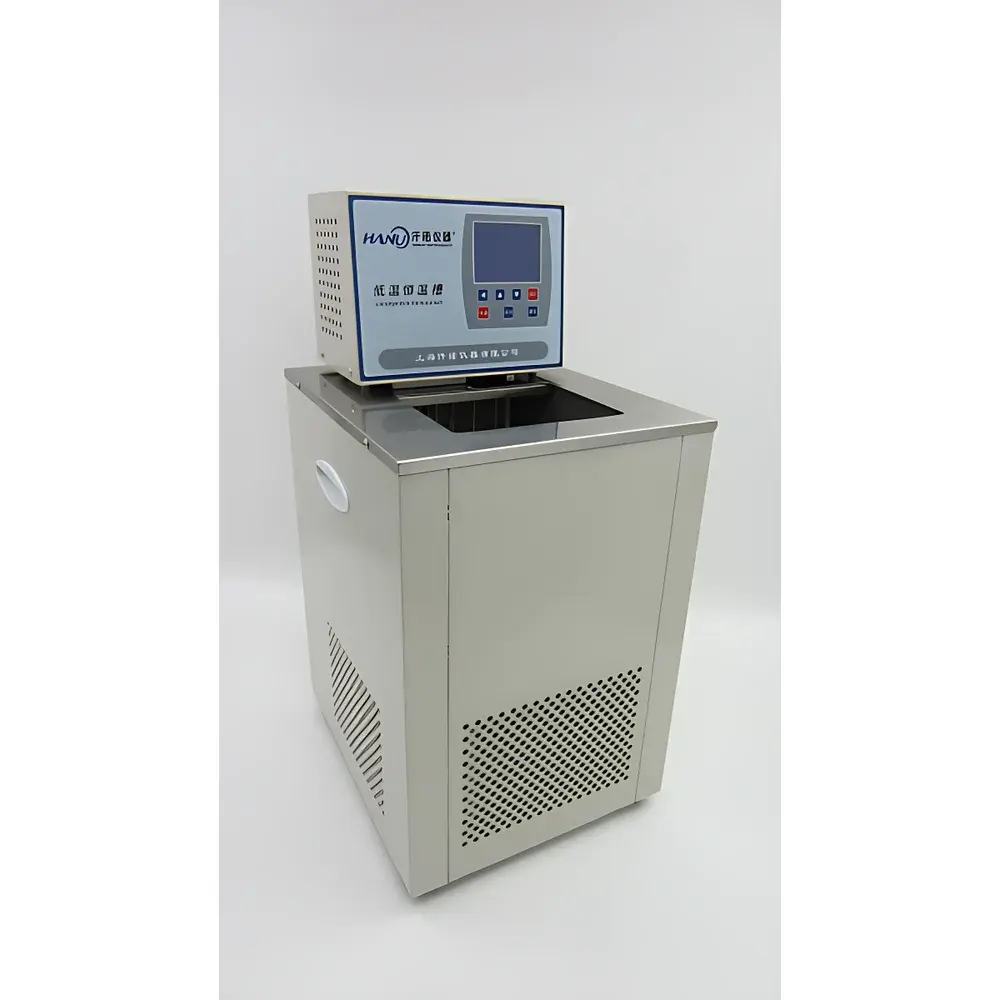
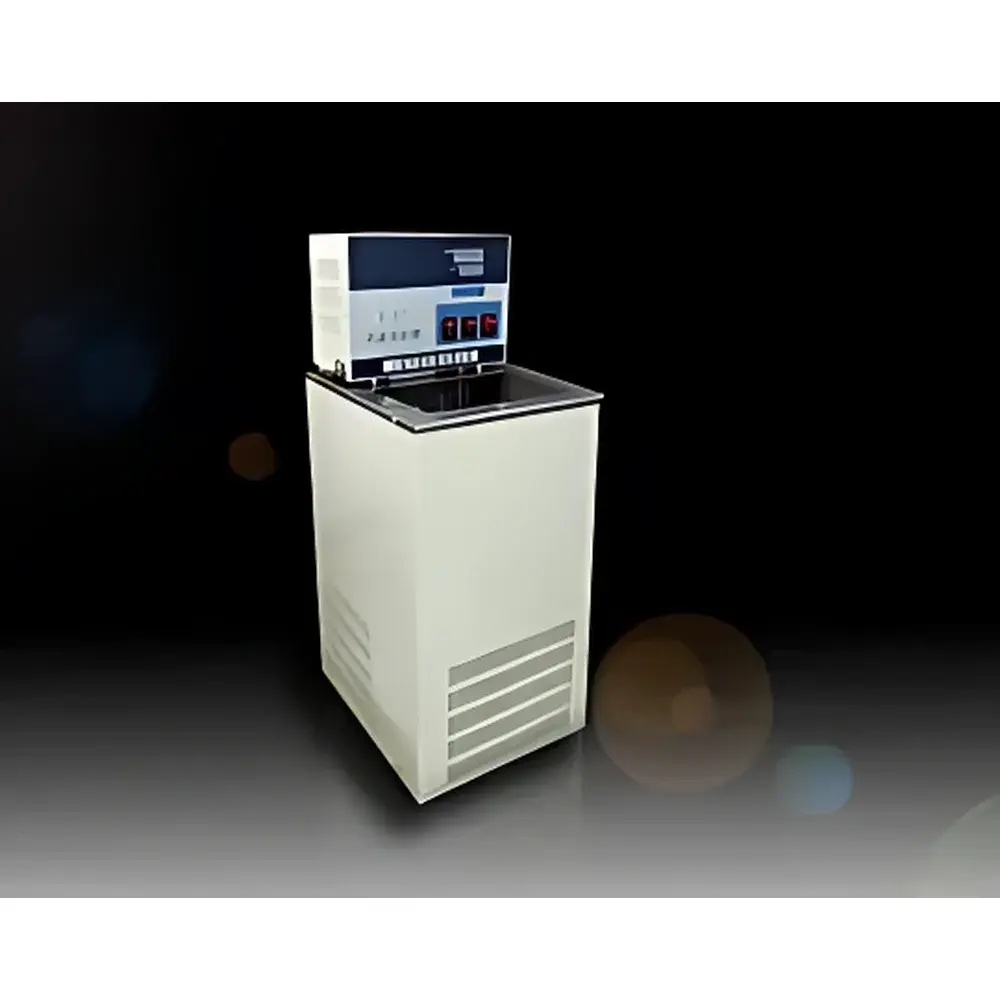
Hanuo DL-20 Series Low-Temperature Circulating Chiller
| Brand | Hanuo |
|---|---|
| Origin | Shanghai, China |
| Model | DL-20 Series |
| Cooling Method | Air-Cooled |
| Temperature Range | −20 °C |
| Temperature Stability | ±0.5 °C |
| Refrigeration Capacity | 180–3500 W (model-dependent) |
| Reservoir Volume | 5–50 L |
| Circulating Pump Flow Rate | 15 L/min |
| Pump Pressure | 0 bar (low-head design) |
| Operating Mode | Continuous Duty |
| Enclosure Type | Integrated Unit |
| Compliance | CE-marked per IEC 61010-1 for laboratory use |
Overview
The Hanuo DL-20 Series Low-Temperature Circulating Chiller is an integrated, air-cooled refrigeration system engineered for precise thermal management in laboratory and analytical applications. It employs a hermetically sealed compressor-based refrigeration cycle coupled with microprocessor-controlled PID temperature regulation to deliver stable, continuous coolant circulation at setpoints down to −20 °C. Unlike water-cooled chillers requiring external condenser water supply, the DL-20 series operates autonomously using ambient air heat rejection—ideal for laboratories with limited infrastructure or space constraints. Its primary function is to supply temperature-stabilized coolant to external equipment—including rotary evaporators, bioreactors, electron microscopes, mass spectrometers, cryogenic reaction vessels, and vacuum coating systems—or to serve as a direct low-temperature bath for immersion-based experiments. The system’s thermodynamic architecture ensures consistent heat extraction across variable thermal loads while maintaining tight temperature stability under dynamic operating conditions.
Key Features
- Microprocessor-based PID temperature controller with real-time digital display and adjustable setpoint resolution of 0.1 °C
- Air-cooled, hermetically sealed R404A or R507 refrigeration system with built-in thermal overload protection, compressor delay logic, and overcurrent safeguarding
- Stainless steel reservoir with integrated level sensor and low-level shutdown interlock to prevent dry-run operation
- Low-noise, corrosion-resistant centrifugal circulation pump delivering a constant flow rate of 15 L/min across all models (head pressure optimized for open-loop external circuits)
- Continuous-duty rated motor and refrigeration components validated for 24/7 operation under nominal load conditions
- Modular chassis design supporting five standard reservoir capacities (5 L, 10 L, 20 L, 30 L, and 50 L), enabling scalable thermal capacity selection without compromising control fidelity
- Front-panel interface with status indicators for refrigeration stage, pump activation, and fault diagnostics (e.g., high discharge temperature, low coolant level)
Sample Compatibility & Compliance
The DL-20 series is compatible with standard aqueous glycol-water mixtures (typically 30–50% ethylene or propylene glycol) and other non-corrosive heat transfer fluids recommended by equipment OEMs. It interfaces seamlessly with common laboratory instruments via standard 1/2″–3/4″ NPT or BSP threaded ports. All units comply with IEC 61010-1:2010 for electrical safety in laboratory environments and carry CE marking. While not certified to ISO/IEC 17025 or GLP-specific validation protocols out-of-the-box, the chiller supports IQ/OQ documentation packages upon request and meets baseline requirements for traceable temperature control in GMP-adjacent workflows when operated within defined environmental conditions (ambient temperature ≤30 °C, relative humidity <80% non-condensing).
Software & Data Management
The base configuration features standalone hardware control without external software dependency. Optional RS485 or analog 4–20 mA output modules enable integration into centralized building management systems (BMS) or SCADA platforms for remote monitoring of setpoint, actual bath temperature, and pump status. For audit-ready environments, third-party data loggers (e.g., Omega OM-DAQPRO-5300) may be connected to record time-stamped temperature profiles compliant with FDA 21 CFR Part 11 requirements when paired with appropriate electronic signature and access control policies. No proprietary cloud service or firmware update mechanism is included; all firmware revisions are distributed via secure offline USB update protocol.
Applications
- Condenser cooling for rotary evaporation under reduced pressure, minimizing solvent bumping and improving recovery yield
- Thermal stabilization of high-resolution electron microscopy stages and detector assemblies to reduce thermal drift during long-duration imaging
- Temperature control of jacketed glass reactors during exothermic low-temperature synthesis (e.g., Grignard reactions, lithiation steps)
- Coolant supply to vacuum metallization chambers and sputtering systems to maintain target and substrate thermal equilibrium
- Direct immersion cooling of calibration standards, reference cells, or optical benches requiring sub-zero ambient equivalence
- Support for lyophilization pre-freezing cycles where −20 °C plateau conditioning precedes primary drying
FAQ
What refrigerant is used in the DL-20 series?
R404A or R507, selected per regional regulatory compliance and thermodynamic efficiency targets for −20 °C operation.
Can the chiller operate unattended overnight?
Yes—designed for continuous duty with automatic safety cutoffs; however, uninterrupted power supply (UPS) and ambient temperature monitoring are recommended for mission-critical deployments.
Is the pump capable of lifting coolant to elevated equipment?
The unit provides 15 L/min flow at near-zero static head; vertical lift beyond 1.5 m requires external booster pumping or repositioning the chiller below the application point.
Does it support external temperature feedback control?
Not natively—the PID loop regulates only the bath sensor. External probe integration requires optional analog input module and custom loop tuning.
What maintenance intervals are recommended?
Compressor oil inspection every 24 months; condenser coil cleaning every 3 months in dusty environments; glycol concentration verification semiannually.



