
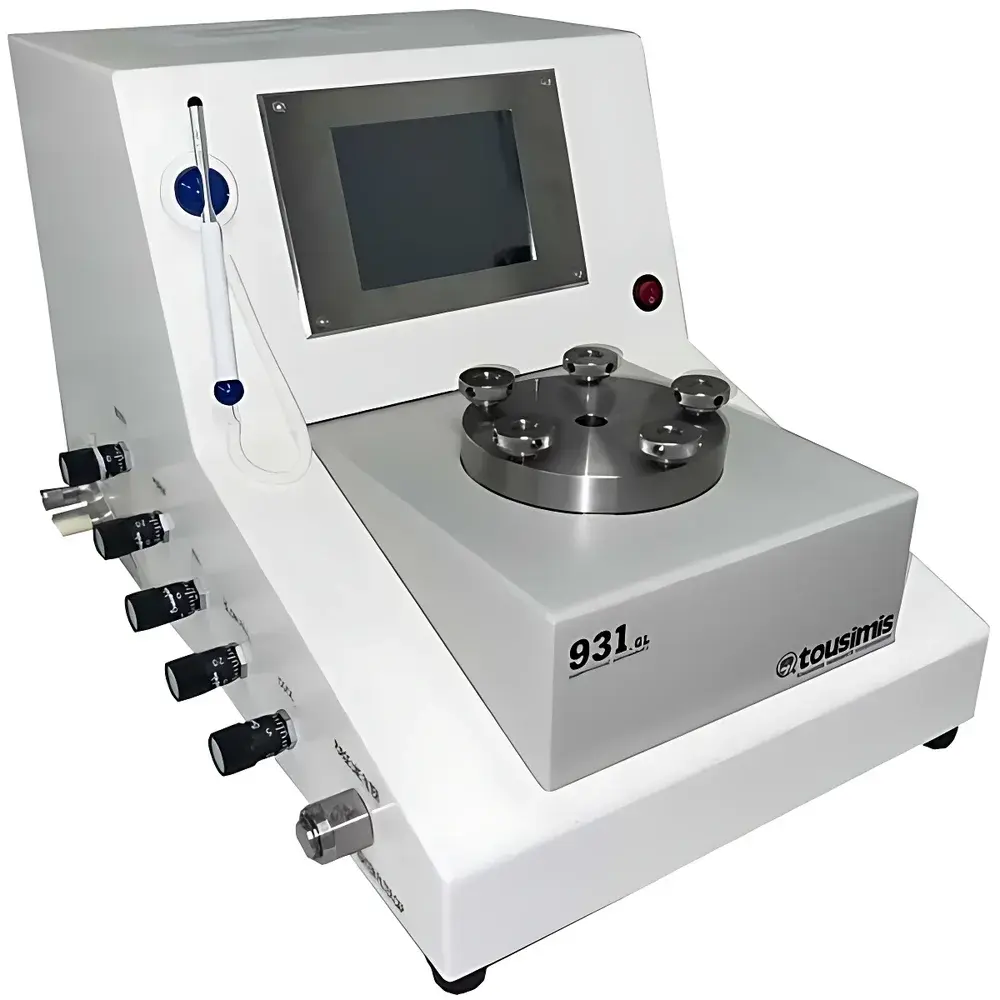
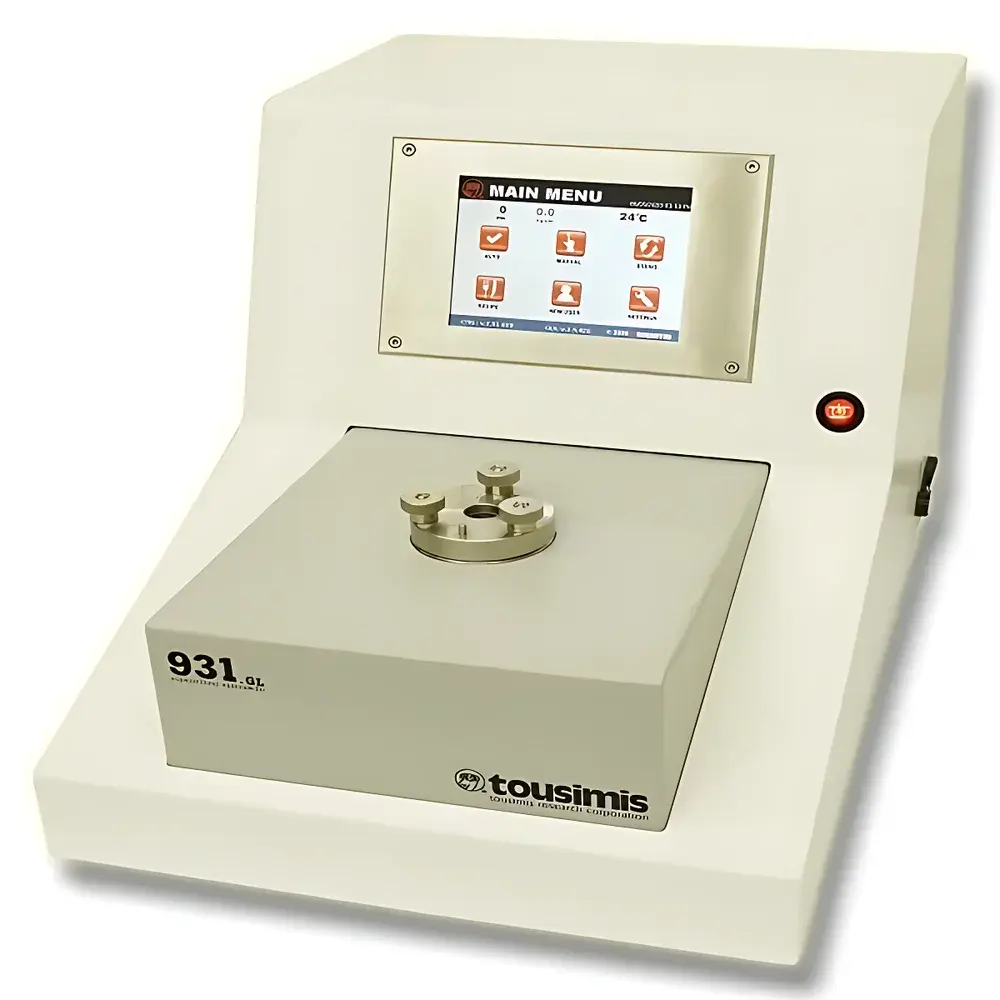
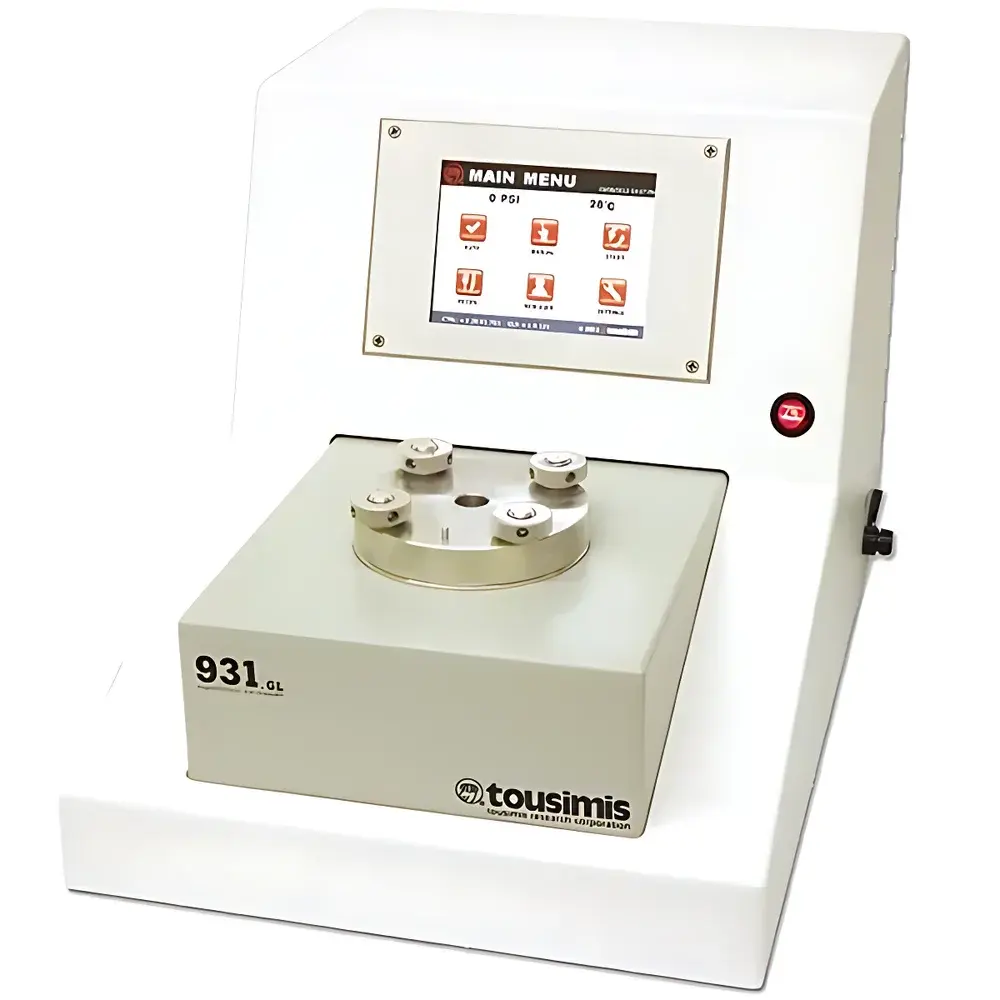
Tousimis AUTOSAMDRI-931 Touchscreen Fully Automated Critical Point Dryer
| Brand | Tousimis |
|---|---|
| Origin | USA |
| Model | AUTOSAMDRI-931 |
| Chamber Diameter Options | 1.25", 2.50", 3.40" |
| Pressure Range | 0–2000 psi |
| Temperature Range | −30 °C to 60 °C |
| Control Interface | Full-touchscreen programmable automation |
| CO₂ Compatibility | Yes (with ethanol/acetone intermediate exchange) |
| Compliance | Designed for SEM/TEM sample preparation per ASTM E2027, ISO 16700, and GLP-aligned workflows |
Overview
The Tousimis AUTOSAMDRI-931 is a fully automated critical point dryer engineered for high-fidelity structural preservation of delicate, hydrated, or porous specimens—particularly those used in scanning electron microscopy (SEM), transmission electron microscopy (TEM), and advanced materials characterization. It operates on the thermodynamic principle of supercritical fluid drying: by transitioning liquid carbon dioxide (CO₂) through its critical point (31.1 °C, 1072 psi), the phase boundary between liquid and gas vanishes, eliminating interfacial surface tension. This prevents capillary collapse, shrinkage, or distortion commonly induced by conventional air or vacuum drying—especially in hydrophilic biological tissues, hydrogels, aerogels, MOFs, nanofibrous scaffolds, and MEMS devices.
Unlike older manual or semi-automated systems, the AUTOSAMDRI-931 integrates precise thermal and pressure regulation with real-time process monitoring, enabling reproducible, operator-independent drying cycles. Its design reflects over four decades of refinement in critical point drying technology, with direct lineage from the foundational SAMDRI®-PVT-3D platform. The system employs a two-step solvent exchange protocol—typically ethanol or acetone as an intermediate—to ensure complete water displacement prior to CO₂ infiltration, minimizing residual moisture and preventing ice formation or phase segregation during depressurization.
Key Features
- Intuitive 7-inch full-color touchscreen interface with preloaded drying protocols and customizable recipe programming
- Three standard chamber diameters (1.25″, 2.50″, 3.40″) to accommodate diverse specimen formats—from single TEM grids to multi-wafer carriers (up to 8-inch wafers supported in compatible configurations)
- Stasis™ software suite: enables extended CO₂ saturation dwell times for challenging samples such as high-viscosity hydrogels, crosslinked polymers, and low-permeability biomaterials
- Integrated cooling system reduces chamber temperature from ambient to −30 °C in under 60 seconds (for 1.25″ chamber), facilitating rapid condensation and controlled CO₂ liquefaction
- Illuminated observation window with adjustable LED lighting allows real-time visual verification of meniscus position and solvent displacement progress
- Patented gentle agitation mechanism ensures uniform solvent exchange without mechanical disturbance to fragile structures
- Onboard particulate filtration (0.2 µm) protects internal valves and pressure transducers from contamination during repeated ethanol/CO₂ cycling
- Dedicated condenser module separates spent ethanol from CO₂ vapor, preventing static discharge, frost buildup, and acoustic noise during venting
- Compact footprint (22″ W × 24″ D × 32″ H) optimized for benchtop integration in core imaging facilities and cleanroom-adjacent labs
Sample Compatibility & Compliance
The AUTOSAMDRI-931 supports a broad spectrum of specimen types requiring ultra-gentle dehydration: fixed biological tissues (e.g., plant stomata, insect cuticles, neural tissue), cryo-fixed cells, bacterial biofilms, synthetic and natural hydrogels, silica and polymer aerogels, metal–organic frameworks (MOFs), carbon nanotube assemblies, graphene oxide monolayers, and silicon-based microstructures including MEMS devices and semiconductor wafers. All standard configurations comply with ASTM E2027 (“Standard Practice for Preparation of Biological Specimens for Scanning Electron Microscopy”) and ISO 16700 (“Microbeam analysis — Scanning electron microscopy — Guidelines for specimen preparation”). When operated with audit-trail-enabled Stasis™ software and timestamped cycle logs, the system supports GLP and GMP-aligned documentation requirements. Optional validation packages are available for FDA 21 CFR Part 11 compliance in regulated environments.
Software & Data Management
Stasis™ software provides deterministic control over all critical parameters: temperature ramp rates, pressure hold durations, CO₂ fill rates, agitation timing, and vent profiles. Each run generates a timestamped, immutable log file (.csv and .pdf) containing pressure/temperature traces, valve actuation events, and user annotations. Remote monitoring via Ethernet connection allows integration into centralized lab management systems. Cycle templates can be password-protected, version-controlled, and exported/imported across instruments—ensuring method transfer consistency between sites. Firmware updates are delivered via secure USB or network interface, maintaining backward compatibility with legacy protocols.
Applications
- High-resolution SEM/TEM sample preparation for life sciences, including immunolabeled tissues and frozen-hydrated sections
- Drying of soft lithographic templates and nanoimprint resists without pattern collapse
- Preservation of 3D-printed hydrogel scaffolds for post-processing morphological analysis
- Processing of MOF crystals and porous coordination polymers for BET surface area and pore size distribution studies
- Preparation of ultrathin graphene oxide films for AFM and Raman mapping
- MEMS device release drying where stiction mitigation is essential
- Quality control of pharmaceutical aerogel drug carriers and lyophilized protein formulations
FAQ
What solvents are compatible with the AUTOSAMDRI-931?
Ethanol and acetone are the most widely validated intermediate solvents; methanol and tert-butanol may be used with prior validation and hardware compatibility review.
Can the system handle wafer-level drying?
Yes—when configured with the 3.40″ chamber and optional wafer carrier fixtures, it accommodates up to five 4-inch wafers or one 8-inch wafer per cycle.
Is CO₂ purity specification required?
Liquid CO₂ must meet ISO 8573-1 Class 1.2.1 (oil-free, particle-free, dew point ≤ −70 °C); standard laboratory-grade CO₂ cylinders with inline 0.2 µm filtration are sufficient.
How is maintenance performed?
Routine tasks include O-ring replacement (provided in standard kit), filter cartridge changes every 50 cycles, and annual calibration of pressure and temperature sensors using NIST-traceable references.
Does the system support IQ/OQ/PQ documentation?
Yes—Tousimis provides comprehensive qualification templates and on-site support for installation qualification (IQ), operational qualification (OQ), and performance qualification (PQ) per ISO/IEC 17025 guidelines.



