
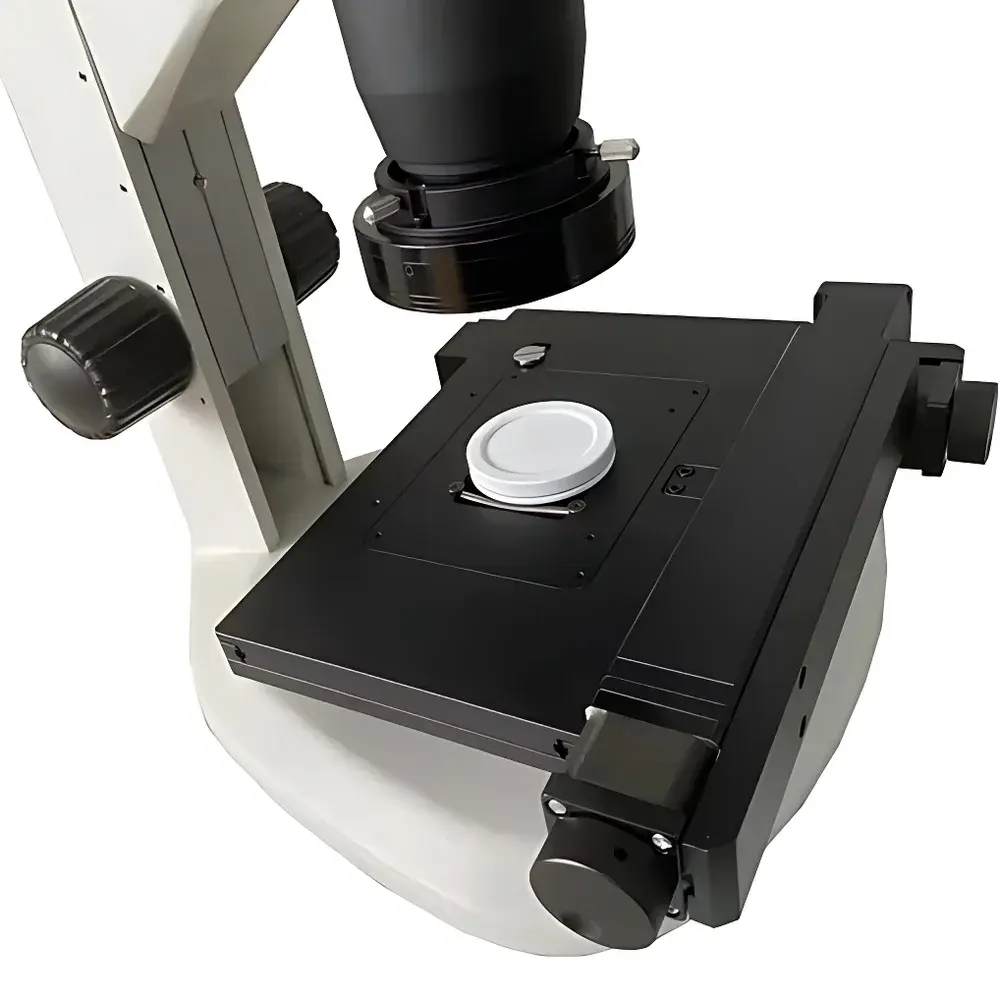
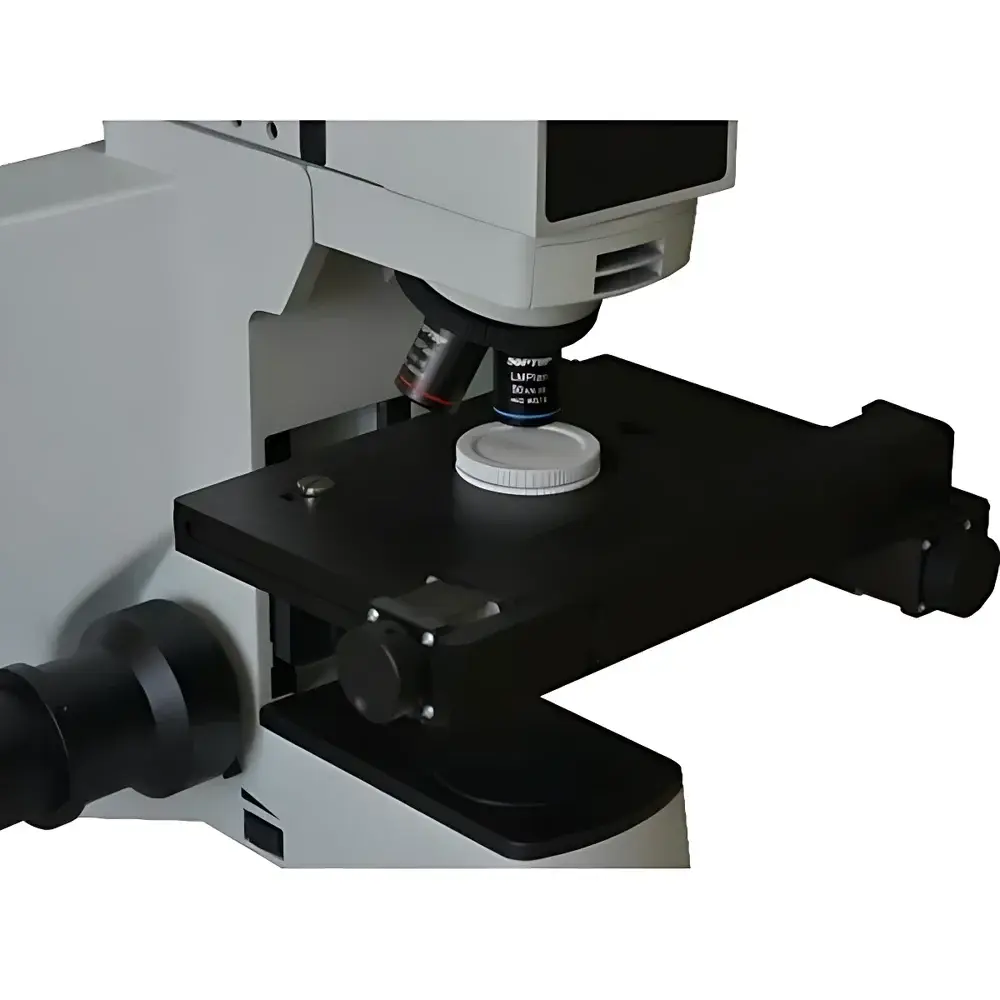
Tansi TS3000 Cleanliness Inspection & Microscopic Image Analysis System
| Brand | Tansi |
|---|---|
| Model | TS3000 |
| Microscope Configuration Options | TS3000M (Upright Metallurgical Microscope) or TS3000S (Stereo Microscope) |
| Imaging Mode | Simultaneous Brightfield & Polarized Light Acquisition |
| Automated Stage | High-Precision ACCUR Motorized XY Platform |
| Focus Control | Motorized Z-Axis (TS3000M only) |
| Camera Interface | USB 3.0 High-Resolution Digital Camera |
| Software | Integrated Cleanliness Analysis Suite with ASTM/ISO/VDI/VDA-Compliant Reporting Engine |
| Report Output | Template-Based PDF + Database-Backed Audit Trail |
| Compliance Support | VDA 19.1, ISO 16232, ASTM F3257, USP <788>, GLP/GMP-Ready Data Integrity Features |
Overview
The Tansi TS3000 Cleanliness Inspection & Microscopic Image Analysis System is a purpose-engineered solution for quantitative particulate contamination assessment on filter membranes extracted from critical components. It operates on the principle of automated digital microscopy combined with algorithm-driven image segmentation and classification—enabling traceable, repeatable, and standards-compliant cleanliness verification across high-precision manufacturing sectors. Unlike manual visual inspection or semi-automated systems, the TS3000 acquires full-filter-field imagery in a single pass under both brightfield and polarized illumination, eliminating sequential imaging artifacts and operator-induced variability. Its architecture integrates hardware synchronization between motorized stage motion, illumination control, autofocus logic (in TS3000M configuration), and high-fidelity image capture—ensuring metrological consistency required for automotive powertrain validation, aerospace hydraulic systems, medical device component release, and semiconductor packaging process control.
Key Features
- Simultaneous dual-contrast acquisition: Captures co-registered brightfield and polarized-light images in one scan cycle—critical for distinguishing metallic vs. non-metallic particles without manual repositioning or optical realignment.
- Fully automated workflow: One-click initiation triggers stage scanning, dynamic focus optimization (TS3000M), illumination mode switching, image stitching, particle detection, morphometric analysis, and report generation.
- Intelligent autofocus engine: Software evaluates local contrast gradients across the field-of-view in real time and commands precise Z-axis adjustments to maintain optimal focus at each tile—essential for uneven filter surfaces or tilted substrates.
- Seamless panoramic stitching: Proprietary tiling algorithm compensates for mechanical drift and optical distortion, reconstructing sub-micron registration accuracy across multi-thousand-tile mosaics without visible seams or geometric warping.
- Multi-class particle recognition: Classifies particles by material type (metallic, non-metallic, fiber), size distribution (≥5 µm up to full filter area), shape descriptors (aspect ratio, convexity, solidity), and spatial density metrics (coverage %, particles/mm²).
- Interactive correction layer: Enables manual refinement of segmentation boundaries—splitting merged objects or merging fragmented detections—while preserving original pixel data and audit trail metadata.
- Dynamic navigation & recall: Users may replay stage coordinates to revisit regions of interest, overlay measurement annotations, or export localized ROIs for secondary review or cross-laboratory correlation.
Sample Compatibility & Compliance
The TS3000 supports standard filtration media including mixed cellulose ester (MCE), polyvinylidene fluoride (PVDF), and polycarbonate track-etched membranes (pore sizes 0.45 µm–5.0 µm). It accommodates filter diameters from 25 mm to 100 mm via configurable stage fixtures. The system’s analytical engine implements calculation logic aligned with VDA 19.1 (2021), ISO 16232-10 (2018), and ASTM F3257-22 for particle counting, sizing bins, and cleanliness class assignment. All software operations—including user login, parameter changes, result edits, and report exports—are logged with timestamped, immutable entries satisfying FDA 21 CFR Part 11 requirements for electronic records and signatures. Optional database integration enables centralized storage of raw images, processed datasets, and version-controlled reporting templates compliant with ISO/IEC 17025 internal audit protocols.
Software & Data Management
The TS3000 Cleanliness Analysis Software is built on a modular, client-server architecture supporting concurrent multi-user access with role-based permissions (operator, reviewer, administrator). Raw image tiles are stored in lossless TIFF format with embedded EXIF metadata (exposure time, magnification, illumination state, stage coordinates). Processed results—including particle tables, histogram distributions, and annotated mosaic views—are archived in ACID-compliant SQL databases with daily incremental backups and optional cloud synchronization. Reporting modules support customizable templates conforming to OEM-specific cleanliness specifications (e.g., BMW QV 2010, Ford WSS-M2P159-A2, Bosch 020001). All reports include digital signatures, revision history, instrument calibration status, and traceability to NIST-traceable reference standards used during validation.
Applications
The TS3000 delivers validated performance in environments where particulate contamination directly impacts functional reliability: diesel high-pressure fuel injectors (max particle threshold: ≤200 µm per ISO 16232-C); turbine blade cooling channel filters (requiring ≥99.9% removal of >10 µm ferrous debris); orthopedic implant machining swarf residue analysis (ASTM F3257-compliant biocompatibility screening); lithium-ion battery electrode slurry filtration QC (detection of agglomerates >5 µm affecting coating uniformity); and photomask cleaning verification in EUV lithography tooling (sub-100 nm defect sensitivity via optional 100× objective upgrade path). Its modularity allows seamless adaptation to evolving industry standards—such as upcoming revisions to ISO 4406:2023 for fluid cleanliness grading or VDA 19.2 draft guidelines on additive manufacturing residue characterization.
FAQ
Does the TS3000 comply with VDA 19.1 and ISO 16232?
Yes—the system implements all mandatory counting algorithms, size binning definitions, and reporting structures specified in VDA 19.1 (2021) and ISO 16232-10 (2018), including automatic exclusion of edge artifacts and fiber rejection logic.
Can users define custom cleanliness thresholds beyond preloaded standards?
Yes—through the “Standard Editor” module, laboratories may create, validate, and deploy proprietary classification rules based on particle count, cumulative area, or dimensional thresholds tied to specific component zones.
Is the software qualified for regulated GMP/GLP environments?
Yes—audit trail functionality, electronic signature support, and 21 CFR Part 11 compliance features are enabled by default; IQ/OQ documentation packages are available upon request.
What microscope configurations are supported?
Two primary configurations: TS3000M integrates an upright metallurgical microscope with motorized Z-focus for high-magnification metallographic analysis; TS3000S uses a stereo microscope optimized for low-magnification overview imaging of large-diameter filters.
How is measurement reproducibility verified?
The system includes built-in calibration routines using NIST-traceable stage micrometers and certified particle reference slides (e.g., Thermo Scientific AccuCount), with automated repeatability testing across five independent runs per session.



