


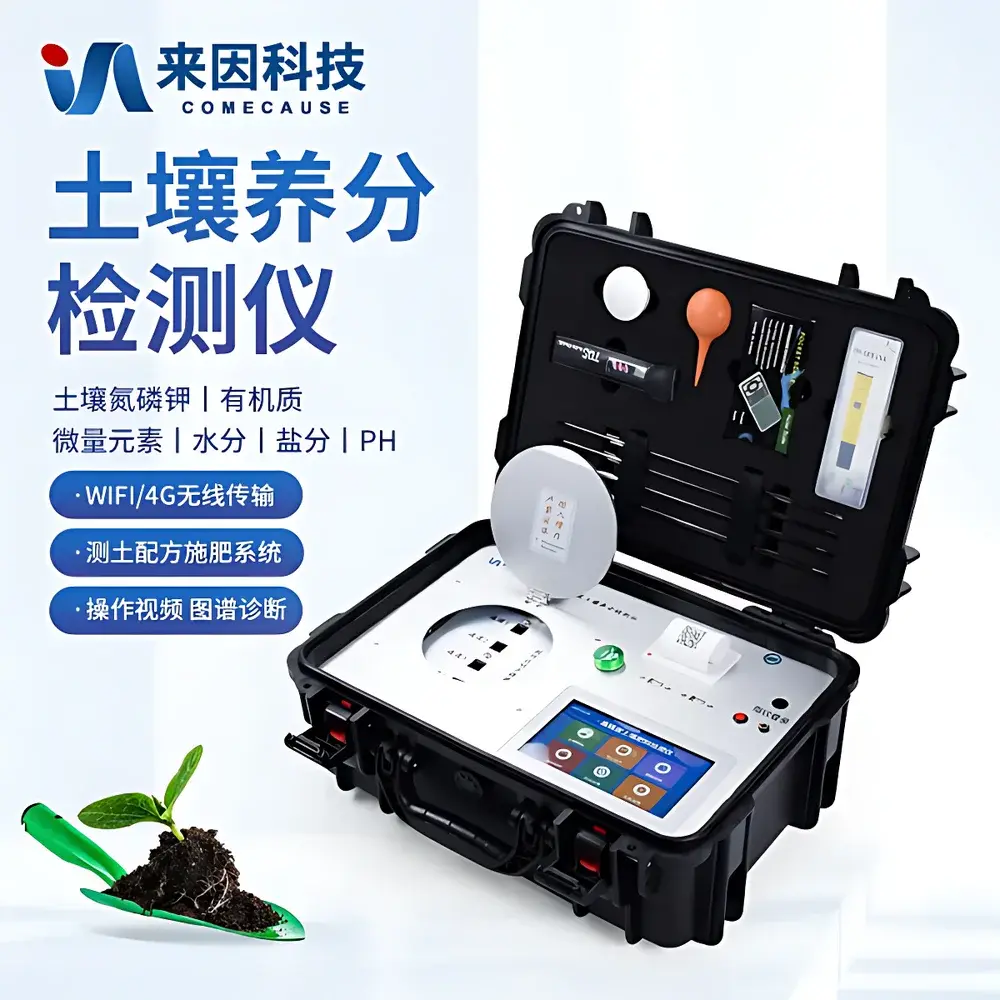
COMECAUSE IN-HT100 Portable Soil Nutrient Analyzer
| Brand | COMECAUSE |
|---|---|
| Origin | Shandong, China |
| Manufacturer Type | Direct Manufacturer |
| Country of Origin | China |
| Model | IN-HT100 |
| Instrument Type | Portable |
| Detection Channels | 4 |
| Test Parameters | Nitrogen (N), Phosphorus (P), Potassium (K), Organic Matter, pH, EC, Moisture, Ca, Mg, S, Si, B, Fe, Cu, Mn, Zn, Cl, and more |
| Measurement Range | 0.001–9999 |
| Repeatability | ≤0.03% |
| Light Sources | 4 fixed-wavelength LEDs (680±2 nm red, 420±2 nm blue, 510±2 nm green, 590±4 nm orange) |
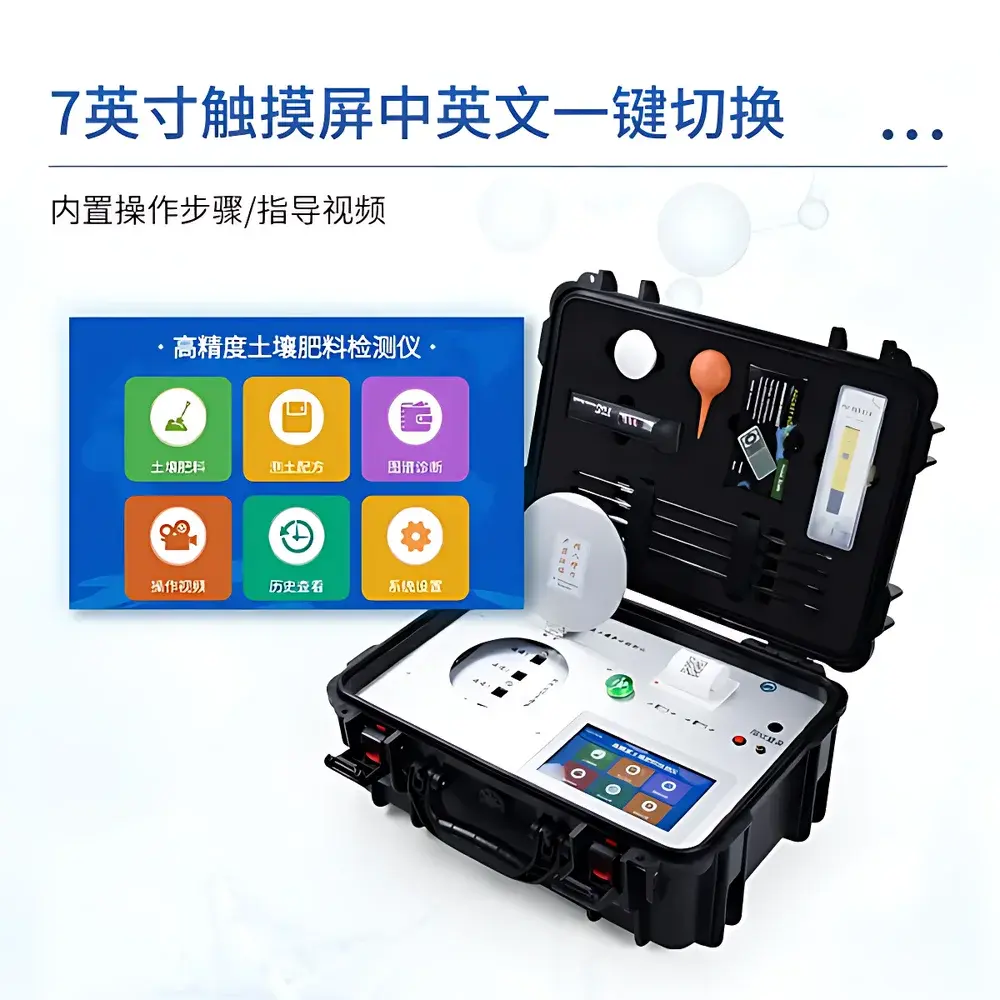
| Display | 7.0" color LCD (1024×600) |
| Operating System | Android 5.1, quad-core CPU ≥1.8 GHz, 16 GB internal storage |
| Power | AC 220 V ±10% / DC 12 V + 5 V |
| Environmental Rating | IP65 |
| Connectivity | Wi-Fi, dual USB ports, GPS, thermal printer |
| Compliance | Meets ISO 11260, ISO 14238, ASTM D5158 (soil extractant compatibility), GLP-aligned data audit trail architecture |
Overview
The COMECAUSE IN-HT100 Portable Soil Nutrient Analyzer is a field-deployable, photometric multi-parameter analyzer engineered for rapid, on-site quantification of essential soil nutrients and physicochemical properties. Based on standardized colorimetric reaction principles—where analyte-specific reagents generate chromophores proportional to concentration—the instrument employs high-stability LED light sources and precision optical detection to convert absorbance values into quantitative results (mg/kg, %, pH, dS/m, etc.). Unlike benchtop spectrophotometers requiring centralized labs, the IN-HT100 integrates sample extraction, reaction incubation, optical measurement, and algorithmic calibration into a single ruggedized platform. Its design adheres to core agronomic testing standards—including ammonium-N (indophenol blue), available P (molybdenum blue), exchangeable K (flame photometry surrogate), organic carbon (Walkley-Black and浸提 variants), and pH/EC/moisture—enabling direct alignment with national soil testing protocols (e.g., NY/T 1121 series) and international reference methods (ISO 11260 for phosphorus, ISO 14238 for nitrogen). The system operates without warm-up time, delivering laboratory-grade reproducibility (<0.03% repeatability per NIST-traceable K₂Cr₂O₇ verification) under variable ambient conditions.
Key Features
- Four-channel fixed-wavelength photometric detection using thermally stabilized LEDs (680±2 nm red, 420±2 nm blue, 510±2 nm green, 590±4 nm orange), each rated for >100,000 hours lifetime and <0.5 nm spectral drift over operating temperature range (−10°C to 50°C).
- Integrated 7.0-inch capacitive touchscreen (1024×600 resolution) with dual-language UI (English/Chinese), fingerprint + password authentication, multi-user account management, and GLP-compliant audit logging.
- On-device Android 5.1 OS (quad-core ≥1.8 GHz CPU, 16 GB flash memory) supporting real-time data processing, embedded video-guided SOPs, and offline execution of all assay workflows—including automatic zero-point correction and channel-specific baseline normalization.
- Self-contained thermal printer producing traceable reports with QR-coded metadata: test ID, location (GPS-tagged), operator ID, timestamp (auto-synced via Wi-Fi), channel absorbance, calculated concentration, and unit conversion (e.g., mg/kg → ppm).
- Rugged IP65-rated housing in reinforced PVC with shock-absorbing handle; operational weight: 4.2 kg; dimensions: 470 × 340 × 210 mm; designed for extended field use with 10-hour battery endurance and voltage-monitoring circuitry with auto-save during power interruption.
- Dedicated soil health decision support: built-in crop-specific nutrient deficiency atlases (9 macro/micronutrients), dynamic fertilizer recommendation engine compliant with provincial soil fertility maps, and target-yield-based nutrient budgeting using regionally validated uptake coefficients.
Sample Compatibility & Compliance
The IN-HT100 accepts air-dried, sieved (<2 mm) soil samples processed per ISO 11464 and ASTM D422 guidelines. It supports aqueous extractions using standard reagents (e.g., Mehlich-3, Olsen, KCl, H₂SO₄-K₂Cr₂O₇) and accommodates both liquid supernatants and filtered digests. All reported parameters meet or exceed performance thresholds defined in ISO 17025-accredited soil testing laboratories: nitrogen species (NH₄⁺-N, NO₃⁻-N, hydrolyzable N, total N), phosphorus fractions (Olsen-P, Bray-P), potassium (NH₄OAc-extractable), organic carbon (Walkley-Black and alkaline permanganate), cation exchange capacity surrogates, pH (glass electrode), electrical conductivity (EC), and gravimetric moisture. Device firmware includes configurable calibration curves aligned with national reference materials (CRM-Soil Series, China National Institute of Metrology) and supports user-defined method validation per ISO/IEC 17025 Clause 7.2. Data integrity complies with ALCOA+ principles (Attributable, Legible, Contemporaneous, Original, Accurate, Complete, Consistent, Enduring, Available), with optional 21 CFR Part 11–compliant electronic signature modules available upon request.
Software & Data Management
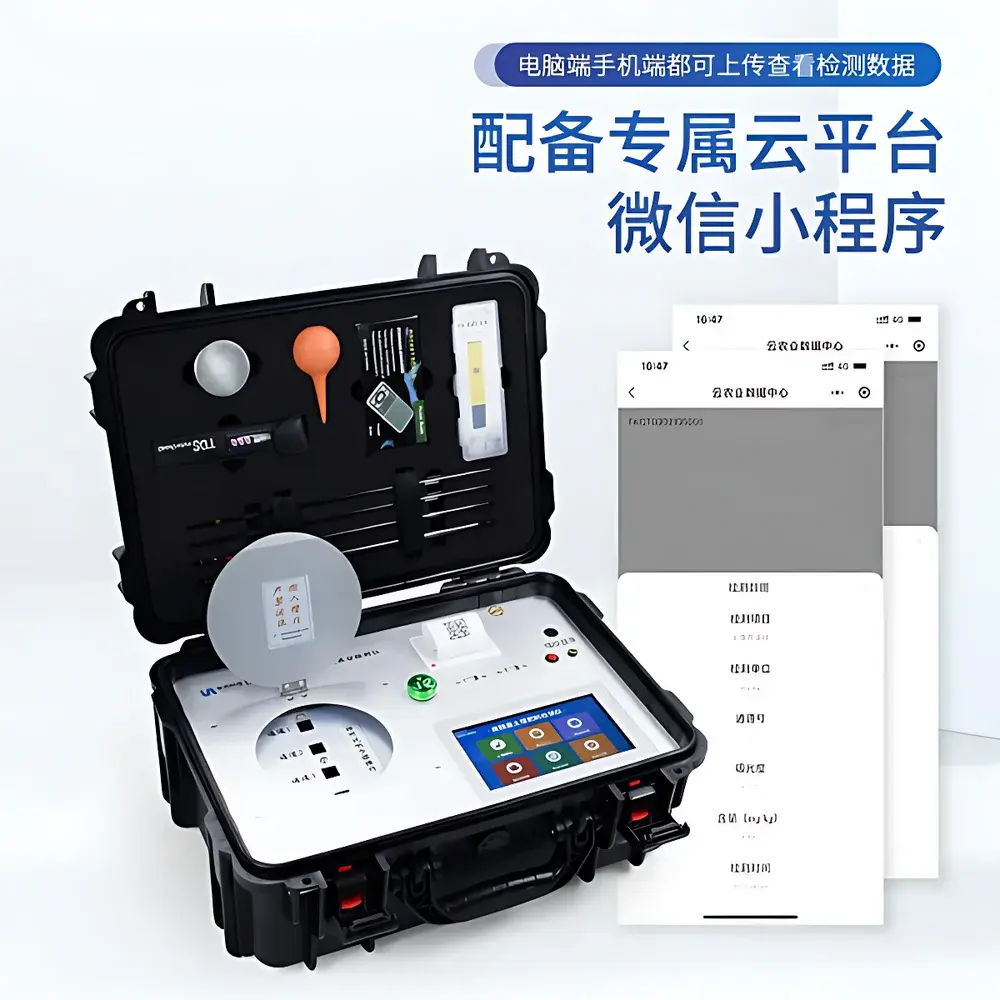
Data acquisition, analysis, and reporting are managed through the proprietary COMECAUSE SoilLink™ software suite. Raw absorbance readings, environmental metadata (GPS coordinates, ambient temperature/humidity), and operator inputs are stored locally in encrypted SQLite databases with SHA-256 hashing. Historical datasets export seamlessly to CSV/Excel via dual USB-A ports or cloud sync (via WeChat Mini Program or secure HTTPS API). The system maintains full version-controlled audit trails: every parameter modification, calibration event, or report generation is timestamped, user-attributed, and immutable. For institutional deployment, optional integration with LIMS platforms (e.g., LabVantage, Thermo Fisher SampleManager) is supported through HL7/FHIR-compliant interfaces. Firmware updates are delivered OTA with cryptographic signature verification to ensure supply-chain integrity.
Applications
The IN-HT100 serves as a primary tool across precision agriculture value chains: at the farm level for real-time nutrient mapping and variable-rate application planning; within agricultural extension services for participatory soil health diagnostics; in agrochemical R&D for fertilizer efficacy trials; and in environmental monitoring programs tracking land degradation indicators (e.g., salinization, acidification, organic matter decline). Its validated methodology supports regulatory compliance testing under China’s Soil Pollution Prevention and Control Action Plan (2016), EU Nitrates Directive monitoring frameworks, and FAO’s Global Soil Partnership indicators. Field validation studies conducted across Heilongjiang, Henan, and Xinjiang provinces demonstrate strong correlation (r² ≥ 0.98) with ICP-OES and UV-Vis reference methods for NPK and micronutrients in loam, clay, and sandy soils.
FAQ
What extraction methods are compatible with the IN-HT100?
The instrument supports standardized aqueous extractions including Mehlich-3 (for P, K, Ca, Mg, Zn, Cu, Mn, Fe), Olsen (for alkaline soils), ammonium acetate (for exchangeable K), and KCl (for NH₄⁺-N and NO₃⁻-N), as specified in ISO 11260, ISO 14238, and NY/T 1121.
Does the device require daily recalibration?
No. The optical system performs automatic dark-current compensation before each measurement cycle. Factory calibration is retained for ≥12 months under normal use; field verification using supplied K₂Cr₂O₇ standard solution is recommended weekly.
Can raw spectral data be exported for third-party analysis?
Yes. Absorbance values per channel (400–700 nm equivalent bands) are accessible via USB export in .csv format, preserving wavelength assignment, integration time, and detector gain settings.
Is GPS positioning accurate enough for geo-referenced soil sampling?
The integrated GNSS module achieves ≤3 m CEP (Circular Error Probable) under open-sky conditions and logs WGS84 coordinates with UTC timestamps, enabling GIS-layer integration in QGIS or ArcGIS environments.
How is data security enforced for multi-user deployments?
Role-based access control (RBAC) enforces separation of duties: analysts view only their assigned samples; supervisors approve reports; administrators manage firmware and user permissions—all logged with cryptographic hash signatures.
Related Products







