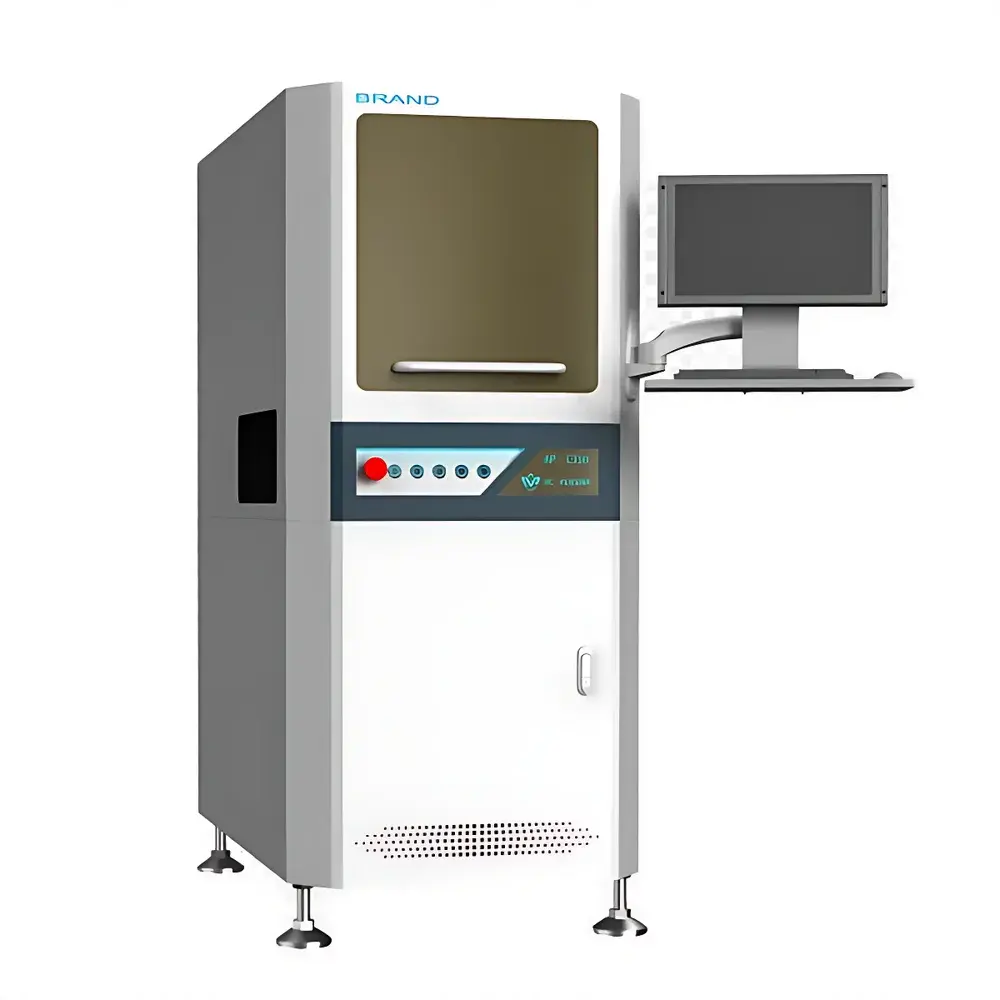
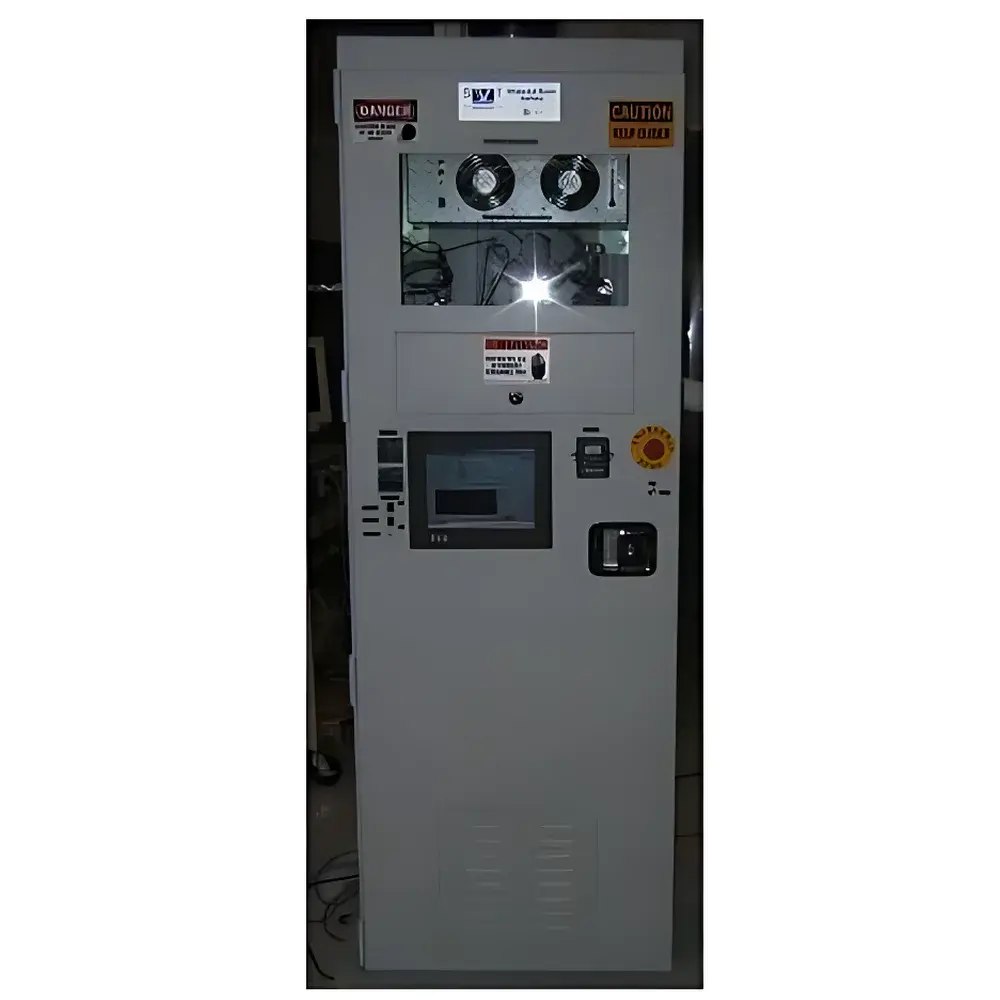
SVT Associates SVTA-O3 Ozone Delivery System for Molecular Beam Epitaxy
| Brand | SVT Associates |
|---|---|
| Origin | USA |
| Model | SVTA-O3 |
| Configuration | Integrated Ozone Generation, Cryogenic Storage & Controlled Delivery Subsystem |
| Compliance | Designed for UHV-Compatible MBE Integration |
| Control Interface | Touchscreen HMI + RoboMBE™ Remote Software Suite |
| Gas Purity | >99.999% O₃ (Ozone-in-O₂ basis), <1 ppm NOₓ/H₂O hydrocarbon contaminants |
| Operating Pressure Range | 1×10⁻⁸ to 1×10⁻³ Torr (process chamber interface) |
| Ozone Concentration Range | 1–15 wt% in oxygen carrier gas |
| Cryogenic Trap Temperature Range | –120 °C to –40 °C (programmable) |
| Delivery Line Material | Electropolished 316L SS + Fluorosilicone-elastomer-sealed VCR® fittings |
| Cooling | Integrated recirculating chiller (water-cooled ozone injector head) |
| Footprint | 600 mm × 750 mm × 1,200 mm (W×D×H) |
Overview
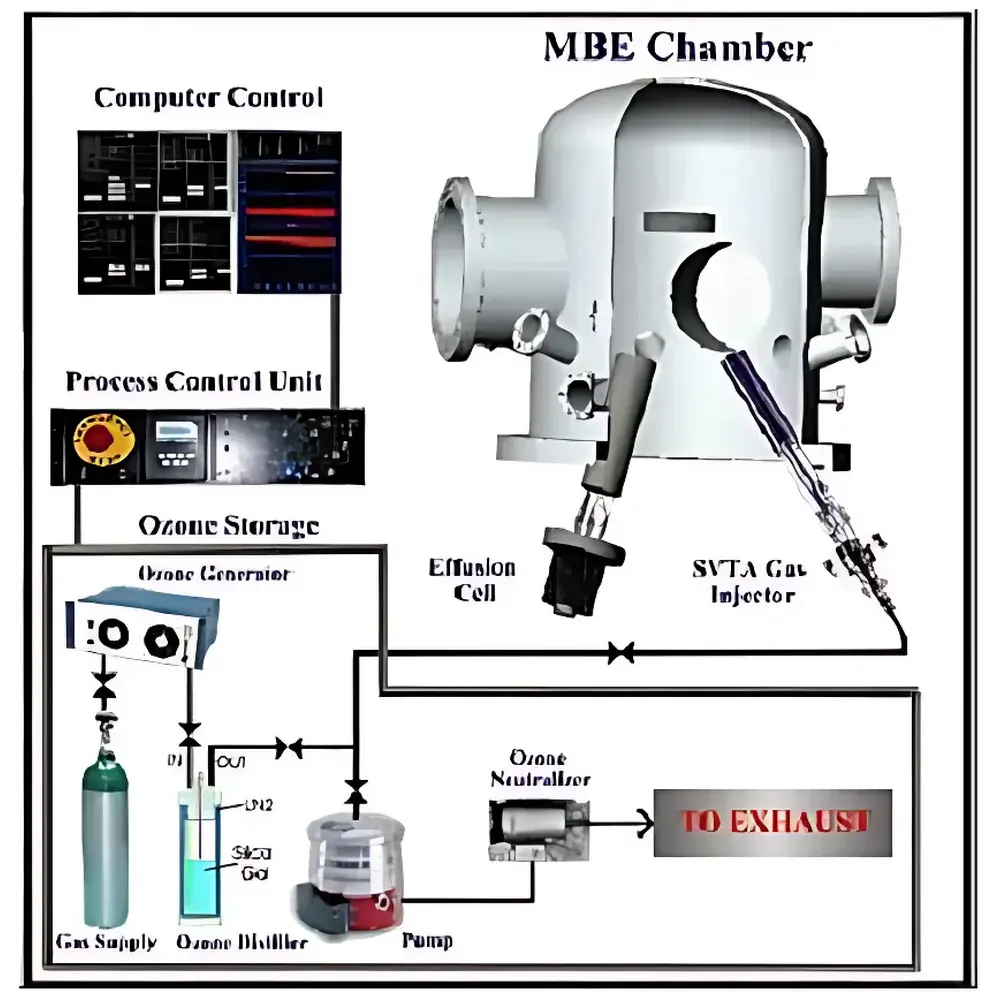
The SVT Associates SVTA-O3 Ozone Delivery System is a purpose-engineered, ultra-high-purity gas supply platform designed specifically for integration with molecular beam epitaxy (MBE) and other high-vacuum thin-film growth systems requiring controlled, contamination-free ozone introduction. Unlike conventional ozone generators relying on ambient air or low-purity oxygen feedstocks, the SVTA-O3 employs a closed-loop, cryogenically stabilized delivery architecture grounded in fundamental principles of dielectric barrier discharge (DBD) ozone synthesis and selective thermal desorption. It delivers ozone as a precisely metered, thermally stable oxidant—enabling reproducible atomic-layer oxidation during III–V and II–VI compound semiconductor heterostructure growth, such as Ga₂O₃, In₂O₃, ZnO, and high-κ dielectric interlayers. The system operates under strict UHV-compatible design rules: all wetted surfaces are electropolished 316L stainless steel; elastomeric seals are fluorosilicone-based for ozone resistance; and gas pathways maintain ≤1×10⁻¹⁰ Torr·L/s He leak integrity. Its modular tripartite architecture—comprising the DBD ozone generator, temperature-programmable cryogenic ozone trap, and actively water-cooled injection source—ensures stoichiometric control, minimal decomposition, and sub-second response time during growth mode transitions.
Key Features
- Dielectric barrier discharge (DBD) ozone generation using high-purity (>99.9999% O₂) feed gas, minimizing nitrogen oxide and hydrocarbon byproducts
- Programmable cryogenic ozone trap (-120 °C to -40 °C) enabling storage stability, concentration calibration, and pulse-mode delivery
- Integrated water-cooled ozone injector head with <15 cm gas path length—reducing residence time and thermal decomposition to <0.8% per second at 25 °C
- Touchscreen HMI with real-time pressure, temperature, and flow monitoring; fully compatible with RoboMBE™ remote control protocol for synchronized MBE recipe execution
- Hermetically sealed gas cabinet equipped with dual-channel ozone sensor array and redundant solenoid shutoff valves compliant with SEMI S2-0215 safety guidelines
- Gas-path validation documentation package available—including material certifications (ASTM A270, ASTM B827), helium leak test reports, and surface passivation verification (XPS/EDS)
Sample Compatibility & Compliance
The SVTA-O3 is engineered for direct coupling with standard MBE vacuum flanges (CF-63, CF-100, ISO-KF 40) and supports seamless integration into existing UHV growth chambers operating at base pressures ≤2×10⁻¹⁰ Torr. It meets critical requirements for semiconductor process tool qualification: materials of construction conform to ASTM F800 (cleanroom-compatible metals) and ASTM F1249 (permeation-resistant elastomers); ozone concentration stability is verified per ISO 11133 Annex D protocols; and system-level traceability aligns with ISO 9001:2015 and IATF 16949 audit frameworks. For regulated R&D environments, optional 21 CFR Part 11-compliant electronic logbook and audit trail modules are available upon request.
Software & Data Management
Control is managed via an embedded Linux-based HMI running SVT’s proprietary OzoneControl™ firmware v3.2, supporting both local touchscreen operation and Ethernet-connected RoboMBE™ integration. All process parameters—including trap temperature ramp rate, delivery pulse width, mass flow setpoints (via Brooks 5860 series MFCs), and real-time ozone partial pressure—are timestamped and exportable in CSV/TSV format. The system logs operational history with SHA-256 hashed integrity checks and supports configurable alarm thresholds (e.g., ozone concentration deviation >±2%, trap temperature drift >±0.5 °C over 30 s). Optional data archiving interfaces include OPC UA server compatibility and direct SQL database push to enterprise LIMS platforms.
Applications
- Atomic-layer oxidation during MBE growth of wide-bandgap oxides (e.g., β-Ga₂O₃ on SiC substrates)
- In-situ formation of ultrathin Al₂O₃ or HfO₂ gate dielectrics on III–N templates
- Surface passivation of InAs quantum wells prior to capping layer deposition
- Low-temperature (<200 °C) ozone-assisted MOCVD precursor activation in hybrid MBE-MOCVD reactors
- Calibration reference source for in-chamber ozone sensors used in plasma-enhanced ALD processes
FAQ
What ozone purity levels does the SVTA-O3 achieve, and how is purity verified?
Ozone output exceeds 99.999% purity (O₃-in-O₂ basis), with residual NOₓ and hydrocarbons below 1 ppm. Purity is validated via FTIR spectroscopy (ASTM E1421) and GC-MS analysis of collected condensate samples.
Can the SVTA-O3 be retrofitted onto legacy MBE systems?
Yes—standard CF and ISO-KF port adapters are included. Mechanical, electrical, and software integration kits support Varian, Riber, and Veeco MBE platforms manufactured after 2005.
Is ozone decomposition monitored in real time during delivery?
Yes—integrated UV absorption cells (254 nm) provide continuous inline ozone concentration feedback with ±0.3% full-scale accuracy, referenced against NIST-traceable calibration standards.
Does the system support automated recipe-driven ozone pulsing?
Yes—RoboMBE™ synchronization enables microsecond-precision trigger alignment between ozone pulses and effusion cell shutter sequences, with jitter <50 µs.
What maintenance intervals are recommended for long-term reliability?
Ozone generator electrodes require cleaning every 1,200 hours of cumulative operation; cryotrap cold heads are rated for 20,000 hours MTBF; full system performance validation is recommended annually per ISO/IEC 17025 guidelines.
Related Products