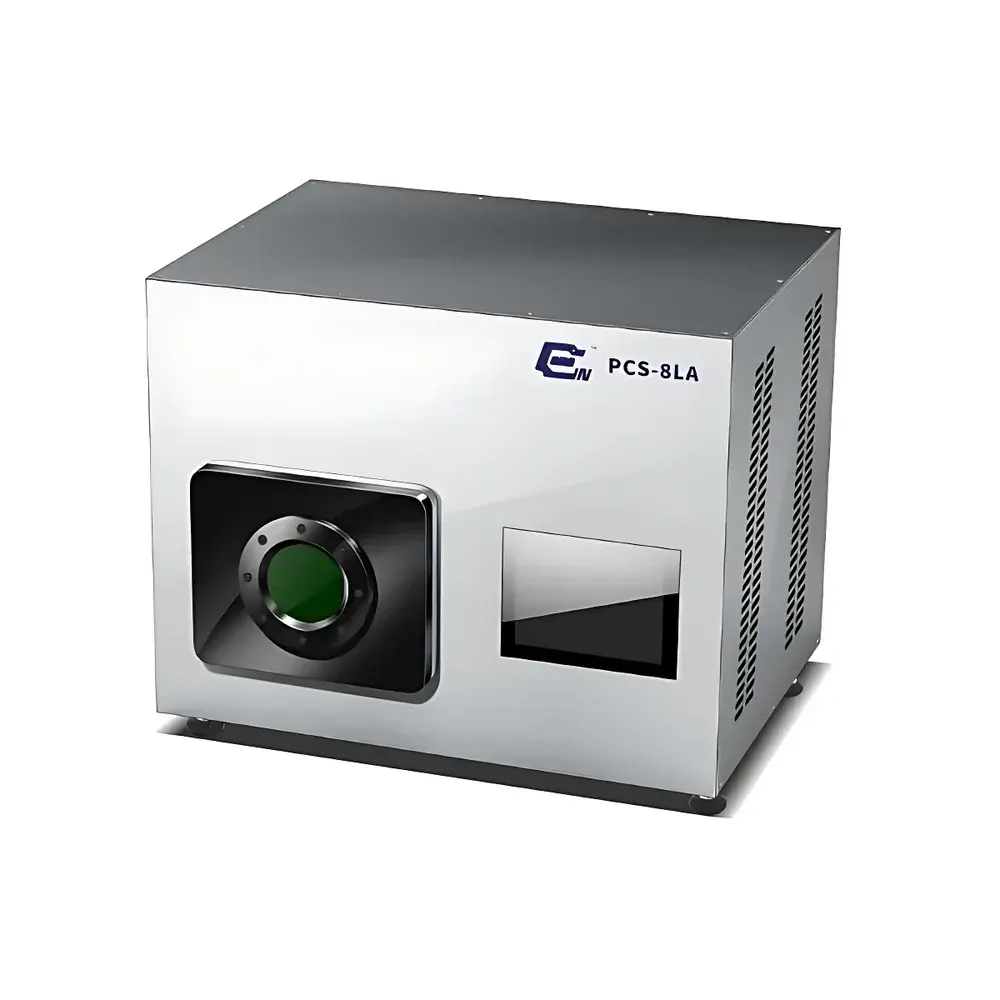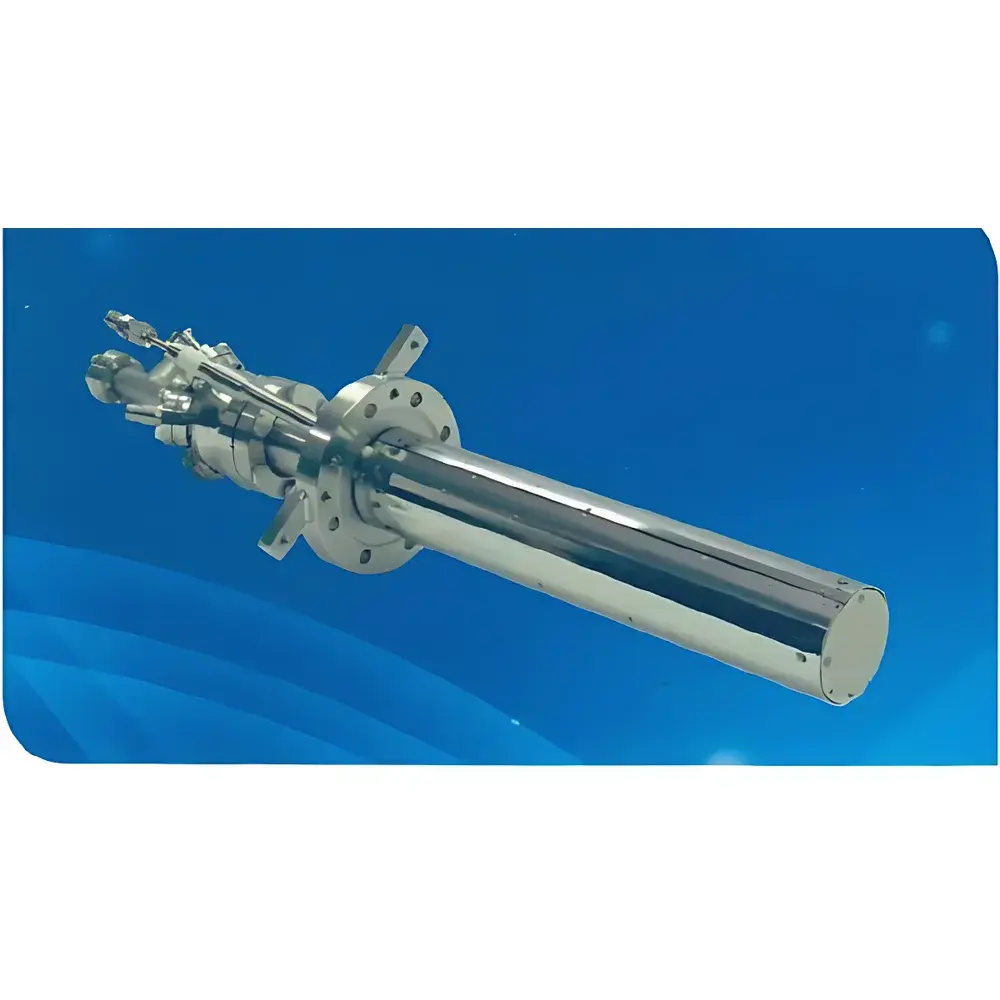
SVT Associates RF Plasma Source for Thin Film Deposition and In-Situ Substrate Cleaning
| Brand | SVT Associates |
|---|---|
| Origin | USA |
| Model Options | 2.75", 4.5", 6.0" CF Flange |
| RF Power Range | 200–600 W |
| Gas Flow Range | 0.1–10 SCCM (N₂, O₂, H₂) |
| Plasma Chamber Materials | Pyrolytic Boron Nitride (PBN), Alumina, Quartz |
| Cooling | Water, 0.17 GPM (0.227 m³/hr) |
| Plasma Viewing Window | Integrated |
| Aperture & Cavity Geometry | Customizable |
| RF Matching | Manual (Auto-tuning optional) |
| Plasma Beam Composition | Predominantly neutral atomic species, negligible ion energy (<5 eV) |
| Typical Growth Rate | >4 µm/hr for nitride/oxide films |
Overview
The SVT Associates RF Plasma Source is a high-stability, low-energy plasma generation system engineered for integration into ultra-high vacuum (UHV) thin film growth platforms—including molecular beam epitaxy (MBE), plasma-assisted MBE (PAMBE), and reactive sputtering systems. Unlike DC or pulsed-plasma sources, this RF-driven inductively coupled plasma (ICP) source operates without direct electrode contact, eliminating arcing risks and enabling stable, long-duration plasma discharge under controlled gas flow and pressure conditions (typically 1×10⁻⁵ to 5×10⁻⁴ Torr). Its core function is the efficient dissociation of diatomic process gases—primarily N₂, O₂, and H₂—into highly reactive neutral atomic species (e.g., N, O, H) with minimal kinetic energy. This near-thermal-energy beam minimizes substrate surface damage during in-situ cleaning or reactive growth, making it particularly suitable for delicate III–V, II–VI, and 2D material heterostructures where stoichiometry control and interface integrity are critical.
Key Features
- Low-ion-energy plasma output: Atomic beam composition dominated by neutrals; ion energies maintained below 5 eV—verified via retarding field energy analysis—ensuring non-destructive surface treatment and defect-free nucleation.
- Modular flange compatibility: Standard ConFlat (CF) interfaces available in three sizes—2.75″, 4.5″, and 6.0″—to match common UHV chamber port configurations across major MBE tool manufacturers (e.g., Riber, Veeco, DCA Instruments).
- Thermally robust plasma cavity: Constructed from pyrolytic boron nitride (PBN), high-purity alumina, or fused quartz depending on gas chemistry and thermal load requirements; all materials exhibit ultra-low outgassing and high resistance to chemical erosion.
- Integrated plasma observation window: Fused silica viewport enables real-time optical emission spectroscopy (OES) monitoring for process endpoint detection and plasma stability assessment.
- Customizable beam optics: Aperture diameter, cavity aspect ratio, and gas injection geometry are configurable to optimize radical flux uniformity and directionality for specific reactor geometries and target substrates.
- Flexible RF control architecture: Base configuration includes manual impedance matching; optional auto-matching network supports closed-loop power regulation under varying gas composition or pressure transients.
Sample Compatibility & Compliance
The SVT RF Plasma Source is compatible with substrates ranging from 2″ to 6″ diameter wafers—including GaAs, InP, SiC, sapphire, and graphene-on-copper foils—and supports both heated and cryogenic substrate stages. It complies with standard UHV safety and material compatibility protocols per ASTM E1557 (Standard Practice for Vacuum System Integrity Testing) and ISO 14644-1 Class 4 cleanroom assembly requirements. All wetted components meet SEMI F57 specifications for semiconductor process equipment. When integrated into GLP/GMP-compliant deposition lines, the optional software package supports 21 CFR Part 11–compliant audit trails, user access control, and electronic signature functionality.
Software & Data Management
An optional Windows-based control suite provides full remote operation via Ethernet or RS-232. The software enables programmable ramping of RF power and gas flow, synchronized logging of plasma emission intensity (via optional photodiode input), and storage of complete process recipes—including timestamped parameter sets, operator ID, and chamber pressure history. Data export is supported in CSV and HDF5 formats for traceability and integration with MES platforms such as Siemens Opcenter or Applied Materials Endura Connect. All firmware updates are digitally signed and validated prior to installation.
Applications
- Growth of high-quality GaN, AlN, and InN layers via PAMBE, achieving smooth surfaces (RMS roughness <0.2 nm) and low dislocation densities (<1×10⁸ cm⁻²) without substrate heating above 750 °C.
- In-situ pre-growth surface activation of Si(111) and Ge(001) using atomic hydrogen plasma, removing native oxides while preserving surface reconstruction.
- Low-damage passivation of perovskite thin films (e.g., MAPbI₃) using low-energy oxygen radicals, enhancing ambient stability without inducing halide vacancy formation.
- Reactive etching precursor generation for selective area deposition (SAD) in nanowire arrays, where directional neutral flux enables conformal sidewall coverage.
- Integration into hybrid ALD–MBE tools for sequential oxide/nitride bilayer synthesis (e.g., HfO₂/TiN gate stacks) with interfacial oxygen control at sub-monolayer precision.
FAQ
What gases are supported, and are gas-specific source configurations required?
N₂, O₂, and H₂ are fully supported. While the base design accommodates all three, optimal dissociation efficiency and lifetime are achieved with gas-specific cavity liners—PBN for nitrogen, quartz for oxygen, and alumina for hydrogen—to minimize recombination and wall catalysis.
Can the source be operated continuously for >100 hours without maintenance?
Yes—under stable 300–500 W RF power and 1–5 SCCM flow conditions with proper cooling, mean time between cleaning (MTBC) exceeds 120 hours for N₂ and O₂ operation. H₂ operation may require more frequent inspection due to potential hydride formation on internal surfaces.
Is vacuum bake-out capability included?
The source is rated for 250 °C UHV bake-out when equipped with high-temp CF seals and ceramic feedthroughs; standard configuration supports up to 150 °C.
How is plasma ignition reliability ensured during automated recipe execution?
The RF generator incorporates arc detection and soft-start sequencing; combined with the optional auto-matching network, ignition success rate exceeds 99.98% across 10,000+ consecutive cycles in production environments.
Does SVT provide OEM integration support for custom reactor designs?
Yes—SVT offers mechanical interface drawings, RF shielding guidelines, thermal modeling reports, and on-site commissioning assistance for turnkey integration into third-party epitaxy platforms.