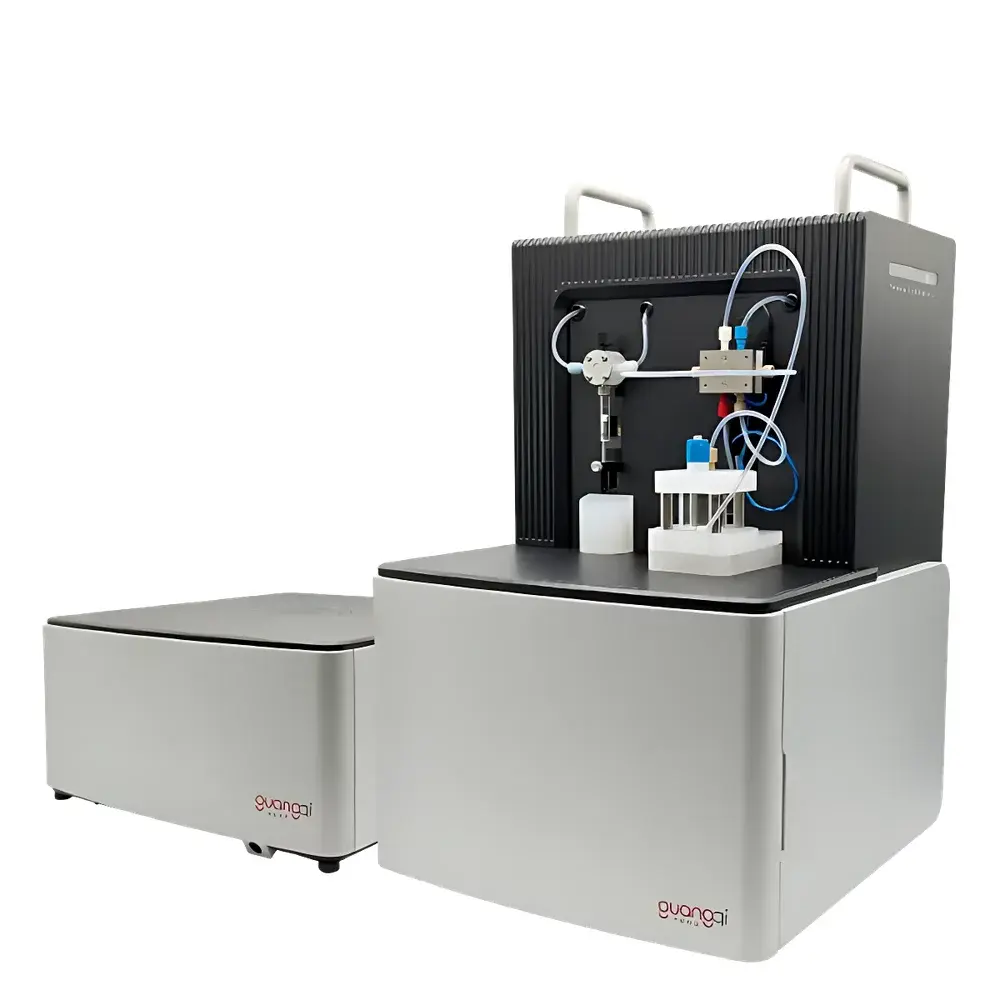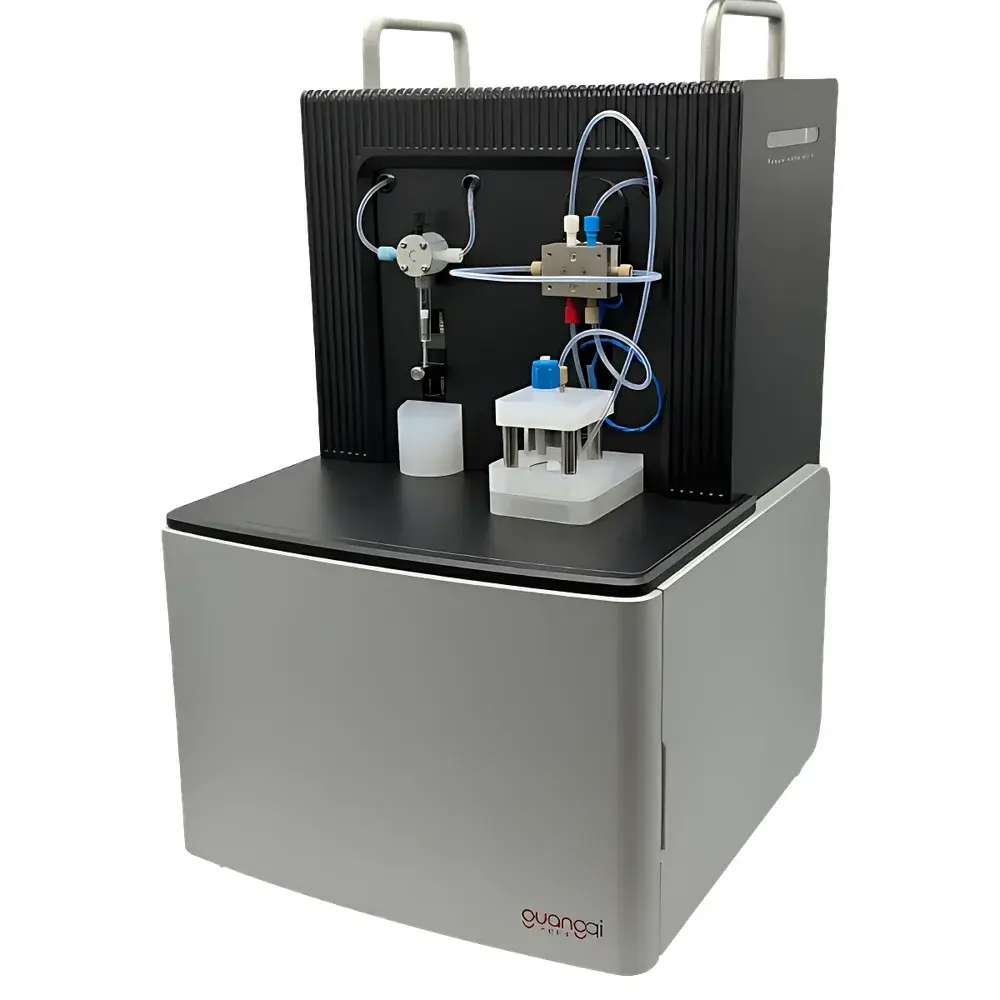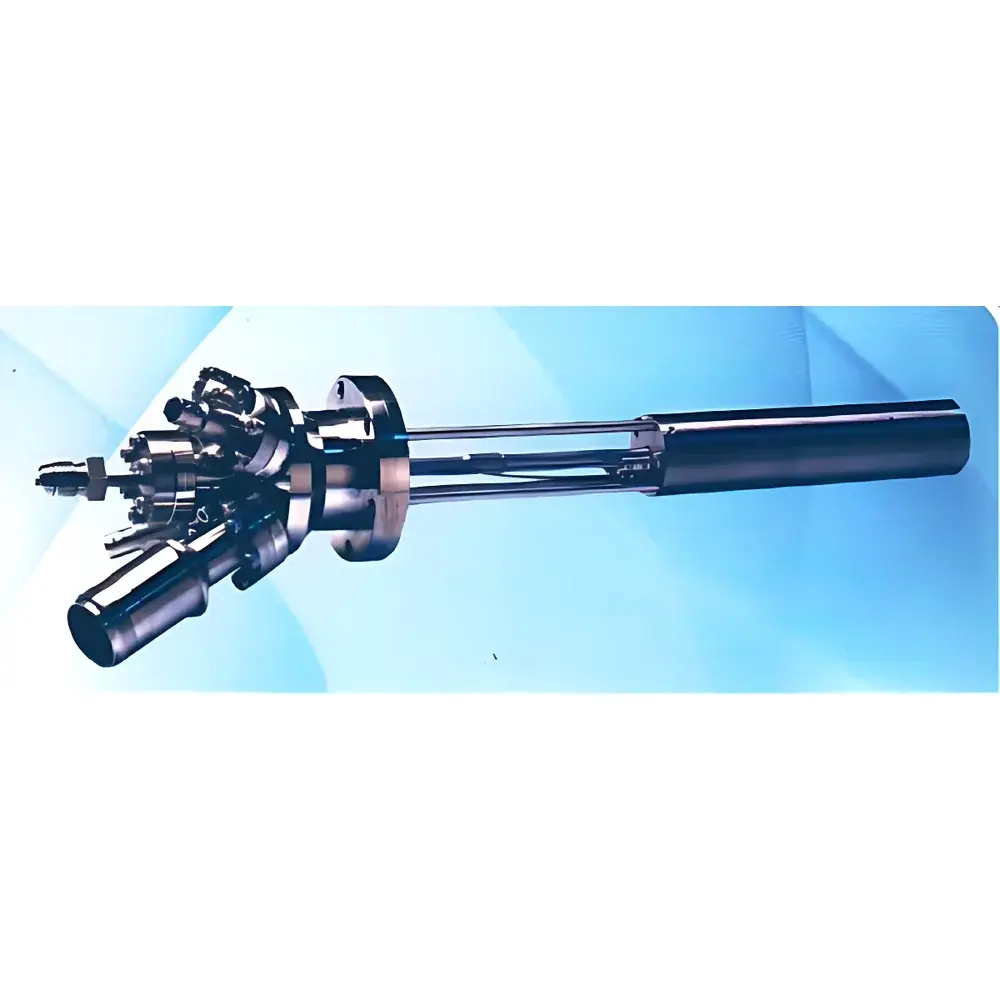
SVT Associates SVT-AH Atomic Hydrogen Source
| Brand | SVT Associates |
|---|---|
| Origin | USA |
| Model | SVT-AH |
| Heating Principle | Electron-beam heated tungsten/molybdenum filament |
| Max Filament Temperature | 2873 K |
| Emission Current | Up to 100 mA |
| Power Supply Requirement | 300 W |
| Filament Current | 15 A |
| Vacuum Interface | 2.75″ (70 mm) CF flange |
| Compatible With | Standard MBE Systems via Adaptable Flange Kits |
| Recommended Power Supply | SVTA-H1-PS (Triply Integrated: High-Voltage Bias, High-Current Filament, and Emission Control with Beam Current Monitoring & Display) |
Overview
The SVT Associates SVT-AH Atomic Hydrogen Source is a precision-engineered thermal dissociation source designed for ultra-high vacuum (UHV) molecular beam epitaxy (MBE) and surface science applications. It operates on the principle of electron-beam heating of refractory metal filaments—typically tungsten (W) or molybdenum (Mo)—to thermally crack molecular hydrogen (H₂) into highly reactive atomic hydrogen (H•) without generating significant ion flux. Unlike plasma-based or RF-driven hydrogen sources, the SVT-AH produces a neutral, low-energy atomic beam with negligible substrate sputtering or lattice damage, making it ideal for in-situ pre-growth surface cleaning of III–V, II–VI, and elemental semiconductors—including GaAs, InP, Si, Ge, and graphene substrates—prior to epitaxial layer deposition.
Key Features
- Electron-beam heated filament architecture enabling stable, controllable H-atom generation at up to 2873 K (2600 °C), ensuring high dissociation efficiency (>95% under optimized flow and pressure conditions).
- Neutral atomic hydrogen output—no measurable ion current—minimizing surface charging, defect formation, or unintended etching during critical surface preparation steps.
- Compact 2.75″ (70 mm) ConFlat (CF) vacuum interface as standard; optional adapter flanges available for integration with 4.50″ (114 mm) CF or other MBE chamber configurations.
- Dedicated tri-function power supply (SVTA-H1-PS): integrates independent high-voltage bias (for optional substrate biasing), high-current filament supply (up to 15 A), and emission current regulation with real-time beam current readout (0–100 mA range, ±1% full-scale accuracy).
- Modular mechanical design: standard 12″ (305 mm) in-chamber length; custom lengths available upon request to accommodate chamber geometry constraints.
- Optional water-cooled outer shield for thermal management in long-duration or high-duty-cycle operation, preserving vacuum integrity and reducing radiative load on adjacent MBE components.
Sample Compatibility & Compliance
The SVT-AH is compatible with all UHV-compatible substrates used in semiconductor epitaxy, including but not limited to Si(100), GaAs(001), InP(100), Ge(100), and 2D material templates. Its neutral atomic hydrogen flux enables gentle oxide desorption and carbon contaminant removal without inducing subsurface disorder—critical for achieving atomically clean, stoichiometric termination prior to growth initiation. The system complies with standard UHV material compatibility requirements per ASTM F1411 and ISO 14644-1 Class 4 (cleanroom-equivalent particulate control). All wetted materials—including Amphenol ring-type filament connectors and SHV high-voltage feedthroughs—are certified for bake-out temperatures up to 200 °C, supporting rigorous MBE chamber conditioning protocols.
Software & Data Management
While the SVT-AH operates as a hardware-integrated analog source, its recommended SVTA-H1-PS power supply includes analog voltage outputs for emission current (0–10 V = 0–100 mA) and filament temperature proxy signals, enabling seamless integration into LabVIEW-, EPICS-, or PLC-based MBE control systems. Optional digital I/O modules support RS-232/RS-485 communication for remote setpoint adjustment and status reporting. All operational parameters—including filament current, bias voltage, and beam current—are logged with timestamped resolution suitable for GLP-compliant process documentation and FDA 21 CFR Part 11 audit trails when paired with validated data acquisition software.
Applications
- In-situ substrate deoxidation and native oxide removal prior to III–V or Si-based MBE growth.
- Surface passivation and hydrogen termination of dangling bonds on reconstructed semiconductor surfaces.
- Carbon contamination reduction during high-purity epitaxy of quantum well and superlattice structures.
- Pre-deposition cleaning for 2D heterostructure assembly (e.g., h-BN/graphene/SiC interfaces).
- Atomic hydrogen-assisted annealing studies in surface science UHV chambers.
- Calibration reference source for H-atom flux measurement using calibrated ion gauges or quartz crystal microbalances (QCMs).
FAQ
What vacuum compatibility does the SVT-AH support?
The SVT-AH is rated for continuous operation in base pressures ≤5×10⁻¹⁰ Torr and is fully compatible with standard UHV baking protocols up to 200 °C.
Can the SVT-AH be used with non-MBE vacuum systems?
Yes—its modular flange design and neutral beam characteristics make it suitable for surface analysis systems (e.g., XPS, AES, LEED) and atomic layer deposition (ALD) tools requiring controlled H• exposure.
Is filament replacement user-serviceable?
Yes—filament cartridges are field-replaceable using standard UHV tools; SVT provides detailed maintenance guides and OEM filament kits (W or Mo) with traceable certification.
Does the SVT-AH require gas purification?
High-purity (99.999%) H₂ is strongly recommended; inline palladium diffuser purifiers are advised for applications demanding sub-ppb O₂/H₂O contamination control.
What safety interlocks are integrated?
The SVTA-H1-PS includes over-current, over-temperature, and arc-detection circuitry, with hardwired emergency shutdown linkage to chamber interlock systems per SEMI S2-0215 guidelines.