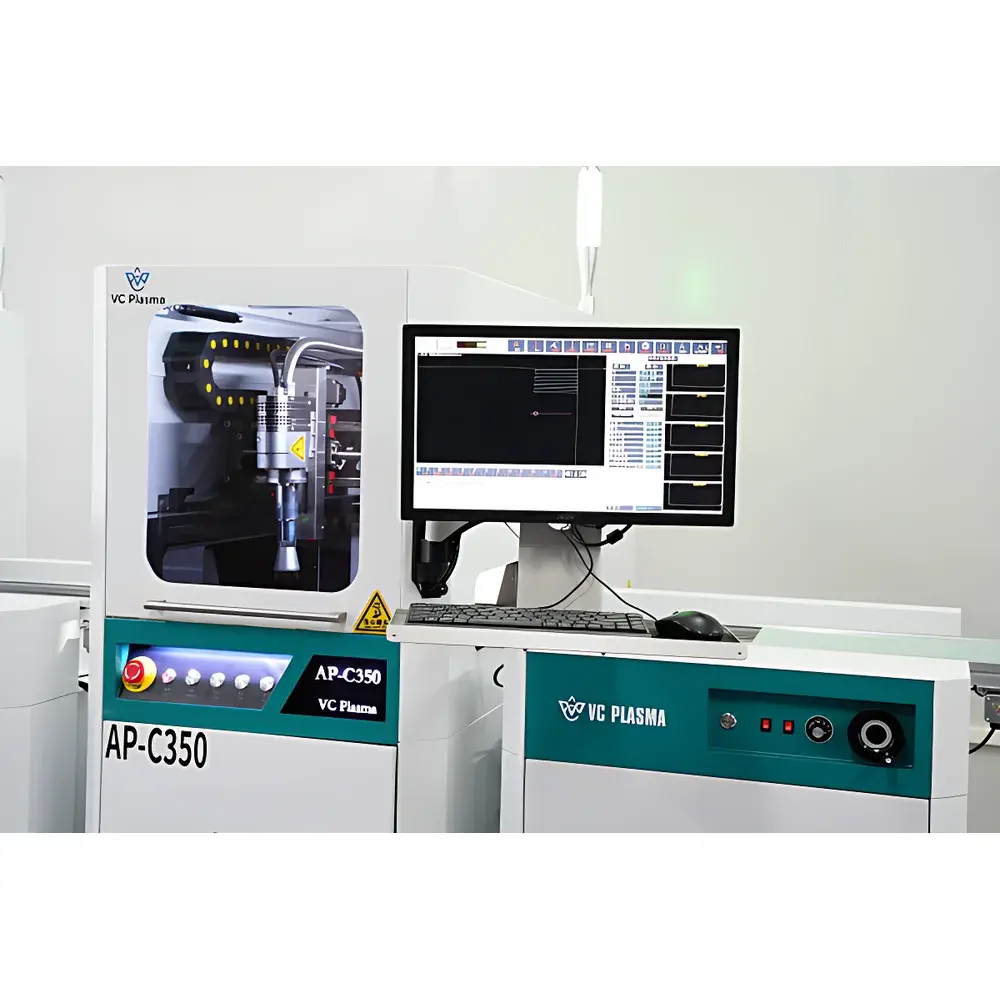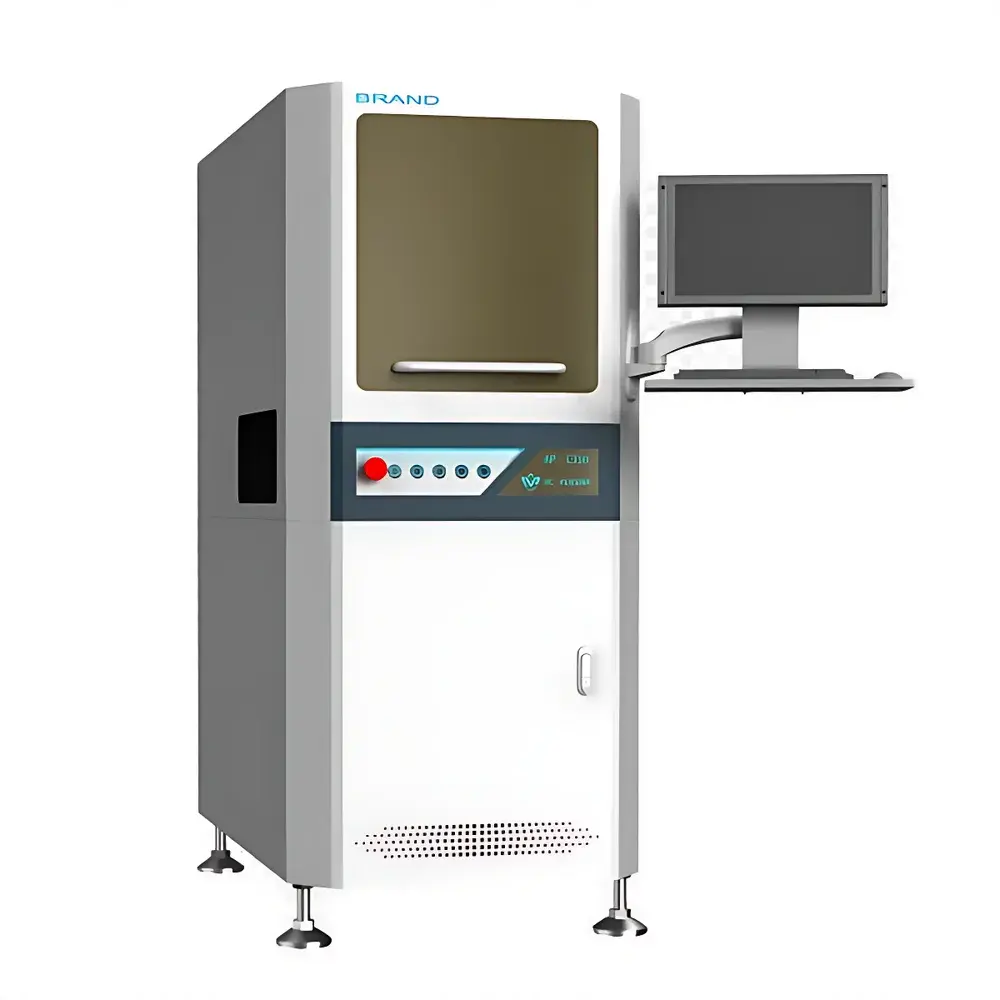
SVT Associates RHEED System with Real-Time Image Acquisition
| Brand | SVT Associates |
|---|---|
| Origin | USA |
| Model | RHEED |
| Electron Beam Energy | 10 keV |
| Filament Current | 3 A |
| Emission Current | 5 A |
| Spot Size | 1.0 mm at 17″ (432 mm) working distance |
| Maximum Bakeout Temperature | 230 °C |
| Flange Options | 2.75″ and 4″ CF |
| Detector | High-Resolution CCD or Scientific CMOS Camera |
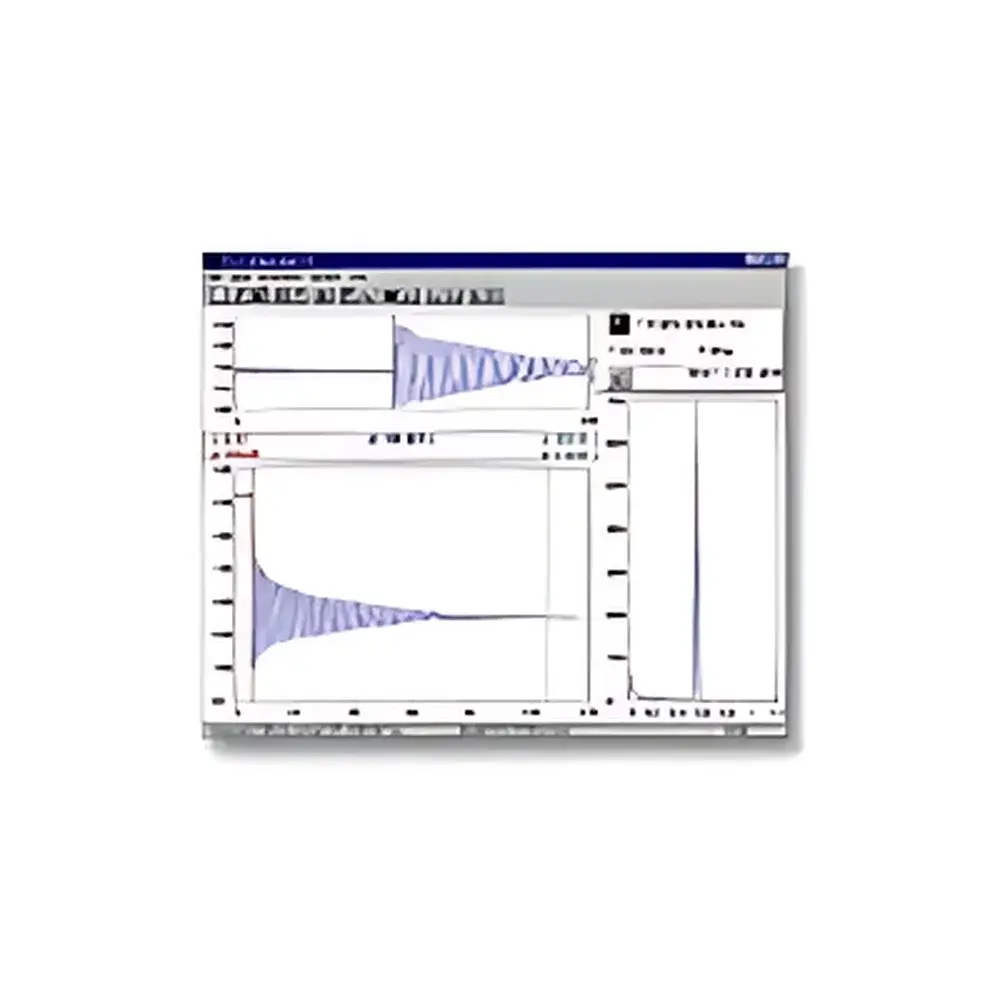
| Software | Real-Time RHEED Image Analysis Suite (2D/3D intensity profiling, oscillation tracking, growth rate calculation) |
| Magnetic Shielding | Integrated mu-metal housing for electron optics |
Overview
The SVT Associates RHEED System is a high-vacuum compatible, ultra-stable reflection high-energy electron diffraction instrument engineered for in situ monitoring of molecular beam epitaxy (MBE) and other ultra-high vacuum (UHV) thin-film growth processes. Operating at a fixed accelerating voltage of 10 keV, the system directs a collimated, monoenergetic electron beam onto the sample surface at a shallow grazing incidence angle (typically 0.5°–3°). Electrons undergo elastic scattering from the topmost atomic layers, producing a diffraction pattern that reflects the surface’s long-range order, reconstruction, and cleanliness. Unlike bulk-sensitive techniques such as XRD, RHEED is uniquely surface-sensitive (<1–3 atomic layers), enabling real-time feedback on surface morphology evolution, layer-by-layer growth mode, and interface abruptness—critical parameters for fabricating high-mobility heterostructures (e.g., GaAs/AlGaAs, InSb/GaSb), oxide interfaces (e.g., SrTiO₃/LaAlO₃), and 2D materials (e.g., graphene on SiC).
Key Features
- UHV-compatible 10 keV electron source with thermionic LaB₆ or W filament, rated for continuous operation at 3 A filament current and up to 5 A emission current
- Precision-aligned electron optics housed within integrated mu-metal magnetic shielding to suppress external field interference and ensure beam stability under varying lab conditions
- Optimized optical path delivering a 1.0 mm nominal probe size at standard 432 mm (17″) screen distance—enabling high signal-to-noise ratio diffraction patterns even on small-area substrates
- Robust mechanical design supporting bakeout temperatures up to 230 °C, fully compatible with standard MBE chamber conditioning protocols
- Modular flange integration: available with 2.75″ or 4″ ConFlat (CF) vacuum interfaces for direct mounting on MBE effusion cell shutters or load-lock ports
Sample Compatibility & Compliance
The RHEED system is compatible with all standard MBE substrate holders (e.g., 2″, 3″, and 4″ wafers; bulk crystals; cleaved van der Waals substrates) and operates continuously under base pressures ≤5×10⁻¹¹ Torr. Its optical configuration supports both conventional phosphor screens (for visual alignment and qualitative assessment) and high-dynamic-range scientific cameras (for quantitative intensity analysis). The system meets ASTM F1592–22 requirements for UHV instrumentation integrity and conforms to ISO 20000-1:2018 guidelines for calibration traceability of vacuum measurement subsystems. All electrical components comply with UL 61010-1 and IEC 61000-6-3 electromagnetic compatibility standards.
Software & Data Management
The optional RHEED Image Analysis Software provides synchronized acquisition, processing, and archival of time-resolved diffraction data. It supports hardware-triggered frame capture at up to 60 Hz (dependent on camera model), real-time background subtraction, azimuthal integration, and pixel-wise intensity time-series extraction along user-defined lines or regions of interest. Built-in algorithms detect and quantify RHEED intensity oscillations—including period, amplitude decay, and phase shift—to calculate instantaneous growth rates with ±0.05 monolayer precision. Data export is compliant with HDF5 and ASCII formats; audit trails, user authentication, and electronic signatures satisfy FDA 21 CFR Part 11 and GLP/GMP documentation requirements for regulated R&D environments.
Applications
- In situ monitoring of layer-by-layer growth kinetics during III–V, II–VI, and IV–IV semiconductor epitaxy
- Detection of surface reconstructions (e.g., (2×4), (4×2), c(4×4)) and their temperature-dependent transitions
- Quantification of growth interruption effects on interface sharpness and strain relaxation
- Real-time feedback control for automated shutter sequencing in multi-element MBE
- Surface diffusion studies via intensity decay analysis after growth cessation
- Characterization of 2D material nucleation (e.g., MoS₂, h-BN) on insulating or metallic templates
FAQ
What vacuum level is required for stable RHEED operation?
RHEED requires an operating pressure ≤1×10⁻⁹ Torr for reliable pattern formation; optimal performance is achieved below 5×10⁻¹⁰ Torr.
Can the system be retrofitted to an existing MBE chamber?
Yes—the 2.75″ and 4″ CF flange options enable direct integration without chamber modification, provided line-of-sight access to the substrate is maintained.
Is the RHEED source compatible with reactive gas environments (e.g., O₂, NH₃)?
No—the electron source must operate in UHV; reactive gases must be introduced downstream or via separate effusion cells to avoid filament oxidation.
Does the software support automated growth rate feedback to MBE controllers?
Yes—via TCP/IP or RS-232 interface, the analysis software can output real-time growth rate values to third-party PLCs or MBE control systems for closed-loop deposition control.
What maintenance is required for long-term beam stability?
Annual filament replacement and quarterly alignment verification using certified reference samples (e.g., Si(001)-2×1) are recommended per SVT’s maintenance protocol.