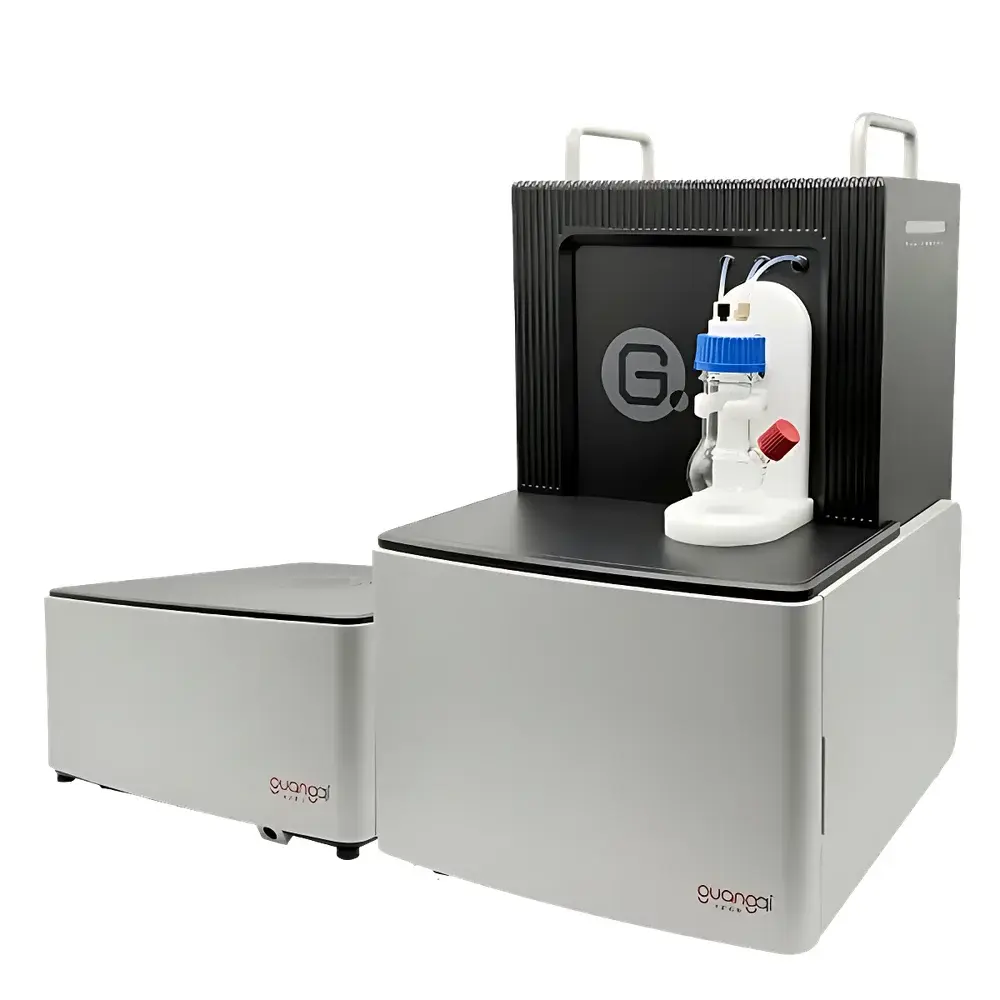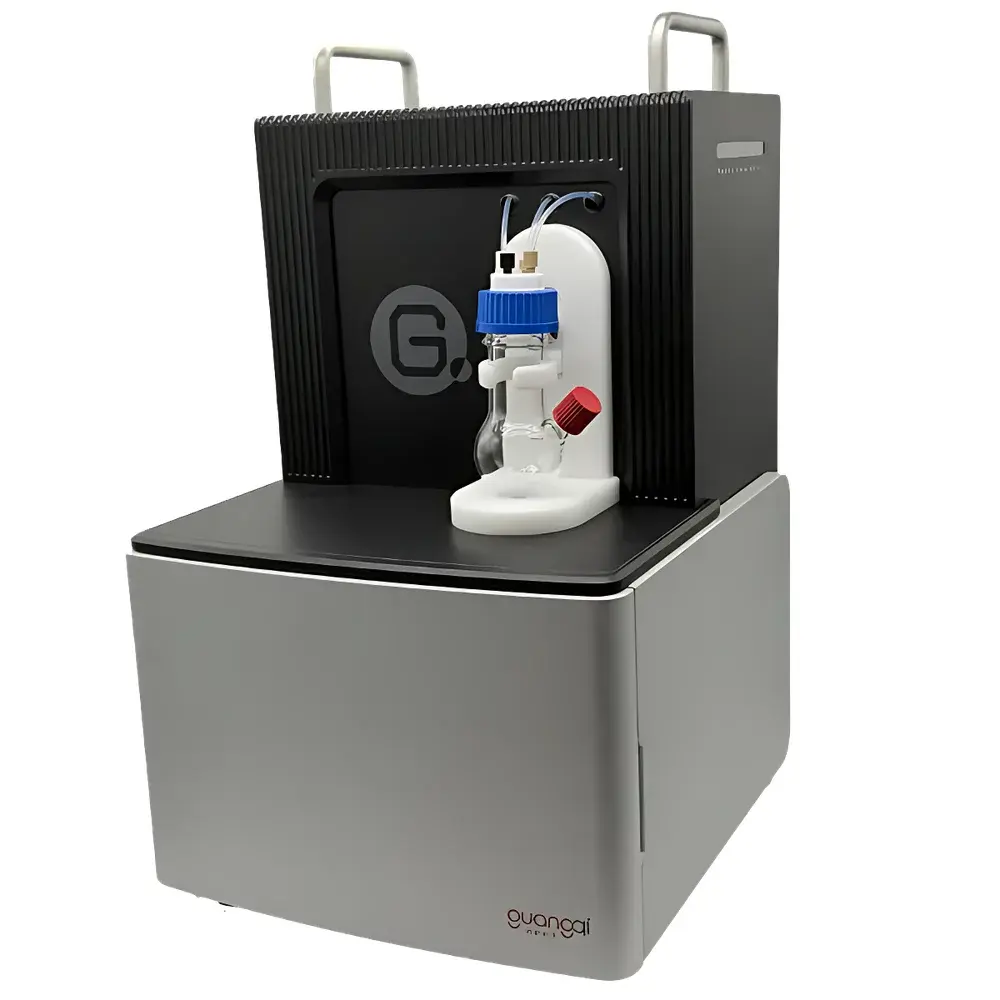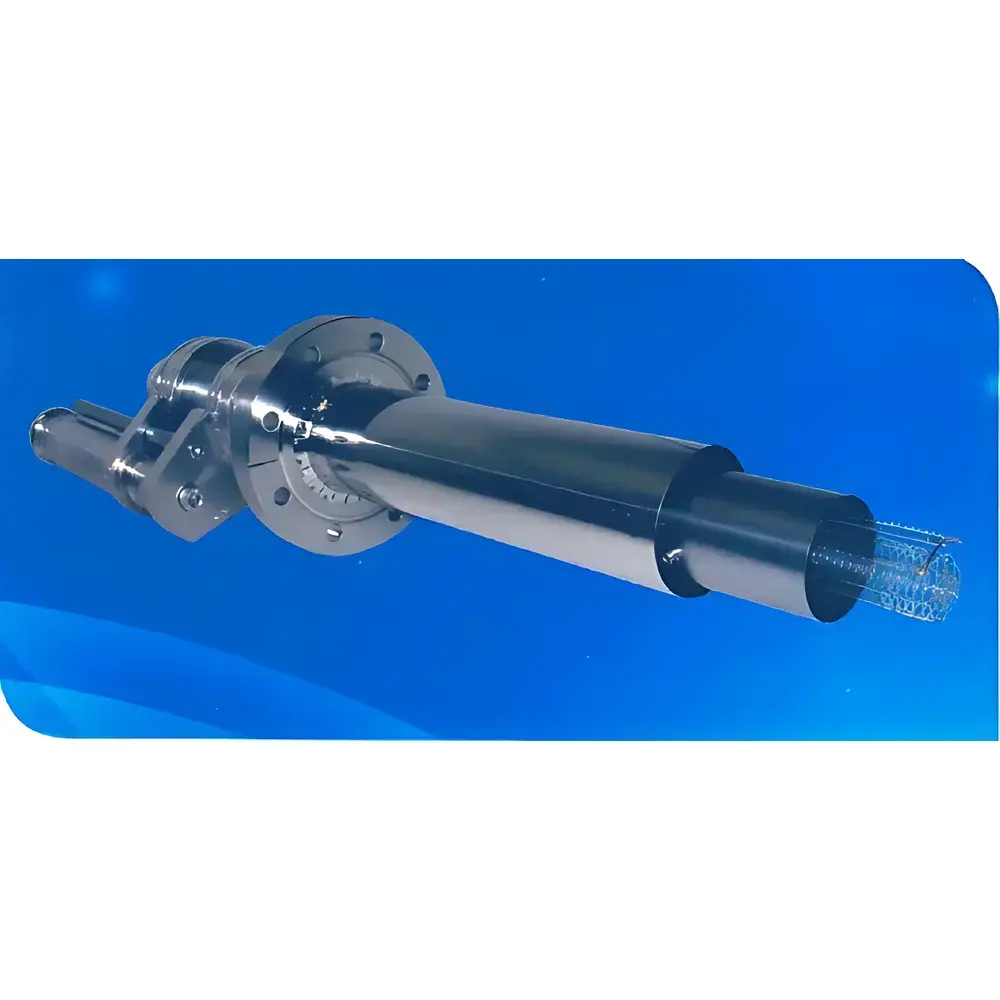
SVT Associates SVTA-LBFM Linear Beam Flux Monitor
| Brand | SVT Associates |
|---|---|
| Origin | USA |
| Model | SVTA-LBFM |
| Vacuum Compatibility | Ultra-High Vacuum (UHV) |
| Filament Positioning | Front-of-source mountable |
| Bakeout Temperature | 230 °C (max), 200 °C (standard operational) |
| Flange Options | 2.75″ CF or 4.5″ CF |
| Optional Isolation Valve | Yes |
| Beam Voltage | 10 kV |
| Filament Current | 3 A |
| Emission Current | 5 A |
| Optical Path Clearance | 4.5″ CF-compatible aperture |
| Beam Spot Diameter | 1.0 mm at 17″ (432 mm) working distance |
| Customizable Probe Length | Yes |
Overview
The SVT Associates SVTA-LBFM Linear Beam Flux Monitor is a precision UHV-compatible ionization gauge system engineered specifically for real-time, quantitative monitoring of atomic/molecular beam flux in molecular beam epitaxy (MBE) and other ultra-high vacuum thin-film growth environments. Unlike conventional pressure gauges, the SVTA-LBFM operates on the Bayard–Alpert (B-A) ionization principle—where electron emission from a heated filament ionizes incident neutral beam species, and the resulting ion current is linearly proportional to beam flux density under controlled conditions. This enables direct, in-situ calibration of effusion cell or electron-beam evaporator output without interrupting growth or compromising chamber integrity. Its front-mounted filament configuration allows placement proximal to the source aperture—minimizing beam divergence effects and maximizing signal-to-noise ratio for low-flux regimes typical in III–V and II–VI compound semiconductor epitaxy.
Key Features
- Bayard–Alpert ionization gauge architecture optimized for directional beam detection—not ambient pressure measurement
- UHV-rated construction with all-metal seals and ceramic insulators; compatible with base pressures ≤1×10⁻¹⁰ Torr
- High-temperature bakeout capability up to 230 °C, ensuring compatibility with standard MBE chamber conditioning protocols
- Modular probe design with fully customizable length—enabling precise positioning to avoid shadowing or thermal interference from shutters, flanges, or substrate holders
- Dual flange options: 2.75″ ConFlat (CF) for compact integration or 4.5″ CF for enhanced optical access and mechanical stability
- Optional integrated UHV isolation valve for in-situ gauge maintenance without venting the main growth chamber
- 10 kV beam voltage tolerance and 3 A filament current rating support stable operation with high-energy electron-beam evaporators and reactive metal sources
Sample Compatibility & Compliance
The SVTA-LBFM is designed for use with elemental (e.g., Ga, As, In, Sb, Si, Ge) and compound (e.g., GaAs, AlGaAs, InP, GaN) molecular beams generated by effusion cells, cracking cells, or e-beam sources. It exhibits consistent response across beam energies from 10 eV to >500 eV and is insensitive to background residual gases when operated with appropriate differential pumping or beam collimation. The device complies with ISO 3567:2019 (vacuum technology — terminology and definitions) and meets mechanical interface standards per ASTM F1372-22 (specifications for CF flanges). Its materials and surface finish conform to ASTM B845-20 (multi-layer metallic vacuum components), and its bakeout performance aligns with SEMI F28-1108 (UHV component qualification for semiconductor processing equipment).
Software & Data Management
The SVTA-LBFM outputs analog current signals (0–10 V or 4–20 mA) compatible with standard MBE control systems (e.g., Riber, Veeco, DCA Instruments). When integrated with SVT’s optional LBFM-DAQ module, it supports timestamped data logging at up to 100 Hz sampling, with full audit trail functionality compliant with FDA 21 CFR Part 11 requirements—including user authentication, electronic signatures, and immutable record retention. All calibration coefficients (including beam-species-dependent sensitivity factors) are stored in non-volatile memory and can be recalled per recipe, supporting GLP/GMP-aligned process documentation for qualified epitaxial wafer production.
Applications
- In-situ calibration of group III and group V flux ratios during GaAs, InP, and GaN heterostructure growth
- Real-time feedback control of shutter sequencing and source temperature ramping in multi-layer quantum well fabrication
- Quantitative assessment of beam uniformity and angular spread via axial translation scans
- Process validation for high-mobility two-dimensional electron gas (2DEG) structures requiring sub-monolayer flux accuracy
- Diagnostic tool for effusion cell clogging, crucible degradation, or beam divergence anomalies in production MBE tools
FAQ
Can the SVTA-LBFM measure reactive beams such as atomic nitrogen or oxygen?
Yes—when used with appropriate filament material selection (e.g., iridium or tungsten) and emission current optimization, it provides stable ion current response for reactive species. However, calibration against a known flux standard (e.g., RHEED oscillation period) is recommended for each species.
Is the 1.0 mm beam spot size fixed, or adjustable?
The specified 1.0 mm diameter is measured at a standardized 17″ (432 mm) working distance using the default 4.5″ CF optical path. Spot size scales linearly with distance; users may adjust collimation upstream to modify effective probe area.
Does the optional isolation valve include pneumatic actuation?
Standard valves are manual UHV gate valves; pneumatically actuated versions with position feedback are available as custom-order options under SVT part number LBFM-VAL-PNEU.
How often does the filament require replacement in continuous MBE operation?
Under typical Ga/As beam conditions (≤3 A emission, ≤200 °C bakeout cycles), filament lifetime exceeds 1,200 hours. Lifetime decreases significantly with reactive species exposure or excessive beam current; SVT recommends routine emission current trending as part of preventive maintenance.