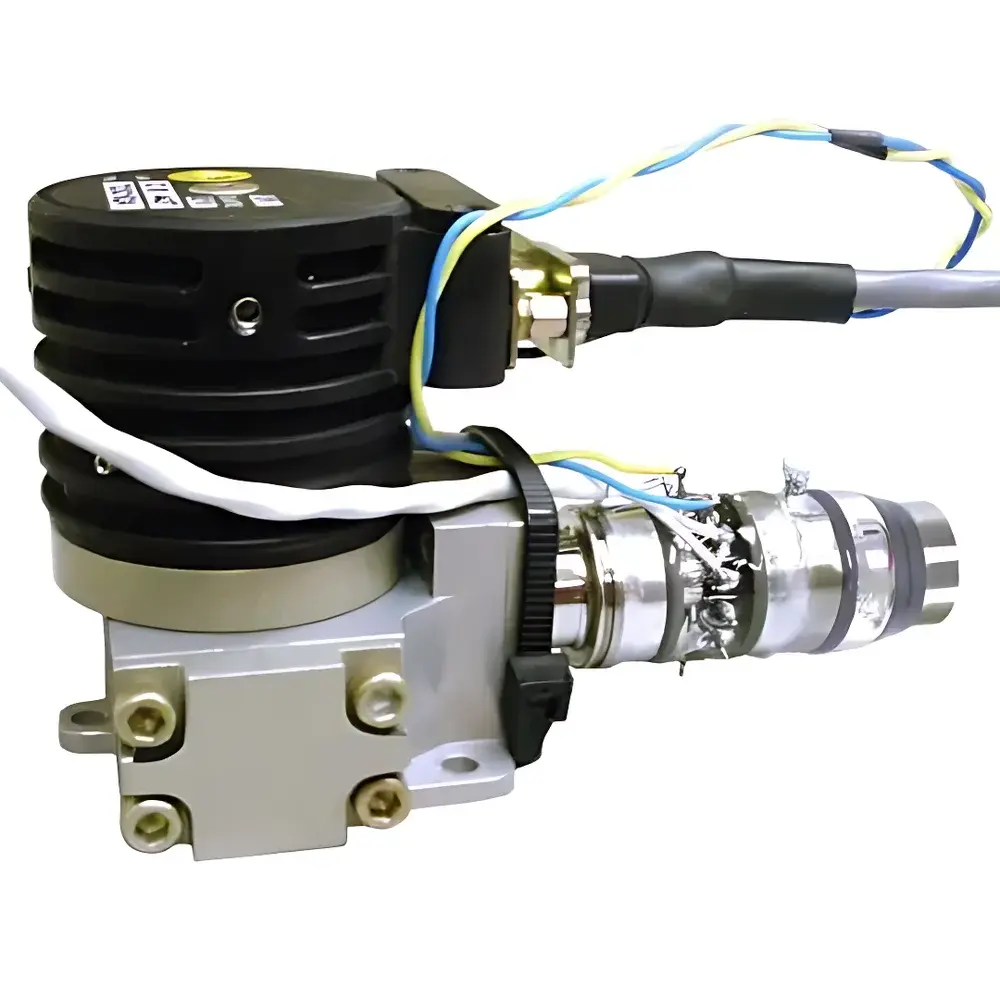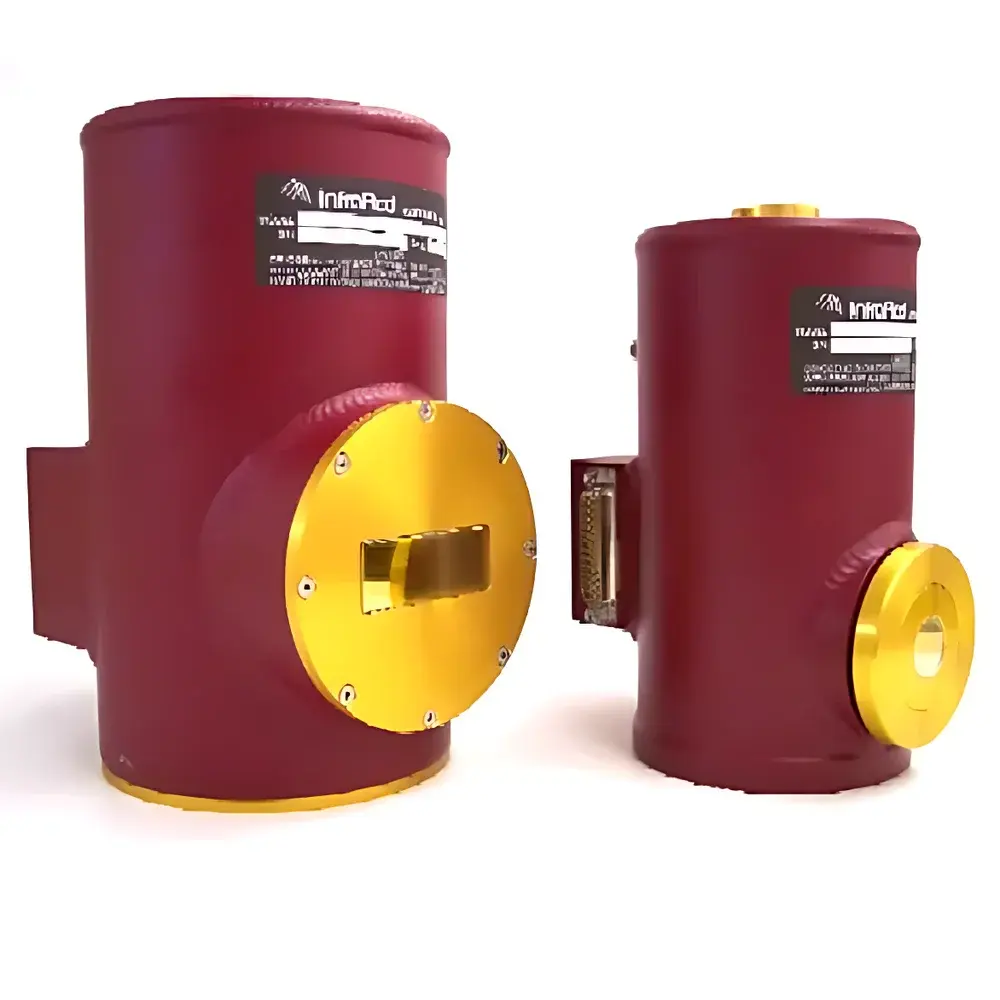
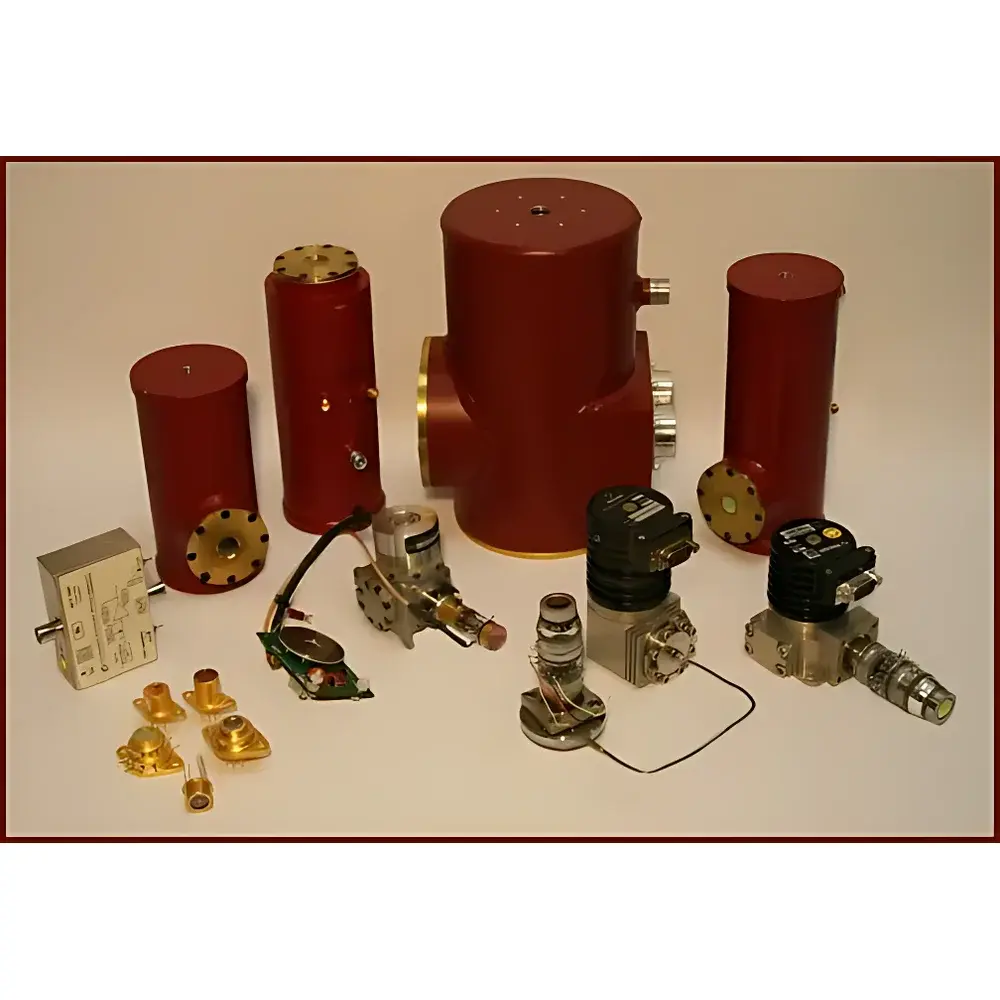
Infrared Associates HgCdTe Infrared Detector

| Brand | Infrared Associates |
|---|---|
| Origin | USA |
| Detector Type | Mercury Cadmium Telluride (HgCdTe) |
| Spectral Range | 1–25 µm |
| Cooling Options | Liquid Nitrogen (LN₂), Stirling Cryocooler, Thermoelectric (TE), or Uncooled Operation |
| Detector Formats | Single-Element, Quadrant Arrays, Dual-Band (InSb/HgCdTe), and Custom Linear/2D Arrays |
| Compliance | RoHS-compliant packaging |
| Interface | Standard BNC or SMA output |
Ask about pricing, availability and specifications.
Overview
The Infrared Associates HgCdTe Infrared Detector is a high-performance photonic sensor engineered for precision mid- to long-wave infrared (MWIR/LWIR) radiometric and spectroscopic applications. Based on mercury cadmium telluride (HgCdTe or MCT) semiconductor technology, this detector operates on the principle of intrinsic photoconductive or photovoltaic response—where incident photons with energy exceeding the material’s bandgap generate electron-hole pairs, resulting in a measurable photocurrent or voltage change. Its tunable cutoff wavelength (1–25 µm) is achieved by adjusting the Cd composition during crystal growth, enabling spectral optimization for specific analytical tasks such as gas-phase FTIR spectroscopy, thermal imaging calibration, laser power monitoring, and non-destructive evaluation. Unlike thermal detectors (e.g., microbolometers), HgCdTe devices deliver superior detectivity (D* > 1 × 10¹⁰ cm·√Hz/W at 77 K), fast temporal response (sub-microsecond rise times), and high quantum efficiency (>70% typical in MWIR), making them indispensable in research-grade and industrial metrology systems requiring high signal-to-noise ratio and spectral fidelity.
Key Features
- Wide spectral coverage: Configurable cutoff wavelengths from 1 µm to 25 µm via precise Hg₁₋ₓCdₓTe alloy composition control
- Multiple cooling architectures: Supports liquid nitrogen (77 K), Stirling-cycle cryocoolers (80–120 K), thermoelectric (200–240 K), and uncooled operation modes—enabling flexibility across lab, field, and embedded platforms
- Detector format versatility: Available as single-element units, quadrant arrays (for beam position sensing), dual-band InSb/HgCdTe hybrid structures, and custom linear or 2D arrays up to 64 × 64 elements
- Integrated electronics compatibility: Designed for seamless interfacing with low-noise transimpedance amplifiers, lock-in amplifiers, and digitizers; optional factory-mounted preamplifier modules reduce external noise pickup
- Robust mechanical packaging: Hermetically sealed TO-8, TO-66, or custom flange-mount housings with AR-coated ZnSe, Ge, or Si windows; rated for operation under shock (50 g) and vibration (5–500 Hz) per MIL-STD-810G
Sample Compatibility & Compliance
The HgCdTe detector is compatible with standard optical bench configurations—including Fourier transform infrared (FTIR) spectrometers, monochromators, laser heterodyne setups, and collimated beam paths using reflective or refractive optics. It interfaces directly with commercial data acquisition systems (e.g., National Instruments PXI, Keysight DAQ) and supports analog voltage/current output formats compliant with IEEE 1275-1995 instrumentation standards. All detectors are manufactured in accordance with ISO 9001-certified processes and meet RoHS Directive 2011/65/EU requirements. For regulated environments, the detector architecture supports integration into GLP/GMP workflows when paired with validated software platforms that provide audit-trail-enabled calibration logging, per FDA 21 CFR Part 11 guidelines.
Software & Data Management
While the HgCdTe detector itself is a hardware-only component, Infrared Associates provides comprehensive technical documentation—including spectral responsivity curves, NEP (noise-equivalent power) plots, and temperature-dependent dark current specifications—for integration into third-party analysis environments such as MATLAB, Python (NumPy/SciPy), LabVIEW, or commercial spectroscopy suites (e.g., Thermo Fisher OMNIC, Bruker OPUS). Detector characterization data is traceable to NIST-calibrated blackbody sources, and users may implement real-time compensation algorithms for temperature drift and nonlinearity using provided polynomial coefficients. Optional firmware-upgradable preamplifier modules support digital gain control and offset trimming via RS-232 or USB-C interfaces.
Applications
- FTIR spectroscopy of greenhouse gases (CO₂, CH₄, N₂O) and volatile organic compounds (VOCs) in environmental monitoring stations
- Laser power and energy measurement for CO₂ (10.6 µm), quantum cascade (4–12 µm), and optical parametric oscillator (OPO) sources
- Thermal reference source calibration in national metrology institutes and accredited calibration labs
- Beam profiling and centroid tracking in adaptive optics and free-space optical communication terminals
- Non-contact temperature mapping in semiconductor wafer inspection and aerospace component testing
- Dual-band detection for simultaneous MWIR/LWIR imaging in military target discrimination and hyperspectral remote sensing
FAQ
What is the typical operating temperature range for HgCdTe detectors?
Standard LN₂-cooled HgCdTe detectors operate at 77 K; Stirling-cooled variants maintain stable performance between 80–120 K; thermoelectric-cooled versions function optimally at 200–240 K; uncooled configurations are limited to short-wave IR (SWIR) applications below 2.5 µm.
Can this detector be used in vacuum environments?
Yes—most hermetically sealed packages (TO-8, TO-66, and flange-mount variants) are rated for operation under high vacuum (≤10⁻⁶ Torr) and bake-out temperatures up to 80 °C.
Is spectral calibration data provided with each unit?
Each detector is shipped with individual spectral responsivity data measured against an NIST-traceable blackbody source, along with dark current vs. bias voltage and temperature curves.
Do you offer OEM integration support?
Yes—Infrared Associates provides mechanical drawings, electrical interface schematics, thermal management guidelines, and application engineering consultation for volume OEM deployments.
How does HgCdTe compare to InSb in terms of detectivity and response time?
HgCdTe offers higher D* above 5 µm and broader spectral tunability; InSb excels in uniformity and stability within the 3–5 µm band. Both exhibit comparable sub-microsecond response times under optimized bias conditions.