
Biotex Universal Swivel Casters for Animal Behavior Research Systems
| Brand | KISSEI |
|---|---|
| Origin | Japan |
| Manufacturer Type | Authorized Distributor |
| Import Status | Imported |
| Model | Biotex |
| Price Range | USD 1,400 – 7,000 |
Overview
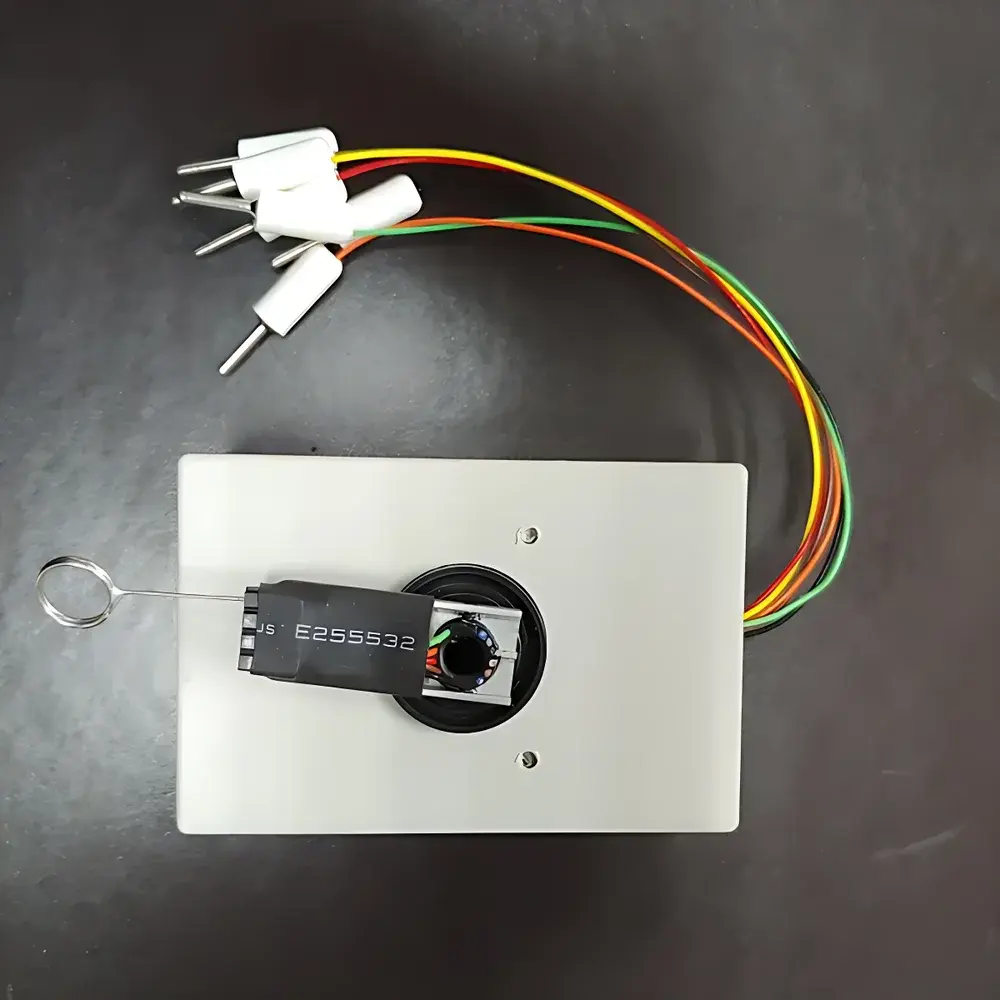
The Biotex Universal Swivel Casters are precision-engineered mechanical interface components designed specifically for integration into tethered animal behavior research platforms—particularly those supporting optogenetics, electrophysiology, and chronic neural recording experiments in freely moving rodents. Unlike generic caster assemblies, the Biotex system is engineered to maintain low-noise electrical continuity while enabling unrestricted 360° rotational freedom under dynamic load conditions. Its core function is to decouple animal locomotion from cable torsion, thereby eliminating mechanical drag, signal artifacts induced by twisting, and premature cable fatigue. The design adheres to fundamental principles of low-torque rotational mechanics and galvanic isolation integrity, ensuring compatibility with high-impedance neural signal acquisition systems (e.g., 6-channel headstage interfaces) operating within standard electrophysiological bandwidths (DC–10 kHz). Units are manufactured in Japan under strict quality control protocols aligned with JIS B 8501 (casters) and IEC 61000-4-6 (conducted immunity), making them suitable for GLP-compliant preclinical neuroscience laboratories.
Key Features
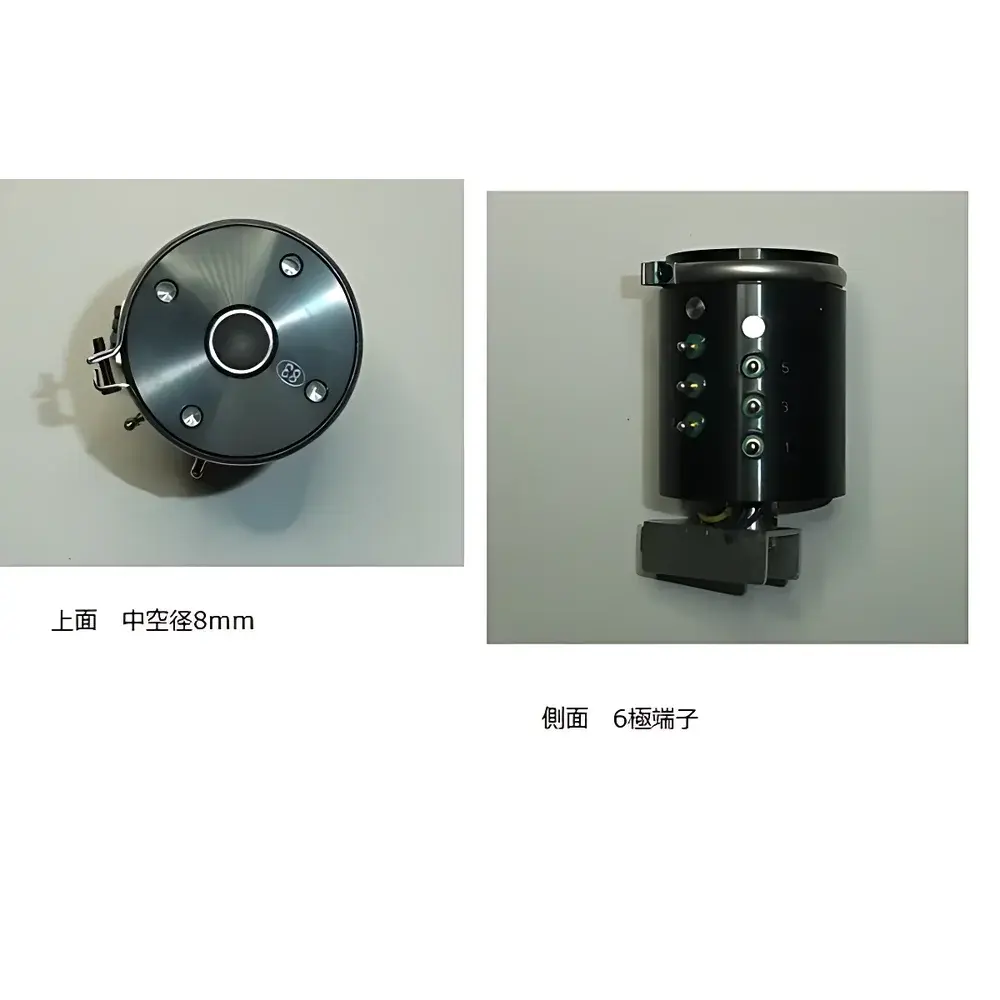
- Two standardized configurations: solid-body (standard) and through-hole (optogenetics-ready), with precision-aligned central bore for optical fiber or multi-core electrode cable passage
- Low-contact-resistance slip-ring interface: ≤300 mΩ per channel (measured at 1 kHz, 10 mA DC), enabling stable transmission of analog neural signals and TTL-triggered optogenetic pulses
- High-current capability: rated for continuous 800 mA per channel, supporting simultaneous operation of multiple LED drivers or microstimulators
- Robust electrical insulation: ≥100 MΩ at DC 60 V (IEC 60243-1 compliant), minimizing crosstalk and leakage current in multi-channel recordings
- Dielectric strength: withstands AC 60 V (1 min, no breakdown), verified per IEC 60664-1 for functional insulation in Class II medical-grade instrumentation environments
- Ultra-low rotational torque: ≤30 gf·cm (≤2.94 mN·m), reducing inertial loading on animal-mounted headstages and preserving natural gait kinematics
- MNB ball-bearing assembly (special specification): stainless steel races with PTFE-lubricated miniature balls, enabling smooth bidirectional rotation (clockwise & counterclockwise) without stick-slip hysteresis
- Extended service life: ≥2 × 10⁷ rotational cycles under nominal load (tested per JIS B 8501 Annex C), validated across thermal cycling from −20 °C to +60 °C
Sample Compatibility & Compliance
The Biotex casters are compatible with standard 3.5 mm and 5.0 mm diameter coaxial, twisted-pair, and custom multi-lumen cables used in rodent neurophysiology rigs (e.g., Tucker-Davis Technologies, Neuralynx, Intan Technologies, and Open Ephys-compatible harnesses). Through-hole variants accommodate Ø1.2–2.0 mm optical fibers (e.g., Doric Lens, Thorlabs) alongside conductive leads. All materials comply with RoHS Directive 2011/65/EU and REACH Regulation (EC) No. 1907/2006. Mechanical dimensions conform to ISO 2859-1 sampling plans for incoming inspection; electrical safety testing follows IEC 61010-1:2010 for laboratory equipment. Documentation includes traceable calibration reports for contact resistance and dielectric strength, supporting FDA 21 CFR Part 11–aligned audit trails in regulated behavioral pharmacology studies.
Software & Data Management
While the Biotex caster is a passive electromechanical component, its performance directly impacts data fidelity in closed-loop behavioral paradigms. When integrated with acquisition systems such as Spike2 (CED), NeuroPort (Blackrock Neurotech), or Bonsai visual programming environment, consistent rotational impedance minimizes baseline drift and phase distortion in spike-sorted LFP and unit activity. Optional firmware-configurable encoder modules (sold separately) can be mounted coaxially to provide real-time angular velocity metadata synchronized via TTL or NIDAQ digital input—enabling precise correlation between rotational displacement and behavioral event timestamps. All technical specifications are programmatically accessible via XML-based device descriptors for automated lab inventory and QC logging.
Applications
- Optogenetic stimulation during open-field exploration, Morris water maze, or operant conditioning assays
- Chronic multi-site electrophysiology in socially interacting mice or rats
- Head-fixed treadmill-based navigation studies requiring full azimuthal freedom
- Combined fNIRS–EEG motion artifact mitigation in awake-behaving primates (with custom adapter plates)
- Validation of wireless telemetry alternatives where wired signal integrity remains critical
FAQ
Are these casters compatible with third-party commutators or rotary joints?
Yes—Biotex units feature standardized M4 threaded mounting and 12 mm shaft diameter, enabling mechanical coupling with commercial rotary joints (e.g., Doric Lens RJP series, Adafruit STEPPERONIC) using OEM adapter kits.
Can the through-hole variant support both optical and electrical pathways simultaneously?
Yes—the central bore allows concurrent passage of single-mode optical fiber (125 µm cladding) and up to six 36 AWG insulated copper leads, with spatial separation maintained by internal PEEK insulating sleeves.
Is thermal derating required at ambient temperatures above 45 °C?
No—full electrical and mechanical specifications are guaranteed across the entire −20 °C to +60 °C operating range; accelerated life testing confirms no measurable degradation in contact resistance or bearing friction after 500 hr at 60 °C.
Do you provide installation validation protocols for GLP audits?
Yes—KISSEI provides a downloadable Installation Qualification (IQ) template aligned with ASTM E2500-13, including torque verification, continuity mapping, and environmental stress screening checklists.





