
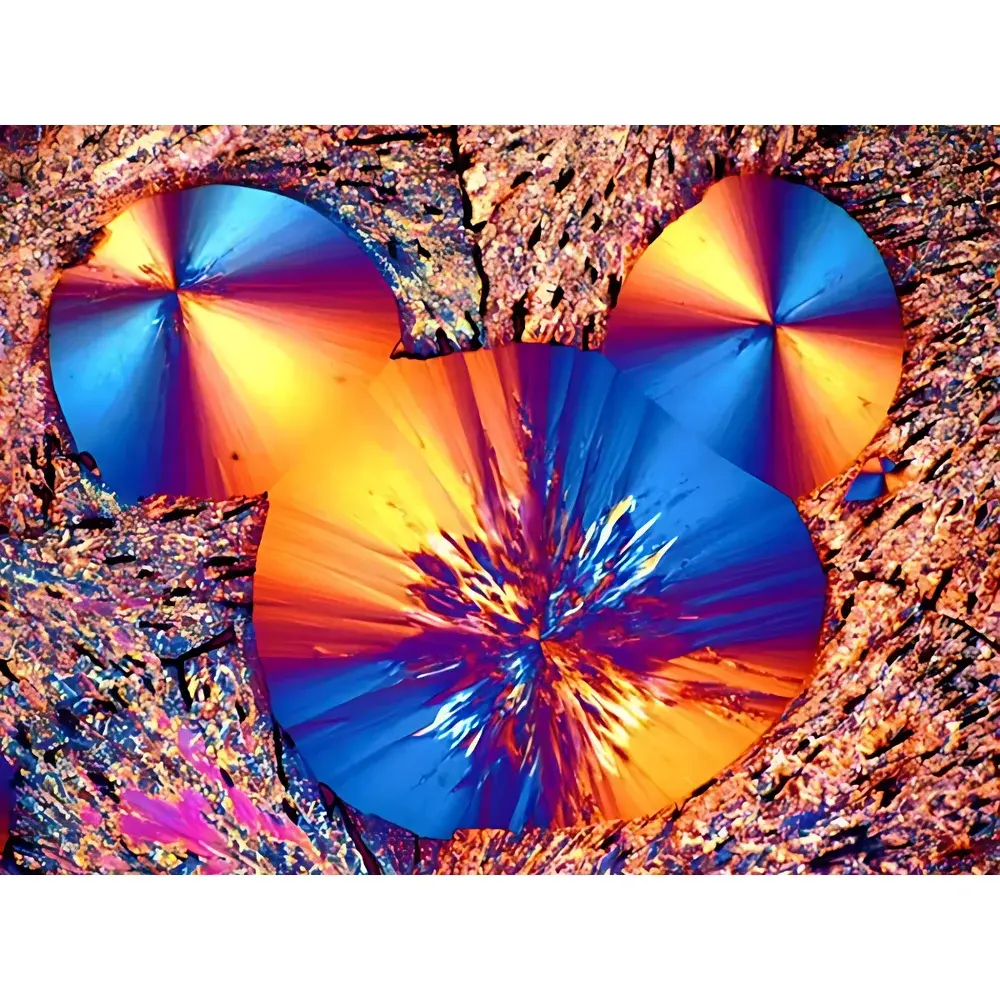
Leica DM4 P Universal Polarizing Microscope
| Brand | Leica |
|---|---|
| Origin | Germany |
| Model | DM4 P |
| Configuration | Semi-Automatic Upright Polarizing Microscope |
| Field of View | 25 mm |
| Objective Turret | Encoded 6-Position |
| Standard Objectives | 2.5×, 5×, 10×, 20×, 40×, 63×, 100× (oil) |
| Illumination Control | Motorized Intensity & Aperture Adjustment |
| Image Calibration | Automatic via Encoded Turret and Components |
| Compliance | CE, ISO 9001, IEC 61000-6-3 |
Overview
The Leica DM4 P Universal Polarizing Microscope is a semi-automatic upright polarized light microscope engineered for high-precision petrographic, mineralogical, metallurgical, and materials science applications. Built upon Leica’s proven optical architecture, it employs strain-free optics, precision-aligned polarizers and analyzers, and a fully rotatable 360° graduated stage to enable quantitative birefringence analysis, extinction angle measurement, and interference figure acquisition (conoscopic imaging). Its core design adheres to the principles of classical polarized light microscopy—relying on controlled linear polarization, quarter-wave plate insertion, and precise rotation of the specimen relative to the vibration directions of the polarizer and analyzer. The system is optimized for routine and advanced characterization of anisotropic materials including geological thin sections, polymer crystallites, liquid crystals, pharmaceutical polymorphs, and composite phase distributions.
Key Features
- Encoded 6-position objective turret: Automatically registers magnification, numerical aperture, and correction collar settings; ensures consistent image scaling, metadata embedding, and repeatable configuration recall across users and sessions.
- 25 mm field of view (FOV) optics: Delivers expansive overview imaging at low magnifications (e.g., 2.5×), enabling rapid identification of macrostructural features—such as flow banding, deformation twins, cooling textures, or grain boundary networks—without stage repositioning.
- Motorized illumination management: Integrates programmable halogen illumination intensity control and motorized field/condenser aperture adjustment, synchronized with objective selection to maintain optimal Köhler illumination conditions across all magnifications.
- Strain-free optical path: All lenses—including objectives, condensers, and Bertrand lens—are certified free of internal mechanical stress, minimizing spurious birefringence and ensuring fidelity in quantitative retardation measurements.
- Conoscopy-ready optical train: Includes built-in Bertrand lens, removable λ-plate and quartz wedge compensators, and centerable polarizer/analyzer assemblies—fully aligned for interference figure acquisition and retardation quantification per ASTM D4123 and ISO 10110-5 standards.
- Ergonomic modular platform: Compatible with Leica Application Suite (LAS X) software, motorized Z-drive, digital camera interfaces (including sCMOS and EMCCD), and optional heating/cooling stages for in-situ thermal analysis.
Sample Compatibility & Compliance
The DM4 P accommodates standard 26 mm × 76 mm petrographic slides, metallurgical mounts (up to 40 mm diameter), and custom sample holders with height clearance up to 85 mm. It supports both transmitted and reflected polarized light modes, making it suitable for transparent thin sections, opaque polished sections (with incident illumination kit), and semi-crystalline bulk specimens. The instrument conforms to EU Directive 2014/30/EU (EMC), 2014/35/EU (LVD), and carries CE marking. Manufacturing quality is governed by ISO 9001:2015, and optical components comply with ISO 10110-5 (specifications for polarizing optics) and DIN EN 60825-1 (laser safety, where applicable for optional laser alignment modules). Data integrity workflows support GLP/GMP environments when integrated with LAS X software configured for 21 CFR Part 11-compliant audit trails.
Software & Data Management
Controlled exclusively via Leica Application Suite (LAS X) v3.7 or later, the DM4 P enables full hardware synchronization—including turret position, illumination state, focus offset, and compensator insertion—within each acquired image metadata set. LAS X provides dedicated polarized light modules for automatic extinction angle mapping, retardation calibration using standard quartz wedges, and interference figure annotation with angular scale overlays. All measurement parameters are exportable in CSV and TIFF formats with embedded EXIF tags containing objective NA, magnification, analyzer angle, and exposure settings. For regulated laboratories, optional LAS X Security Pack enforces user role-based access, electronic signatures, and immutable audit logs meeting FDA 21 CFR Part 11 requirements.
Applications
- Quantitative petrography: Identification and modal analysis of mineral assemblages in igneous, metamorphic, and sedimentary thin sections.
- Metallurgical phase analysis: Detection of martensite, retained austenite, and intermetallic precipitates in alloy microstructures.
- Pharmaceutical solid-state characterization: Differentiation of polymorphs, hydrates, and amorphous content based on birefringence and extinction behavior.
- Advanced materials R&D: Evaluation of liquid crystal director alignment, polymer spherulite morphology, and stress-induced birefringence in composites and coatings.
- Forensic geology and archaeometry: Provenance determination of ceramics, obsidian, and sedimentary aggregates via optical mineralogy fingerprints.
- In-situ thermal studies: Real-time observation of phase transitions (e.g., nematic–isotropic shifts) using compatible heating stages and time-lapse LAS X acquisition.
FAQ
Does the DM4 P support both transmitted and reflected polarized light observation?
Yes—the base configuration includes a swing-out condenser for transmitted light; optional incident light illuminators (e.g., HI 100) enable reflected polarized light analysis of opaque samples.
Is the 2.5× objective corrected for polarized light work?
Yes—all standard objectives in the DM4 P lineup—including the 2.5× wide-field overview lens—are strain-free and fully corrected for use in polarized light, maintaining extinction uniformity across the entire 25 mm FOV.
Can the encoded turret interface with third-party image analysis software?
Metadata (magnification, NA, objective ID) is embedded in TIFF headers and accessible via standard DICOM/TIFF libraries; however, real-time hardware control requires LAS X or Leica’s SDK (LAS X SDK v2.0+).
What calibration standards are recommended for quantitative retardation measurements?
Leica recommends NIST-traceable quartz wedge standards (e.g., SPINDLE QW-100) and calibrated mica plates (λ = 530 nm, λ/4 = 132.5 nm) per ISO 10110-5 verification protocols.
Is service and technical support available outside Germany?
Yes—Leica Microsystems maintains authorized service centers in over 40 countries, with multilingual application specialists trained in polarized light methodology and regulatory documentation support.




