
Kissei Kinema Tracer 3D Animal Gait Analysis System
| Brand | KISSEI |
|---|---|
| Origin | Japan |
| Manufacturer Type | Authorized Distributor |
| Import Status | Imported |
| Model | Kinema Tracer 3D |
| Price Range | USD 14,000 – 70,000 |
Overview
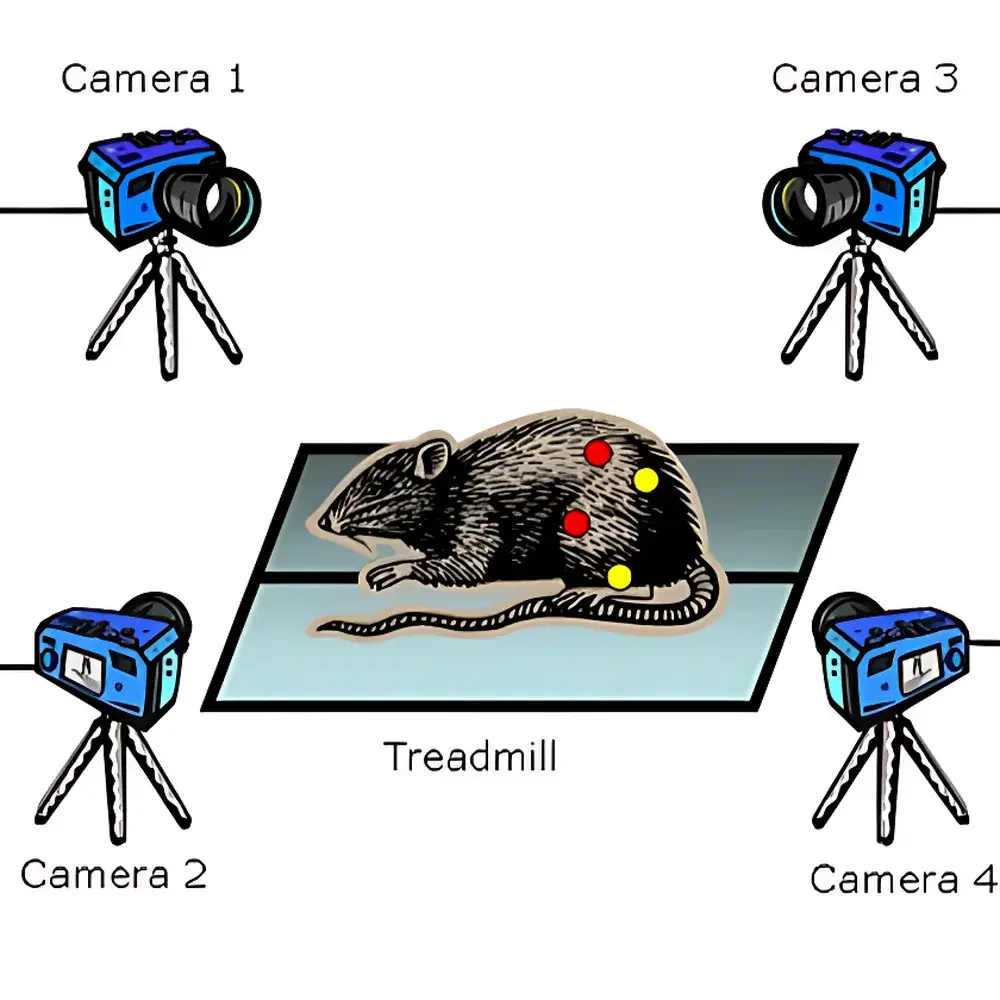
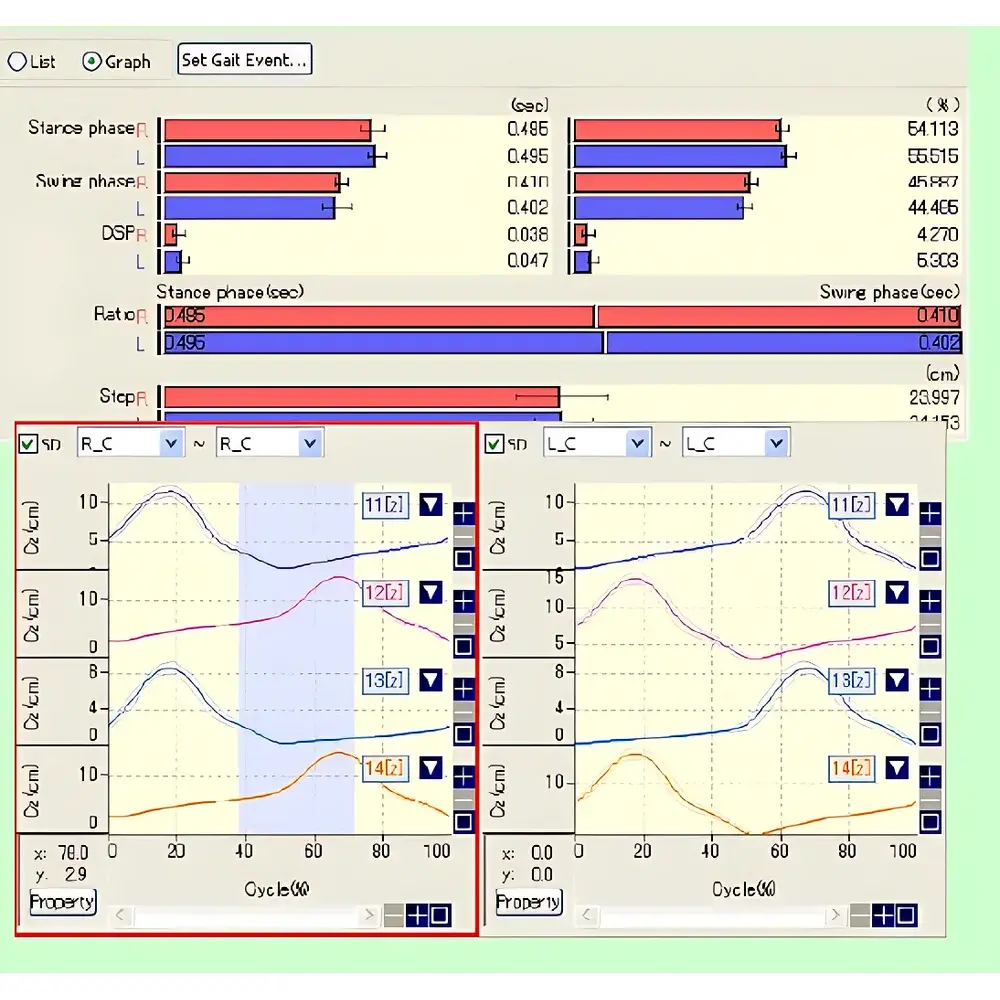
The Kissei Kinema Tracer 3D Animal Gait Analysis System is a high-resolution, marker-based motion capture platform engineered for quantitative biomechanical assessment of locomotion in preclinical rodent and small-mammal models. Operating on the principle of synchronized multi-camera infrared triangulation, the system reconstructs three-dimensional trajectories of anatomical landmarks (e.g., paw contact points, ankle, knee, hip joints) with sub-millimeter spatial precision and temporal resolution up to 120 Hz. Designed specifically for translational neuroscience and musculoskeletal research, it enables objective, repeatable measurement of dynamic gait parameters—including stance duration, swing phase timing, double support intervals, step cycle symmetry, interlimb coordination, and center-of-mass displacement—under controlled experimental conditions. Its non-invasive acquisition protocol supports longitudinal studies without behavioral stress artifacts, making it suitable for monitoring progressive functional recovery following spinal cord injury, Parkinsonian motor deficits, peripheral neuropathy, osteoarthritis, or post-surgical orthopedic interventions.
Key Features
- Modular infrared camera array: Configurable with 2–6 USB3.0 cameras (1.3 MP resolution, 1280 × 1024 pixels), auto-synchronized via hardware trigger for zero-latency frame alignment.
- Real-time 3D marker tracking: Supports both permanent (tattoo) and temporary (non-toxic pigment) skin markers; adaptive color segmentation algorithms enable robust identification across species (mice, rats, guinea pigs, rabbits) and gait speeds.
- Sub-20 µs shutter control: Adjustable exposure time (20 µs–7.5 ms) ensures motion blur suppression even during rapid limb acceleration phases.
- Integrated biomechanical computation engine: Direct derivation of joint kinematics (flexion/extension angles), angular velocities, and accelerations from raw marker coordinates using validated inverse kinematic models.
- Robust data reconstruction pipeline: Includes automatic outlier rejection, spline-based interpolation for missing frames, predictive position modeling, and bidirectional tracking validation to ensure trajectory continuity.
Sample Compatibility & Compliance
The system accommodates subjects ranging from 15 g mice to 5 kg rabbits, with adjustable treadmill or open-field acquisition arenas. All analysis workflows comply with GLP-aligned documentation standards: audit trails record user actions, parameter changes, and processing steps; raw video and marker coordinate datasets are stored in vendor-neutral HDF5 format for long-term archival and third-party validation. While not FDA-cleared as a diagnostic device, the Kinema Tracer 3D meets ISO/IEC 17025 requirements for measurement traceability in accredited research laboratories and supports adherence to NIH behavioral phenotyping guidelines and STAIR/ARRIVE reporting frameworks.
Software & Data Management
The proprietary Kinema Studio software provides a unified interface for acquisition, annotation, computation, visualization, and export. Core modules include synchronized multi-view playback with overlay rendering, Lissajou plots for joint coupling analysis, normalized gait cycle alignment (0–100% stride), and statistical summarization across cohorts (mean ± SD, coefficient of variation, interquartile range). Export options include CSV, MATLAB .mat, and C3D files compatible with OpenSim and SIMM biomechanical modeling environments. All analytical scripts are version-controlled and reproducible; metadata (camera calibration matrices, subject morphology, trial annotations) is embedded directly into output files to satisfy FAIR data principles.
Applications
- Neurodegenerative disease modeling: Quantification of bradykinesia, freezing episodes, and asymmetry in α-synuclein or MPTP-induced Parkinson’s models.
- Spinal cord injury rehabilitation: Temporal-spatial metrics to evaluate axonal regeneration efficacy and sensorimotor circuit reintegration.
- Peripheral nerve injury studies: Detection of subtle gait deviations preceding histological evidence of Wallerian degeneration.
- Orthopedic implant evaluation: Load distribution analysis via ground reaction force proxy metrics derived from center-of-pressure trajectories.
- Pharmacokinetic–pharmacodynamic correlation: Dose-dependent modulation of gait rhythm and interlimb synchrony following CNS-active compound administration.
FAQ
What camera synchronization method does Kinema Tracer 3D use?
Hardware-level genlock synchronization via TTL trigger signals ensures sub-millisecond inter-camera timing accuracy.
Can the system be used without skin markers?
No—Kinema Tracer 3D is a marker-based system requiring visible contrast points; markerless pose estimation is not supported.
Is calibration required before each session?
Yes; volumetric calibration using a certified checkerboard pattern must be performed prior to acquisition to maintain spatial fidelity.
Does the software support batch processing of multiple trials?
Yes—automated pipeline execution allows standardized parameter extraction across hundreds of gait cycles with configurable normalization thresholds.
Are raw video files stored alongside coordinate data?
Yes; synchronized AVI/MXF video streams and calibrated 3D marker coordinates are archived together with full metadata for audit readiness.




