
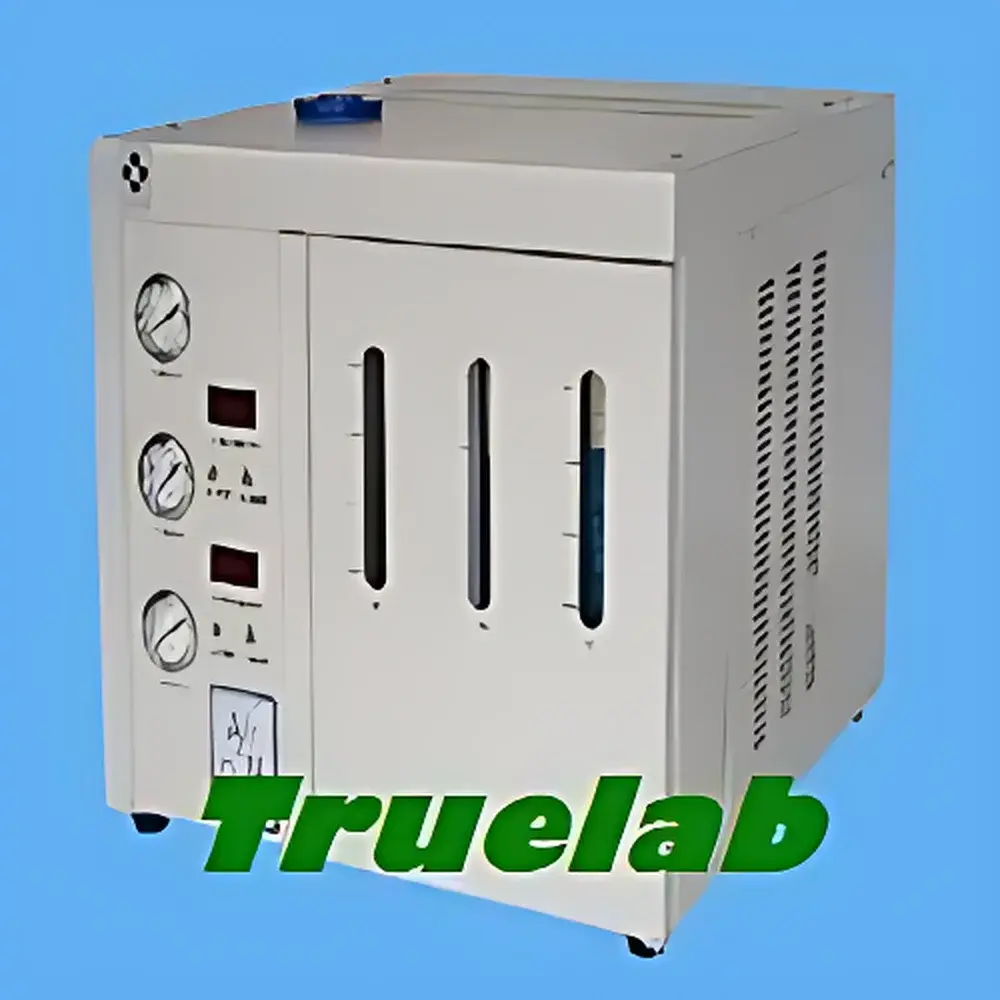
XiYou XYT-500G Integrated Nitrogen-Hydrogen-Air Gas Generator
| Brand | XiYou |
|---|---|
| Origin | Shanghai, China |
| Model | XYT-500G with Imported Air Compressor |
| Nitrogen Purity | O₂ < 3 ppm, Dew Point ≤ −70 °C |
| Hydrogen Purity | 99.999% |
| Nitrogen Flow Rate | 0–500 mL/min |
| Hydrogen Flow Rate | 0–500 mL/min |
| Air Flow Rate | 0–5000 mL/min |
| Nitrogen Output Pressure | 0–0.5 MPa (factory-set at 0.4 MPa) |
| Hydrogen Output Pressure | 0–0.4 MPa (factory-set at 0.3 MPa) |
| Air Output Pressure | 0–0.5 MPa (factory-set at 0.4 MPa) |
| Power Consumption | 450 W |
| Dimensions | 460 × 440 × 370 mm |
| Net Weight | < 42 kg |
| Construction | Integrated stainless steel chassis with built-in electrolytic hydrogen generator, membrane-based nitrogen generator, and two-stage pressure-regulated, three-stage filtered air system |
Overview
The XiYou XYT-500G Integrated Nitrogen-Hydrogen-Air Gas Generator is an engineered solution for laboratories requiring concurrent, on-demand supply of high-purity carrier, fuel, and combustion-support gases for analytical instrumentation. Designed specifically to serve gas chromatography (GC), gas chromatography–mass spectrometry (GC-MS), and flame ionization detection (FID) systems, this tri-gas generator operates via three independent yet co-located gas generation modules: a potassium hydroxide (KOH)-based alkaline electrolytic cell for hydrogen production; a selective polymer membrane separation system for nitrogen generation from compressed air; and a multi-stage compressed air delivery subsystem with integrated drying and filtration. Unlike conventional cylinder-based supply, the XYT-500G eliminates logistical overhead, pressure variability, and safety risks associated with high-pressure gas storage—delivering consistent, traceable, and continuously monitored gas streams compliant with ASTM D6304 and ISO 8573-1:2010 Class 2 purity requirements for instrumental analysis.
Key Features
- Integrated triple-gas architecture housed in a single compact footprint (460 × 440 × 370 mm), minimizing laboratory spatial demand while maintaining full functional independence between nitrogen, hydrogen, and air output circuits.
- Hydrogen generation via sealed, cylindrical alkaline electrolyzer with automatic anti-alkaline-backflow control and overpressure cut-off—certified to operate continuously at ≤0.4 MPa without membrane degradation or electrolyte migration.
- Nitrogen module employs proprietary hollow-fiber membrane technology, achieving O₂ < 3 ppm residual oxygen and dew point ≤ −70 °C—validated per ISO 8573-3 for moisture content and suitable for electron capture detector (ECD) and thermal conductivity detector (TCD) applications.
- Air subsystem features an imported oil-free scroll compressor, dual-stage precision pressure regulation, and triple-stage filtration (coalescing + activated carbon + ultra-low particulate), delivering contaminant-free air at up to 5000 mL/min.
- All gas lines incorporate stainless steel 316 tubing and VCR fittings; internal pressure relief valves and real-time digital pressure monitoring ensure compliance with IEC 61000-6-2 electromagnetic compatibility and EN 61010-1 safety standards.
Sample Compatibility & Compliance
The XYT-500G is validated for continuous operation with GC systems requiring stable, low-particulate, low-moisture, and low-hydrocarbon gas inputs—including Agilent 8890/8860, Thermo Scientific TRACE 1300, Shimadzu GC-2030, and PerkinElmer Clarus series. Its hydrogen output meets USP specifications for GC fuel gas, while nitrogen purity satisfies ASTM D6299 requirements for inert carrier gas in trace-level volatile organic compound (VOC) analysis. The unit supports GLP/GMP environments through configurable audit trails, password-protected parameter settings, and optional RS-232/RS-485 serial interface for integration into LIMS-controlled workflows. No external venting or dedicated exhaust is required, as all generated gases are fully contained within ASME BPVC Section VIII-compliant internal stainless steel reservoirs.
Software & Data Management
The XYT-500G includes an embedded microcontroller with a 3.5-inch TFT LCD interface supporting real-time visualization of flow rates, outlet pressures, system temperature, and operational status codes. While the base model operates in standalone mode, optional firmware upgrade enables Modbus RTU protocol support for remote monitoring via SCADA or laboratory building management systems (BMS). All critical events—including pressure deviations exceeding ±5% setpoint, electrolyte level warnings, or filter saturation alerts—are logged with timestamps and retained for ≥30 days. Data export is available via USB flash drive in CSV format, facilitating retrospective review during FDA 21 CFR Part 11–aligned validation protocols. No cloud connectivity or proprietary software installation is required for routine operation.
Applications
- Carrier gas supply for capillary GC columns operating at ≤50 psi backpressure.
- Fuel gas for FID, NPD, and FPD detectors requiring stoichiometric H₂:air ratios.
- Make-up gas for mass spectrometer ion sources and collision cells.
- Zero-air generation for ambient air quality calibrators and ozone analyzers.
- Blank gas for purge-and-trap and dynamic headspace sampling systems.
FAQ
What maintenance intervals are recommended for the XYT-500G?
Electrolyte replenishment every 6 months (using certified 30% KOH solution); nitrogen membrane replacement every 24 months; air filter cartridges every 12 months under continuous use. Maintenance logs are auto-recorded in device memory.
Can the XYT-500G be used in explosion-hazardous areas?
No. The unit is rated for general laboratory use only (IEC 60079-0, non-certified for Zone 1/2). Hydrogen generation occurs within sealed, pressure-relieved chambers but does not meet ATEX or IECEx certification requirements.
Is external cooling required?
No. The integrated thermally optimized heat sink and forced-air convection system maintain electrolyzer temperature within 25–35 °C across ambient conditions of 15–35 °C and ≤80% RH.
How is gas purity verified during operation?
Real-time purity assurance is achieved via redundant electrochemical O₂ sensors (for nitrogen) and thermal conductivity detectors (for hydrogen), with deviation alarms triggered at >1.5× specification limits.
Does the unit support variable flow programming?
Yes. Each gas channel supports programmable ramp profiles (0–100% full scale) via front-panel keypad or optional analog 0–10 VDC input, enabling synchronization with instrument method sequences.



