
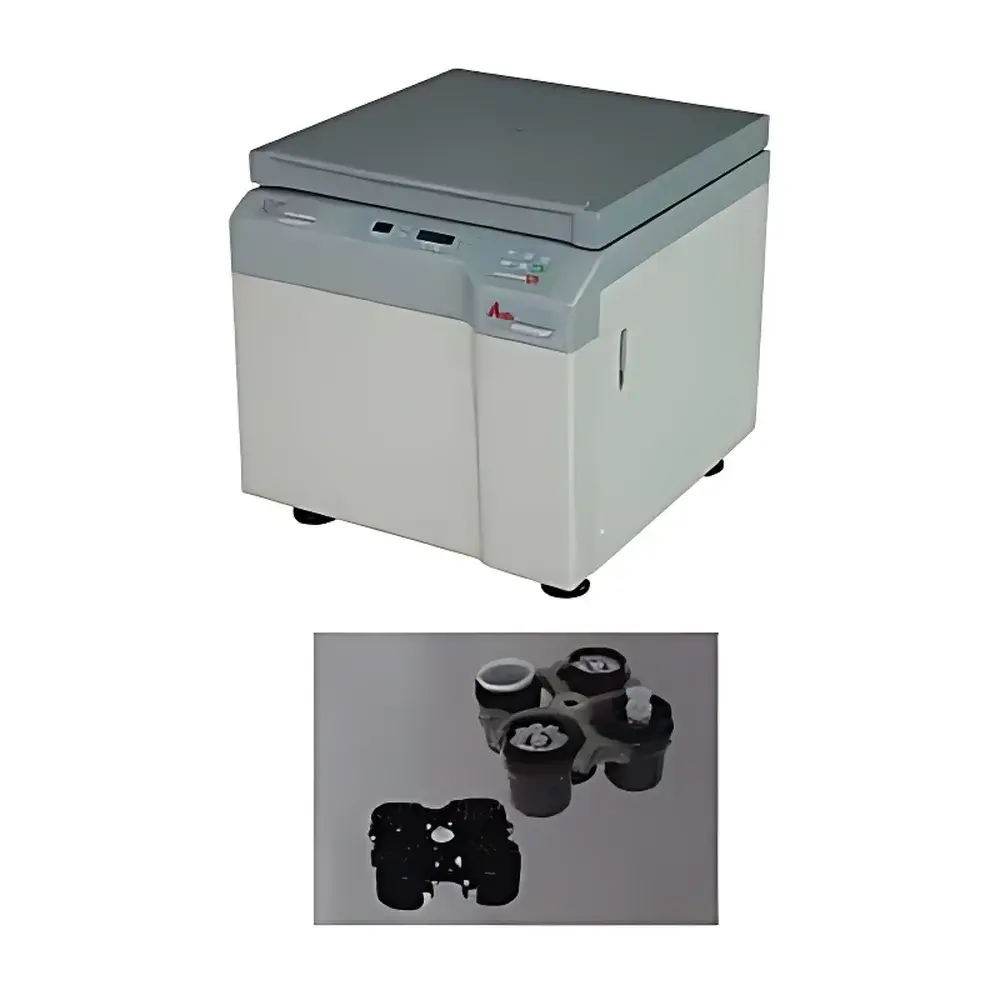
AnTing FeiGe TDL-5-A Benchtop Low-Speed High-Capacity Centrifuge
| Brand | AnTing FeiGe |
|---|---|
| Origin | Shanghai, China |
| Instrument Type | Benchtop Centrifuge |
| Speed Range | 0–5000 rpm |
| Max RCF | 5000 ×g |
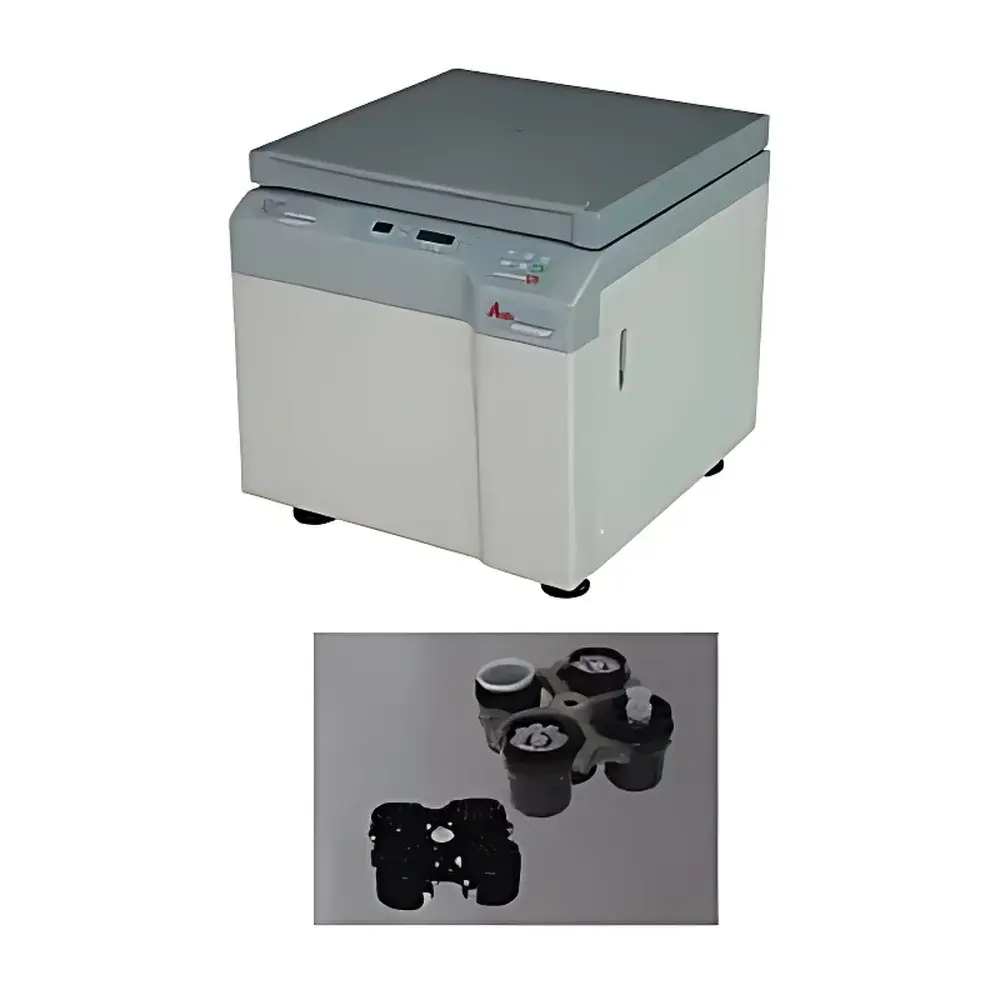
| Max Capacity | 4 × 250 mL (horizontal rotor) |
| Timer Range | 0–99 min |
| Temperature Rise During Run | <5°C |
| Power Supply | 220 V, 50 Hz |
| Speed Accuracy | ±20 rpm |
| Rotor Material | High-Strength Alloy |
| Chamber Material | ASTM A240 Grade 316 Stainless Steel |
| Noise Level | Optimized via Nanocomposite Acoustic Damping |
| Control Interface | LCD Display (simultaneous readout of time, speed, RCF) |
| Drive System | Microprocessor-Controlled Frequency Converter Motor |
| Safety Features | Automatic Electronic Lid Lock, Patented Spring-Loaded Hinge, Self-Adjusting Vibration Dampers |
| Enclosure | Full-Metal Housing with Optimized Airflow Cooling Path |
| Compliance | Designed to meet general laboratory safety and electromagnetic compatibility requirements per GB/T 14710 and IEC 61010-1 |
Overview
The AnTing FeiGe TDL-5-A is a benchtop low-speed high-capacity centrifuge engineered for routine separation tasks in academic laboratories, quality control units, and industrial R&D settings. It operates on the principle of sedimentation under controlled gravitational force—generating up to 5000 ×g at its maximum rotational speed of 5000 rpm—to separate suspended particles, cells, organelles, or precipitated biomolecules based on density, size, and shape. Unlike ultracentrifuges used for subcellular fractionation or macromolecular analysis, the TDL-5-A is optimized for robust, reproducible processing of large-volume samples (up to 1 L total capacity per run) without requiring refrigeration. Its mechanical architecture prioritizes operational stability, acoustic attenuation, and long-term reliability—making it suitable for daily use in environments where sample integrity, operator safety, and equipment uptime are critical.
Key Features
- Microprocessor-controlled frequency converter motor ensures precise speed regulation (±20 rpm accuracy) and smooth acceleration/deceleration profiles, minimizing sample disturbance and rotor stress.
- Patented electronic lid interlock system automatically engages during operation, preventing accidental opening while maintaining compliance with IEC 61010-1 mechanical safety standards.
- Horizontally configured rotor chamber accommodates standard volume configurations: 4 × 250 mL bottles, 8 × 50 mL tubes, or 36 × 10 mL tubes—enabling flexibility across sample throughput requirements.
- Chamber constructed from ASTM A240 Grade 316 stainless steel resists corrosion from common biological buffers, saline solutions, and mild organic solvents, supporting GLP-aligned cleaning and maintenance protocols.
- Nanocomposite acoustic damping material integrated into housing walls reduces operational noise to levels compatible with open-lab environments—typically below 65 dB(A) at 1 m distance.
- Self-compensating vibration dampers dynamically adjust to minor imbalances during spin-up, ensuring stable operation even with partially loaded rotors.
- LCD interface displays real-time parameters including elapsed time, set speed (rpm), calculated RCF (×g), and remaining timer—supporting traceable documentation in regulated workflows.
Sample Compatibility & Compliance
The TDL-5-A accepts standard polypropylene, polycarbonate, and glass centrifuge vessels conforming to ISO 8573-1 (clean air classification) and ASTM D4169 (packaging performance testing) dimensional tolerances. It is routinely deployed in applications involving whole blood fractionation, cell pellet harvesting, polymer precipitation, and environmental slurry clarification. While not certified for biosafety level 3 (BSL-3) containment or ISO Class 5 cleanroom integration, its sealed rotor chamber and non-porous 316SS interior support decontamination using 70% ethanol, 0.5% sodium hypochlorite, or validated autoclave-compatible cleaning agents. The device meets general-purpose electrical safety requirements outlined in IEC 61010-1 and environmental operating specifications per GB/T 14710 (Chinese national standard for environmental adaptability of lab instruments).
Software & Data Management
The TDL-5-A operates as a standalone instrument with no external software dependency. All operational parameters—including speed, time, and RCF—are stored in non-volatile memory and recalled upon power-up. The LCD interface supports manual parameter entry and immediate execution; however, it does not feature USB export, network connectivity, or audit trail functionality. For laboratories requiring electronic recordkeeping under FDA 21 CFR Part 11 or EU Annex 11, users must integrate external logging tools (e.g., time-stamped video capture, dedicated data acquisition systems, or LIMS-linked manual entry). Routine calibration verification—per ISO/IEC 17025 guidelines—can be performed using NIST-traceable tachometers and calibrated reference weights.
Applications
- Preparative isolation of mammalian and microbial cells from culture supernatants or fermentation broths.
- Clarification of crude protein extracts prior to chromatographic purification or electrophoretic analysis.
- Separation of lipid phases in food emulsion studies or biodiesel feedstock processing.
- Sedimentation of particulate matter in wastewater effluent monitoring or soil suspension analysis.
- Routine pelleting of erythrocytes, leukocytes, or platelets in clinical hematology labs.
- High-volume buffer exchange and desalting of synthetic polymers or nanomaterial dispersions.
FAQ
What rotor types are compatible with the TDL-5-A?
The TDL-5-A is configured exclusively for horizontal (swinging-bucket) rotors. Standard configurations include 4-position 250 mL bottle carriers, 8-position 50 mL tube holders, and 36-position 10 mL microtube adapters—all manufactured from corrosion-resistant alloy and balanced to ISO 15530-3 specifications.
Is the TDL-5-A suitable for temperature-sensitive samples?
No active refrigeration system is integrated. However, thermal rise during operation remains limited to <5°C above ambient due to optimized airflow design and low-friction bearing assembly—making it appropriate for short-duration runs with thermolabile proteins or enzymes when ambient lab temperature is stabilized.
Can this centrifuge be used in GMP-regulated environments?
While the unit supports basic operational traceability through its digital display and timer function, it lacks electronic audit trails, user access controls, or data export capabilities required for full 21 CFR Part 11 compliance. Validation must be performed per site-specific IQ/OQ protocols prior to deployment in GMP manufacturing or QC labs.
What maintenance intervals are recommended?
Rotor inspection and dynamic balancing verification should occur every 500 operating hours or annually—whichever comes first. Lubrication of drive shaft bearings is not user-serviceable; scheduled servicing by authorized technicians is advised every 2,000 hours or biennially.
Does the TDL-5-A support custom rotor fabrication?
AnTing FeiGe does not offer OEM rotor development services. Third-party rotors are not supported due to mechanical interface constraints and safety certification limitations. Only factory-supplied, serial-numbered rotors may be operated on this platform.



