
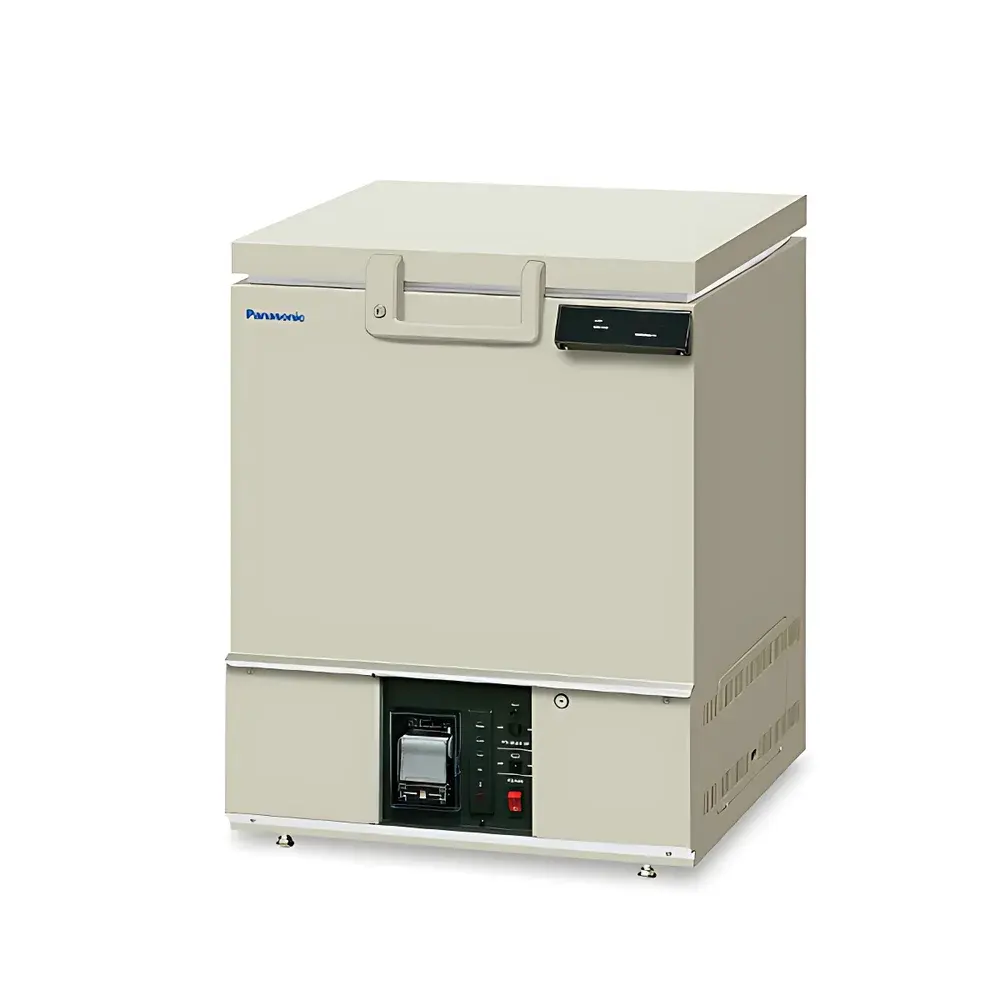
Panasonic MDF-193 Ultra-Low Temperature Freezer (–86 °C)
| Brand | Panasonic |
|---|---|
| Origin | Japan |
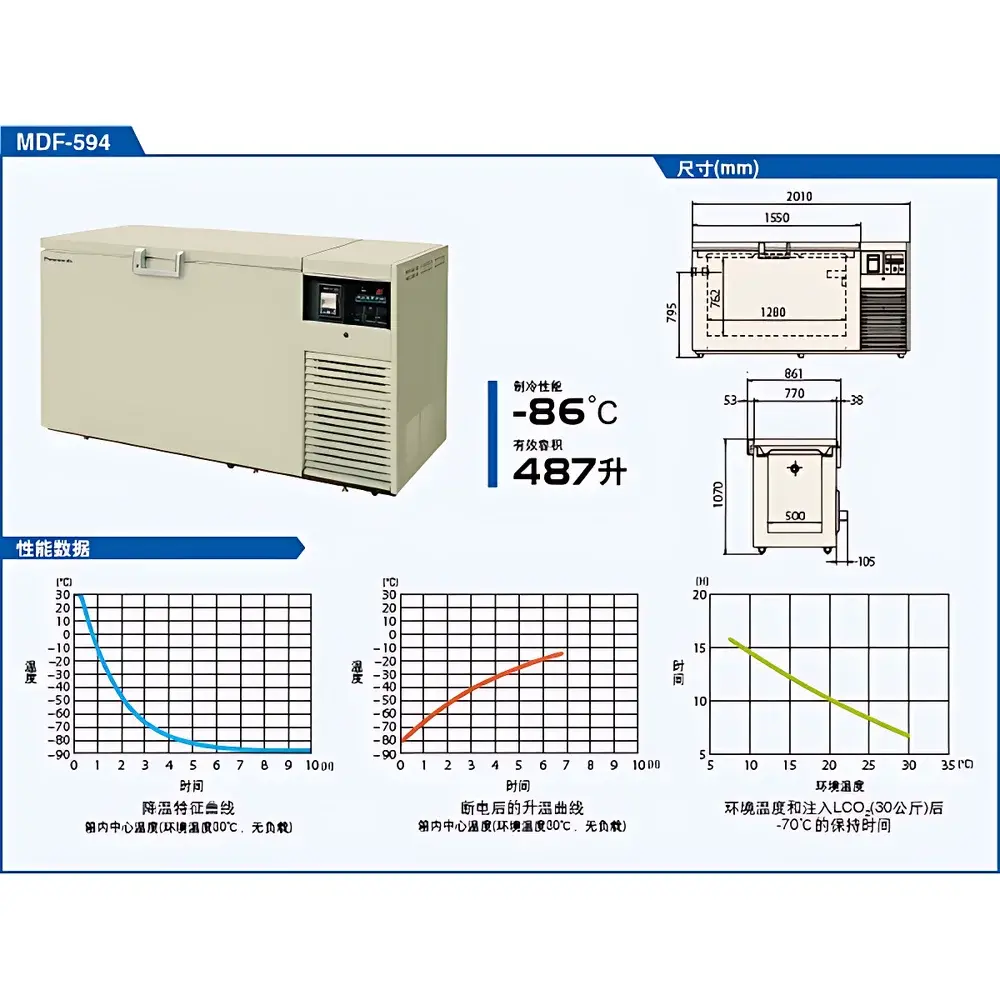
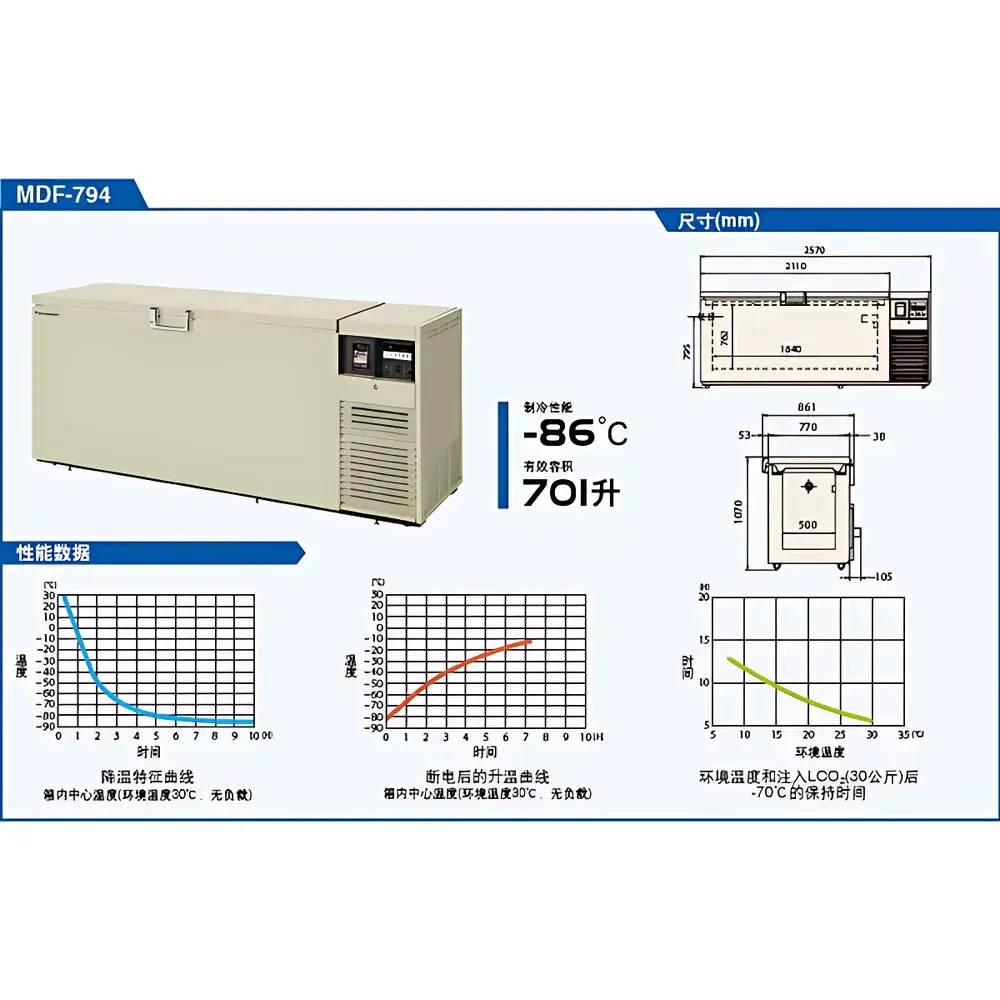
| Model | MDF-193 / MDF-594 / MDF-794 |
| Instrument Type | Upright |
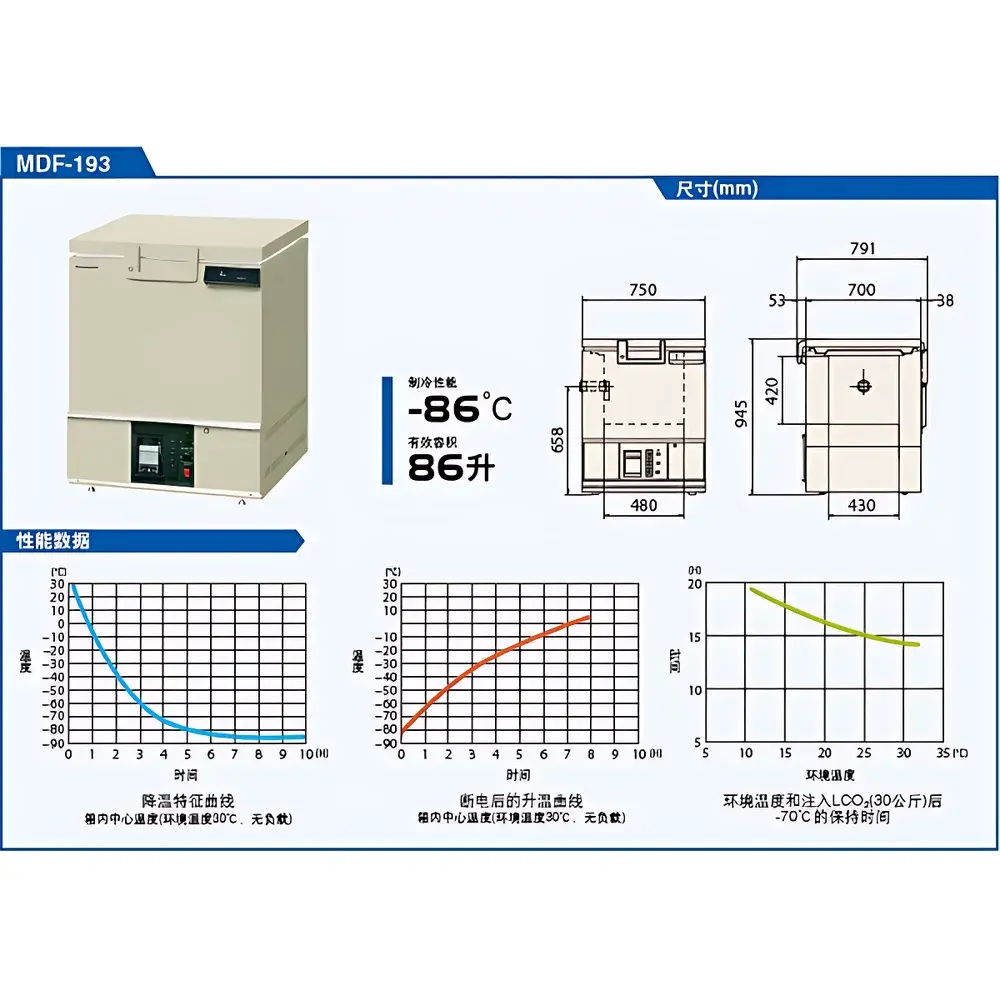
| Effective Volume | 86 L |
| Internal Dimensions (W×D×H) | 750 × 700 × 945 mm |
| External Dimensions (W×D×H) | 750 × 700 × 945 mm |
| Power Supply | 220 V AC |
| Rated Power Consumption | 450 W |
| Temperature Range | –50 °C to –86 °C (adjustable in 1 °C increments) |
| Temperature Sensor | Pt100 platinum resistance thermometer |
| Control System | Microprocessor-based digital controller with dual-stage cascade refrigeration |
| Insulation | In-situ foamed rigid polyurethane (≥120 mm thickness) |
| Cabinet Construction | Exterior — pre-painted steel |
| Compressor Configuration | Two-stage hermetic scroll compressors (high-stage & low-stage) |
| Alarm Functions | High/low temperature deviation (±5 °C to ±20 °C adjustable), power failure, door ajar, condenser filter clog (MDF-594/MDF-794 only), remote alarm contact output |
| Net Weight | 103 kg |
Overview
The Panasonic MDF-193 is a compact upright ultra-low temperature (ULT) freezer engineered for reliable long-term storage of biologics, primary cell lines, genomic samples, and temperature-sensitive reagents at –86 °C. Designed using cascade refrigeration architecture—comprising independent high-stage and low-stage hermetic scroll compressors—the system achieves stable thermal performance even under ambient conditions up to 30 °C. Its optimized airflow path, enabled by aerodynamically shaped internal ducts and Cool Safe™ compressor integration, ensures uniform temperature distribution across the entire chamber (±2.5 °C stability at setpoint, per IEC 61010-2-011). The unit complies with international safety and electromagnetic compatibility standards including IEC 61000-6-3 (EMI), IEC 61000-6-2 (immunity), and UL 61010-1, supporting GLP- and GMP-aligned laboratory environments.
Key Features
- Compact footprint (750 × 700 × 945 mm) optimized for space-constrained labs or individual researcher workspaces
- Dual-stage cascade refrigeration system with high-efficiency scroll compressors delivering consistent –86 °C operation without liquid nitrogen dependency
- In-situ foamed rigid polyurethane insulation (≥120 mm thick) minimizing thermal bridging and reducing annual energy consumption by ~10% versus prior-generation ULT freezers
- Electropolished SUS304 stainless-steel interior resistant to corrosion, facilitating decontamination and compliance with ISO 14644-1 Class 7 cleanroom-compatible cleaning protocols
- Microprocessor-based temperature controller with Pt100 sensor (±0.3 °C accuracy), real-time digital display, and programmable alarm thresholds (±5 °C to ±20 °C deviation)
- Comprehensive alarm suite: audible/visual alerts for temperature excursion, power interruption, door open duration >30 s, and condenser filter status (MDF-594/MDF-794 models)
- Remote alarm contact output (dry contact, 24 V DC) compatible with centralized building management systems (BMS) and LIMS-integrated monitoring platforms
Sample Compatibility & Compliance
The MDF-193 maintains sample integrity for cryopreserved human peripheral blood mononuclear cells (PBMCs), induced pluripotent stem cell (iPSC) vials, RNA extraction kits, and lyophilized enzyme preparations requiring uninterrupted sub–80 °C storage. Its chamber design accommodates standard 2-inch cryoboxes (up to 36 boxes on three removable stainless-steel shelves), microcentrifuge tube racks, and cryovial storage canisters. The freezer meets ISO 13485 requirements for medical device storage environments and supports audit readiness for FDA 21 CFR Part 11 when integrated with validated electronic log systems. Temperature mapping validation reports (per ISO/IEC 17025-accredited protocols) are available upon request.
Software & Data Management
While the MDF-193 operates via embedded firmware without cloud connectivity, its analog/digital alarm outputs and RS-485 interface (optional accessory) enable integration with third-party environmental monitoring systems (e.g., Sensaphone, DicksonOne, or Siemens Desigo CC). All alarm events—including timestamped temperature deviations, power loss duration, and door-open intervals—are logged internally for ≥30 days and exportable via USB interface (with optional data logger module). Audit trails comply with ALCOA+ principles (Attributable, Legible, Contemporaneous, Original, Accurate) when paired with compliant software platforms meeting Annex 11 and EU GMP Chapter 4 requirements.
Applications
- Long-term archival storage of clinical biospecimens in biobanks and translational research centers
- Stabilization of thermolabile monoclonal antibodies and ADC payloads during QC release testing
- Preservation of CRISPR-Cas9 ribonucleoprotein (RNP) complexes prior to electroporation
- Backup cold chain redundancy for vaccine development labs operating under WHO PQ guidelines
- Storage of reference standards for LC-MS/MS bioanalysis in regulated bioanalytical laboratories
FAQ
What is the minimum ambient temperature required for continuous –86 °C operation?
The MDF-193 is rated for stable performance at ambient temperatures between 10 °C and 30 °C (non-condensing), with optimal efficiency achieved at 20–25 °C.
Does the unit support 21 CFR Part 11-compliant electronic records?
The base configuration does not include built-in Part 11 functionality; however, integration with validated external monitoring software (e.g., Emerson DeltaV or Thermo Fisher SampleManager) enables compliant audit trails and user access controls.
Is the interior compatible with ethanol-based disinfectants and hydrogen peroxide vapor (HPV) decontamination cycles?
Yes—the electropolished SUS304 chamber and silicone door gasket resist degradation from 70% ethanol, isopropanol, and validated HPV sterilization protocols (≤1000 ppm, ≤60 °C).
Can the MDF-193 be installed in non-dedicated utility rooms?
It requires dedicated ventilation clearance: ≥100 mm rear/side spacing and ≥300 mm ceiling clearance to ensure adequate heat dissipation from the condenser assembly.
What maintenance intervals are recommended for optimal longevity?
Condenser filter inspection every 3 months; full system performance verification (temperature uniformity, compressor oil integrity, refrigerant charge) annually by Panasonic-certified service engineers.





