
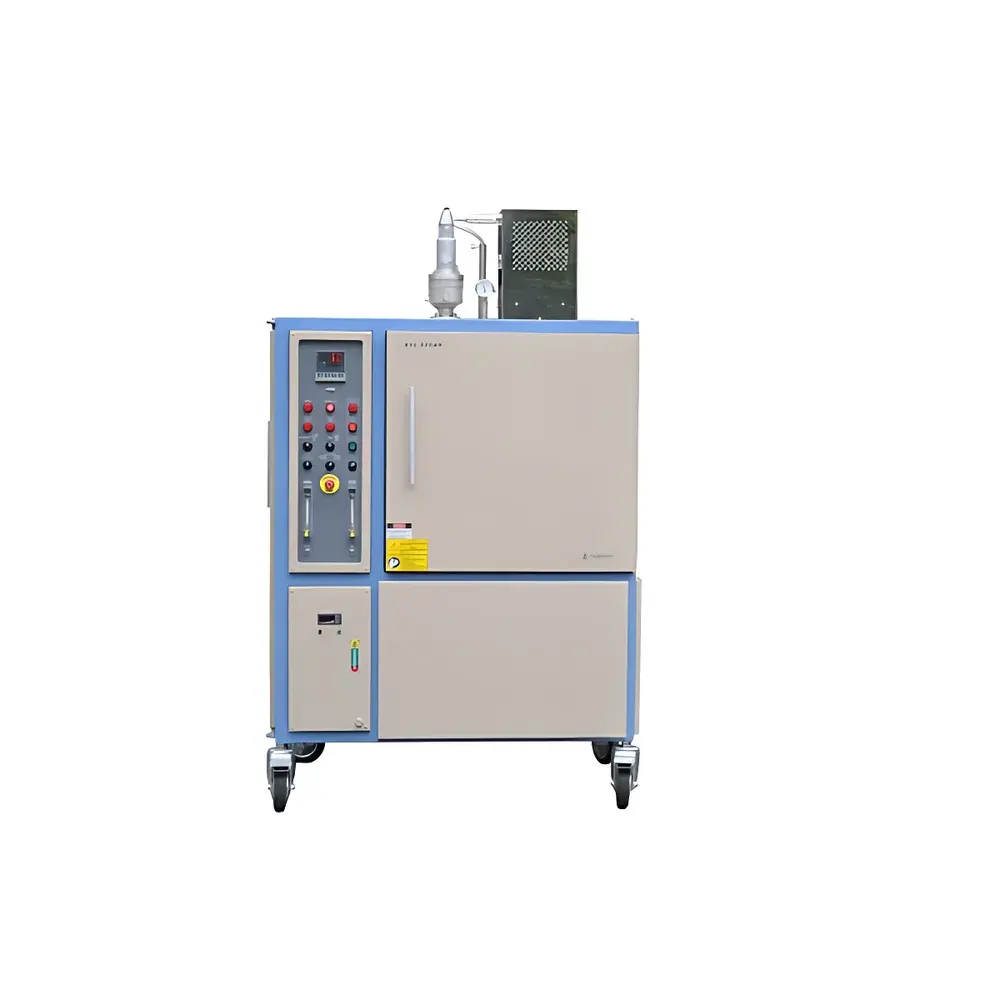
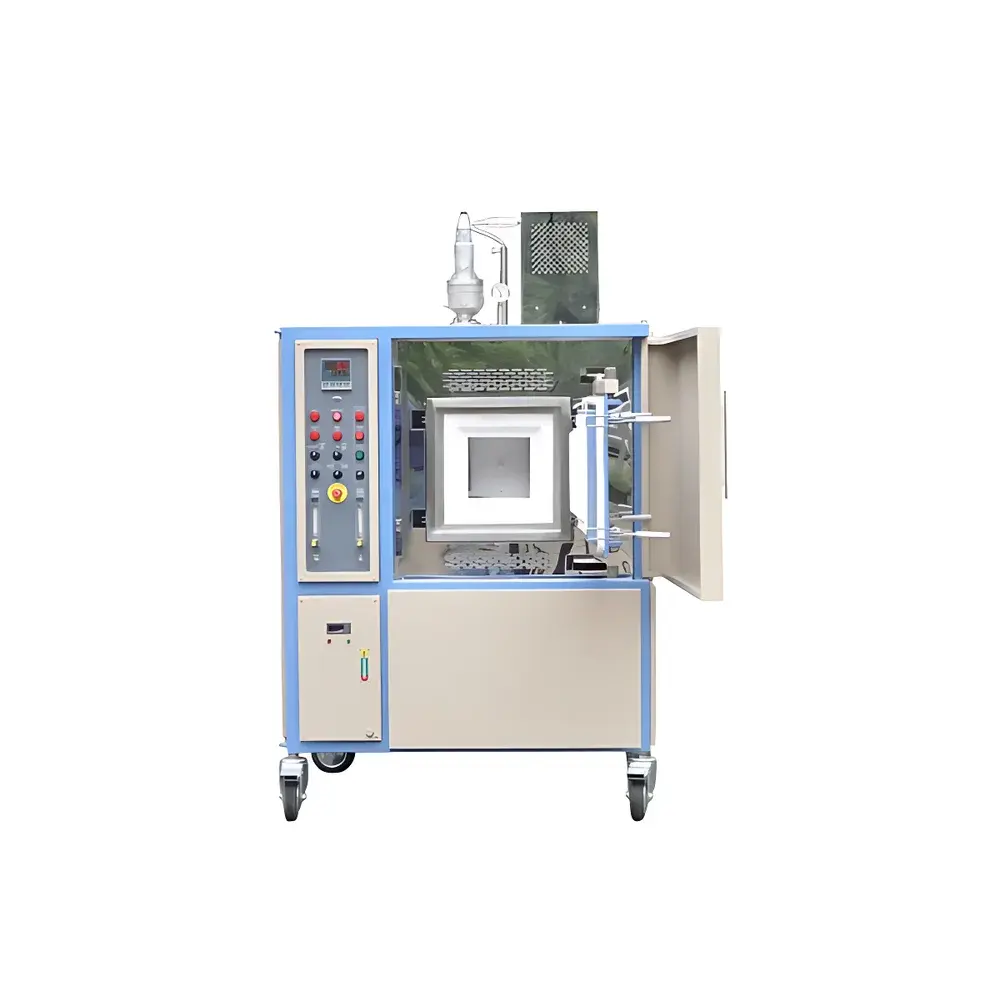
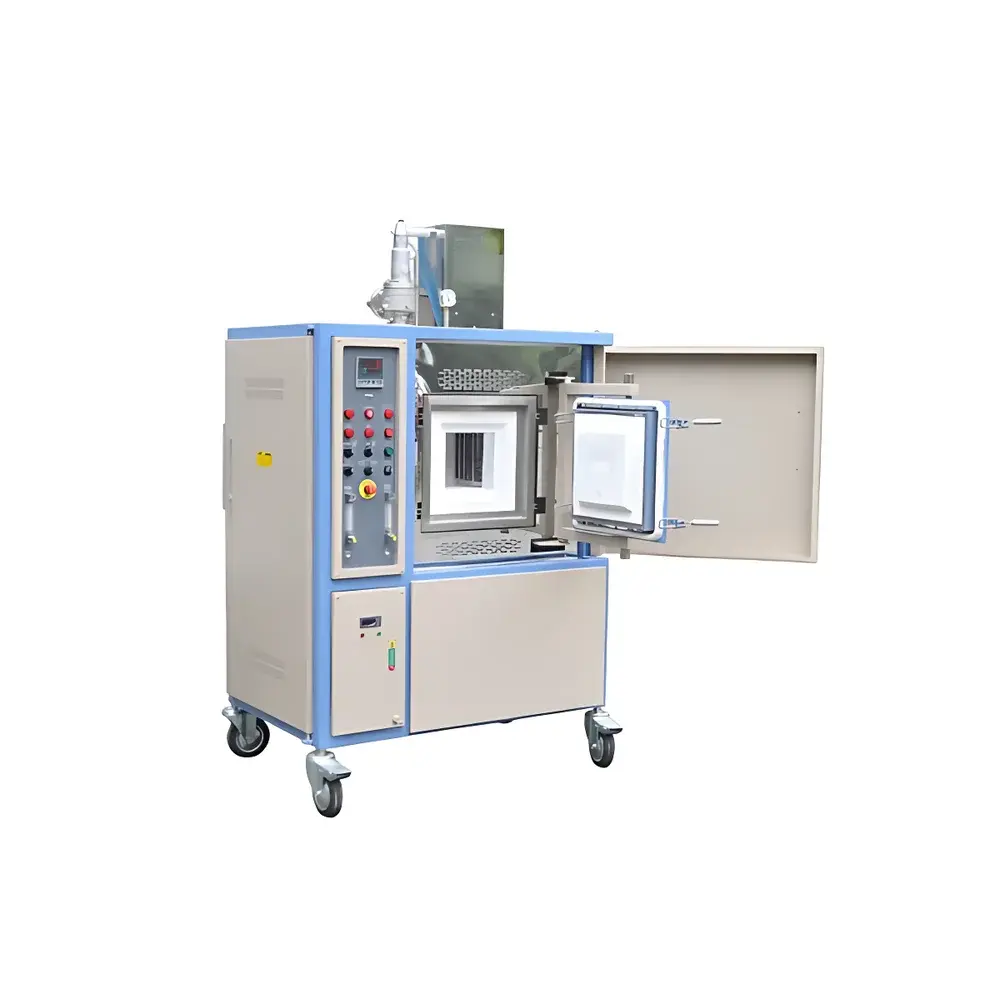
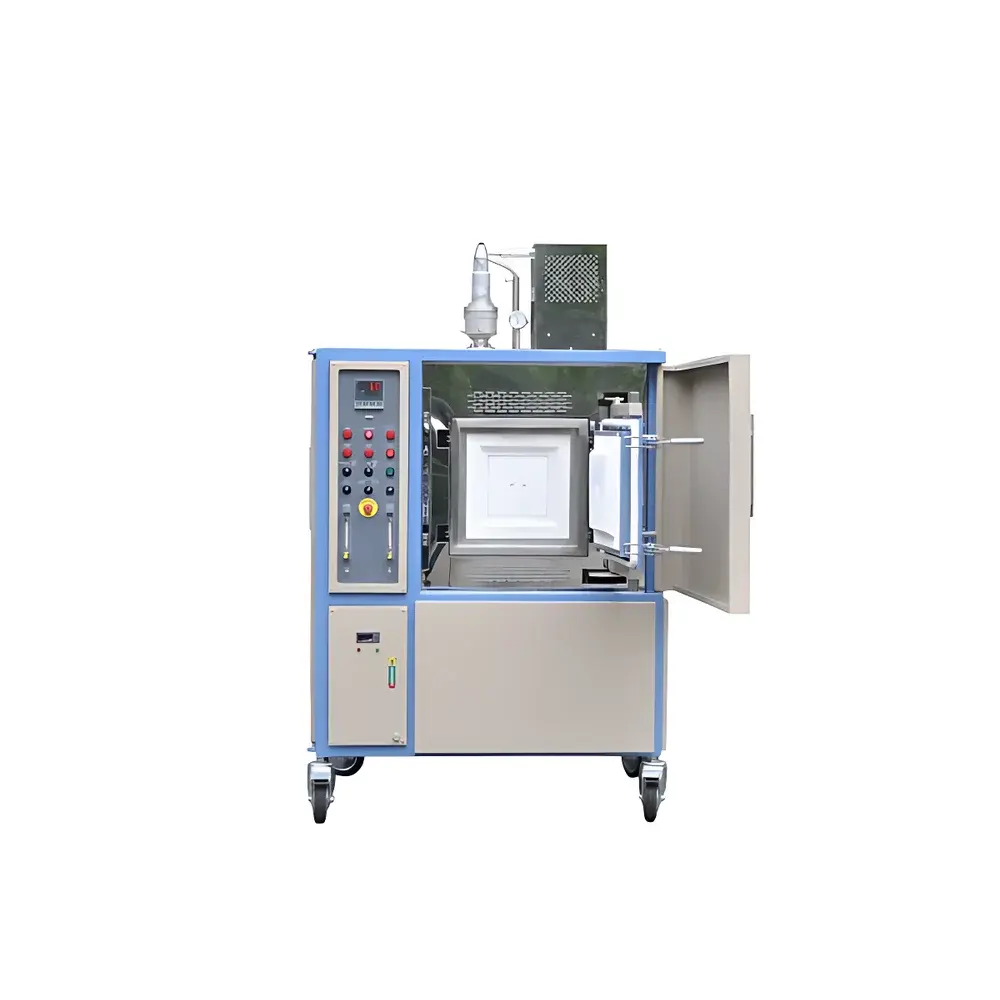
KJ GROUP KSL-1700X-H2 High-Temperature Hydrogen Atmosphere Box Furnace
| Brand | KJ GROUP |
|---|---|
| Origin | Liaoning, China |
| Manufacturer Type | Authorized Distributor |
| Country of Origin | China |
| Model | KSL-1700X-H2 |
| Power Supply | AC 208–240 V, 50 Hz |
| Rated Power | 6 kW |
| Max Current | 30 A (requires 50 A circuit breaker) |
| Chamber Dimensions | 200 × 200 × 200 mm (8 L) |
| Heating Element | Molybdenum wire |
| Max Temperature | 1700 °C (≤1 h), Continuous Use: 1600 °C |
| Heating Rate | 5 °C/min |
| Temperature Uniformity | ±1 °C |
| Atmosphere Control | H₂ (0–400 SCCM), N₂ (0–1000 SCCM) |
| Pressure Range | +1 MPa (gauge), –0.1 MPa (vacuum) |
| Cooling | Integrated 16 L/min recirculating water chiller (deionized/purified water) |
| Safety Systems | Auto-ignition hydrogen burner with flame-out detection & solenoid cutoff, dual-layer shell with forced-air + water cooling, positive/negative pressure sealing |
| Certifications | CE, UL/MET/CSA (components >24 V), optional TÜV/CSA certification available upon request |
Overview
The KJ GROUP KSL-1700X-H2 is a high-temperature, atmosphere-controlled box furnace engineered for precise thermal processing under reducing or inert gas environments—specifically optimized for hydrogen (H₂) atmospheres up to 1 MPa gauge pressure. It operates on the principle of resistive heating via high-purity molybdenum wire elements embedded in a low-thermal-mass alumina fiber insulation chamber, enabling rapid thermal response and exceptional temperature stability. Designed for laboratory-scale sintering, annealing, reduction, and carburizing of advanced functional materials—including titanium alloys, rare-earth phosphors, metal hydrides, and ceramic precursors—the furnace meets stringent requirements for reproducible, contamination-free thermal treatment under controlled redox conditions. Its dual-shell architecture integrates active air and water cooling to maintain structural integrity during prolonged operation at 1600 °C continuous or 1700 °C short-term (≤1 h), while ensuring operator safety through redundant pressure containment and real-time H₂ combustion management.
Key Features
- Dual-layer stainless steel housing with integrated forced-air ventilation and top-mounted water-cooled sealing plate, supporting sustained positive pressure (up to +1 MPa) and vacuum capability (down to –0.1 MPa).
- High-purity alumina fiber furnace chamber (200 × 200 × 200 mm, 8 L volume) coated with stabilized Al₂O₃ to minimize particulate shedding and enhance thermal efficiency.
- PID-based 30-segment programmable temperature controller with ±1 °C accuracy and ramp rate control from 0.1 to 5 °C/min.
- Dedicated hydrogen safety subsystem: flame-sensing auto-igniter with thermocouple-based flame-out detection, coupled to fail-safe solenoid valve closure (<100 ms response).
- Two calibrated glass-tube float flowmeters: one for H₂ (0–400 SCCM), one for inert purge gases such as N₂ or Ar (0–1000 SCCM).
- Onboard mechanical pressure gauge and sealed gas inlet/outlet ports with 6 mm double-ferrule compression fittings compatible with standard industrial gas manifolds.
- Recirculating water chiller (16 L/min capacity) pre-installed and plumbed directly into the furnace’s top cooling jacket; accepts deionized or purified water only.
- Full electrical compliance: all components rated above 24 V carry UL, MET, and CSA recognition; CE marking affixed per Machinery Directive 2006/42/EC and Electromagnetic Compatibility Directive 2014/30/EU.
Sample Compatibility & Compliance
The KSL-1700X-H2 accommodates crucibles and sample boats made from Mo, W, Ta, graphite (with appropriate pre-conditioning), or high-purity Al₂O₃—ensuring compatibility with oxygen-sensitive and reducible compounds. It supports ASTM C1171 (sintering of refractory metals), ISO 2738 (porosity testing of sintered metal parts), and USP (container suitability for pharmaceutical intermediates requiring reductive annealing). The furnace’s pressure-rated chamber and certified gas-handling components comply with EN 13445-1 (Unfired Pressure Vessels) and PED 2014/68/EU when operated within specified limits. For regulated environments, optional audit-ready documentation packages—including IQ/OQ protocols, calibration certificates traceable to NIST standards, and 21 CFR Part 11–compliant electronic log export—are available upon request.
Software & Data Management
While the standard configuration utilizes a front-panel PID controller with local data logging (USB export of time-temperature-pressure-gas flow profiles), optional RS485/Modbus RTU or Ethernet TCP/IP interfaces enable integration into centralized lab automation systems (e.g., LabVIEW, DeltaV, or custom SCADA platforms). All logged parameters—including chamber temperature (Type S thermocouple), inlet gas flow rates, system pressure, and chiller coolant temperature—are timestamped and stored with configurable sampling intervals (1–60 s). Raw CSV exports support post-processing in MATLAB, Python (Pandas), or JMP for statistical process control (SPC) analysis. Firmware updates are delivered via secure HTTPS portal with SHA-256 signature verification.
Applications
- Sintering of Ti-6Al-4V and other near-alpha titanium alloys without interstitial embrittlement.
- Reductive annealing of Eu²⁺-activated alkaline-earth aluminates for persistent luminescence optimization.
- Synthesis of transition-metal borides (e.g., MoB₂, WB) via solid-state reaction under stoichiometric H₂ flow.
- Deoxidation and densification of Y₂O₃-stabilized zirconia (YSZ) electrolytes for SOFC fabrication.
- Thermal decomposition studies of metal amides (e.g., LiNH₂) for hydrogen storage material development.
- Controlled carburization of Fe–Ni alloys to produce metastable ε-carbides relevant to magnetic recording media.
FAQ
What gas purity is required for safe and effective operation?
Hydrogen must be ≥99.999% pure (5.0 grade); inert purge gases (N₂, Ar) require ≥99.99% purity to prevent oxidation of molybdenum heating elements and avoid carbon deposition.
Can this furnace be used under vacuum-only conditions without gas flow?
Yes—it supports static vacuum down to –0.1 MPa (100 mbar abs), but extended use below 10⁻² mbar is not recommended due to outgassing limitations of fiber insulation and potential hot-zone degradation.
Is remote monitoring supported out of the box?
Basic remote status readout (temperature, pressure, alarm state) is enabled via optional Modbus TCP module; full supervisory control requires third-party SCADA integration or KJ GROUP’s OEM firmware upgrade package.
What maintenance intervals are recommended for long-term reliability?
Inspect alumina fiber integrity and seal gasket condition every 200 operating hours; replace Mo heating elements after ~1500 h cumulative exposure at ≥1500 °C; calibrate thermocouples annually or per GLP-defined frequency.
Does the unit include a gas mixing manifold or mass flow controllers?
No—gas delivery is configured externally. The furnace provides two independent inlet ports with 6 mm double-ferrule fittings and integrated flowmeters; users must supply certified MFCs, pressure regulators, and leak-tested gas lines per ISO 8573-1 Class 2 requirements.



