
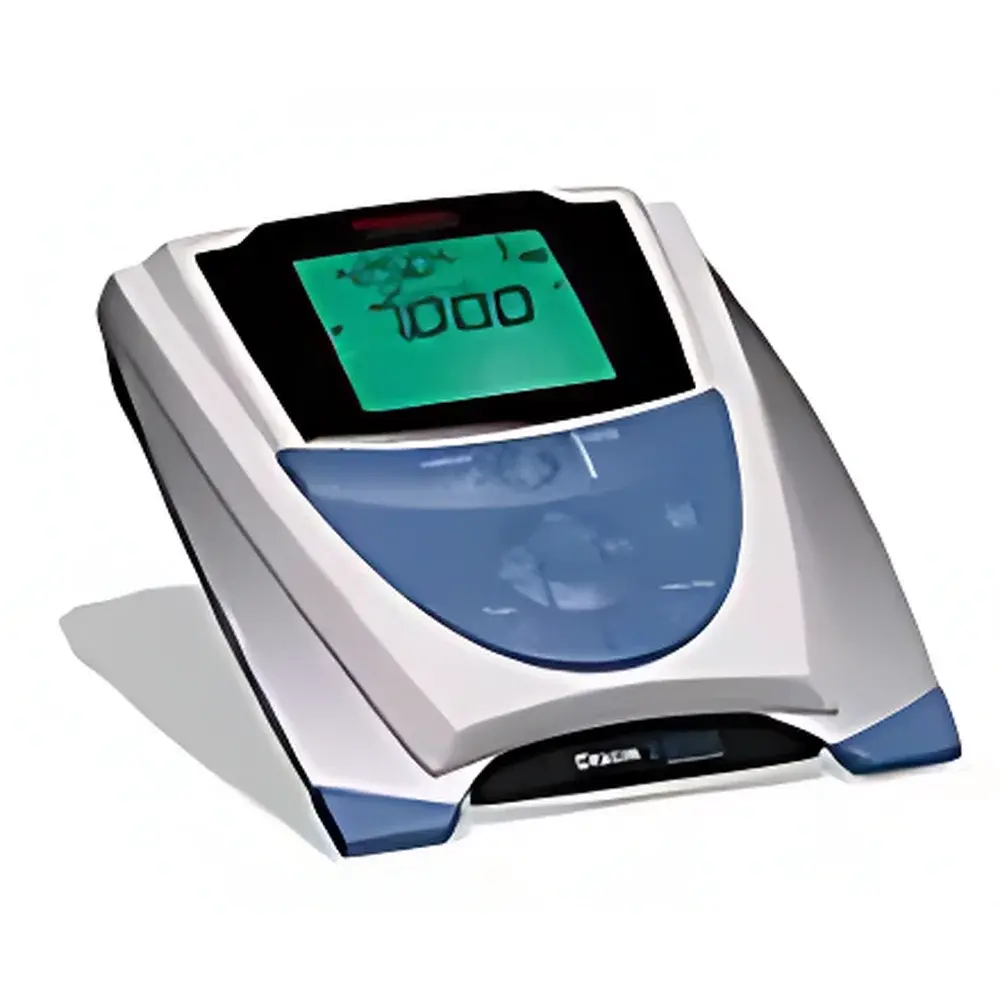
Thermo Scientific Orion 410C-06 Precision Benchtop Pure Water pH/Conductivity Meter
| Origin | USA |
|---|---|
| Manufacturer Type | Authorized Distributor |
| Origin Category | Imported |
| Model | 410C-06 |
| Pricing | Upon Request |
Overview
The Thermo Scientific Orion 410C-06 is a high-precision benchtop meter engineered for rigorous measurement of pH, conductivity, resistivity, TDS, salinity, and redox potential (ORP) in ultrapure and low-conductivity water systems. Designed specifically for critical applications in pharmaceutical manufacturing, power generation, biotechnology, and semiconductor-grade water monitoring, the instrument implements dual-sensor electrochemical principles: potentiometric pH measurement via high-impedance glass or ISFET electrodes, and conductometric analysis using temperature-compensated four-electrode or two-electrode cells. Its architecture conforms to the metrological requirements of USP for purified and water-for-injection (WFI) testing, and supports traceable calibration against NIST-traceable pH and conductivity standards. The system operates under a robust firmware platform compliant with GLP data integrity frameworks and integrates seamlessly into regulated laboratory environments requiring audit-ready documentation.
Key Features
- Triple-parameter capability: Simultaneous real-time measurement of pH (–2.000 to 19.999), conductivity (0.000 µS/cm to 3000 mS/cm), and temperature (–5 °C to 105 °C)
- High-resolution display: Backlit LCD with 0.001 pH / 0.001 µS/cm resolution and ±0.001 pH / ±0.01 µS/cm accuracy (±0.5% or ±1 digit, whichever is greater)
- Intelligent signal processing: Smart Stability™ algorithm dynamically adjusts response threshold to minimize settling time; Smart Averaging™ computes statistically weighted mean values over user-defined intervals
- Multi-point calibration: Up to five-point pH calibration with auto-recognition of US/NIST, DIN, or custom buffers; up to five-point conductivity calibration with selectable cell constant (0.001–199.9 cm⁻¹)
- ORP measurement mode: Direct mV/RmV/EH readout referenced to Standard Hydrogen Electrode (SHE), with ±0.1 mV or ±0.05% accuracy
- Benchtop-specific interfaces: Integrated mini-DIN conductivity and temperature ports, BNC pH input, phone-jack stirrer control, RS232 bidirectional communication, and optional USB adapter
- Security & compliance: Password-protected method storage (10 methods), GLP-compliant data logging (200 entries), full calibration history (last 10 calibrations), and optional FDA 21 CFR Part 11 software module for electronic signatures and audit trails
Sample Compatibility & Compliance
The 410C-06 accommodates a broad spectrum of aqueous matrices—from ultrapure water (resistivity up to 18.2 MΩ·cm at 25 °C) to concentrated brines—via interchangeable electrode configurations: two-ring, four-ring, or planar conductivity cells; ROSS™ composite pH electrodes optimized for low-ionic-strength media; and optional ISFET sensors for harsh or protein-fouling environments. All measurements adhere to ASTM D1125 (Standard Test Methods for Electrical Conductivity and Resistivity of Water), ISO 7888 (Water Quality – Determination of Electrical Conductivity), and USP (Water for Pharmaceutical Use). The instrument’s IP54-rated enclosure ensures dust resistance and splash protection during routine lab operation, while its CE, UL, CSA, TÜV, and FCC Class A certifications validate electromagnetic compatibility and electrical safety per IEC 61010-1.
Software & Data Management
Data acquisition and reporting are governed by an embedded GLP engine that timestamps every measurement, stores operator ID, electrode serial numbers, calibration parameters, and environmental conditions. Raw data exports via RS232 to LIMS or Excel-compatible formats preserve metadata integrity. Firmware updates and method downloads occur remotely through Thermo Fisher’s secure network portal, eliminating field service dependencies. Optional Orion Star™ Com software enables advanced graphing, statistical analysis (RSD, confidence intervals), and automated report generation compliant with 21 CFR Part 11 when paired with the licensed security module—including role-based access control, electronic signatures, and immutable audit logs.
Applications
This meter serves as a primary analytical tool in cGMP-regulated facilities where water quality directly impacts product safety and process validation. Key use cases include: continuous monitoring of reverse osmosis (RO) and electrodeionization (EDI) effluent in pharmaceutical water systems; verification of steam condensate purity in thermal power plants; conductivity profiling during clean-in-place (CIP) rinse cycles; pH stability assessment of cell culture media; and final release testing of WFI per USP monographs. Its ability to compensate conductivity to 15 °C, 20 °C, or 25 °C—using linear or non-linear (NaCl or KCl) algorithms—ensures comparability across global regulatory submissions.
FAQ
Does the 410C-06 support automatic temperature compensation for conductivity measurements?
Yes—it offers both automatic and manual temperature compensation, with selectable reference temperatures (15 °C, 20 °C, or 25 °C) and configurable compensation curves (linear, NaCl, or KCl).
Can the instrument store calibration data for multiple electrodes?
It retains the last 10 calibration events, including date/time stamps, buffer IDs, slope/mV values, and cell constant entries—each tagged with electrode identification.
Is the 410C-06 compatible with third-party conductivity cells?
Yes—any mini-DIN–compatible conductivity sensor with a defined cell constant (0.001–199.9 cm⁻¹) can be configured and validated within the instrument’s setup menu.
What power options are available for uninterrupted operation?
The unit operates on four AA alkaline batteries (with >200 hours runtime) or a universal AC adapter (included with benchtop configuration), enabling both lab and field deployment.
How does the instrument ensure data integrity in audited environments?
Through built-in GLP logging, password-protected method storage, and optional 21 CFR Part 11 software—providing electronic signatures, audit trails, and tamper-evident records required for FDA, EMA, and PMDA inspections.
Related Products





