
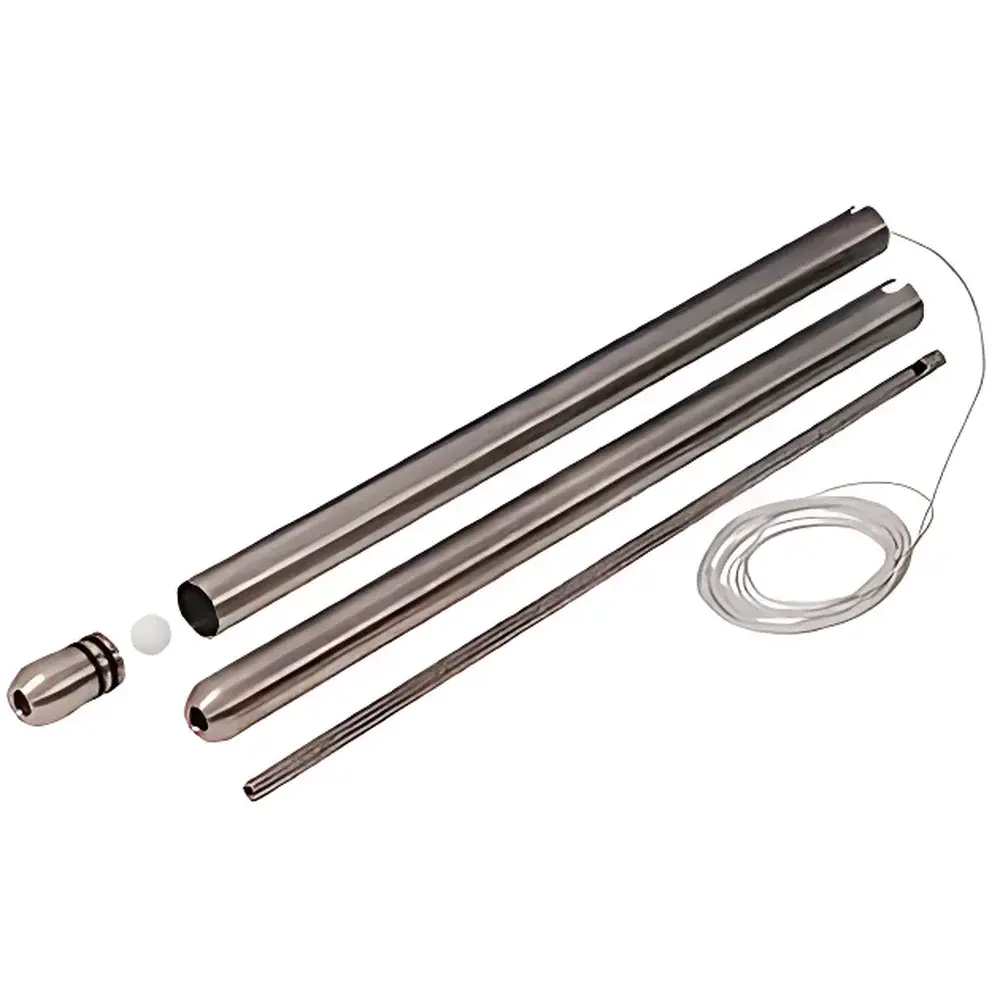
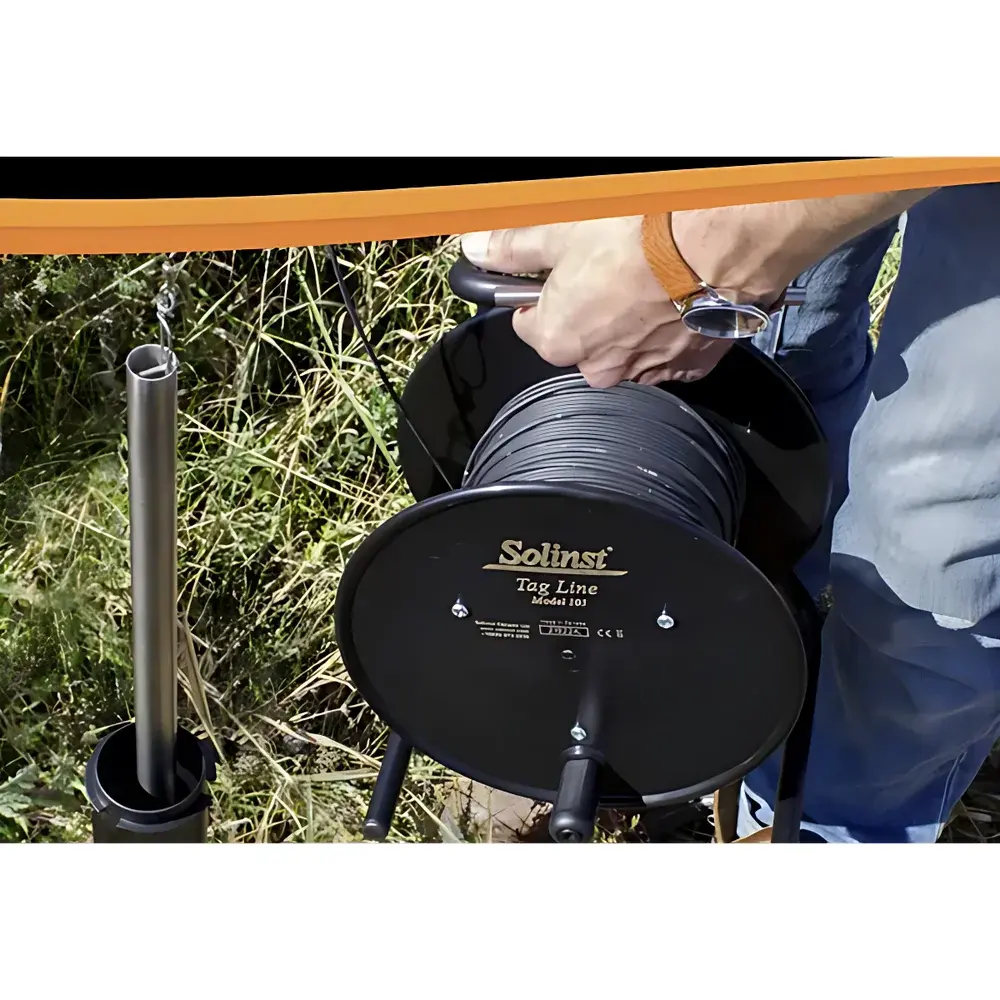
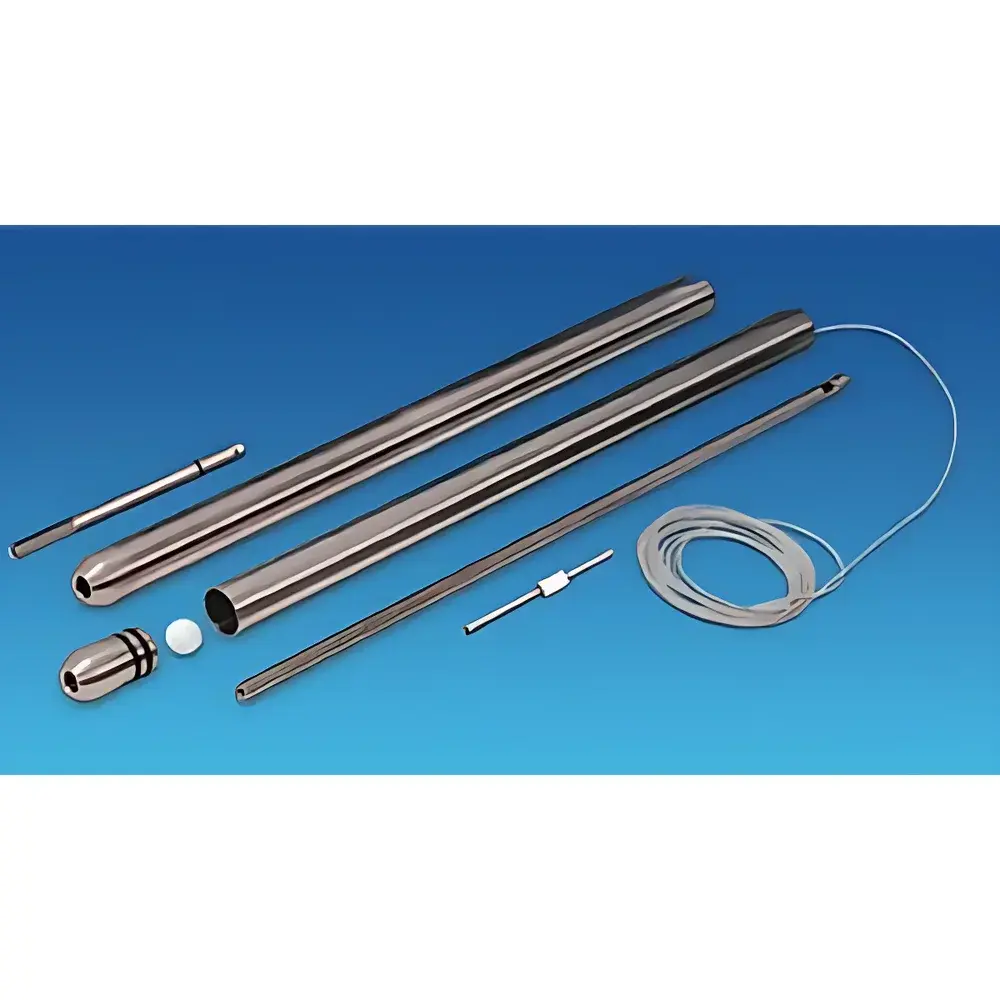
Solinst Model 429 Stainless Steel Bailer for Groundwater Sampling
| Brand | Solinst |
|---|---|
| Origin | Canada |
| Model | 429 |
| Instrument Type | Portable Manual Water Sampler |
| Sampling Method | Discrete Depth Bailer |
| Single Sample Volume | 50–2000 mL |
| Sampling Depth | Unlimited (Depth-Limited Only by Cable Length & Well Geometry) |
| Construction Material | 316 Stainless Steel with PTFE Ball Valves and Viton O-Rings |
| Standard Lengths | 2 ft (610 mm), 3 ft (910 mm), 4 ft (1220 mm) |
| Diameter Options | 0.5 in (12.7 mm), 1.0 in (25.4 mm), 1.5 in (38.1 mm), 2.0 in (50.8 mm) |
| Sample Release Mechanism | Integrated Stainless Steel Controlled-Flow Dispenser |
| Recommended Support Line | Solinst Model 103 Marked Measuring Line |
Overview
The Solinst Model 429 Stainless Steel Bailer is a precision-engineered, manually operated discrete-depth groundwater sampler designed for high-integrity collection of representative samples from specific aquifer zones. It operates on the principle of hydrostatic valve actuation—utilizing gravity-driven flow during descent and inertial/weight-induced closure upon retrieval—to isolate water exclusively from the target depth interval. Unlike continuous-pump or peristaltic systems, the 429 bailer eliminates cross-contamination between stratified horizons by physically isolating the sample volume at the point of retrieval. Its design conforms to standard field practices outlined in ASTM D5088–22 (“Standard Practice for Purging and Sampling of Volatile Organic Compounds from Groundwater Using Low-Flow Techniques”) and supports compliance with EPA Method 502.2 and ISO 5667-3:2018 (Water quality — Sampling — Part 3: Guidance on the preservation and handling of water samples). The device is particularly suited for low-permeability formations, fractured bedrock wells, and narrow-diameter monitoring wells where pump-based sampling may induce vertical mixing or wellbore storage effects.
Key Features
- 316 stainless steel construction ensures long-term corrosion resistance in aggressive geochemical environments—including saline, sulfidic, and acidic groundwater matrices.
- PTFE-seated dual ball valves (top and bottom) provide reliable, repeatable sealing without elastomer degradation; Viton O-rings maintain integrity across wide temperature ranges (–20 °C to +120 °C).
- No external power, compressed gas, or auxiliary equipment required—ideal for remote, off-grid, or confined-access sites including direct-push boreholes and nested well installations.
- Modular diameter options (0.5–2.0 in / 12.7–50.8 mm) enable compatibility with standard monitoring well casings (e.g., 1.25 in PVC, 2 in stainless steel) and direct-push probe rods.
- Integrated stainless steel sample release dispenser minimizes volatilization loss and atmospheric exposure during transfer—critical for VOC, SVOC, and dissolved gas analysis.
- Calibrated length markings (via optional Solinst Model 103 measuring line) support traceable depth registration compliant with GLP documentation requirements.
Sample Compatibility & Compliance
The Model 429 is validated for use with aqueous matrices containing suspended solids ≤ 50 µm, total dissolved solids (TDS) up to 200,000 mg/L, and redox potentials ranging from –300 mV to +600 mV. It is routinely deployed in regulatory monitoring programs adhering to U.S. EPA Region-specific Quality Assurance Project Plans (QAPPs), Canadian CSA Z765-21 (Environmental site assessment), and EU WFD (Water Framework Directive) groundwater monitoring protocols. The absence of internal wetted plastics or lubricants prevents leaching artifacts, making it suitable for ultra-trace metal analysis (e.g., Pb, Cd, As at sub-ng/L levels) when paired with acid-washed handling procedures. All components are non-reactive with common preservatives (HNO₃, H₃PO₄, NaOH) used in field stabilization per APHA Standard Methods 3111B and 3125B.
Software & Data Management
As a manual, non-electronic sampling tool, the Model 429 does not incorporate embedded firmware or digital interfaces. However, its operational traceability integrates seamlessly into modern laboratory information management systems (LIMS) and electronic field data capture platforms (e.g., ESRI Field Maps, Avenza PDF Maps, or proprietary QAPP-compliant mobile apps). Depth-of-sample metadata—recorded via calibrated line deployment—is directly linkable to GIS coordinates, well log stratigraphy, and analytical batch IDs. When used with Solinst’s Model 103 marked line (with metric or imperial graduations), field technicians generate auditable, timestamped depth records that satisfy FDA 21 CFR Part 11 requirements for electronic record integrity when documented in validated digital notebooks.
Applications
- Vertical profiling of redox gradients, contaminant plumes (e.g., chlorinated solvents, petroleum hydrocarbons), and nutrient stratification in multi-level monitoring wells.
- Pre-purge sampling in low-yield wells where traditional purging would deplete the aquifer zone of interest.
- Collection of volatile organic compound (VOC) samples under EPA Method 502.2, minimizing headspace formation and degassing during retrieval.
- Sampling from temporary drive-point wells, cone penetrometer test (CPT) ports, and permanent nested piezometers.
- Baseline characterization and long-term trend monitoring in landfill leachate plume studies, mining-impacted aquifers, and agricultural nitrate migration assessments.
FAQ
How does the Model 429 prevent inter-zonal mixing during retrieval?
The top and bottom PTFE ball valves close simultaneously due to hydrodynamic resistance and gravitational inertia as the bailer is lifted—trapping only water present at the exact depth of arrest. This mechanical isolation eliminates hydraulic short-circuiting observed in open-ended bailers or bail-down/pull-up variants.
Can the Model 429 be used in artesian wells?
Yes, provided the static water level is below the land surface and the bailer is lowered slowly to avoid pressure-induced premature valve closure. For highly artesian conditions (>10 psi overpressure), pre-pressurized alternatives (e.g., Solinst Model 425) are recommended.
What cleaning protocol is required between samples?
Rinse three times with deionized water followed by three rinses with native groundwater (or field blank) prior to each sampling event; ultrasonic cleaning with dilute HCl (1%) is advised after VOC or metal analyses.
Is calibration required?
No factory calibration is performed, as the device relies on mechanical geometry and fluid dynamics rather than sensor-based measurement. Volumetric capacity is defined by nominal dimensions per ASTM D5792–17 Annex A1 and verified via gravimetric testing during manufacturing.
Does Solinst offer validation documentation for regulatory submissions?
Yes—technical specifications, material certifications (ASTM A240/A276 for 316 SS), and third-party verification reports for VOC recovery efficiency (≥98.5% for BTEX at 5 µg/L spike level) are available upon request for QA/QC appendices.







