
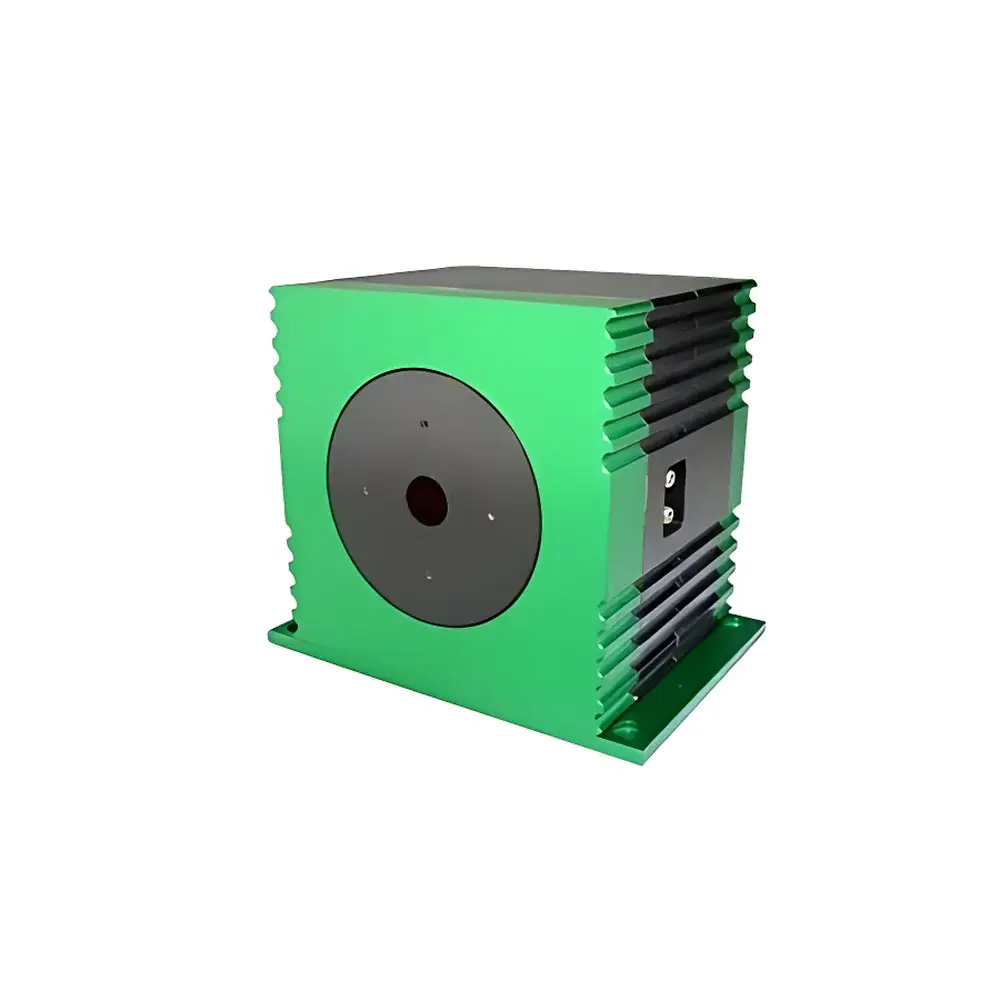
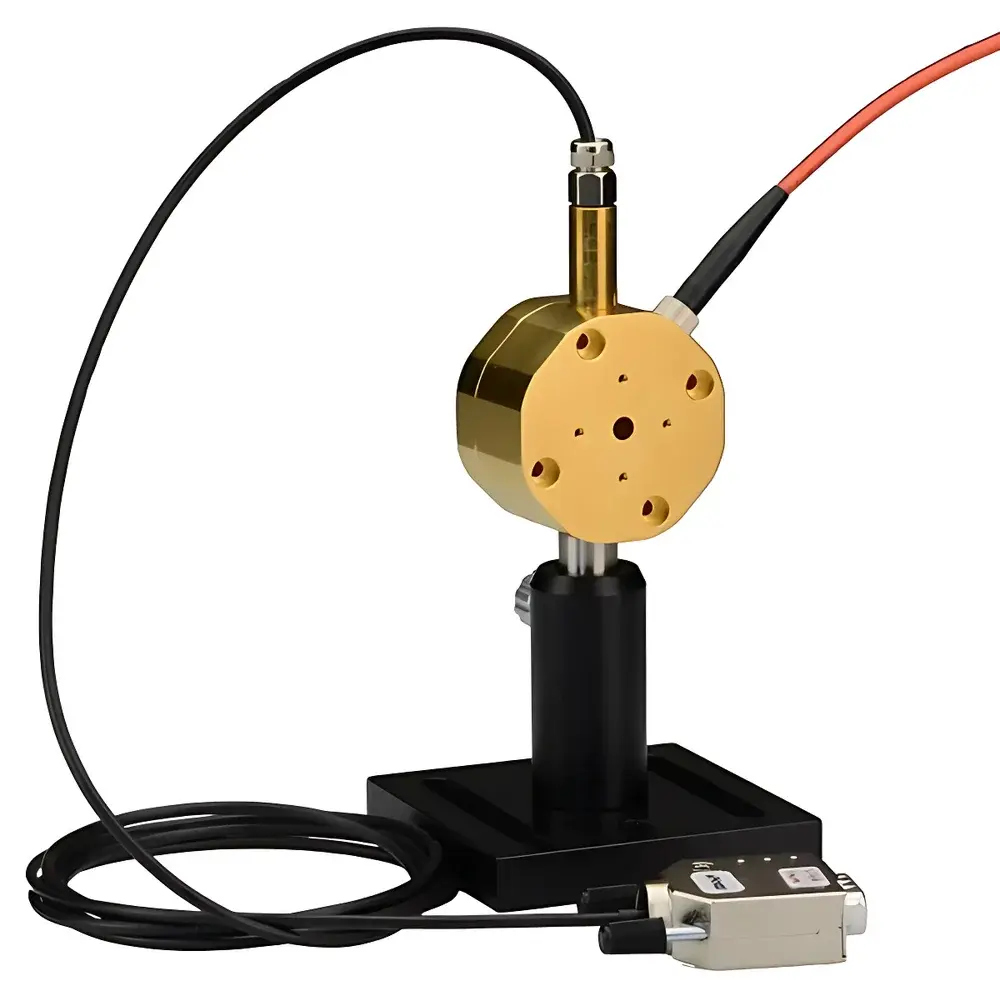
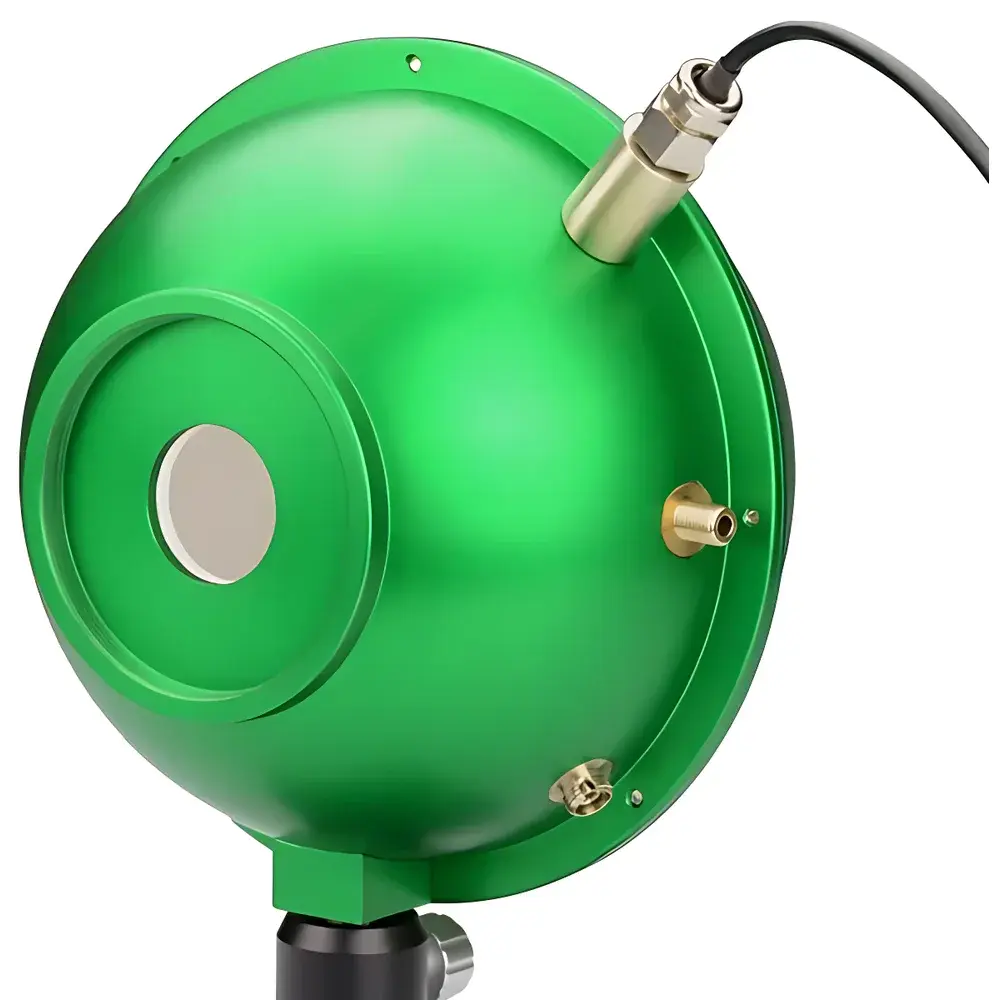
Artifex IS Series Integrating Spheres
| Brand | Artifex |
|---|---|
| Origin | Germany |
| Type | Import (Distributor-Sourced) |
| Model | IS |
| Construction | Semiconductor Laser–Optimized Integrating Sphere System |
| Cooling Options | Air-Cooled or Water-Cooled (Gold-Coated Models) |
| Spectral Range | 650 nm – 20 µm (Gold) / 350 nm – 1700 nm (Polymer) |
| Power Handling | Up to 5 kW/cm² (Gold, pulsed/average) |
| Interface Options | SMA or FC (standard dual-port |
| Detector Compatibility | Si, Ge, InGaAs, VIS-enhanced InGaAs, IR-extended InGaAs photodiodes |
| Internal Diameters | 10 mm, 20 mm, 50 mm, 100 mm |
| Coating | High-reflectance polymer (polymer spheres) or electroless gold (NIR–MIR spheres) |
| Compliance | Designed for ISO/IEC 17025-aligned optical calibration workflows |
Overview
The Artifex IS Series Integrating Spheres are precision-engineered optical components designed for accurate, repeatable measurement of radiant flux from semiconductor lasers and broadband sources across ultraviolet-visible-near-infrared (UV-VIS-NIR) and near-to-mid-infrared (NIR-MIR) spectral bands. Based on the fundamental principle of spatial integration—where incident light undergoes multiple diffuse reflections within a highly reflective spherical cavity—the IS series ensures uniform irradiance distribution at the detector port, minimizing angular and positional dependence. Unlike thermal detectors such as thermopiles, which suffer from slow response times (>100 ms), the Artifex IS spheres—when coupled with fast-response photodiode-based power meters like the OPM150 series—enable microsecond-scale temporal resolution in laser pulse energy and average power monitoring. This capability is critical in industrial laser processing, ultrafast photonics R&D, and high-repetition-rate LIDAR system validation.
Key Features
- Two distinct sphere architectures: Gold-coated aluminum spheres for high-power NIR–MIR applications (650 nm – 20 µm), and solid polymer spheres with spectrally optimized high-reflectance coatings for low-to-moderate power VIS–NIR measurements (350 nm – 1700 nm).
- Thermal management options: Air-cooled configurations for average powers up to 100 W; water-cooled variants rated for sustained operation at up to 5 kW/cm² irradiance density—validated per ISO 11551 for laser-induced damage threshold (LIDT) compliance.
- Modular port architecture: Standard dual-port configuration (e.g., input + detector) with optional expansion to four ports for simultaneous power metering and spectroradiometric analysis; all ports accept SMA or FC connectors without adapter loss.
- Precision-machined geometry: Polymer spheres fabricated via CNC milling from solid optical-grade PTFE or barium sulfate composites; gold spheres feature electroless plating over machined aluminum substrates with surface roughness <0.4 µm Ra.
- Detector-flexible design: Supports interchangeable photodiodes—including silicon (Si), germanium (Ge), standard and extended-range InGaAs variants—enabling wavelength-specific responsivity calibration traceable to NIST SRMs.
Sample Compatibility & Compliance
The IS Series accommodates collimated, divergent, and multimode fiber-coupled laser beams, with input apertures configurable from Ø1 mm to Ø25 mm based on beam diameter and divergence requirements. All polymer spheres meet ISO 9001 manufacturing controls and are supplied with reflectance characterization reports (measured at 5°, 45°, and 85° incidence angles). Gold-coated models conform to ASTM E1377–22 for infrared integrating sphere performance verification. When integrated into a full measurement chain—including Artifex OPM150 power meters and calibrated reference standards—the system supports GLP/GMP documentation workflows and satisfies audit requirements for ISO/IEC 17025 accredited laboratories. Traceability to national metrology institutes (e.g., PTB, NPL) is maintained through factory-applied calibration certificates with stated uncertainties (k=2).
Software & Data Management
The IS spheres operate seamlessly with Artifex’s OPM Control Suite—a Windows-based application supporting real-time data streaming, statistical analysis (min/max/avg/std dev), and automated logging compliant with FDA 21 CFR Part 11 Annex 11 requirements. Audit trails record user actions, parameter changes, and calibration events with time-stamped digital signatures. Export formats include CSV, XML, and HDF5 for integration into LIMS or MATLAB-based analysis pipelines. Firmware updates preserve backward compatibility with legacy OPM hardware, and the software includes built-in correction algorithms for sphere multiplier (K-factor) compensation based on detector responsivity, coating degradation history, and port loss coefficients.
Applications
- Laser diode and VCSEL production testing: Fast, non-contact power monitoring during burn-in and aging tests.
- Fiber laser amplifier characterization: Measuring ASE suppression ratio and output stability under modulated pumping conditions.
- Mid-IR quantum cascade laser (QCL) metrology: Stable irradiance capture across 4–12 µm spectral windows with minimal thermal drift.
- Photobiomodulation device validation: Quantifying delivered fluence in clinical LED/laser therapy systems per IEC 62471.
- Calibration laboratory transfer standards: Serving as primary or secondary reference spheres in national metrology institutes and OEM calibration services.
FAQ
What is the maximum average power the gold-coated IS sphere can handle?
Depends on cooling mode and beam size: air-cooled models support ≤100 W (CW); water-cooled variants sustain ≥500 W with appropriate flow rate (≥2 L/min) and ΔT < 5°C.
Can I use the polymer sphere for 1550 nm laser measurements?
Yes—VIS-enhanced and IR-extended InGaAs photodiodes are supported; reflectance remains >97% at 1550 nm for standard polymer coatings.
Is NIST-traceable calibration included with purchase?
Each sphere ships with a factory calibration certificate referencing NIST-traceable photodiode standards; optional on-site recalibration services are available.
How does the sphere multiplier (K-factor) vary with wavelength?
K-factor is wavelength-dependent and provided in tabulated form per model; it accounts for coating reflectance, port losses, and detector angular response—software applies automatic interpolation.
Are custom port configurations available beyond four ports?
Yes—custom machining for up to six ports is offered under engineering consultation; lead time and NRE charges apply.



