
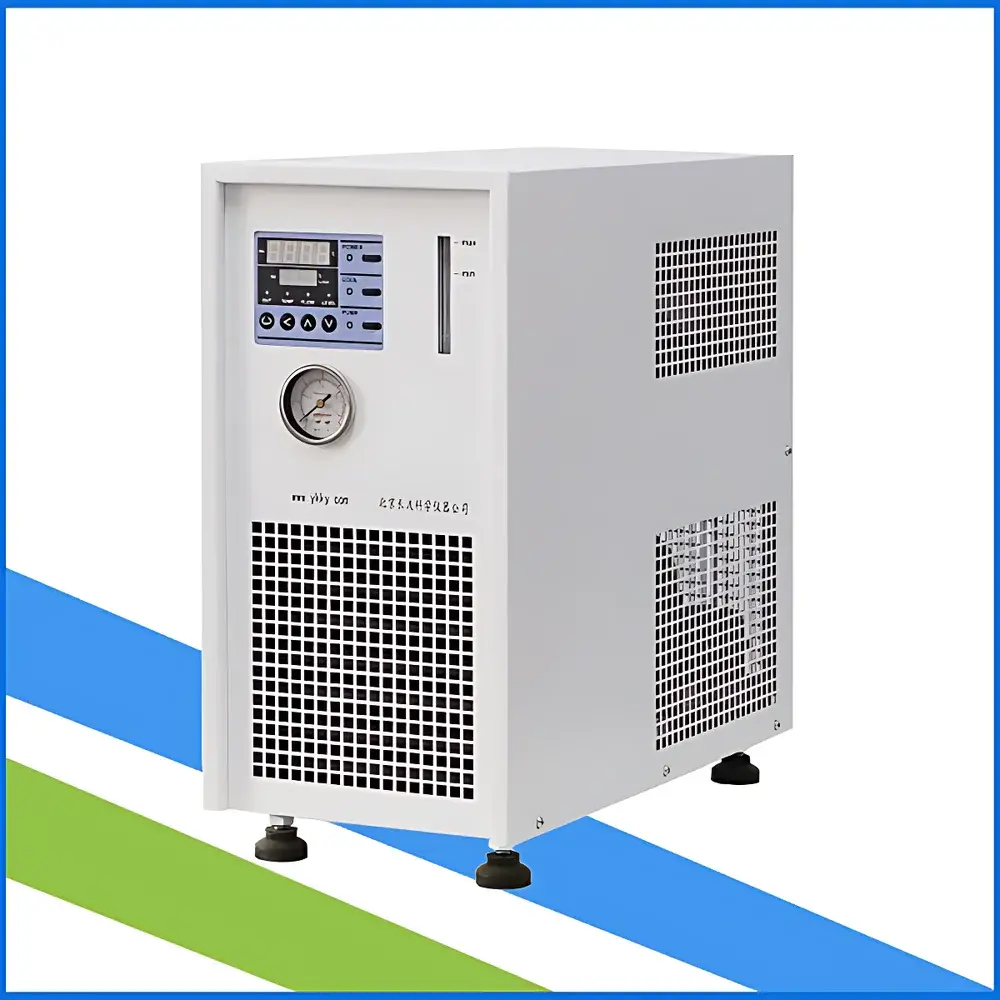
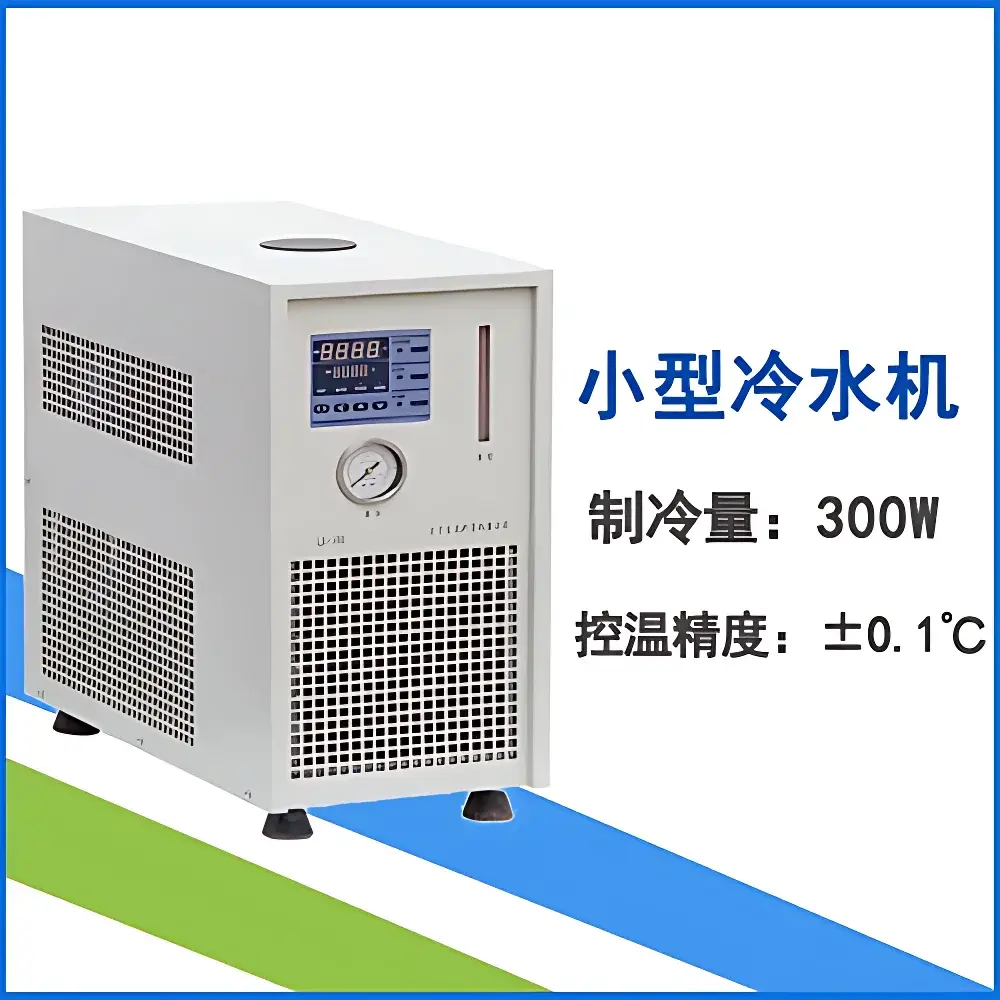
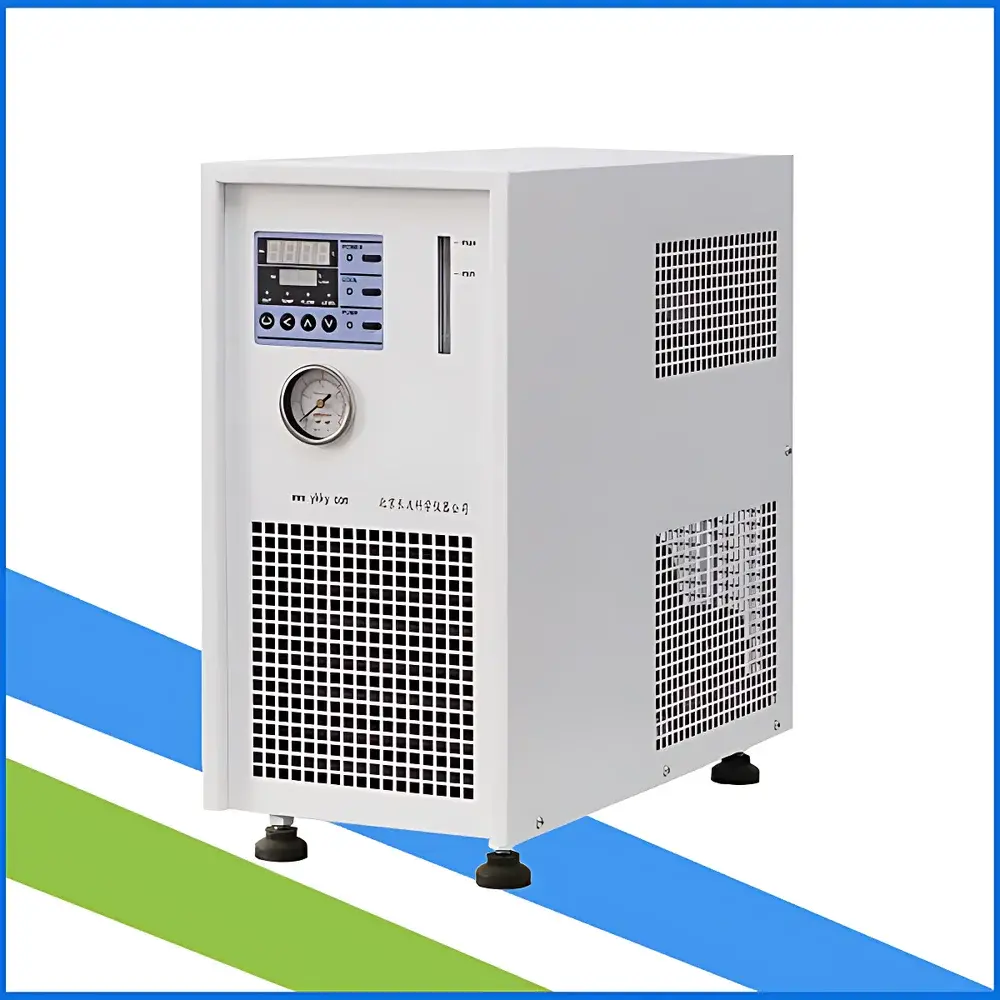
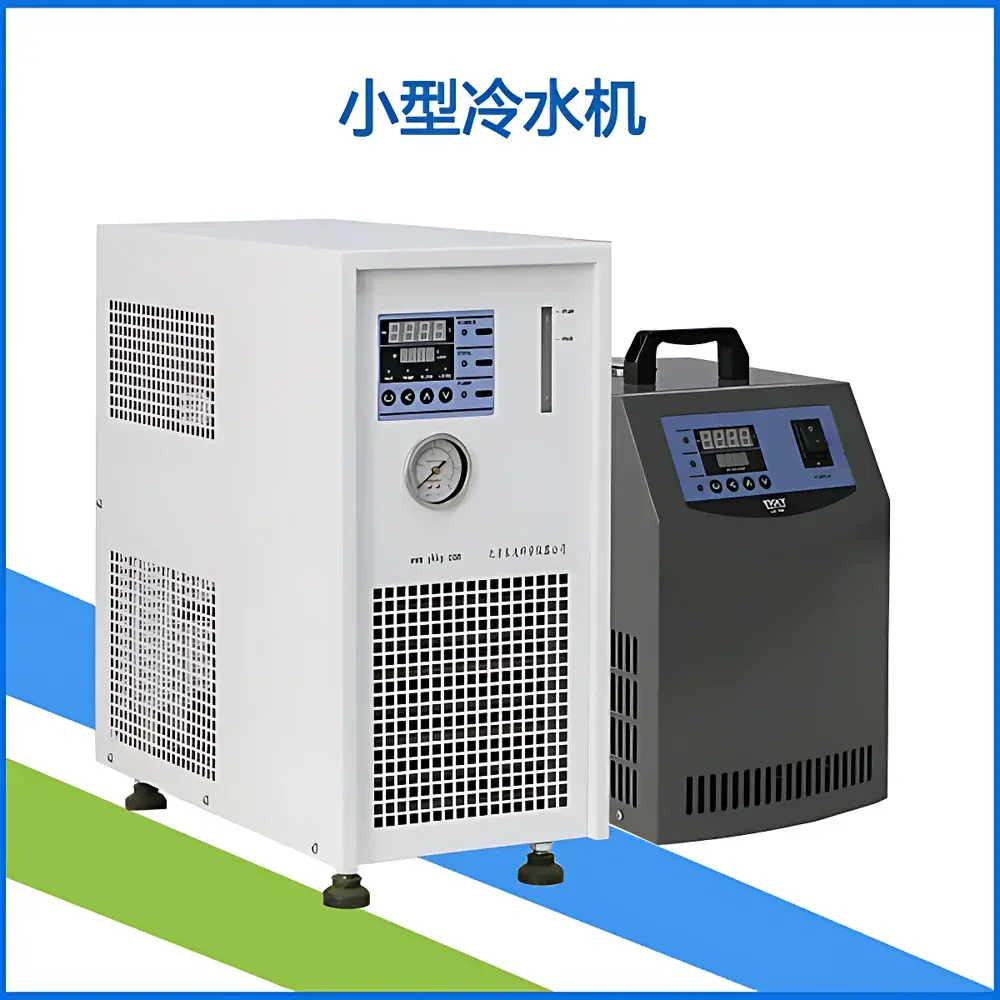
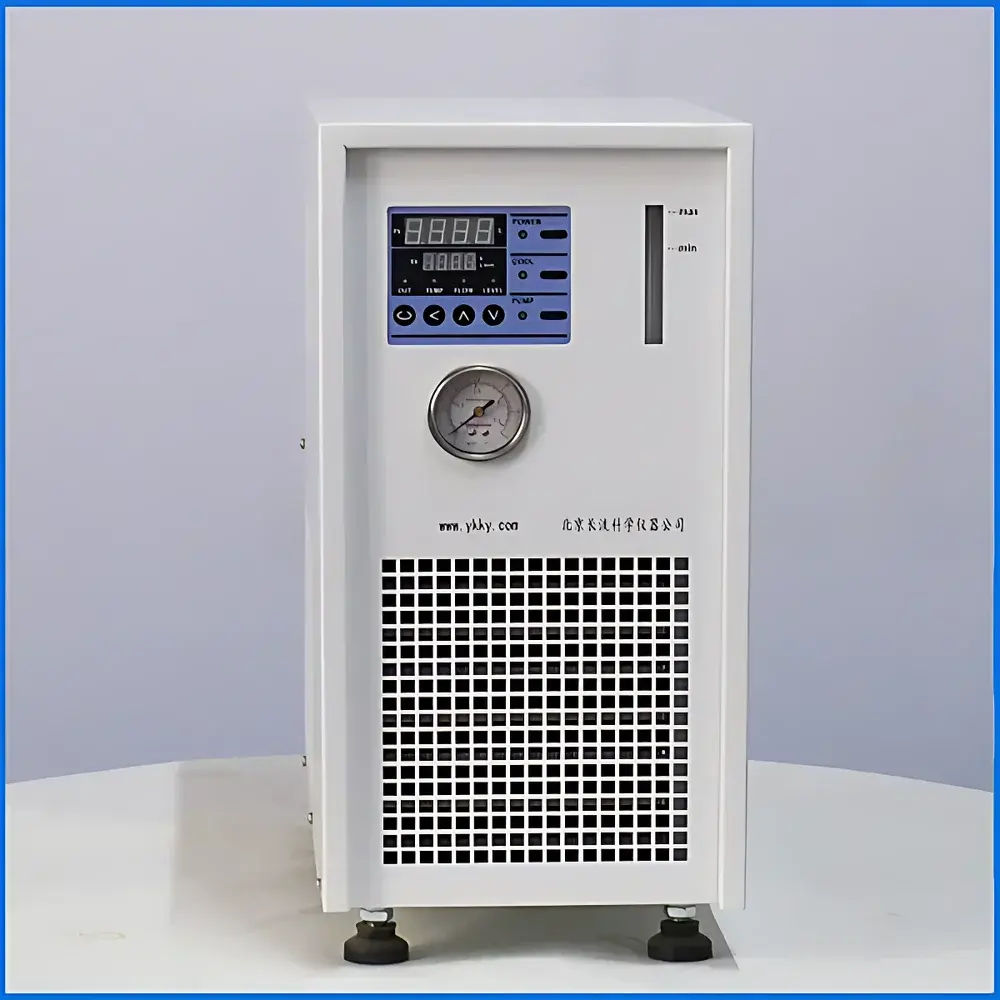
Coolium LX-300 Compact Circulating Chiller
| Brand | Coolium |
|---|---|
| Origin | Beijing, China |
| Manufacturer Type | Authorized Distributor |
| Product Category | Domestic |
| Model | LX-300 |
| Instrument Type | Integrated Unit |
| Cooling Method | Air-Cooled |
| Temperature Range | 5–35 °C |
| Cooling Capacity | 300 W (at 20 °C) |
| Temperature Stability | ±0.1 °C |
| Circulation Pressure | 0.8 bar |
| Flow Rate | 15 L/min |
| Reservoir Volume | 4 L |
| Operating Mode | Continuous |
Overview
The Coolium LX-300 Compact Circulating Chiller is an integrated, air-cooled refrigeration system engineered for precision temperature control in laboratory and analytical instrumentation applications. It operates on a closed-loop vapor-compression cycle, utilizing a hermetically sealed compressor, high-efficiency evaporator, and optimized condenser to deliver stable thermal management across a wide operational envelope. Designed specifically for compact installations—such as benchtop spectrometers, viscometers, calorimeters, electrophoresis units, and low-power laser systems—the LX-300 maintains fluid temperature within ±0.1 °C of setpoint over extended continuous operation. Its 4 L stainless-steel reservoir and recirculating pump provide consistent thermal load dissipation without external water supply dependency, eliminating risks associated with tap-water scaling, microbial growth, or pressure fluctuations.
Key Features
- Hermetically sealed refrigeration circuit with R134a or R290 refrigerant (model-dependent), ensuring long-term reliability and minimal maintenance.
- Digital PID temperature controller with adaptive learning algorithm—self-tunes response based on thermal load dynamics to minimize overshoot and stabilize faster.
- Ultra-quiet centrifugal circulation pump (≤45 dB[A] at 1 m), delivering up to 15 L/min at 0.8 bar maximum head pressure; flow rate adjustable via front-panel interface.
- Stainless-steel fluid path (304 grade) including reservoir, pump housing, and Rc1/2″ (ISO 7-1) threaded inlet/outlet ports—compatible with standard NPT adapters, quick-connect fittings, and silicone/PFA tubing.
- Real-time status display showing setpoint, actual bath temperature, pump status, and active alarms (over-temperature, low-flow, dry-run, compressor fault).
- Integrated safety protections: high-temperature cutoff, low-level reservoir sensor, overpressure relief valve, and automatic compressor shutdown on thermal overload.
- Optional RS485 serial interface (Modbus RTU protocol) for integration into centralized lab monitoring systems or LIMS environments requiring audit-ready temperature logging.
Sample Compatibility & Compliance
The LX-300 is compatible with deionized water, 30% ethylene glycol/water mixtures, and other non-corrosive, low-viscosity heat-transfer fluids meeting ASTM D1384 specifications. Its closed-loop architecture prevents oxidation and contamination of coolant—critical for applications requiring long-term fluid stability, such as electrophoresis buffer cooling or optical instrument thermal management. The unit complies with IEC 61010-1:2010 (Safety Requirements for Electrical Equipment for Measurement, Control, and Laboratory Use) and meets CE marking requirements for EMC (EN 61326-1) and Low Voltage Directive (2014/35/EU). While not certified for GMP or FDA 21 CFR Part 11 out-of-the-box, its optional RS485 interface supports traceable data export for GLP-compliant workflows when paired with validated third-party data acquisition software.
Software & Data Management
The LX-300 operates autonomously via its embedded microcontroller and does not require host PC software for basic function. However, the optional RS485 port enables bidirectional communication with SCADA platforms, LabVIEW, or custom Python-based control scripts. Users can remotely read real-time temperature, flow status, and alarm codes; adjust setpoints; and trigger manual pump start/stop commands. When integrated into validated environments, timestamped operational logs—including temperature deviation history and event-triggered alarms—can be exported for regulatory review. Firmware updates are performed via USB-to-serial adapter (not included), supporting version-controlled configuration management per ISO/IEC 17025 Clause 5.9.
Applications
- Thermal stabilization of differential scanning calorimeters (DSC), isothermal titration calorimeters (ITC), and reaction calorimeters requiring ±0.1 °C stability over multi-hour runs.
- Cooling support for rotational viscometers (e.g., Brookfield DVNext) and capillary viscometers where bath temperature directly affects viscosity measurement accuracy per ASTM D445.
- Constant-temperature supply to refractometers, density meters, and automated titrators operating under ISO 5725-defined repeatability conditions.
- Electrophoresis tank cooling (e.g., SDS-PAGE, native PAGE) to prevent gel distortion and band smearing caused by Joule heating.
- Active thermal management of low-power diode lasers (<5 W output), fiber-optic sensors, and photomultiplier tube housings in spectroscopic setups.
- Process validation support in food science labs (e.g., texture analyzer chilling modules) and electronics QA testing (e.g., thermal cycling fixtures).
FAQ
What is the minimum ambient temperature required for reliable operation?
The LX-300 is rated for ambient environments between 15 °C and 35 °C. Operation below 15 °C may impair compressor oil return and reduce refrigerant efficiency; supplemental ambient heating is recommended in uncontrolled cold rooms.
Can the unit operate with 100% ethylene glycol?
No. Glycol concentrations above 35% by volume significantly increase viscosity and reduce heat transfer efficiency, risking pump cavitation and overheating. Coolium recommends ≤30% glycol/water mixtures for sub-zero applications.
Is the reservoir accessible for cleaning or fluid replacement?
Yes—the top-mounted lid features a removable gasket-sealed cover with internal drain valve. A dedicated service port allows full reservoir evacuation without disassembling the pump manifold.
Does the LX-300 support external temperature sensing?
Not natively. It uses an internal Pt100 sensor located near the outlet port. For remote sensing, users must integrate an external PID controller with analog input capability and configure the LX-300 in “external setpoint” mode via RS485.
What maintenance intervals are recommended?
Compressor oil and refrigerant integrity should be verified every 24 months under continuous use. The reservoir and fluid path require flushing and refilling every 12 months when using DI water, or every 18 months with inhibited glycol solutions.



