
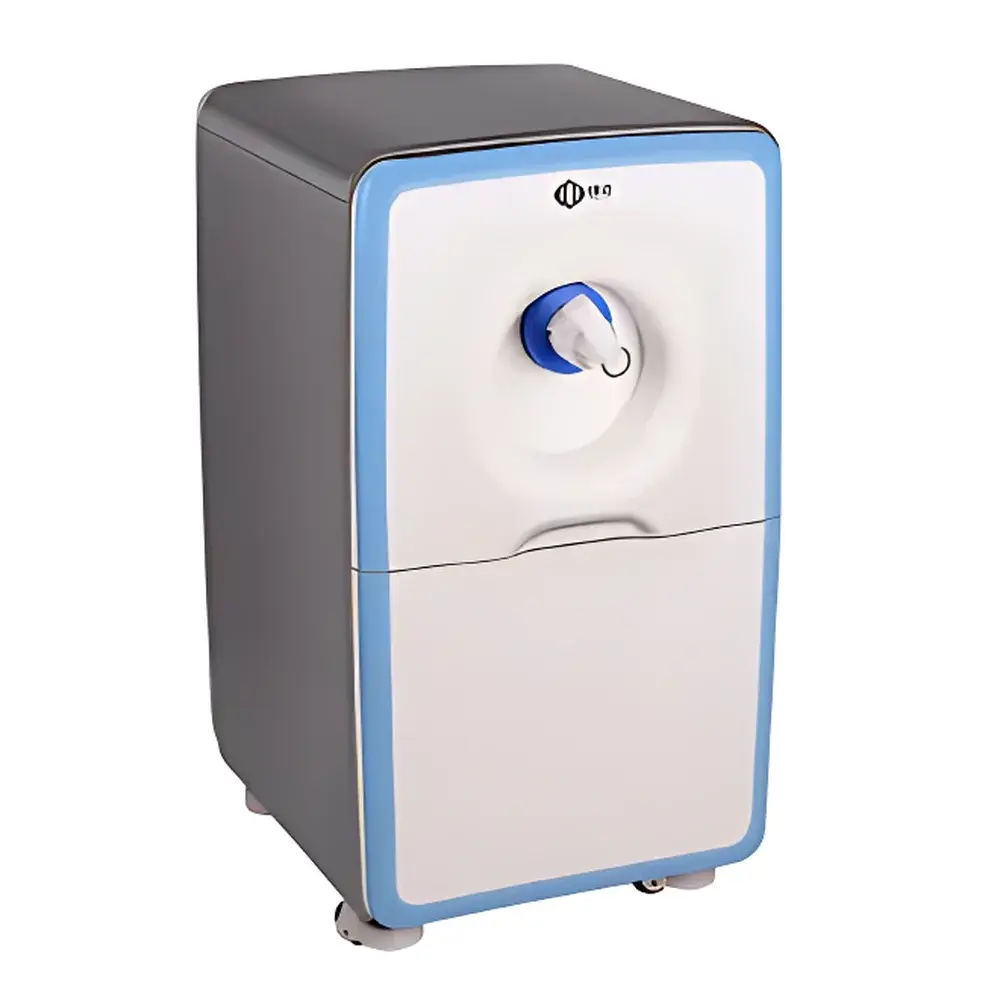
NIUMAG QMR-06 Low-Field Nuclear Magnetic Resonance Analyzer for Small Animal Body Composition
| Brand | NIUMAG |
|---|---|
| Origin | Jiangsu, China |
| Instrument Type | Low-Field NMR Analyzer |
| Model | QMR-06 |
| Sample Type | Live small animals (mice, rats, rabbits) — solid/liquid non-invasive measurement |
| Magnet Type | Permanent magnet |
| Measurement Time | ≤ 60 s per sample |
| Application | Quantitative in vivo fat mass, lean body mass, and free water content |
Overview
The NIUMAG QMR-06 is a dedicated low-field nuclear magnetic resonance (LF-NMR) analyzer engineered for non-invasive, quantitative assessment of body composition in live small laboratory animals. Unlike destructive or radiation-based methods, the QMR-06 leverages the intrinsic magnetic properties of hydrogen nuclei (1H) in adipose tissue and lean tissue to differentiate and quantify fat mass, lean body mass, and free water content based on distinct transverse relaxation times (T2). Operating at a stable, homogeneous permanent magnet field (typically ~0.05–0.1 T), the system employs a robust CPMG (Carr–Purcell–Meiboom–Gill) pulse sequence optimized for biological tissue discrimination. Its design adheres to core principles of quantitative NMR metrology—relying on signal amplitude proportionality to proton density and relaxation behavior rather than calibration curves derived from reference standards. This enables absolute, operator-independent quantification without chemical reagents, ionizing radiation, or surgical intervention.
Key Features
- Non-invasive & longitudinal monitoring: Enables repeated measurements on the same animal over time—critical for preclinical studies involving obesity, metabolic syndrome, cancer cachexia, or pharmacological interventions.
- Live-animal compatibility: No anesthesia, sedation, fasting, or euthanasia required; animals remain conscious and unstressed during acquisition, preserving physiological integrity.
- Sub-minute acquisition: Full-body composition analysis completed in ≤ 60 seconds per subject, supporting high-throughput screening in multi-group rodent studies.
- Dual-tissue resolution: Simultaneous quantification of fat mass (primarily triglyceride-bound protons with long T2) and lean mass (protein- and water-bound protons with shorter T2), with independent free water estimation.
- Permanent magnet architecture: Eliminates cryogen dependency, reduces infrastructure requirements (no liquid helium or chiller), and ensures operational stability across ambient temperature fluctuations typical in vivarium environments.
- Compact footprint & benchtop integration: Designed for seamless placement in animal housing facilities or core imaging labs without structural modification.
Sample Compatibility & Compliance
The QMR-06 accommodates live mice (15–45 g), rats (80–500 g), and rabbits (up to 2.5 kg) within its cylindrical bore. Subjects are placed supine in standardized, non-magnetic restraint tubes that minimize motion artifacts while ensuring reproducible positioning. The system complies with ISO/IEC 17025 general requirements for competence of testing and calibration laboratories when operated under documented SOPs. While not FDA-cleared as a medical device, its methodology aligns with NIH-supported preclinical phenotyping guidelines (e.g., Mouse Phenome Project) and supports GLP-compliant study execution when paired with audit-trail-enabled software configurations. Data output meets minimum reporting standards for publication in journals requiring method transparency (e.g., International Journal of Obesity, Diabetes).
Software & Data Management
The proprietary QMR Analysis Suite provides a validated, menu-driven interface compliant with ALCOA+ data integrity principles. Key capabilities include: automated shimming and RF calibration prior to each session; real-time signal-to-noise ratio (SNR) monitoring; batch processing of multi-subject datasets with metadata tagging (strain, age, treatment group); export of raw FID and processed T2 decay spectra in ASCII or HDF5 format; and generation of audit-ready PDF reports containing acquisition parameters, quality metrics (e.g., SNR ≥ 35 dB, phase error < 2°), and composition results with coefficient of variation (CV) per cohort. Software versioning, user access control (role-based permissions), and electronic signature support facilitate adherence to 21 CFR Part 11 requirements where applicable.
Applications
- Longitudinal tracking of adiposity changes in diet-induced obesity (DIO) mouse models
- Assessment of lean mass preservation during anti-cachectic drug trials
- Validation of genetic knockouts affecting lipid metabolism (e.g., Lepob/ob, Ucp1−/−)
- Quantification of edema or ascites volume in inflammatory or oncologic models
- Quality control in breeding colonies for consistent baseline phenotypes
- Supporting OECD Test Guidelines 407 (Repeated Dose 28-Day Oral Toxicity) and 452 (Chronic Toxicity Studies) via objective body composition endpoints
FAQ
Does the QMR-06 require animal anesthesia or restraint beyond standard handling?
No. Animals are gently placed in a ventilated, non-magnetic acrylic tube and remain fully conscious. The measurement is silent and non-stressful, with no physical discomfort reported in published behavioral assessments.
How does QMR compare to DEXA or CT for small animal body composition?
Unlike DEXA (dual-energy X-ray absorptiometry) or micro-CT, QMR delivers true volumetric fat/lean quantification without ionizing radiation exposure, eliminating cumulative dose concerns in longitudinal studies. It also avoids bone mineral density confounding effects inherent in DEXA-derived lean mass estimates.
Can the system be calibrated against chemical carcass analysis?
Yes. Validation studies routinely correlate QMR-derived fat mass with gravimetric Soxhlet extraction (r² > 0.98) and lean mass with nitrogen analysis (r² > 0.95), confirming traceability to gold-standard wet chemistry methods.
Is training provided for operation and data interpretation?
NIUMAG offers on-site installation qualification (IQ), operational qualification (OQ), and comprehensive user training—including SOP development, troubleshooting, and statistical analysis workflows for cohort-level comparisons.





