
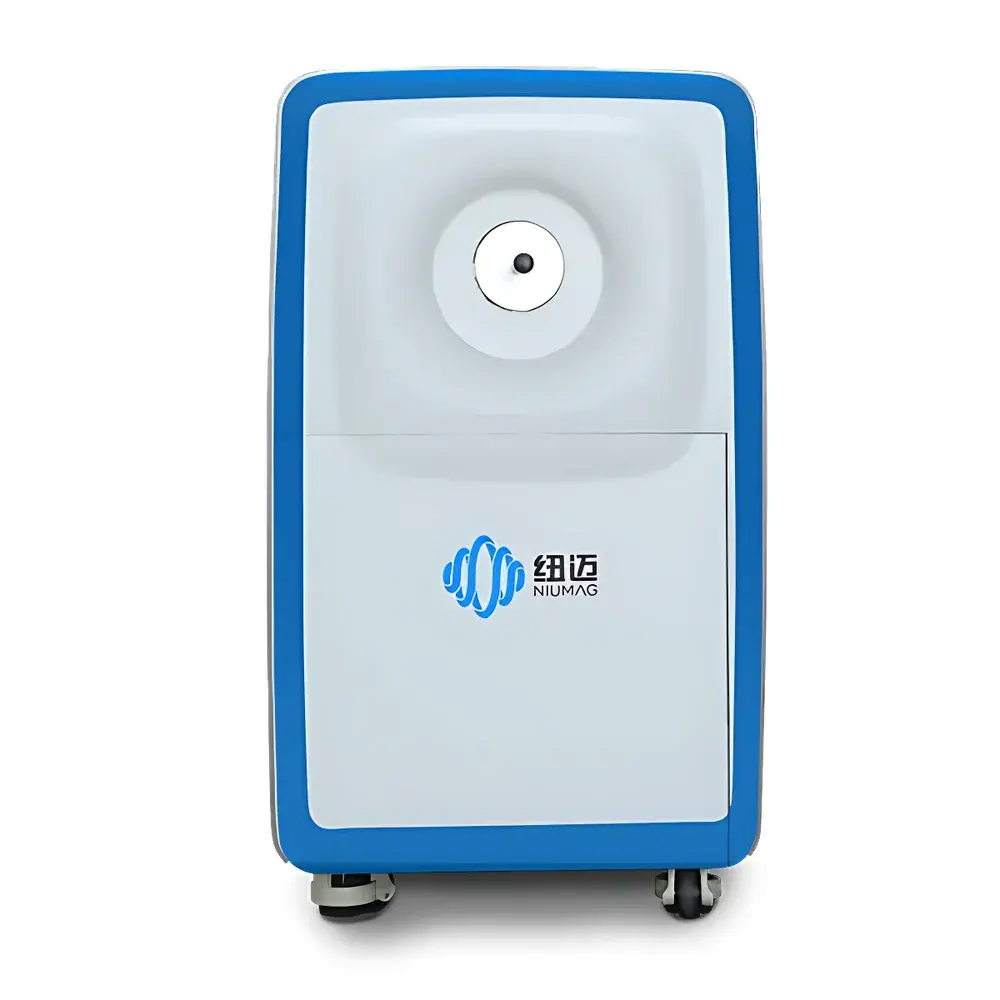
NIUMAG QMR06-090H-PRO-4 Low-Field Nuclear Magnetic Resonance Analyzer for Leptin-Deficient Animal Models
| Brand | NIUMAG |
|---|---|
| Origin | Jiangsu, China |
| Manufacturer Type | Authorized Distributor |
| Regional Classification | Domestic (China) |
| Model | QMR06-090H-PRO-4 |
| Instrument Type | Low-Field NMR Analyzer |
| Sample Compatibility | Solid-Liquid Dual-Phase (Live Small Animals) |
| Magnet System | Permanent Magnet |
| Dedicated Probe | Mouse Body-Composition Optimized RF Coil |
| Software | NIUMAG Proprietary Mouse Body Composition Analysis Suite |
| Regulatory Compliance | Designed for GLP-Compliant Preclinical Research Environments |
Overview
The NIUMAG QMR06-090H-PRO-4 is a purpose-engineered low-field nuclear magnetic resonance (LF-NMR) analyzer optimized for non-invasive, quantitative body composition analysis in leptin-deficient preclinical models—including ob/ob mice and Zucker fatty diabetic rats (ZFDM). Operating at a static magnetic field strength typical of permanent-magnet-based LF-NMR systems (typically 0.05–0.1 T), the instrument exploits intrinsic differences in transverse (T₂) and longitudinal (T₁) relaxation times among adipose tissue, lean muscle mass, and free/bound water compartments. This enables robust discrimination and quantification of fat mass, lean body mass, and total body water—without reliance on ionizing radiation, chemical contrast agents, or surgical intervention. The system is calibrated and validated specifically for conscious, unrestrained small rodents, eliminating confounding physiological stressors associated with anesthesia or restraint. Measurement acquisition is completed within 60–180 seconds per subject, supporting high-throughput longitudinal studies across metabolic, endocrine, and obesity pharmacology workflows.
Key Features
- Non-invasive, real-time quantification of fat mass, lean mass, and total body water in conscious, freely moving mice and rats
- Dedicated RF probe geometry engineered for optimal signal-to-noise ratio (SNR) and spatial homogeneity across murine thoracoabdominal anatomy
- Permanent magnet architecture ensuring field stability, minimal power consumption, and zero cryogen dependency
- No requirement for animal sedation, fasting, or euthanasia—preserving native metabolic state and enabling repeated measurements over time
- Integrated hardware-software synchronization enabling automated subject positioning, pulse sequence execution, and spectral deconvolution
- Thermal management system maintaining consistent probe temperature to ensure measurement reproducibility across multi-day study protocols
Sample Compatibility & Compliance
The QMR06-090H-PRO-4 supports live, unrestrained specimens including C57BL/6J-ob/ob mice, db/db mice, ZFDM rats, New Zealand White rabbits (up to 3 kg), and other small laboratory mammals within defined bore diameter and weight limits. All measurement protocols adhere to internationally recognized standards for preclinical imaging and metabolic phenotyping—including OECD Test Guideline 452 (Chronic Toxicity Studies), ISO/IEC 17025:2017 (General Requirements for Competence of Testing and Calibration Laboratories), and NIH Office of Laboratory Animal Welfare (OLAW) guidelines. While not a diagnostic medical device, the system is designed to support data integrity requirements aligned with FDA 21 CFR Part 11 for electronic records and signatures when deployed in regulated pharmacology studies.
Software & Data Management
NIUMAG’s proprietary Mouse Body Composition Analysis Software provides a validated, audit-trail-enabled interface for acquisition control, T₂ distribution fitting, multi-component relaxation modeling (e.g., bi-exponential or stretched exponential decay analysis), and absolute mass calibration using reference phantoms. The software implements traceable calibration routines compliant with ASTM E2810-22 (Standard Practice for Quantitative Analysis Using Low-Field NMR). Raw FID data are stored in vendor-neutral HDF5 format; processed results export to CSV, Excel, and XML for integration with LIMS or statistical platforms such as SAS, R, or GraphPad Prism. Role-based user access, electronic signature capture, and full audit logging meet GLP/GMP documentation expectations for regulatory submissions.
Applications
- Longitudinal monitoring of adiposity dynamics during anti-obesity drug intervention trials in leptin-signaling-deficient models
- Quantification of lean mass preservation or loss under insulin-sensitizing or anabolic therapies
- Assessment of fluid retention or edema progression in diabetic nephropathy or heart failure comorbidity models
- Correlation of NMR-derived body composition metrics with histopathological endpoints (e.g., liver steatosis grade, adipocyte hypertrophy)
- Validation of MRI or DEXA-derived body composition estimates in cross-platform method comparison studies
- Supporting mechanistic investigations into hypothalamic-pituitary-adrenal axis modulation and energy homeostasis regulation
FAQ
Can the QMR06-090H-PRO-4 be used for longitudinal studies requiring repeated measurements?
Yes—the system is explicitly designed for serial, non-invasive assessments without cumulative biological impact. Each scan imposes no thermal, electromagnetic, or pharmacological burden on the subject.
Is anesthesia required for accurate measurement?
No. The instrument operates with motion-tolerant pulse sequences and subject-specific coil tuning; data acquisition occurs while animals remain fully conscious and unrestrained.
What is the minimum and maximum subject weight supported?
The standard configuration accommodates mice (15–50 g) and rats (100–500 g); optional bore inserts extend compatibility to juvenile rabbits up to 3 kg.
How does this system compare to DEXA or CT for body composition analysis?
Unlike ionizing modalities, LF-NMR avoids radiation exposure and provides direct biochemical contrast based on molecular mobility—enabling differentiation of intramyocellular lipids, extracellular water, and adipose triglyceride pools without bone interference.
Is method validation documentation available for regulatory submissions?
NIUMAG provides IQ/OQ/PQ protocols, system suitability test procedures, and analytical method validation reports aligned with ICH M10 and FDA Bioanalytical Method Validation Guidance.




