
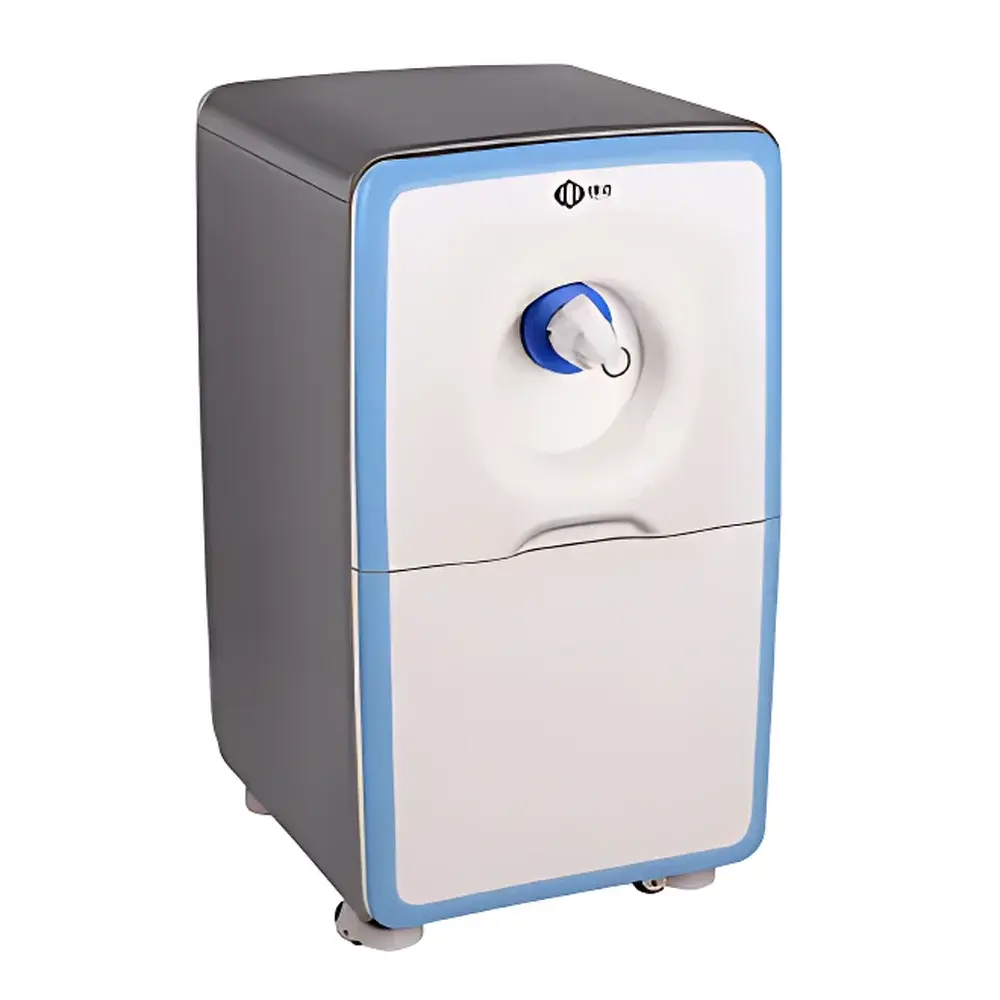
NIUMAG QMR06-090H-PRO Small Animal Body Composition Analyzer
| Brand | NIUMAG |
|---|---|
| Origin | Jiangsu, China |
| Magnet Type | Permanent Magnet |
| Sample Types | Live rats, mice, rabbits |
| Measurement Time | ≤ 60 s per scan |
| Measured Parameters | Fat mass, lean tissue mass, free water content |
| Software | Integrated proprietary NMR quantification platform with GLP-compliant audit trail |
| Compliance | Designed for ISO/IEC 17025-aligned laboratory environments |
| Hardware Architecture | Benchtop low-field NMR system (0.06–0.09 T) |
| Sample Handling | Non-invasive, non-destructive, no anesthesia or euthanasia required |
Overview
The NIUMAG QMR06-090H-PRO Small Animal Body Composition Analyzer is a benchtop, low-field nuclear magnetic resonance (NMR) instrument engineered for rapid, quantitative, and non-invasive assessment of body composition in live small laboratory animals. Operating at a static magnetic field strength of 0.06–0.09 tesla, the system leverages the intrinsic relaxation contrast between proton populations in adipose tissue (short T₂), lean tissue (intermediate T₂), and free water (long T₂) to deliver precise, model-based quantification of fat mass, lean tissue mass, and free water content. Unlike destructive or radiation-based methods, this analyzer employs a calibrated, pulse-sequence-driven NMR signal acquisition protocol—based on multi-echo CPMG (Carr–Purcell–Meiboom–Gill) acquisition—to extract compositional parameters directly from raw FID decay data without reliance on empirical calibration curves or external standards. Its permanent magnet architecture ensures stable field homogeneity and eliminates cryogen dependency, enabling continuous operation in standard laboratory environments with minimal infrastructure requirements.
Key Features
- Non-invasive, in vivo measurement: Enables longitudinal studies on the same animal cohort without anesthesia, sedation, or sacrifice—critical for metabolic phenotyping, dietary intervention trials, and pharmacological efficacy assessments.
- Sub-minute acquisition: Single-scan acquisition completed in ≤ 60 seconds, supporting high-throughput screening of up to 30–40 animals per day with consistent operator workflow.
- Robust hardware integration: Sealed permanent magnet assembly with active temperature stabilization (±0.1 °C) ensures long-term field stability and reproducible T₂ decay profiling across multi-day experiments.
- Automated sample positioning: Motorized animal cradle with adjustable bore alignment ensures repeatable placement within the homogeneous region (Dsh ≥ 40 mm), minimizing positional variance in signal amplitude and relaxation time estimation.
- Embedded signal processing: Real-time Fourier transformation and mono-/bi-exponential T₂ fitting algorithms are executed onboard, reducing post-acquisition computational latency and ensuring immediate parameter output.
Sample Compatibility & Compliance
The QMR06-090H-PRO accommodates live rodents and lagomorphs within standardized physiological weight ranges: mice (15–45 g), rats (80–500 g), and rabbits (up to 2.5 kg). The cylindrical RF coil (inner diameter: 90 mm) provides uniform excitation over the thoracic–abdominal region, optimized for whole-body or regional (e.g., abdominal-only) analysis. All measurement protocols comply with NIH Guide for the Care and Use of Laboratory Animals (8th edition) and support adherence to OECD Test Guidelines 452 (Chronic Toxicity Studies) and 453 (Combined Chronic Toxicity/Carcinogenicity Studies). Data integrity is maintained through timestamped audit logs, user-access controls, and exportable raw FID datasets—facilitating alignment with GLP documentation requirements and internal QA review processes.
Software & Data Management
The proprietary QMR Analysis Suite provides a validated, single-interface environment for instrument control, data acquisition, and quantitative reporting. The software implements role-based access control (RBAC), electronic signature capability, and full 21 CFR Part 11–compliant audit trails—including modification history for acquisition parameters, calibration records, and final compositional outputs. Results are exported in CSV, PDF, and XML formats compatible with LIMS integration. Batch processing mode supports automated analysis of multi-animal datasets, with built-in outlier detection based on T₂ distribution skewness and signal-to-noise ratio thresholds. All algorithmic models (e.g., fat–lean–water decomposition) are documented in the software’s embedded technical reference manual, available for internal validation per ISO/IEC 17025 Clause 7.2.2.
Applications
This system serves as a core analytical tool in preclinical research domains including obesity and diabetes modeling, cancer cachexia monitoring, sarcopenia progression tracking, and nutritional intervention evaluation. It is routinely deployed in academic core facilities, contract research organizations (CROs), and pharmaceutical R&D units conducting IND-enabling toxicology studies. Validated use cases include longitudinal fat mass tracking in db/db mice over 12-week high-fat diet regimens, lean mass preservation assessment during anti-catabolic drug treatment in aged rat models, and free water dynamics monitoring in sepsis-induced edema models. Its quantitative output aligns with endpoints defined in FDA Guidance for Industry: “Nonclinical Safety Evaluation of Pharmaceuticals” (2020) and EMA CHMP Guideline on Non-Clinical Investigation of Medicinal Products for the Treatment of Obesity (2021).
FAQ
What is the minimum and maximum animal weight supported?
The system is validated for mice (15–45 g), rats (80–500 g), and rabbits (up to 2.5 kg). Optimal signal-to-noise ratio is achieved within these ranges; weights outside this span require custom coil configuration and protocol revalidation.
Does the instrument require liquid nitrogen or helium cooling?
No. The permanent magnet design operates at ambient temperature with integrated thermoelectric stabilization—no cryogens or external chillers are needed.
Can the software be validated for GxP environments?
Yes. The QMR Analysis Suite includes IQ/OQ documentation templates, traceable version control, and 21 CFR Part 11–ready features including electronic signatures and immutable audit logs.
Is calibration required before each use?
A daily system check using a reference phantom is recommended; full recalibration is performed annually or after hardware service, following NIUMAG’s certified procedure SOP-QMR-003.
How are results traceable to international standards?
All T₂ decay models are referenced against NIST-traceable relaxation standards (SRM 1919a), and fat/lean quantification accuracy has been cross-validated against dual-energy X-ray absorptiometry (DXA) per ASTM E1827-22.





