
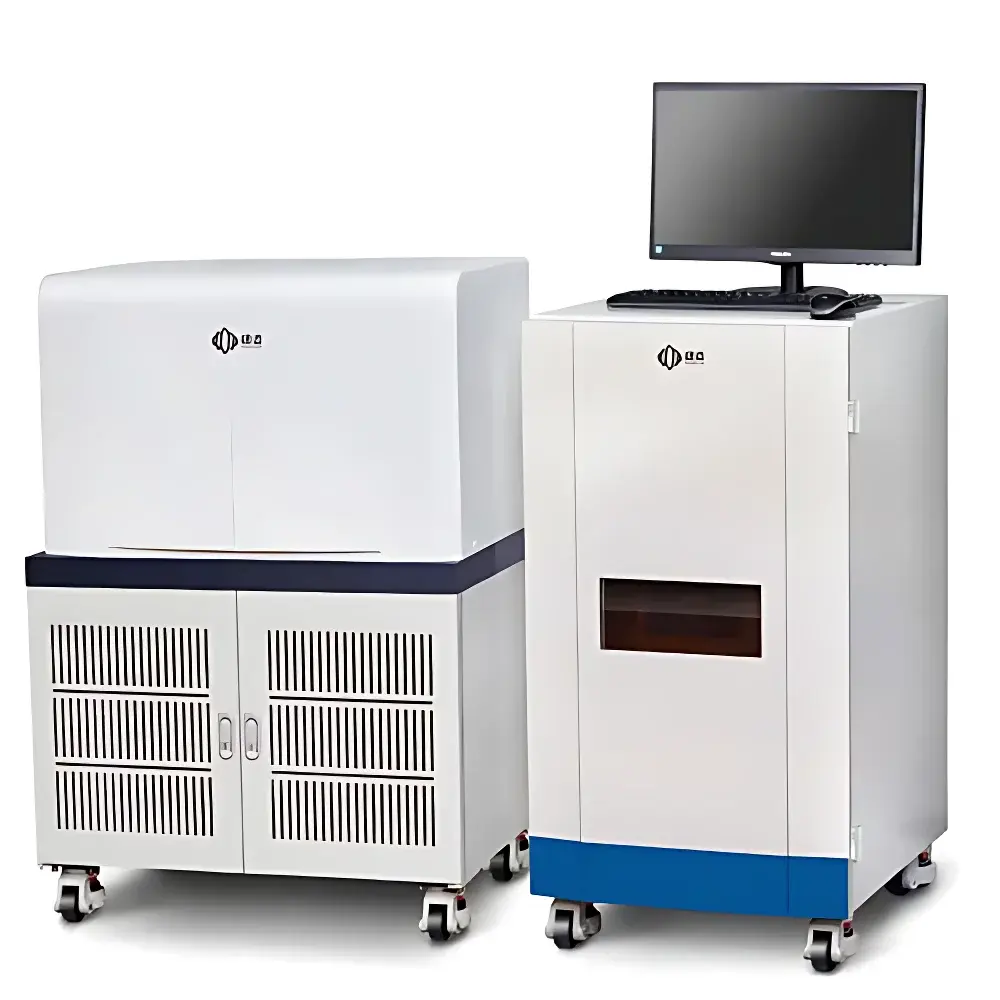
NIUMAG NMI20-060V-I Low-Field Nuclear Magnetic Resonance Analyzer and Imager
| Brand | NIUMAG |
|---|---|
| Origin | Jiangsu, China |
| Manufacturer Type | Authorized Distributor |
| Product Category | Domestic |
| Model | NMI20-060V-I |
| Instrument Type | Low-Field NMR Spectrometer & Imager |
| Sample Compatibility | Solid-Liquid Dual-Mode |
| Bore Diameter | 60 mm |
| Minimum Sample Volume | ≥1 mL |
| Sample Mass Range | 1–120 g |
Overview
The NIUMAG NMI20-060V-I is a benchtop low-field nuclear magnetic resonance (LF-NMR) analyzer and imager engineered for non-invasive, quantitative characterization of molecular dynamics and spatial distribution in food and agricultural materials. Operating at a static magnetic field strength typical of permanent-magnet-based systems (~0.5 T), it leverages proton (1H) NMR signal detection to measure transverse relaxation time (T2), longitudinal relaxation time (T1), and spin density—parameters directly correlated with water mobility, oil binding states, phase separation, and microstructural integrity. Unlike high-field superconducting NMR systems, the NMI20-060V-I employs a rare-earth permanent magnet assembly, eliminating cryogen dependency, RF shielding complexity, and long-term maintenance overhead. Its 60 mm clear bore accommodates heterogeneous samples—including whole fruits, meat cuts, cereal grains, oilseeds, and packaged beverages—without size-induced truncation artifacts. The system delivers rapid, standardized acquisition protocols compliant with routine QC workflows in food R&D, process engineering, and shelf-life assessment laboratories.
Key Features
- Integrated relaxometry and MRI capabilities in a single platform, supporting both quantitative T1/T2 distribution analysis and 2D spatial mapping.
- 60 mm horizontal-bore permanent magnet design optimized for sample flexibility—accepts solids, semi-solids, emulsions, and low-viscosity liquids without pre-treatment or labeling.
- Automated pulse sequence calibration: real-time center frequency search, automatic 90°/180° RF pulse width determination, and adaptive shimming reduce operator dependency and improve inter-user reproducibility.
- Three-step imaging workflow: user-selectable slice orientation (axial, sagittal, coronal), arbitrary slice thickness (1–20 mm), and multi-angle reconstruction—all executed via intuitive GUI navigation.
- Modular hardware architecture: supports optional temperature-controlled sample stages (−20 °C to +80 °C), custom RF coils, and auxiliary sensor interfaces for synchronized environmental monitoring.
- Low total cost of ownership: no liquid helium or nitrogen consumption; minimal power draw (<1.2 kW); compact footprint (W×D×H: 850 × 720 × 630 mm).
Sample Compatibility & Compliance
The NMI20-060V-I is validated for direct analysis of unprocessed food matrices including but not limited to: fresh/frozen meat and seafood, intact fruits and vegetables, cereal kernels and flours, dairy emulsions, edible oils, roasted coffee beans, tobacco leaves, and wood specimens. Sample mass range (1–120 g) and minimum volume (≥1 mL) ensure compatibility with standard lab-scale testing protocols. While not certified to ISO/IEC 17025 as a standalone metrology instrument, its measurement outputs align with ASTM E2491 (Standard Guide for NMR Imaging of Food Products) and support GLP-compliant data generation when deployed within validated laboratory information management systems (LIMS). Audit trails, electronic signatures, and raw FID/data export functions are configurable per FDA 21 CFR Part 11 requirements.
Software & Data Management
The system ships with two interoperable software suites: NIUMAG NMR Analysis Suite (v3.2+) and NMI Imaging Studio (v2.8+). Both run on Windows 10/11 x64 platforms and support DICOM 3.0 export for cross-platform image review. The analysis suite implements CPMG, SE, IR, SEG-CPMG, and FID sequences with built-in exponential decay fitting (mono-/bi-/multi-exponential models), T2 distribution deconvolution, and moisture/oil content calibration using reference standards. The imaging studio provides MSE, FSE, and IR-based contrast weighting, real-time k-space preview, adaptive noise suppression (non-local means filtering), pseudo-color mapping, ROI-based intensity profiling, and volumetric quantification. All datasets retain full metadata (pulse parameters, gradient strengths, dwell time, receiver gain) and are stored in vendor-neutral HDF5 format for third-party processing in MATLAB, Python (SciPy/Nibabel), or ImageJ/Fiji.
Applications
- Quantitative fat/water content and solid fat content (SFC) profiling in dairy, meat, and confectionery products.
- Dynamic monitoring of water migration during drying, freezing, thawing, and cooking—enabling kinetic modeling of mass transfer.
- Non-destructive evaluation of fruit ripeness, internal bruising, seed viability, and grain infestation via T2 heterogeneity mapping.
- Microstructural characterization of myofibrillar protein networks, starch gelatinization, and gluten matrix development.
- Spatially resolved lipid oxidation tracking in fried snacks and baked goods using T1-weighted contrast.
- Process validation for HPP, pulsed electric field (PEF), and microwave-assisted drying technologies.
FAQ
What magnetic field strength does the NMI20-060V-I operate at?
The system utilizes a permanent magnet generating a nominal static field of approximately 0.47 T (20 MHz 1H Larmor frequency), optimized for robust signal-to-noise in heterogeneous biological samples.
Can the instrument distinguish bound vs. free water in food matrices?
Yes—through multi-exponential T2 relaxation analysis, where distinct decay components (e.g., T21 ≈ 1–10 ms, T22 ≈ 10–100 ms, T23 > 100 ms) correspond to immobilized, intermediate, and bulk water populations.
Is spectral resolution sufficient for chemical shift discrimination?
No—this is a low-field relaxometer/imager; it does not resolve chemical shifts. It measures relaxation dynamics and spatial distributions, not molecular identity.
Does the system support automated batch processing?
Yes—via scriptable macros in the analysis software and scheduled acquisition queues in the imaging studio, enabling unattended overnight runs for multi-sample studies.
What regulatory documentation is provided for audit readiness?
A comprehensive IQ/OQ protocol package, electronic logbook templates, raw data archiving guidelines, and a traceable calibration certificate for RF amplitude and gradient linearity are included with each delivery.





