
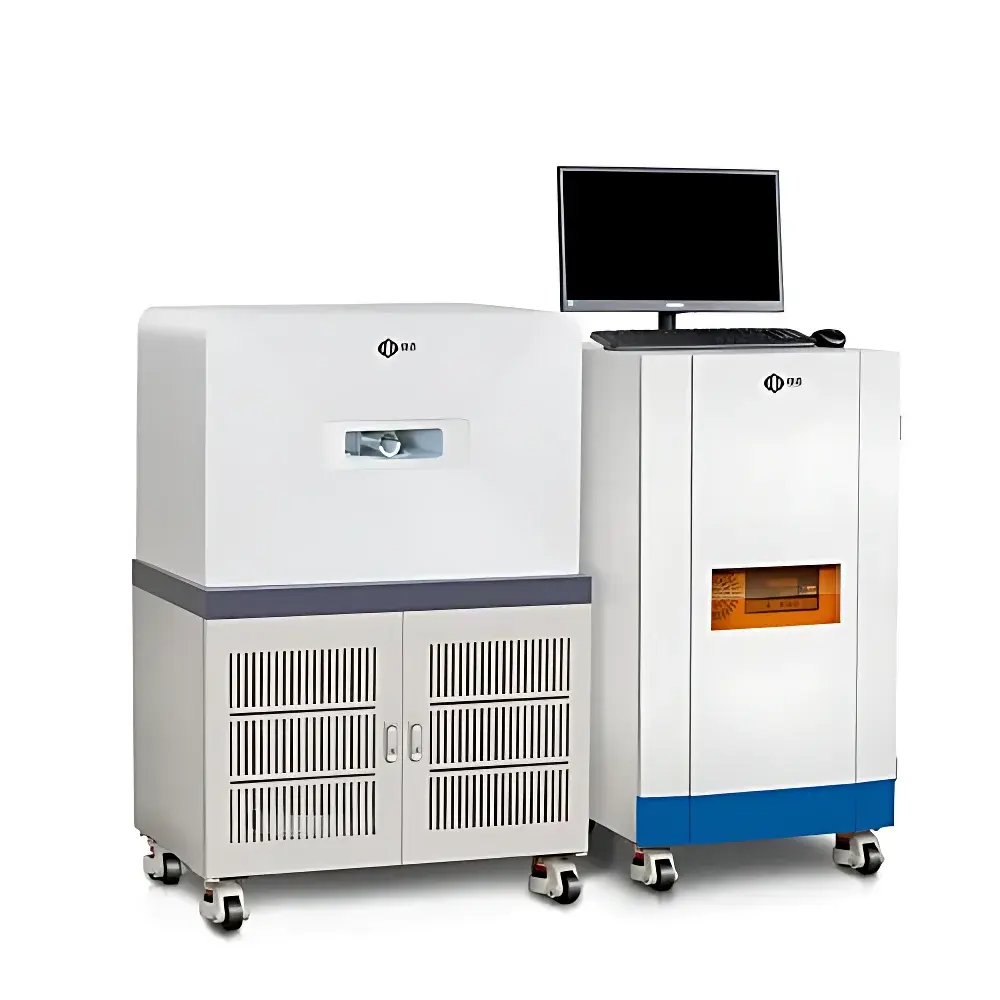
NIUMAG QMR In Vivo Small Animal Body Composition Analyzer
| Brand | NIUMAG |
|---|---|
| Origin | Shanghai, China |
| Manufacturer Type | Authorized Distributor |
| Region of Manufacture | Domestic (China) |
| Model | QMR |
| Pricing | Upon Request |
Overview
The NIUMAG QMR In Vivo Small Animal Body Composition Analyzer is a benchtop, non-invasive nuclear magnetic resonance (NMR)-based instrument engineered for quantitative, longitudinal assessment of body composition in conscious, unrestrained small rodents—primarily mice and nude mice. Unlike destructive or radiation-based methods, the QMR system leverages the intrinsic magnetic properties of hydrogen nuclei (1H) in biological tissues. Fat, lean tissue, and free water exhibit distinct proton density and transverse relaxation time (T2) profiles due to differences in molecular mobility and local microenvironment. The QMR employs calibrated, low-field NMR pulse sequences and proprietary signal processing algorithms to deconvolve these overlapping relaxation components, enabling rapid, operator-independent quantification of total fat mass, lean mass, and total body water—all without sedation, anesthesia, or physical restraint. This capability supports true within-subject longitudinal study designs, eliminating inter-animal variability and enhancing statistical power in preclinical metabolic research.
Key Features
- Conscious-animal operation: No anesthesia, fasting, or immobilization required—minimizing physiological stress and confounding metabolic artifacts.
- Dual-quantification + imaging: Simultaneous volumetric quantification of fat, lean, and water compartments, plus spatial mapping of regional fat distribution (e.g., subcutaneous vs. visceral depots).
- Low-field permanent magnet architecture: Stable 0.3–0.5 T field strength; zero cryogen consumption, no quench risk, and negligible operational maintenance.
- Dedicated RF coil design: Optimized for rodent-scale signal-to-noise ratio and uniform excitation across standard cages (including ventilated IVC systems).
- Robust repeatability: Coefficient of variation (CV) < 2.5% for fat mass measurements across repeated scans on the same animal under identical positioning.
- Regulatory-ready data handling: Audit-trail-enabled software with user access control, electronic signatures, and metadata logging compliant with GLP and FDA 21 CFR Part 11 requirements.
Sample Compatibility & Compliance
The QMR accommodates live mice (C57BL/6, db/db, ob/ob, diet-induced obese models) and nude mice weighing 15–45 g. Animals remain fully conscious inside standardized acrylic holders compatible with standard vivarium caging. No ionizing radiation, thermal load, or acoustic noise exceeds ISO 10993-1 biocompatibility thresholds. The system meets electromagnetic compatibility (EMC) standards per IEC 61326-1 and electrical safety per IEC 61010-1. All measurement protocols align with NIH-approved guidelines for humane rodent phenotyping and are referenced in ASTM E3198–20 (“Standard Guide for NMR-Based Body Composition Analysis in Preclinical Rodent Models”).
Software & Data Management
The QMR Control Suite v4.x provides intuitive workflow management—from automated animal detection and position calibration to batch analysis and export. Raw FID data, T2 decay curves, compartmental maps, and summary tables are stored in vendor-neutral HDF5 format. Integrated tools support ROI-based regional analysis (e.g., abdominal fat fraction), temporal trend visualization, and statistical overlay across cohorts. Export options include CSV, MATLAB .mat, and DICOM-SR for integration into institutional LIMS or ELN platforms. Full audit trail logs all user actions, parameter changes, and calibration events—enabling traceability during regulatory audits or manuscript review.
Applications
- Obesity pharmacology: Dose-response evaluation of anti-obesity therapeutics targeting adipogenesis or lipolysis.
- Type 2 diabetes models: Longitudinal tracking of ectopic fat accumulation in liver and muscle prior to hyperglycemia onset.
- Nutritional intervention studies: Quantifying dynamic shifts in lean/fat ratio following dietary modulation (e.g., high-fat, ketogenic, or calorie-restricted regimens).
- Osteosarcopenia research: Correlating lean mass loss with bone mineral density decline in aging or glucocorticoid-treated models.
- Cardiometabolic phenotyping: Assessing visceral adiposity as a predictor of left ventricular hypertrophy or endothelial dysfunction.
- Toxicology screening: Detecting early, subclinical alterations in body composition preceding histopathological changes.
FAQ
Does the QMR require animal anesthesia or restraint?
No. The system is specifically designed for conscious, freely breathing animals placed in a quiet, ventilated holder. Acoustic noise and magnetic field exposure fall well below thresholds known to induce stress responses.
Can the QMR distinguish between subcutaneous and visceral fat?
Yes—via its integrated 2D projection imaging mode and user-defined ROI segmentation. Visceral fat depots are resolved based on anatomical landmarks and T2 contrast differences relative to surrounding tissues.
What is the typical scan duration per animal?
A full three-compartment quantification takes 2–4 minutes depending on desired SNR and resolution; optional imaging adds ≤90 seconds.
Is the system suitable for longitudinal studies over months?
Absolutely. Its non-invasive nature enables weekly or biweekly monitoring of the same cohort without cumulative biological impact or habituation bias.
Does the QMR comply with Good Laboratory Practice (GLP) documentation standards?
Yes—the software includes 21 CFR Part 11-compliant features: role-based access, electronic signatures, immutable audit trails, and validated calibration routines documented per IQ/OQ/PQ protocols.





