
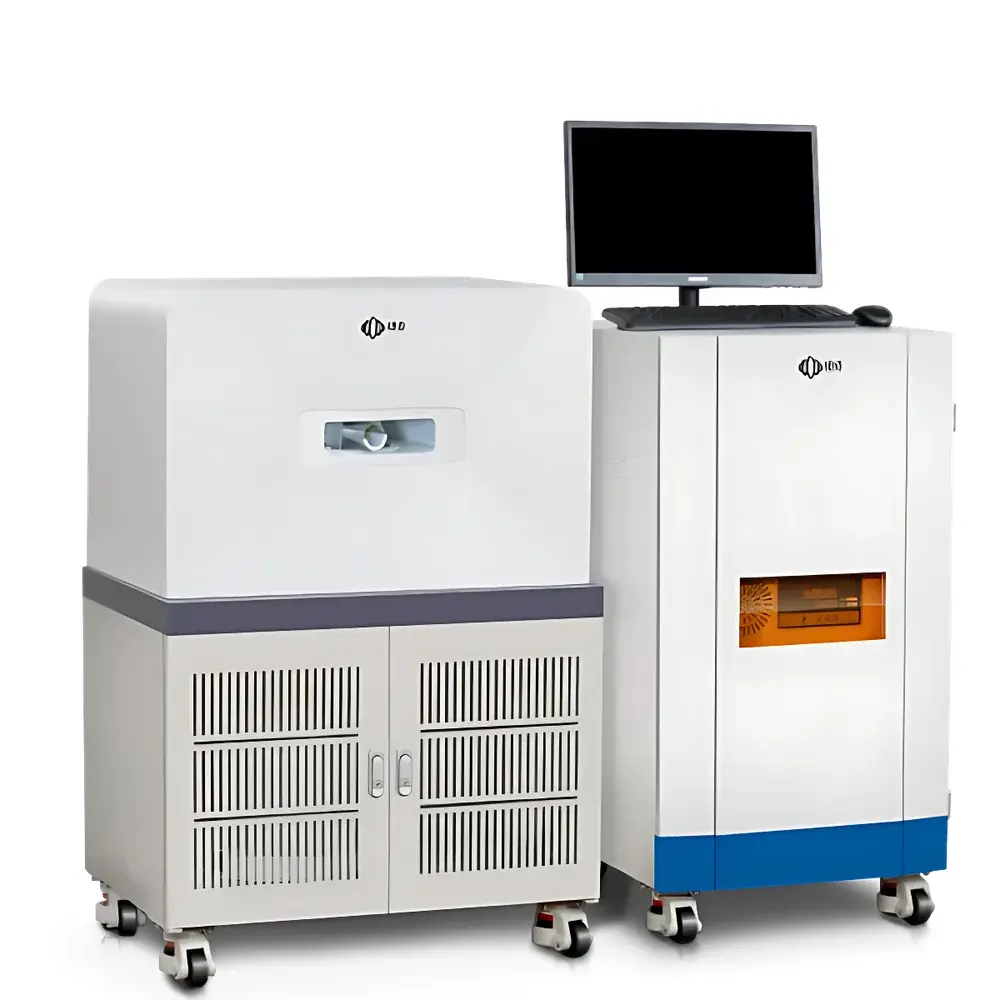
NIUMAG MesoMR Series Low-Field Nuclear Magnetic Resonance Analyzer for Soil Interface Interaction Analysis
| Brand | NIUMAG |
|---|---|
| Origin | Jiangsu, China |
| Manufacturer Type | Authorized Distributor |
| Origin Category | Domestic |
| Model | MesoMR Series+ |
| Instrument Type | Low-Field NMR Spectrometer |
| Sample Compatibility | Solid-Liquid Dual-Phase |
| Operating Frequencies | 12 MHz / 21 MHz |
| Data Acquisition Mode | Pulsed Fourier Transform (PFT-NMR) |
Overview
The NIUMAG MesoMR Series Low-Field Nuclear Magnetic Resonance Analyzer is a dedicated benchtop NMR system engineered for non-destructive, quantitative characterization of soil interface interactions—particularly the dynamic relationships between soil solid matrix, interstitial water, gases, and biological interfaces. Operating on the physical principle of pulsed nuclear magnetic resonance, the instrument detects hydrogen-1 (1H) proton signals from water molecules residing in soil pore spaces. By applying a Carr–Purcell–Meiboom–Gill (CPMG) spin-echo pulse sequence, it acquires transverse relaxation decay curves (T2 decay), which are intrinsically linked to pore-scale fluid confinement. Shorter T2 times correspond to strongly restricted water (e.g., adsorbed or film-bound water in micropores), while longer T2 components reflect less restricted water in meso- and macropores. This enables direct, calibration-free mapping of pore size distribution—without mercury intrusion or vacuum drying artifacts—making the MesoMR an essential tool for fundamental soil physics, hydrological modeling, and sustainable land management research.
Key Features
- Two selectable operating frequencies: 12 MHz (0.287 T nominal field) and 21 MHz (0.5 T nominal field), optimized for enhanced signal-to-noise ratio and resolution in heterogeneous soil matrices.
- Permanent magnet architecture with high field homogeneity (±0.03 T over active volume), ensuring stable long-term operation without cryogen consumption or external cooling infrastructure.
- 60 mm diameter radiofrequency (RF) probe coil, designed for optimal filling factor and RF penetration depth in intact soil cores (up to Ø60 × H80 mm) and powdered samples.
- Full digital pulse programmer supporting standard and advanced sequences: CPMG, IR-CPMG, diffusion-weighted (PGSE), and saturation recovery—enabling T1, T2, D-T2, and T1-T2 correlation analysis.
- Integrated temperature control module (optional) for controlled studies of freeze-thaw cycles, hydrate formation, or adsorption/desorption kinetics under regulated thermal conditions.
Sample Compatibility & Compliance
The MesoMR supports native-state analysis of undisturbed soil cores, sieved aggregates, sediment suspensions, and saturated/unsaturated soil columns. Its solid–liquid dual-phase capability accommodates both rigid mineral frameworks and mobile aqueous phases without sample dehydration or chemical fixation. The system complies with ISO 14687 (soil characterization terminology), ASTM D422 (particle-size analysis), and supports method development aligned with USDA NRCS soil survey protocols. All acquired raw FID and echo train data adhere to HDF5 format standards, enabling traceability and third-party validation. Audit trails, user access controls, and electronic signature support are configurable to meet GLP and FDA 21 CFR Part 11 requirements when deployed in regulated environmental testing laboratories.
Software & Data Management
The proprietary MesoMR Control & Analysis Suite provides end-to-end workflow automation—from pulse sequence setup and real-time signal monitoring to inverse Laplace transformation (ILT) of T2 spectra using non-negative least squares (NNLS) algorithms. Batch processing supports multi-sample comparative analysis with statistical overlays and PCA-based clustering. Export options include CSV, MATLAB .mat, and Bruker-compatible ParaVision formats. Raw data files are timestamped, checksum-verified, and stored with full metadata (pulse parameters, shimming logs, temperature history), facilitating reproducibility audits and inter-laboratory benchmarking per ISO/IEC 17025 guidelines.
Applications
- Soil hydrology: Quantification of bound vs. mobile water fractions; capillary rise dynamics; hysteresis in wetting/drying cycles.
- Pore structure analysis: T2-to-pore-size calibration via surface relaxivity models (e.g., ρ2 = 1–5 µm/s); differentiation of intra-aggregate vs. inter-aggregate porosity.
- Biogeochemical interfaces: Monitoring root exudate–soil particle interactions; microbial biofilm hydration states; redox-sensitive water mobility shifts.
- Environmental stress response: Time-resolved tracking of ice nucleation in frozen soils; methane hydrate dissociation kinetics; CO2 sequestration in clay-rich formations.
- Land-use impact assessment: Comparative pore network degradation under tillage, compaction, or organic amendment regimes.
FAQ
How does the MesoMR distinguish between different water states in soil?
It resolves water populations based on their transverse relaxation time (T2), which correlates inversely with pore confinement and surface interaction strength—short T2 reflects immobile adsorbed water; longer components indicate capillary or gravitational water.
Can the system be used for saturated and unsaturated soil samples?
Yes—the MesoMR operates across water saturation levels from residual moisture (θ 0.45 cm³/cm³), with sensitivity maintained through adaptive RF power and echo spacing optimization.
Is calibration required for pore size quantification?
While absolute pore size requires site-specific surface relaxivity (ρ2) determination, relative distributions and comparative trends are fully quantitative without empirical calibration.
What sample preparation is needed prior to measurement?
Minimal preparation: intact cores are sealed in air-tight tubes to prevent evaporation; no drying, grinding, or chemical treatment is necessary—preserving native pore geometry and interfacial chemistry.
Does the instrument support regulatory compliance for environmental testing reports?
Yes—when configured with audit logging, role-based access, and electronic signatures, the system meets documentation rigor required by EPA Method 9045D, ISO 10390, and EU Soil Thematic Strategy reporting frameworks.





