ProOpto Shack-Hartmann Wavefront Sensor NIR/EUV Series
| Brand | ProOpto |
|---|---|
| Origin | Germany |
| Manufacturer Type | Authorized Distributor |
| Import Status | Imported |
| Model | NIR/EUV |
| Pricing | Upon Request |
| Spectral Range | 1100 nm – 1 nm |
| Dynamic Range | up to 100λ |
| Sensitivity | <100 pm |
| Compliance | ISO 11146, ISO 13694, ISO 11670, ISO 15367 |
| Camera Compatibility | >20 industrial and scientific camera models supported |
| Micro-lens Array Options | Multiple pitch/focal-length configurations available |
| Software | ISO-compliant beam analysis suite with Zernike decomposition, M² real-time calculation, and Fresnel–Kirchhoff propagation engine |
Overview
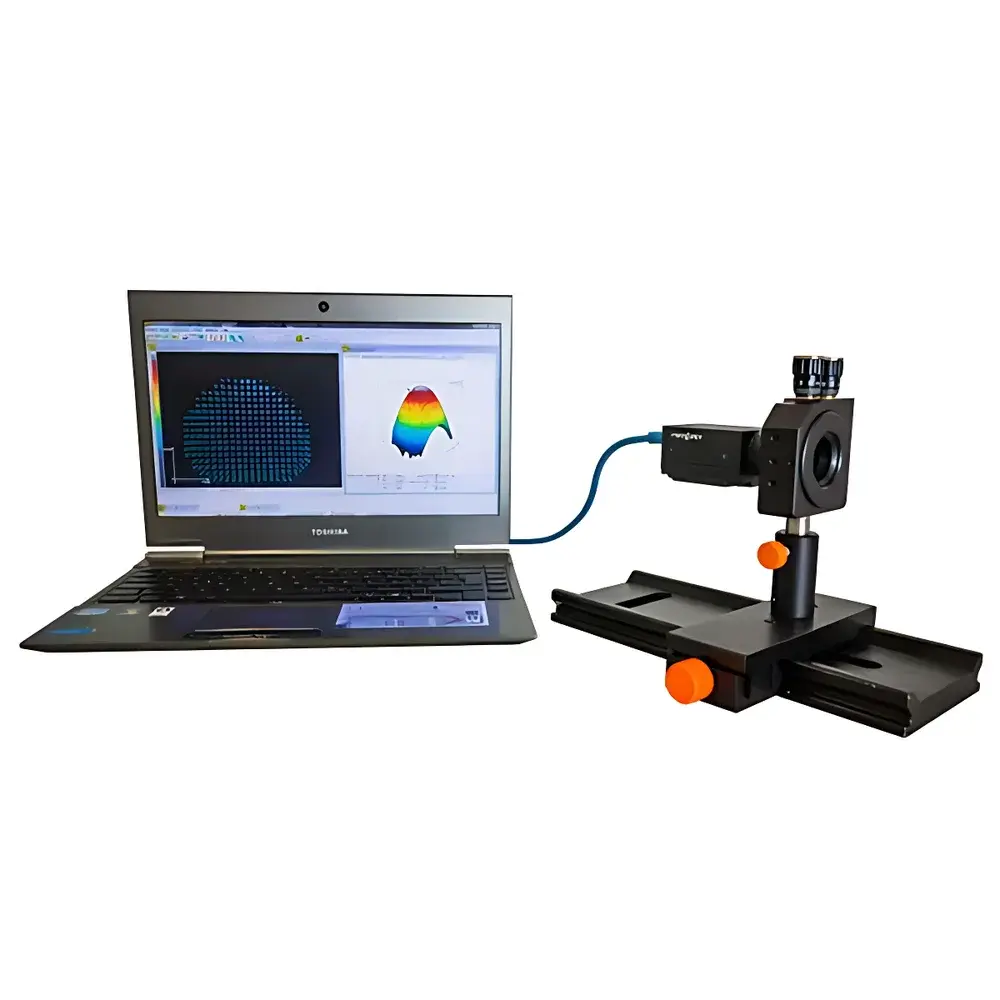
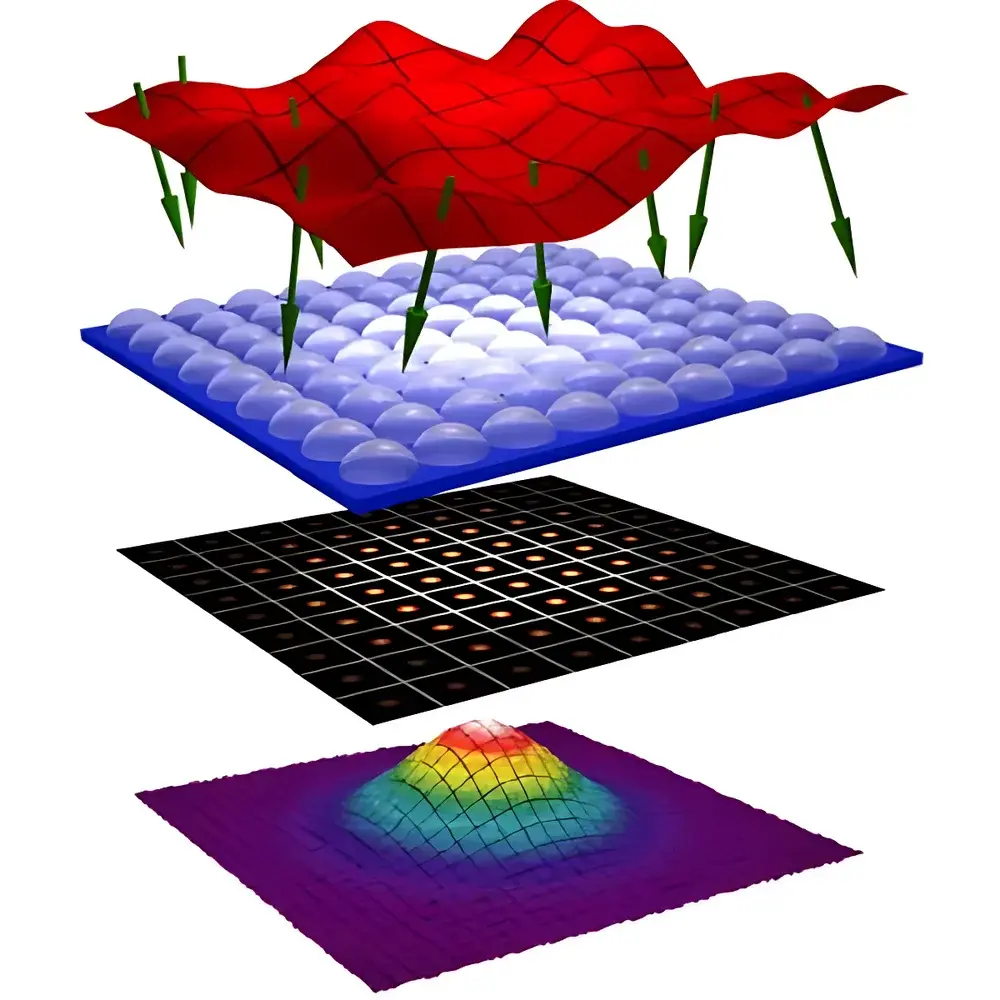
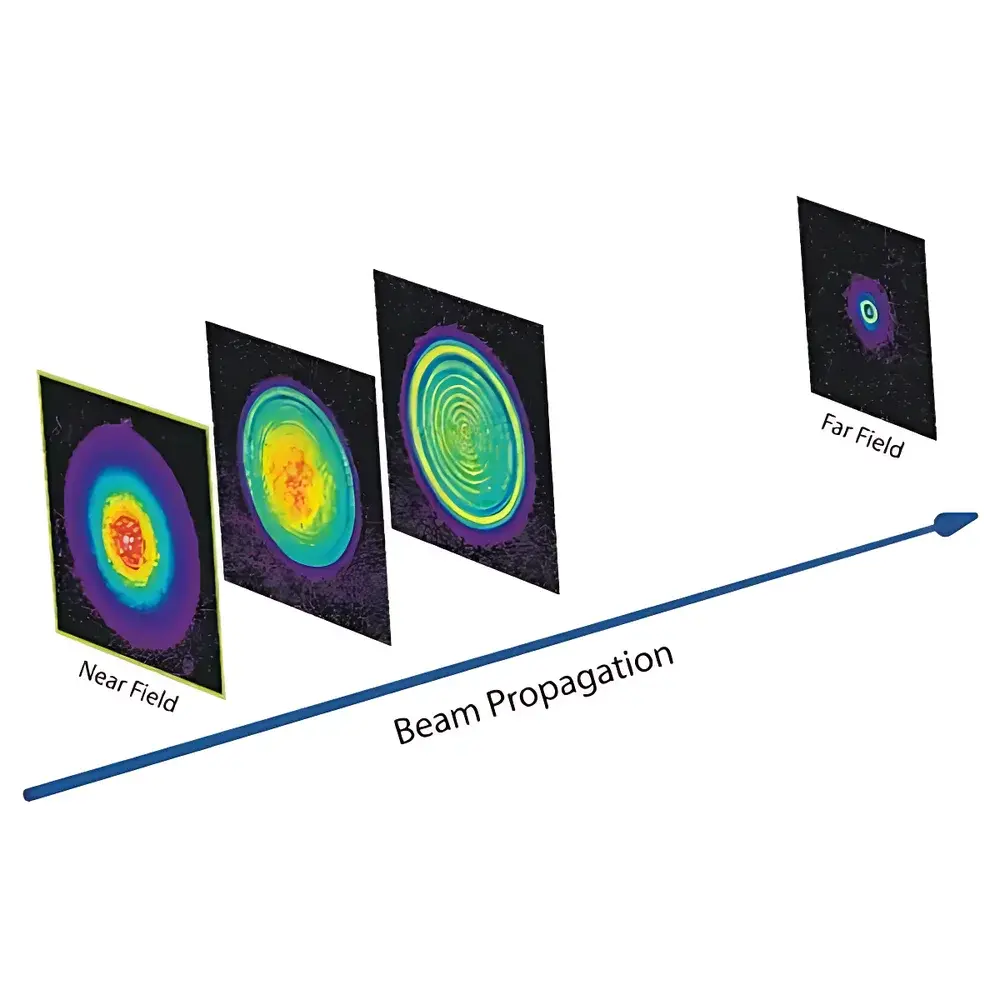
The ProOpto Shack-Hartmann Wavefront Sensor NIR/EUV Series is a precision optical metrology instrument engineered for quantitative, single-shot characterization of laser wavefronts and beam propagation dynamics across an exceptionally broad spectral range—from near-infrared (NIR) at 1100 nm down to extreme ultraviolet (EUV) at 1 nm. Based on the well-established Shack–Hartmann principle, the system employs a micro-lens array (MLA) to subdivide the incident wavefront into an array of localized sub-apertures. Each lenslet generates a focused spot on a high-resolution, low-noise imaging sensor; lateral displacement of each spot relative to its reference position encodes local wavefront slope information. By reconstructing the gradient field via centroid detection algorithms and integrating numerically using least-squares or modal (Zernike) methods, the full 2D phase distribution—and thus the complete optical wavefront—is recovered with sub-picometer sensitivity. This enables rigorous, standards-based assessment of beam quality, focusing performance, and temporal stability without iterative scanning or interferometric referencing.
Key Features
- Single-acquisition, full-parameter beam characterization: simultaneous extraction of intensity profile, wavefront phase, divergence, pointing stability, and M² in one exposure
- Ultra-broad spectral coverage: validated operation from 1100 nm (NIR) to 1 nm (EUV), supporting synchrotron, FEL, and high-harmonic generation (HHG) sources
- High dynamic range wavefront measurement: up to ±50λ peak-to-valley (PV) unambiguous range, extendable via multi-range stitching
- Sub-100 pm RMS wavefront sensitivity under optimized illumination and integration conditions
- Modular MLA design: interchangeable lenslet arrays with varying focal lengths (1–25 mm), pitches (100–500 µm), and coatings (UV-enhanced, EUV multilayer, AR/NIR)
- Fully programmable acquisition engine supporting external triggering, burst mode, and hardware-synchronized shutter control
Sample Compatibility & Compliance
The sensor accommodates collimated, converging, or diverging beams with diameters ranging from 1 mm to 35 mm (dependent on MLA selection). It is compatible with pulsed (fs–ms pulse widths) and CW laser sources, including Ti:sapphire, Yb-fiber, CO₂, excimer, and free-electron lasers. All core beam parameter calculations—beam diameter (ISO 11146-1/2), divergence (ISO 11146-1), M² factor (ISO 11146-2), beam profile flatness (ISO 13694), pointing stability (ISO 11670), and wavefront error (ISO 15367-1)—are implemented per international standards with traceable algorithms and uncertainty budgets. The system architecture supports GLP/GMP-aligned operation: audit trails, user access levels, electronic signatures, and raw-data retention are enabled through optional FDA 21 CFR Part 11–compliant software modules.
Software & Data Management
The bundled ProOpto BeamStudio™ software provides a unified platform for real-time visualization, ISO-conformant reporting, and advanced post-processing. Key capabilities include: Zernike polynomial decomposition (up to 64 terms), Fresnel–Kirchhoff near- and far-field propagation modeling, M² convergence analysis with automatic Rayleigh range determination, temporal drift tracking over hours/days, and export of calibrated HDF5, TIFF, and CSV datasets. The API supports Python (via PyProOpto SDK), MATLAB, and LabVIEW integration. Over 20 camera models are natively supported—including sCMOS, EMCCD, and back-illuminated CCD sensors—with automatic gain/offset calibration and non-uniformity correction applied prior to centroid computation.
Applications
- High-power laser system commissioning and long-term stability monitoring in industrial manufacturing (e.g., laser welding, ablation, additive manufacturing)
- Optical alignment and aberration diagnosis in EUV lithography tools and synchrotron beamlines
- M² validation for ultrafast amplifier chains and CPA systems in academic and national laboratories
- Adaptive optics loop calibration and deformable mirror characterization
- Free-space optical communication link optimization via wavefront error budgeting
- Development and qualification of diffractive optical elements (DOEs), metasurfaces, and custom beam shapers
FAQ
What is the minimum measurable beam diameter?
Beam diameter down to 1 mm is supported using high-density MLA configurations; optimal accuracy is achieved above 3 mm for standard setups.
Can the system measure pulsed lasers with low repetition rates?
Yes—single-shot capability allows characterization of pulses from single-shot FELs to kHz-class amplified systems, provided sufficient photon flux per pulse reaches the sensor.
Is vacuum-compatible operation available for EUV measurements?
EUV variants feature all-metal, UHV-rated housings with CF flanges and differential pumping interfaces; optional in-vacuum MLA mounting kits are available.
How is calibration traceability maintained?
Factory calibration includes NIST-traceable spherical and astigmatic reference wavefronts; users may perform in-situ verification using certified phase plates or interferometric null tests.
Does the software support automated pass/fail reporting against user-defined tolerances?
Yes—customizable test protocols with configurable thresholds, statistical process control (SPC) charts, and PDF/Excel report generation are included in the Production Edition license.