
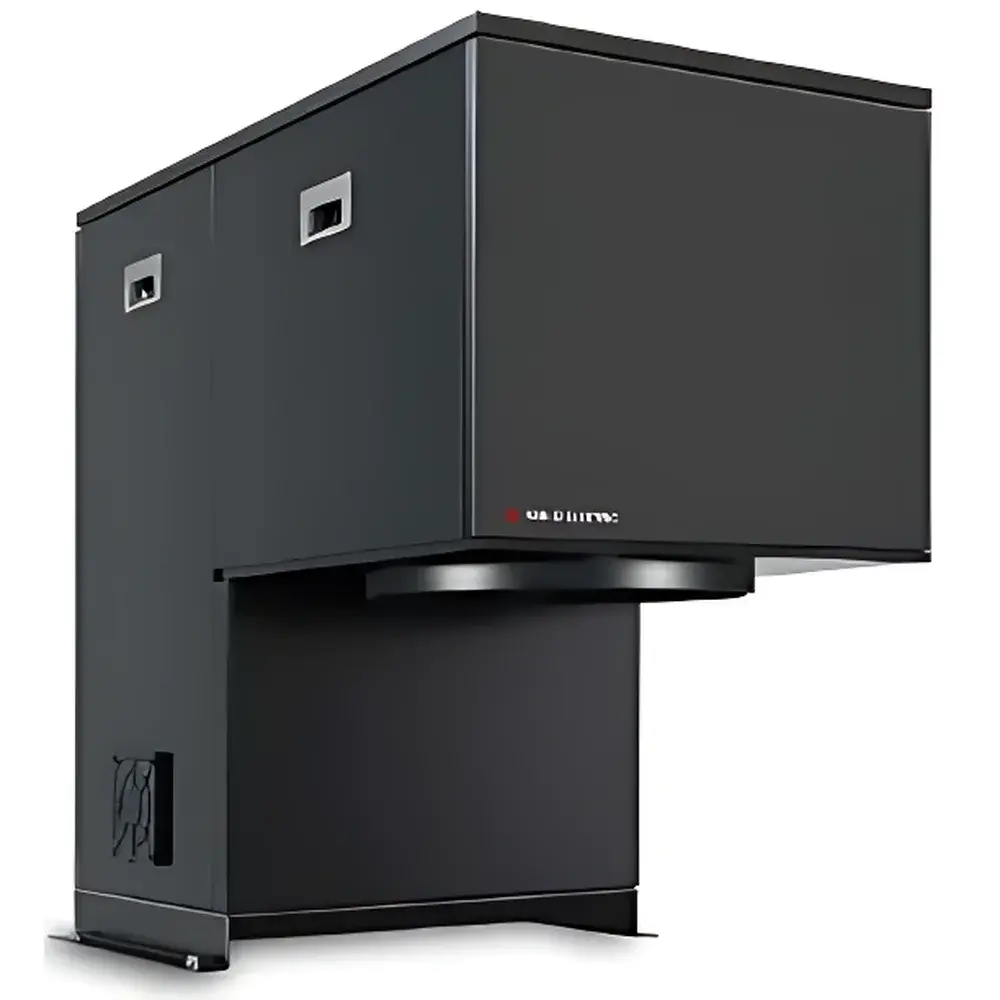
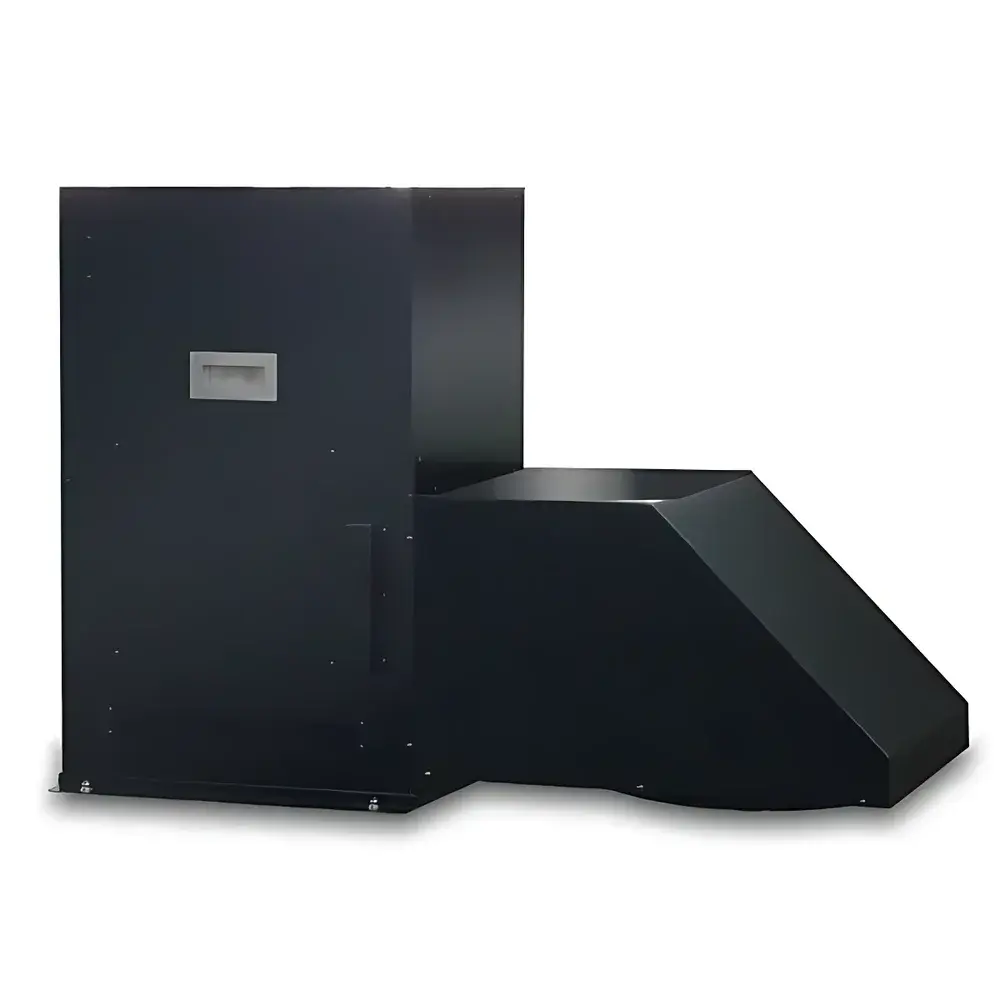
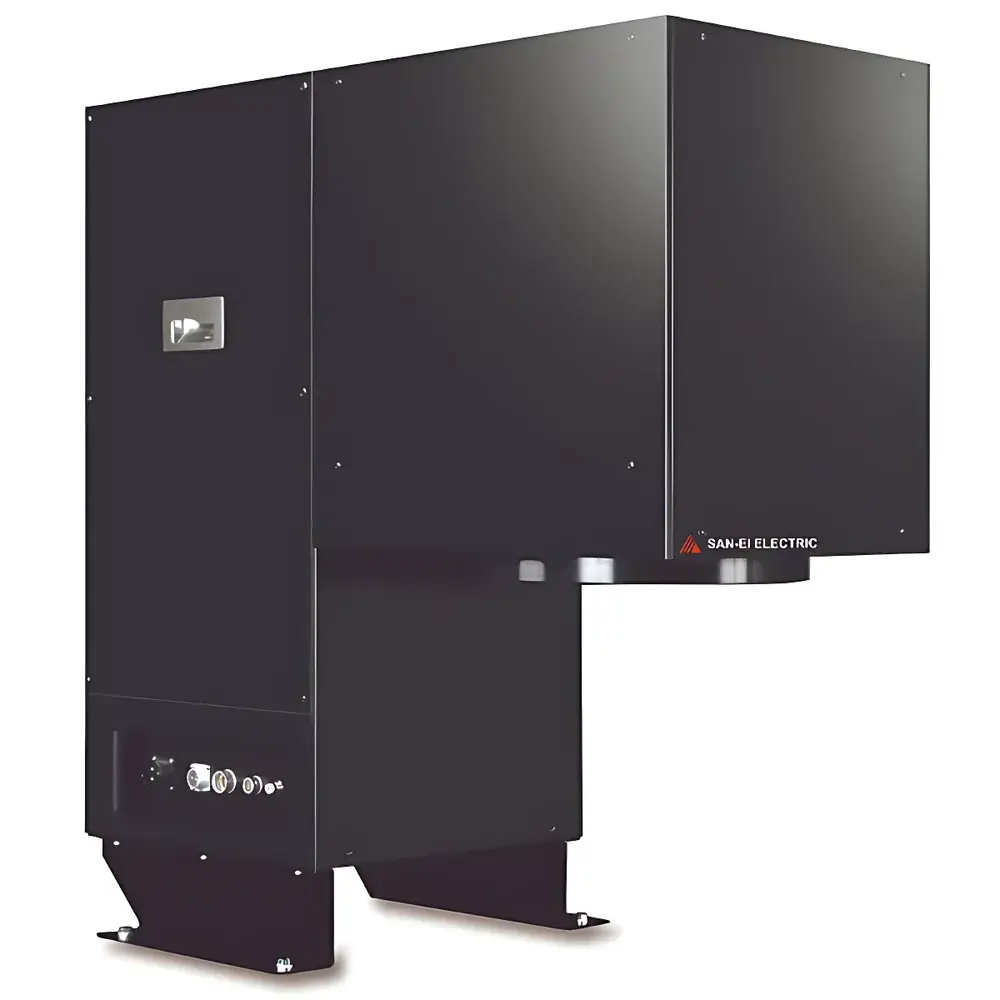
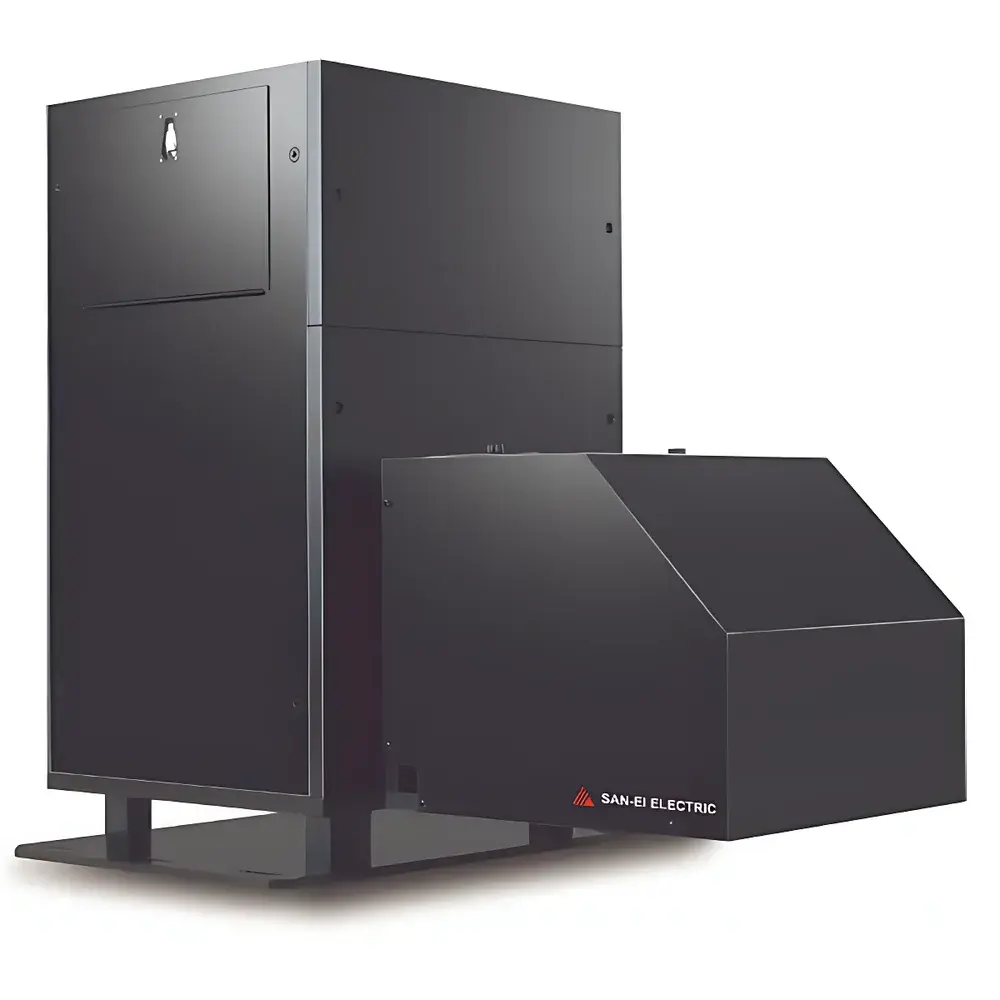
SAN-EI A+A+A+ Class Steady-State Solar Simulator
| Brand | SAN-EI |
|---|---|
| Origin | Japan |
| Model | A+A+A+ |
| Illumination Mode | Steady-State |
| Spectral Match Class | A+ (per IEC 60904-9:2020, ASTM E927-05, JIS C 8912) |
| Spatial Non-Uniformity | <1% (A+) |
| Temporal Instability | <1% over ≥1 h (A+) |
| Spectral Mismatch | <±5% (typical, factory-calibrated), <±10% (IEC limit) (AM1.5G or AM0) |
| Effective Irradiation Area | 50×50 mm to 300×300 mm (customizable) |
| Light Source | Xenon arc lamp (150–3000 W) and/or halogen lamp |
| Irradiance Range | 70–130% of 1000 W/m² (continuously adjustable) |
| Lamp Lifetime | 1000–2000 h |
| Shutter Timing | 0.1 s – 9990 h |
| Safety Features | Thermal cutoff, auto-cooling post-shutdown, interlocked safety lock, adjustable beam direction |
| Remote Control Interface | Standard Ethernet/RS-232/GPIB |
| Optional Integration | Keithley 2400/2600 Series SMUs, NIST-traceable reference cells (20×20 mm, KG5/KG2/quartz window), IV/QE/IPCE software suite with MPPT, bias stability, and repeatability protocols |
Overview
The SAN-EI A+A+A+ Class Steady-State Solar Simulator is an ISO/IEC 17025-aligned optical source engineered for metrologically rigorous photovoltaic device characterization under laboratory and calibration-grade conditions. It operates on the principle of broadband spectral synthesis—using high-stability xenon arc lamps (optionally augmented with halogen sources) coupled with precision AM1.5G or AM0 filter assemblies—to replicate the terrestrial or extraterrestrial solar irradiance spectrum with traceable fidelity. Unlike pulsed or flash-type simulators, its steady-state architecture delivers continuous, temporally stable illumination essential for dynamic parameter extraction (e.g., MPPT tracking, bias-dependent QE, and thermal drift analysis) and for evaluating emerging photovoltaic technologies such as perovskite-silicon tandem cells, organic photovoltaics (OPV), and quantum dot solar cells where transient artifacts significantly distort performance metrics.
Key Features
- A+A+A+ classification certified to IEC 60904-9:2020 Edition 3.1, ASTM E927-05, and JIS C 8912—meeting the most stringent requirements for spectral match (A+), spatial uniformity (A+), and temporal stability (A+)
- Optically optimized dual-lamp architecture supporting scalable irradiance output from 150 W to 3000 W, enabling configuration flexibility across R&D, QA, and calibration lab environments
- Factory-calibrated spectral mismatch ≤ ±5% (AM1.5G), with full spectral data provided per unit; optional AM0 configuration available for space-cell testing
- Real-time irradiance control with 0.1% resolution over 70–130% of 1000 W/m², traceable via integrated thermopile sensor and user-accessible calibration routine
- Integrated lamp-hour counter, thermal overload protection, and programmable post-run forced-air cooling—ensuring operational reliability and compliance with GLP maintenance logs
- Modular mechanical design permitting vertical/horizontal beam orientation, custom collimation, and integration into glovebox or vacuum chamber interfaces
Sample Compatibility & Compliance
The simulator accommodates standard and non-standard PV geometries—from 20×20 mm reference cells to 300×300 mm large-area modules—via interchangeable sample stages including vacuum-actuated thermal platforms (−40°C to +120°C), probe-bar fixtures for edge-contacted devices, and OPV-optimized low-pressure contact carriers. All configurations maintain Class A+ uniformity across the active test plane. The system complies with ISO/IEC 17025 documentation requirements for calibration laboratories and supports FDA 21 CFR Part 11-compliant audit trails when paired with validated IV software. Reference cell certification follows IEC 60904-2 and is supplied with NIST-traceable calibration certificates (uncertainty <1.5% k=2).
Software & Data Management
The bundled IV/QE/IPCE software suite provides full IEC 61215-compliant measurement workflows—including forward/reverse sweep, light/dark I–V acquisition, time-resolved I–t monitoring, and multi-bias spectral response mapping. It supports automated MPPT algorithms per IEC 61853-1 Annex D, repeatability assessment per IEC 60904-10, and spectral mismatch correction using user-defined EQE datasets. Data export conforms to IEEE 1547-2018 metadata schema, with native CSV/HDF5 output and optional integration into LIMS or ELN systems via RESTful API. All measurement parameters, lamp usage logs, and environmental metadata are timestamped and digitally signed to satisfy GLP/GMP record retention mandates.
Applications
- Calibration and verification of reference cells at national metrology institutes (e.g., NIM China, NPL UK, PTB Germany)
- Efficiency validation of monolithic and mechanically stacked tandem solar cells under standardized AM1.5G illumination
- Stability testing of perovskite photovoltaics under controlled irradiance and thermal bias (IEC 61215-2 MQT 20)
- Quantum efficiency and IPCE mapping of thin-film and nanostructured absorbers (CIGS, CZTS, QDSCs)
- Development and qualification of bifacial module rear-side gain models using directional irradiance control
- Accelerated aging studies requiring long-duration, spectrally stable illumination (IEC 61215-2 MQT 11)
FAQ
What standards does the A+A+A+ classification reference?
IEC 60904-9:2020 Edition 3.1 defines AAA (A+A+A+) as simultaneous compliance with spectral match class A (±12.5%), spatial non-uniformity class A (<2%), and temporal instability class A (<2% over 10 s); SAN-EI exceeds this with <±5% spectral mismatch, <1% uniformity, and <1% instability over ≥1 hour.
Can the system be used for AM0 space-cell testing?
Yes—optional AM0 filter assemblies are available and calibrated per ASTM E490-00a, with full spectral irradiance data provided for each unit.
Is remote operation supported for unattended overnight testing?
Yes—Ethernet-based SCPI command set enables full instrument control, data streaming, and safety interlock monitoring via LabVIEW, Python, or MATLAB.
How is spectral calibration maintained over lamp lifetime?
Each lamp change requires re-validation using the included reference cell and spectroradiometer protocol; SAN-EI provides documented recalibration procedures compliant with ISO/IEC 17025 Clause 6.4.
Does the system support bidirectional I–V sweeps with variable scan rates?
Yes—scan rates from 10 mV/s to 5 V/s are programmable, with synchronized voltage/current sampling at up to 100 kHz for transient artifact suppression.





