
PolyK Technologies CP High-Voltage Leakage Current and Pyroelectric Measurement System
| Brand | PolyK Technologies |
|---|---|
| Origin | USA |
| Model | CP |
| Voltage Range | Up to 10 kV |
| Electric Field Capability | ≥100 V/µm (up to 200 V/µm demonstrated) |
| Current Resolution | ≤1 pA |
| Temperature Range | –150 °C to >250 °C (with liquid nitrogen cooling) |
| Sample Diameter | up to 8 cm |
| Electrode Configuration | Spring-loaded spherical electrode for soft polymer films (<10 µm thick) |
| Shielding | Fully enclosed, grounded Faraday cage test chamber |
| Compliance | ASTM D257 (extended-field adaptation), ISO 60270 (partial discharge context), GLP-ready architecture |
Overview
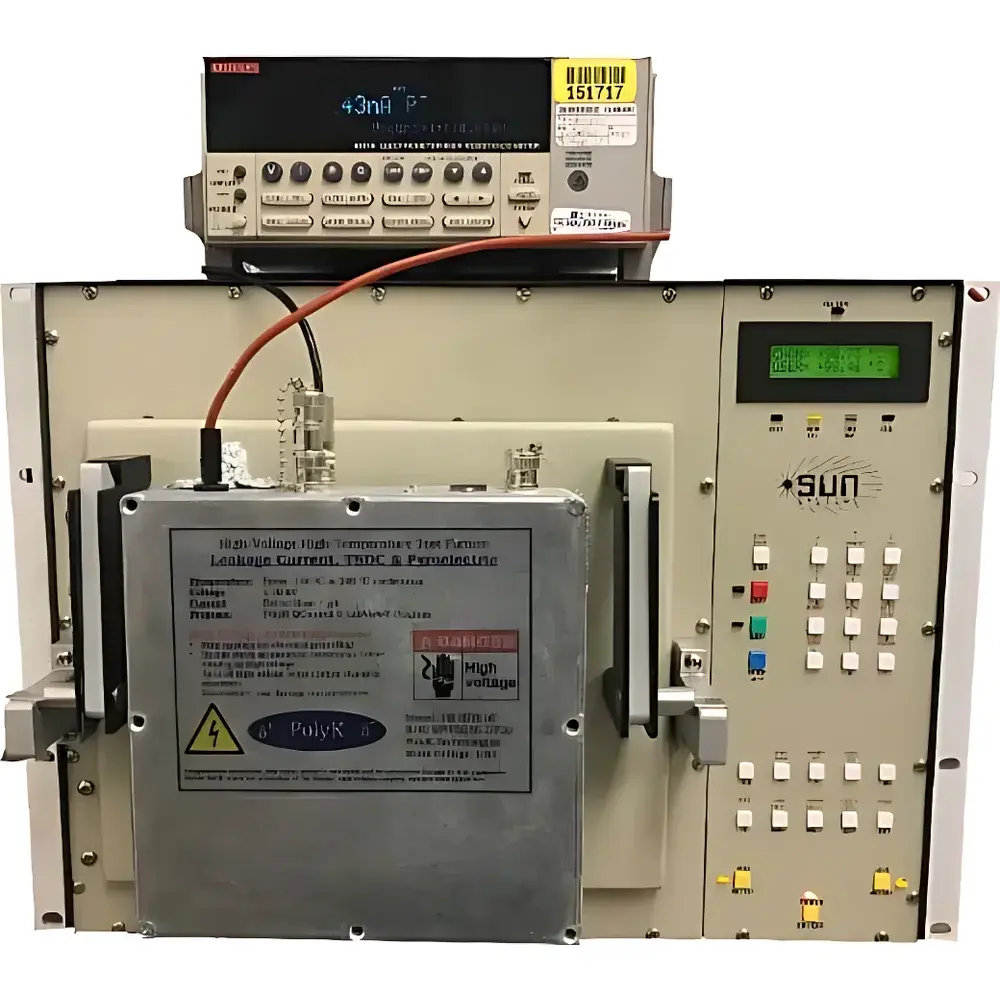
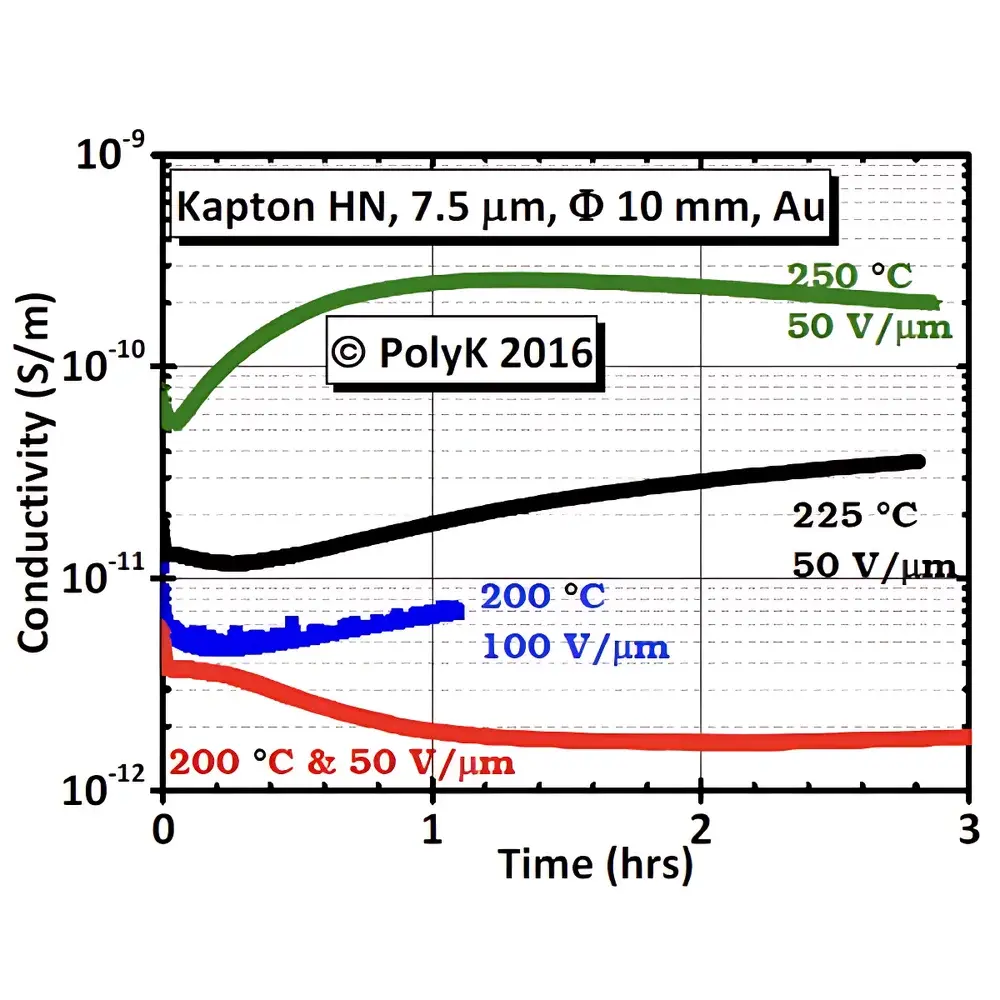
The PolyK Technologies CP High-Voltage Leakage Current and Pyroelectric Measurement System is an engineered solution for quantitative characterization of dielectric materials under extreme operational conditions—specifically high electric fields (>100 V/µm), elevated or cryogenic temperatures (–150 °C to >250 °C), and ultra-low current regimes (down to 1 pA). Unlike conventional resistivity testers operating at low fields (<1 V/µm) for short durations (e.g., 60 s per ASTM D257), the CP system enables continuous, stable, and metrologically traceable measurements under field- and thermally accelerated conditions representative of real-world capacitor and energy-storage device operation. Its design addresses three fundamental challenges in high-field dielectric metrology: (1) electromagnetic interference suppression at sub-picoampere levels; (2) long-term electrical stability without dielectric fluid contamination or air breakdown; and (3) mechanical integrity during contact with ultra-thin (<10 µm), compliant polymer films. The system implements a Couette-like electrode geometry with spring-loaded spherical contacts to minimize localized stress while ensuring uniform field distribution across the sample volume.
Key Features
- Sub-picoampere current measurement capability (≤1 pA resolution) using calibrated Keithley 6517B or 6514 electrometers with triaxial shielding and guarded cabling
- High-voltage sourcing up to ±10 kV via SRS PS350 or Trek 10 kV amplifiers, with active ripple suppression (<0.01% RMS) and programmable ramp/sustain profiles
- Thermally stabilized test chamber with dual-stage temperature control: liquid nitrogen cooling for cryogenic operation and resistive heating for high-temperature testing (–150 °C to >250 °C)
- Hermetically sealed, grounded Faraday cage enclosure with conductive gasketed access door—designed to attenuate ambient EMI by >120 dB across 1 Hz–1 MHz
- Spherical, spring-loaded electrode assembly enabling conformal contact on soft, brittle, or ultra-thin films without indentation or puncture
- Modular cavity architecture compatible with parallel deployment for dielectric spectroscopy (e.g., impedance analyzers) and partial discharge detection per IEC 60270
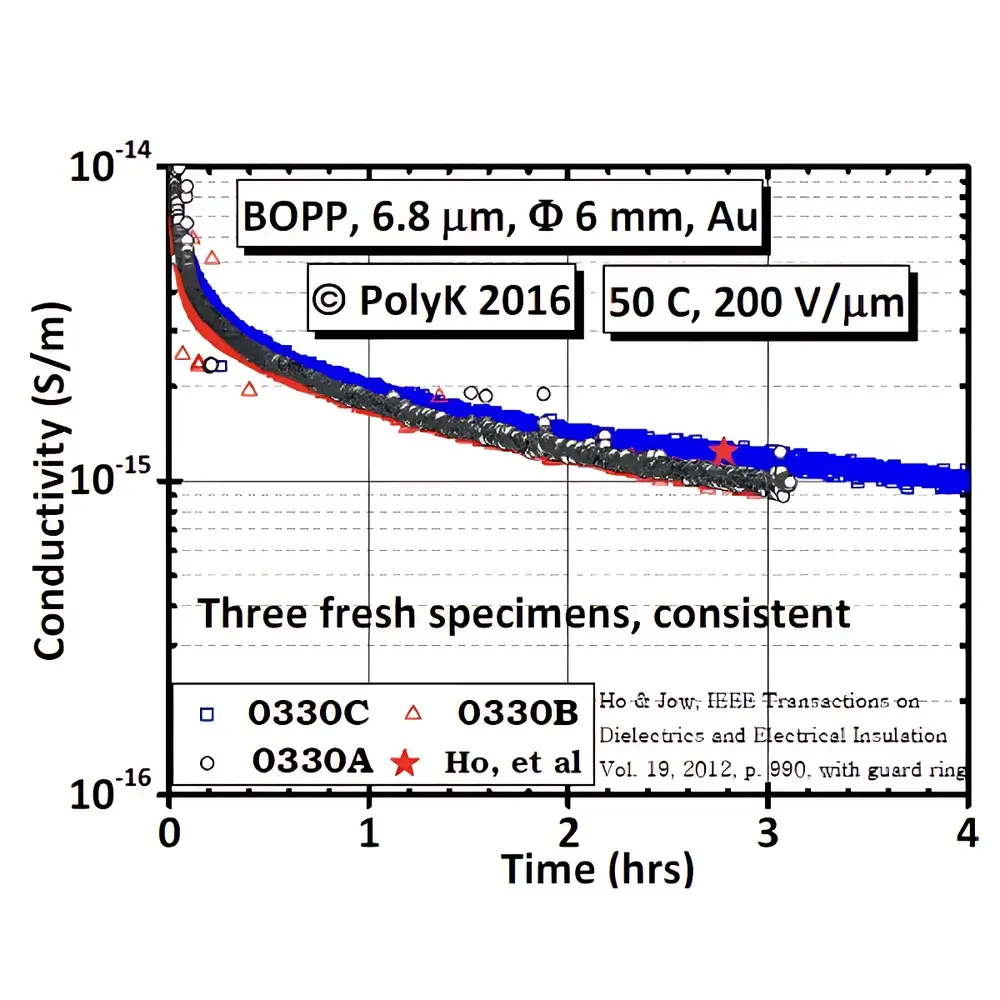
- Validated performance: sustained leakage current measurement on 20 hours without dielectric breakdown
Sample Compatibility & Compliance
The CP system accommodates disk-shaped specimens up to 8 cm in diameter and thicknesses ranging from 0.5 µm to 500 µm—including biaxially oriented polypropylene (BOPP), polyethylene naphthalate (PEN), polyimide (PI), ceramic-polymer composites, and ferroelectric polymer films. All mechanical and electrical interfaces comply with ISO/IEC 17025 calibration traceability requirements. The measurement protocol extends ASTM D257 to high-field regimes through defined preconditioning, voltage ramp rate control (10–100 V/s), and time-resolved current integration over user-defined intervals (1 s to 24 h). Data acquisition supports audit trails required under FDA 21 CFR Part 11 for GMP/GLP environments, including electronic signatures, version-controlled method files, and immutable raw-data logging.
Software & Data Management
Control and analysis are performed via PolyK’s proprietary CP-Monitor Suite—a Windows-based application built on LabVIEW Real-Time and SQL Server Express. The software provides synchronized acquisition of voltage, current, temperature, and time stamps at configurable sampling rates (10 Hz to 1 kHz). It includes automated compliance checking (e.g., field homogeneity validation via electrode gap monitoring), real-time leakage current derivative analysis (dI/dt), and pyroelectric coefficient calculation (p = dP/dT) from thermal ramp sequences. Export formats include CSV, HDF5, and MATLAB .mat for third-party modeling (e.g., Poole–Frenkel, Schottky emission fitting). All data files embed EXIF-style metadata: instrument ID, calibration certificate expiry, operator ID, environmental log (chamber humidity <5% RH), and timestamped firmware revision.
Applications
- Accelerated life testing of high-energy-density film capacitors for EV inverters and pulsed-power systems
- Quantification of field-dependent conduction mechanisms (bulk vs. interfacial, trap-assisted tunneling) in polymer nanocomposites
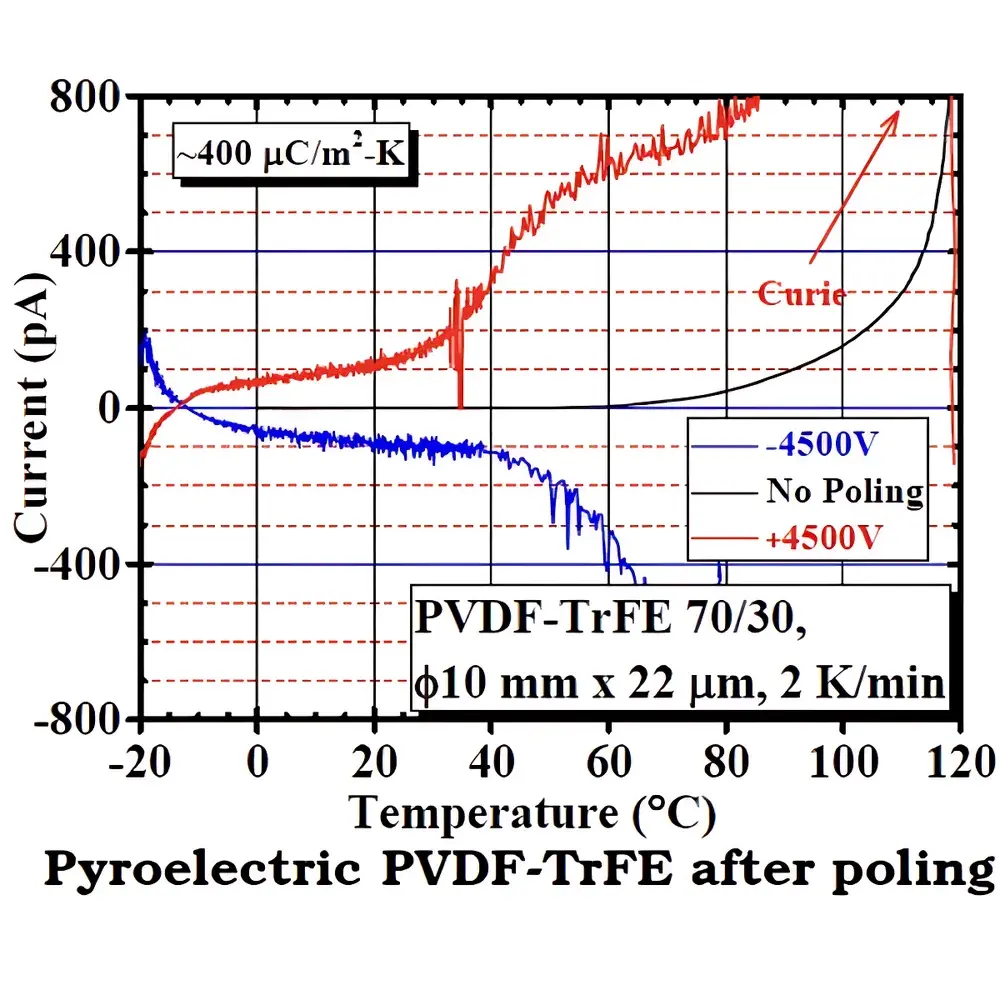
- Pyroelectric coefficient mapping for infrared sensor material qualification (e.g., PVDF-TrFE copolymers)
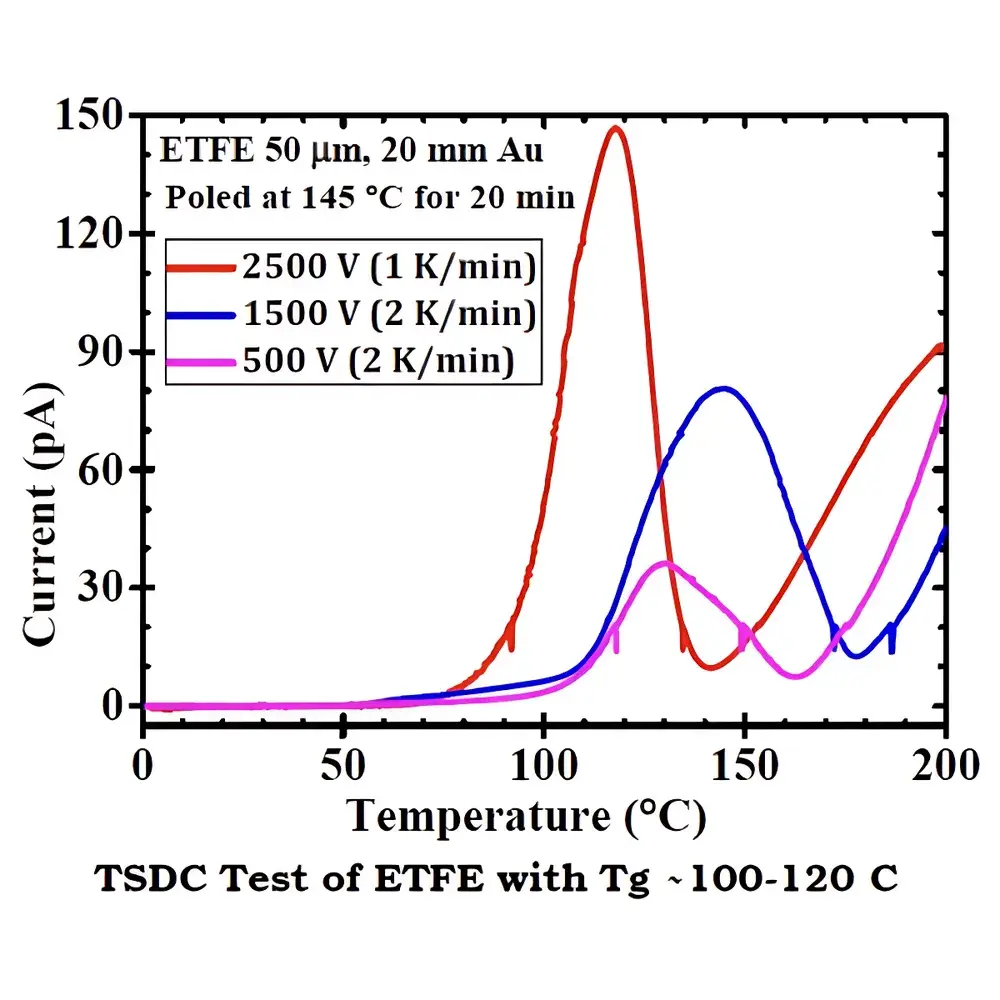
- Thermally stimulated depolarization current (TSDC) analysis to extract trap depth distributions
- Validation of space-charge-limited current (SCLC) models under DC bias at elevated temperature
- Correlation of leakage behavior with morphological transitions observed via in situ XRD or AFM
FAQ
Can the CP system measure both leakage current and pyroelectric current in the same experimental run?
Yes—via sequential thermal and electrical protocols: first apply DC bias at fixed temperature to record steady-state leakage, then ramp temperature at controlled rate (e.g., 2 °C/min) while holding voltage constant to capture pyroelectric response.
Is liquid nitrogen handling integrated or external?
The system includes a vacuum-jacketed LN₂ transfer line and automated level sensor; users supply LN₂ from an external Dewar—no onboard cryogen storage.
What sample mounting fixtures are included?
Standard configuration includes brass spherical electrodes (2 mm radius), PTFE-insulated sample stage, and vacuum-compatible clamping rings for 25 mm, 50 mm, and 80 mm diameter disks.
Does the system support AC field superposition for polarization loss analysis?
Not natively—but the high-voltage amplifier input accepts external signal generators; users may implement small-signal AC叠加 (e.g., 1 Vpp @ 1 kHz) atop DC bias using custom scripting in CP-Monitor Suite.
How is electrode alignment verified before high-field testing?
A built-in capacitance nulling routine measures parallelism via differential C–V sweeps across multiple gap settings; misalignment >0.5° triggers visual alert and prevents HV enable.
Related Products



