
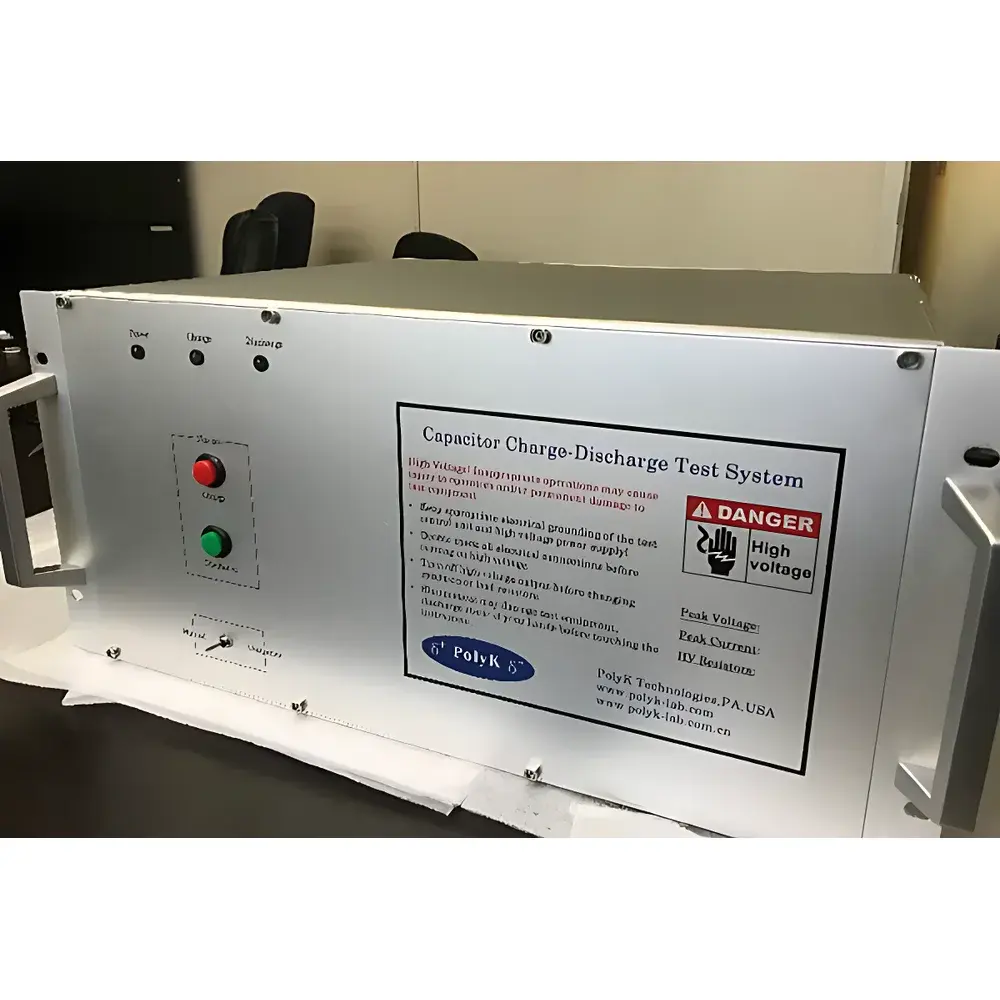
PolyK PK-CPR1901 Capacitor Charge-Discharge Analyzer
| Brand | PolyK Technologies |
|---|---|
| Origin | USA |
| Manufacturer Type | Authorized Distributor |
| Product Category | Imported Instrument |
| Model | PK-CPR1901 |
| Pricing | Available Upon Request |
Overview
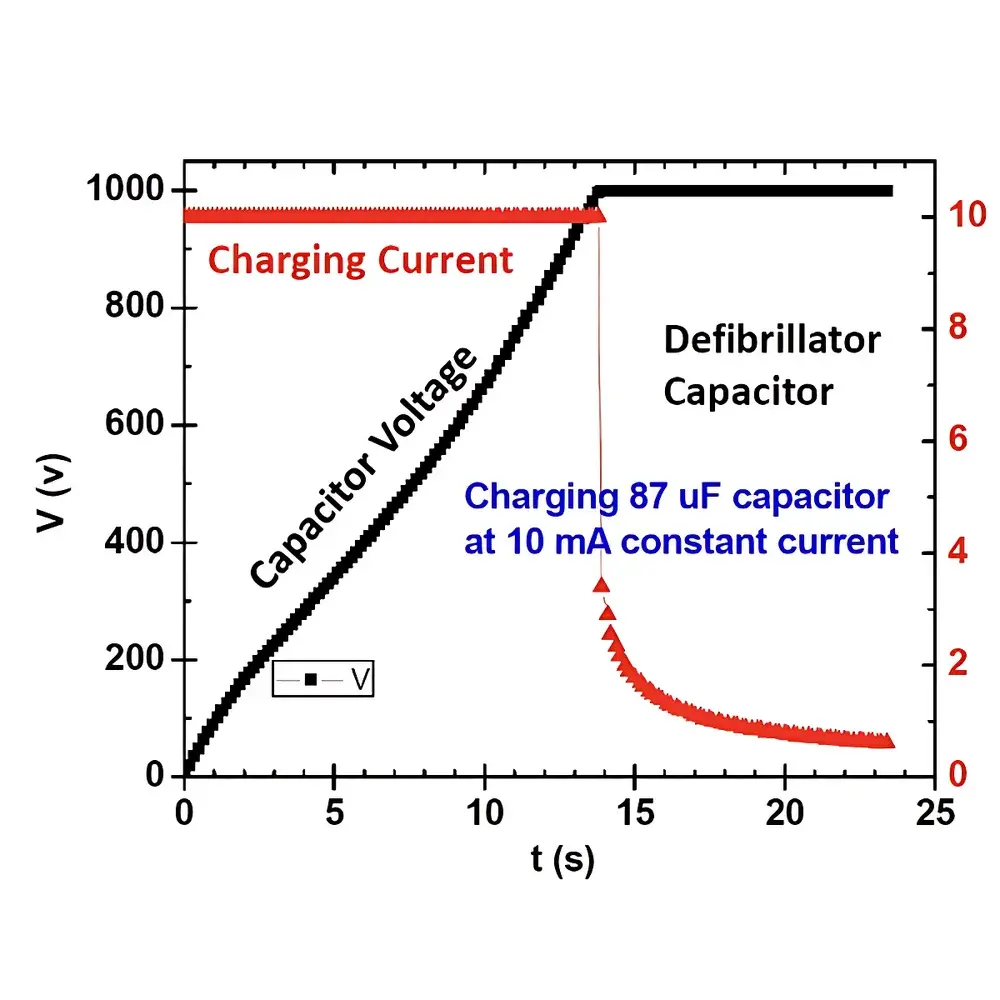
The PolyK PK-CPR1901 Capacitor Charge-Discharge Analyzer is a precision-engineered instrument designed for rigorous evaluation of high-voltage capacitor discharge behavior under application-relevant load conditions. Unlike conventional ferroelectric or dielectric hysteresis testers—where energy is erroneously discharged back into the high-voltage power supply—the PK-CPR1901 employs a true load-based discharge architecture. It utilizes nanosecond-speed, high-voltage MOSFET switching and non-inductive resistive loads to replicate real-world energy delivery dynamics. This enables physically meaningful measurement of discharge energy density (J/cm³ or J/g), critical for evaluating pulsed-power capacitors, electroceramics, relaxor ferroelectrics, and energy-storage dielectrics. The system operates on a fundamental principle: energy stored in a capacitor (½CV²) must be dissipated across a defined impedance network—not recirculated—to yield quantitatively accurate, application-predictive metrics. Its design directly addresses known artifacts in standard Sawyer-Tower or voltage-sweep hysteresis methods, where linear voltage decay, slow discharge (10–100 ms), and uncontrolled source feedback lead to overestimated energy densities and misleading material rankings.
Key Features
- Nanosecond-scale discharge switching: High-voltage MOSFET switch with <100 ns rise/fall time ensures precise temporal control of discharge initiation.
- True-load discharge topology: Uses calibrated, non-inductive resistive loads (0.1 Ω to 1 MΩ) to emulate application-specific impedance matching—enabling realistic energy extraction assessment.
- Dual-mode operation: Manual mode for rapid prototyping and parameter exploration; automated mode for unattended cyclic life testing, statistical reliability analysis, and standardized protocol execution.
- Integrated oscilloscope acquisition: Onboard high-bandwidth digitizer captures simultaneous voltage and current waveforms during discharge, enabling direct computation of instantaneous power and integrated energy density.
- Multi-function extension capability: Supports DC/AC dielectric breakdown strength testing (per ASTM D149 and IEC 60243), transient discharge current profiling, damped oscillation analysis via user-defined RLC networks, and bidirectional voltage/current polarity testing.
- Material polarization support: Includes dedicated hardware and software routines for controlled poling of piezoelectric and ferroelectric thin films and bulk ceramics.
- Customizable fixtures: Modular sample holders accommodate diverse geometries—including low-voltage (<100 V) thin-film devices—and enable temperature-stabilized testing (optional thermal stage integration).
Sample Compatibility & Compliance
The PK-CPR1901 accommodates capacitance values spanning 100 pF to >100 µF, supporting ceramic multilayer capacitors (MLCCs), polymer film capacitors, bulk ferroelectric ceramics (e.g., BaTiO₃, PMN-PT), and composite dielectrics. Its high-voltage architecture (up to 10 kV) and current-handling capability (<15 A peak) comply with safety and measurement integrity requirements for Class I and II dielectric characterization per IEEE Std 1758™ and ASTM D2149. All automated test sequences generate timestamped, audit-ready data logs compliant with GLP and 21 CFR Part 11 when used with validated software configurations. Breakdown testing adheres to standardized ramp-rate and dwell-time protocols specified in IEC 60243-1 (DC) and IEC 60243-2 (AC).
Software & Data Management
The PK-CPR1901 is controlled via PolyK’s proprietary LabControl Suite—a Windows-based application supporting scriptable test sequencing, real-time waveform visualization, and batch processing of energy density, efficiency (η = Edischarge/Echarge), and cycle-life degradation trends. Raw oscilloscope traces are saved in HDF5 format for traceability and third-party analysis. Software enforces role-based access control, electronic signatures, and full audit trails—including operator ID, calibration status, environmental metadata (if sensors connected), and version-stamped test parameters. Export options include CSV, MATLAB (.mat), and PDF reports conforming to ISO/IEC 17025 documentation requirements.
Applications
- Quantification of usable discharge energy density in high-k dielectrics for pulsed-power systems.
- Evaluation of charge/discharge efficiency and self-discharge kinetics in next-generation energy-storage materials.
- Dielectric breakdown strength mapping under DC, AC, and impulse stress for insulation qualification.
- Dynamic polarization response analysis of relaxor ferroelectrics under fast-switched fields.
- Reliability assessment via accelerated life testing (e.g., 10⁴–10⁶ cycles) with in-situ degradation monitoring.
- RC time constant validation and parasitic inductance quantification in high-frequency capacitor packages.
- Development and qualification of piezoelectric actuators requiring controlled poling and dynamic drive characterization.
FAQ
What distinguishes the PK-CPR1901 from conventional ferroelectric hysteresis testers?
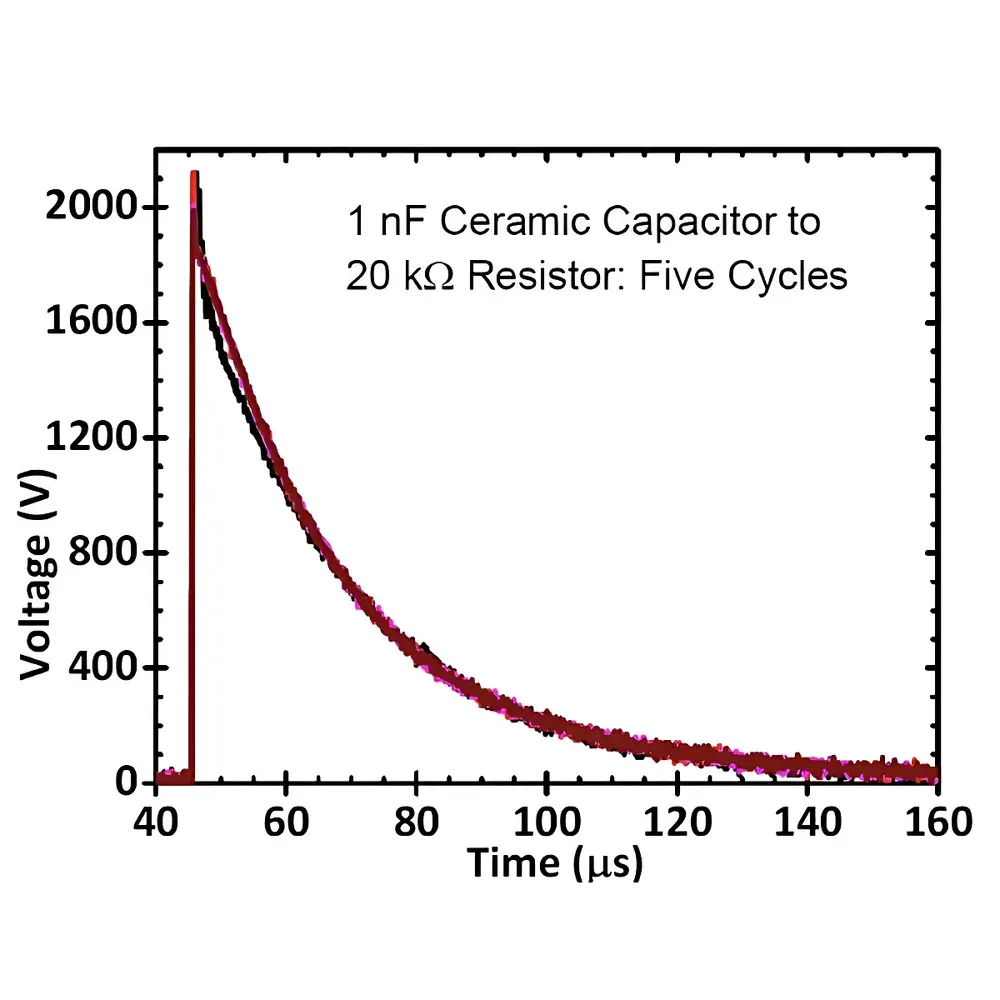
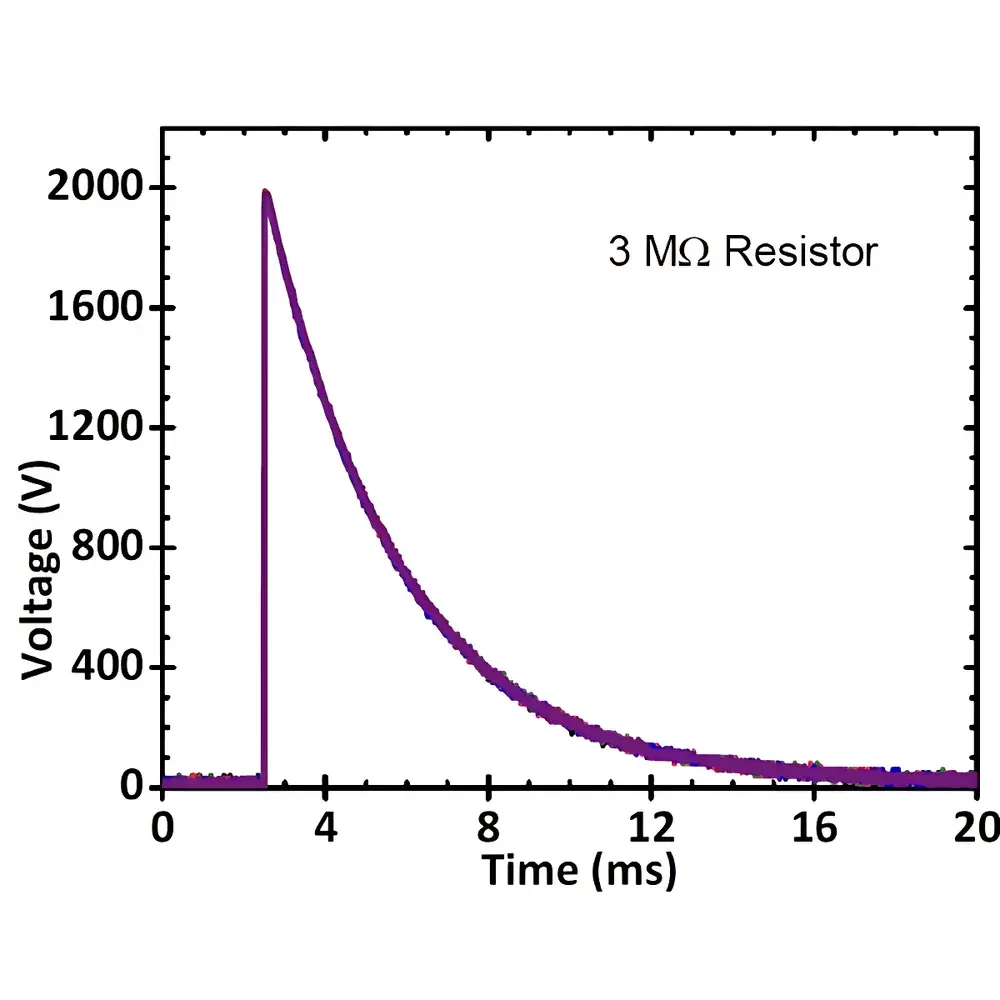
Unlike hysteresis analyzers that discharge energy into the HV supply—yielding non-physical, linear voltage decay—the PK-CPR1901 discharges across a defined resistive load, producing exponential decay and true energy-density metrics.
Can the system measure both energy density and breakdown strength on the same sample?
Yes. The instrument supports sequential or interleaved protocols: first characterize discharge performance at sub-breakdown fields, then execute standardized breakdown tests per ASTM D149 without sample relocation.
Is the built-in oscilloscope sufficient for high-fidelity waveform capture?
The integrated digitizer provides ≥1 GS/s sampling rate and ≥500 MHz bandwidth—adequate for ns-scale switching events and sub-µs current transients typical in capacitor discharge applications.
Does the system support temperature-controlled testing?
Yes. Optional integration with commercial cryogenic or heated stages enables discharge characterization from –50 °C to +200 °C, with temperature metadata automatically embedded in data files.
How is calibration maintained and verified?
Voltage and current channels are traceably calibrated using NIST-traceable HV dividers and precision shunts. Calibration certificates and verification procedures are provided with each unit and supported by PolyK’s service network.



