
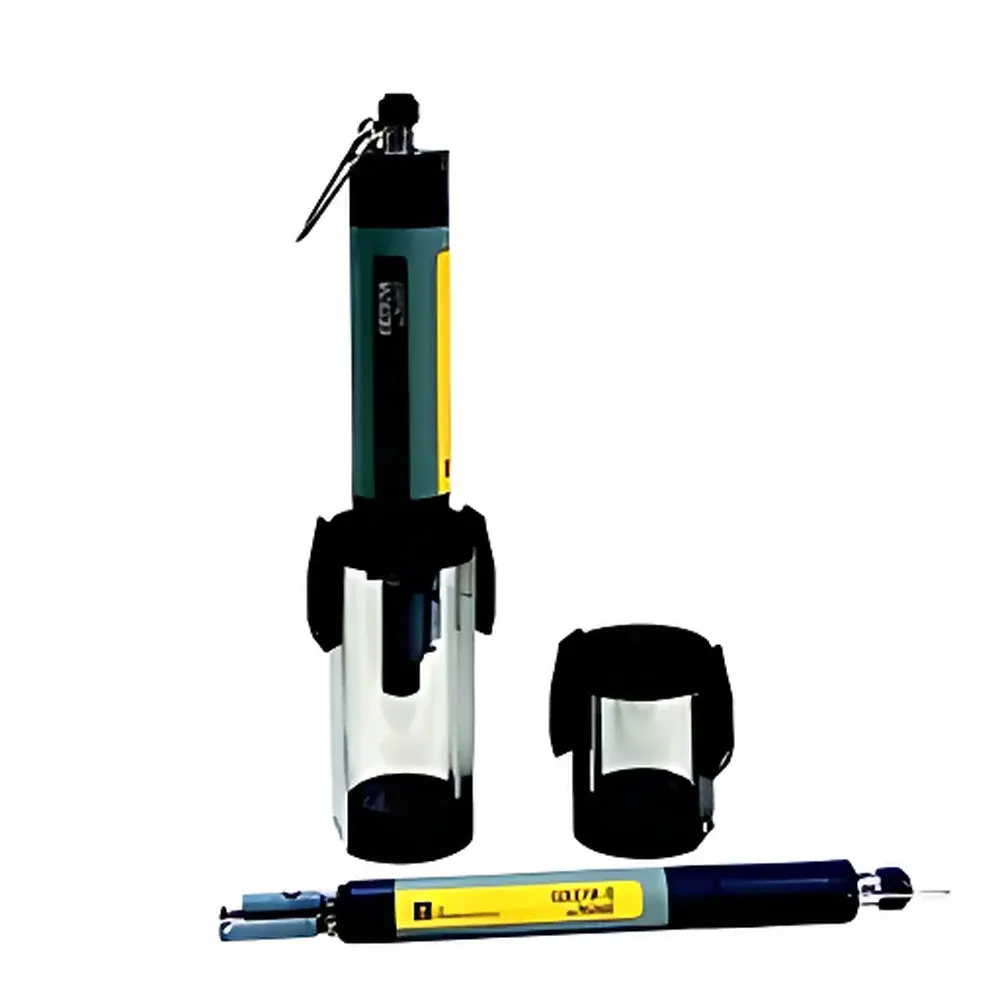
YSI 6920DW / 600DW Drinking Water Multi-Parameter Safety Monitor
| Brand | YSI |
|---|---|
| Origin | USA |
| Model | 6920DW, 600DW |
| Memory Capacity | 150,000 readings |
| Power Options | Rechargeable battery or AC adapter |
| Compliance | US EPA, USGS, and U.S. DoD validated chlorine sensor |
| Sensor Type | Membrane-based amperometric free chlorine, galvanic dissolved oxygen, thermistor temperature, conductivity cell, pH glass electrode (optional), turbidity (nephelometric, 90° scatter) |
| Data Output | RS-232, SDI-12, analog outputs (4–20 mA), Ethernet (6920DW), cellular modem option (6920DW) |
Overview
The YSI 6920DW and 600DW Drinking Water Multi-Parameter Safety Monitors are engineered for continuous, in-situ monitoring of critical water quality parameters at distributed points across municipal drinking water distribution systems. Unlike centralized treatment plant analyzers, these field-deployable instruments operate directly within pressurized pipes, hydrants, storage tanks, and service lines—enabling real-time verification of water safety from source to tap. The system employs a combination of electrochemical, optical, and physical measurement principles: free chlorine is quantified via membrane-covered amperometric detection with high selectivity for hypochlorous acid (HOCl); dissolved oxygen is measured using a galvanic cell with temperature compensation; conductivity and temperature are determined via calibrated four-electrode cells; pH is measured using a ruggedized glass electrode (field-installable option); and turbidity follows ISO 7027-compliant 90° nephelometry. Designed for long-term unattended operation, the platform supports both fixed-site installation and mobile survey applications, delivering traceable, auditable data essential for regulatory compliance and operational decision-making.
Key Features
- Field-deployable architecture optimized for pressurized potable water networks—including mainline taps, reservoir outlets, and customer service connections
- Dual-platform flexibility: 600DW for portable or short-term deployment; 6920DW for permanent installation with integrated Ethernet, cellular telemetry (LTE-M/NB-IoT), and expanded I/O (4–20 mA analog outputs, SDI-12, RS-232)
- US EPA-, USGS-, and U.S. Department of Defense-validated free chlorine sensor—demonstrating <1% drift per month and sub-ppb detection limit under field conditions
- Full suite of EPA ETV-verified sensors for dissolved oxygen, conductivity, temperature, and turbidity—each accompanied by independent third-party performance reports
- Onboard non-volatile memory storing up to 150,000 timestamped records with configurable logging intervals (1 second to 24 hours)
- Power autonomy: rechargeable lithium-ion battery (up to 6 months typical runtime at 15-min logging) or continuous AC operation with automatic switchover
- IP68-rated housing with NSF/ANSI 61-certified wetted materials—suitable for direct insertion into chlorinated water mains up to 10 bar pressure
Sample Compatibility & Compliance
The 6920DW/600DW monitors are validated for use in finished drinking water meeting U.S. EPA National Primary Drinking Water Regulations (NPDWR), WHO Guidelines for Drinking-water Quality, and EU Council Directive 98/83/EC. All sensors comply with ASTM D1129 (standard terminology for water), ASTM D3370 (sampling of water), and ISO 5667-3 (water quality — sampling — guidance on preservation and handling). The free chlorine sensor meets EPA Method 334.0 performance criteria for field-deployable amperometric detection. Data integrity conforms to FDA 21 CFR Part 11 requirements when used with YSI’s compliant software stack, including electronic signatures, audit trails, and user access controls. Instrument calibration protocols align with GLP principles and support traceability to NIST-traceable standards.
Software & Data Management
YSI’s EcoWatch™ Desktop and EcoWatch Cloud platforms provide secure, role-based access to real-time and historical data streams. EcoWatch Desktop enables local configuration, calibration validation, alarm threshold definition (e.g., chlorine 0.3 NTU), and automated report generation compliant with state primacy agency templates (e.g., Texas TCEQ Form W-20, California SWRCB Reporting). EcoWatch Cloud delivers RESTful API integration with SCADA, GIS, and asset management systems (e.g., Cityworks, IBM Maximo), supporting MQTT and OPC UA protocols. All data exports include embedded metadata (sensor serial numbers, calibration dates, firmware versions) and support CSV, JSON, and WaterML 2.0 formats. Audit logs record every configuration change, calibration event, and user login—retained for ≥18 months per internal QA policy.
Applications
- Real-time verification of disinfectant residual maintenance throughout distribution networks to prevent microbial regrowth
- Early detection of cross-connections or intrusion events via anomalous conductivity/turbidity/chlorine co-variation patterns
- Establishment and dynamic updating of site-specific water quality baselines for anomaly detection modeling
- Supporting Water Security Initiative (WSI) and AWWA Standard G300-22 (Distribution System Monitoring)
- Validating hydraulic model assumptions through empirical pressure-compensated sensor data
- Regulatory reporting for Stage 2 Disinfectants and Disinfection Byproducts Rule (DBPR) and Lead and Copper Rule Revisions (LCRR)
FAQ
What is the recommended calibration frequency for the free chlorine sensor?
Chlorine sensor calibration is recommended prior to initial deployment and every 30 days thereafter under routine conditions; more frequent calibration may be required in high-fouling environments or following maintenance events.
Can the instrument operate in chloraminated systems?
Yes—the amperometric sensor responds to total combined chlorine (monochloramine) with reduced sensitivity; YSI provides application-specific correction factors documented in Technical Bulletin TB-6920-CL-02.
Is remote firmware update supported?
Firmware updates are delivered via EcoWatch Cloud with version-controlled rollback capability and pre-update compatibility validation.
How is sensor drift managed during extended deployments?
Each sensor includes built-in diagnostic metrics (e.g., membrane impedance, zero-current stability) logged alongside measurements; automated drift alerts trigger when deviation exceeds ±5% of full-scale range over 7-day rolling window.
Does the system meet cybersecurity requirements for critical infrastructure?
The 6920DW implements TLS 1.2 encryption for cloud communications, configurable firewall rules, disabled default credentials, and adherence to NIST SP 800-82 Rev. 2 guidelines for industrial control systems.







