
LGR CCIA/WVIA CO₂-H₂O Stable Isotope Profile Measurement System
| Brand | LGR |
|---|---|
| Origin | USA |
| Model | CCIA/WVIA |
| Measurement Principle | Off-Axis Integrated Cavity Output Spectroscopy (OA-ICOS) |
| Isotopic Ratios | δ¹³C/δ¹⁸O (CO₂), δ²H/δ¹⁷O/δ¹⁸O (H₂O) |
| Precision (1σ) | δ¹³C ≤ 0.1‰ (5 min), δ¹⁸O ≤ 1‰ (5 min), δ²H ≤ 0.2‰ (100 s), δ¹⁷O ≤ 0.05‰ (100 s) |
| Measurement Frequency | Up to 2 Hz (WVIA), 1 Hz (CCIA) |
| Effective Optical Path | >2 km |
| Operating Temperature | 0–45 °C |
| Sample Temp Range | −20 to +50 °C |
| Pressure Control Accuracy | ±0.001 torr |
| Temperature Control Accuracy | ±0.003 °C |
| Data Interfaces | RS-232, Ethernet, USB |
| Power | 115/230 VAC, 50/60 Hz, 550 W max |
Overview
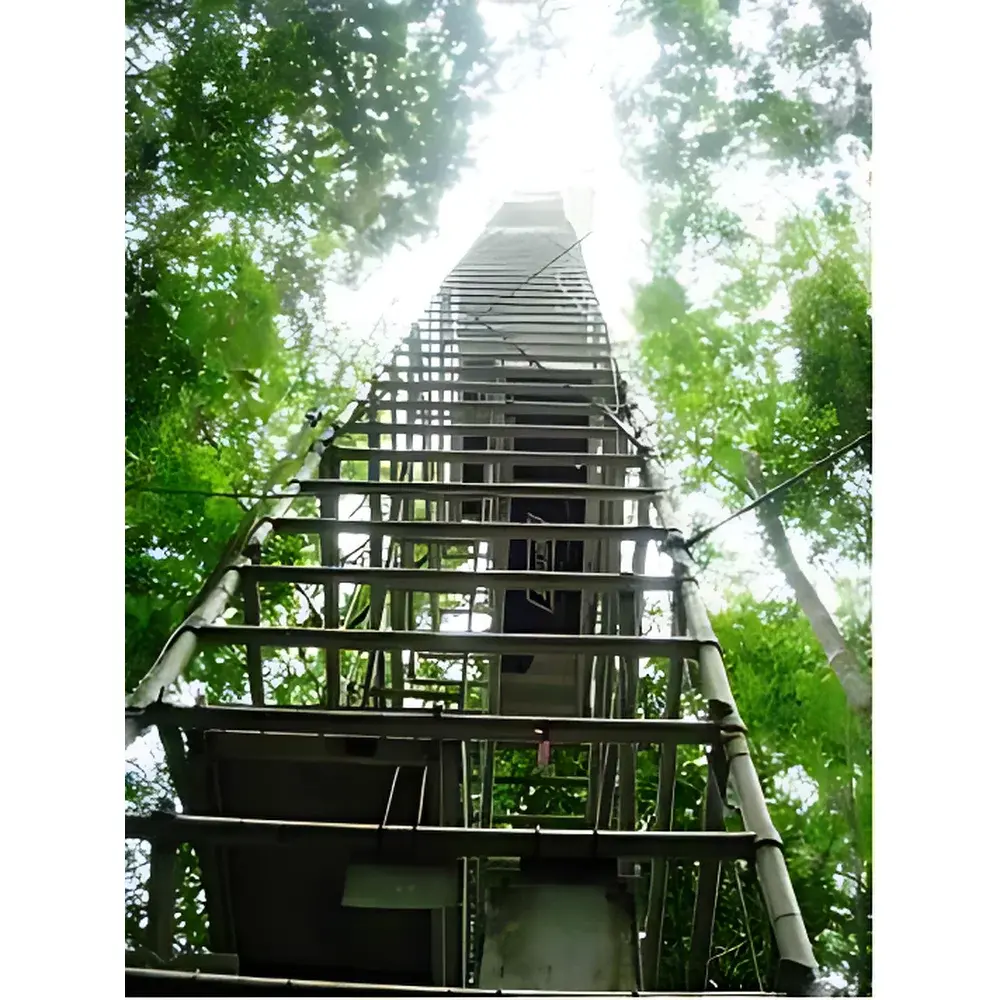
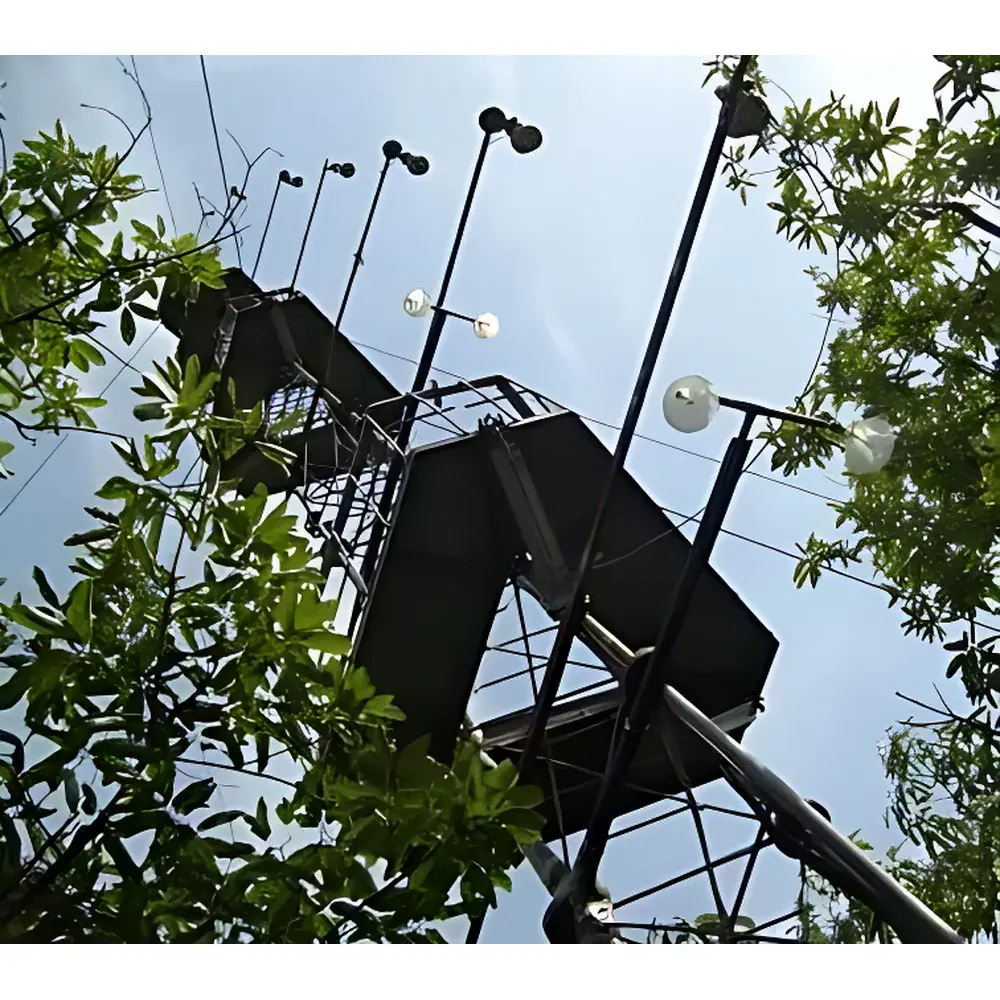
The LGR CCIA/WVIA CO₂-H₂O Stable Isotope Profile Measurement System is an integrated, field-deployable laser absorption spectrometer engineered for high-temporal-resolution, continuous, and simultaneous measurement of stable isotopic ratios in carbon dioxide and water vapor. Unlike traditional isotope ratio mass spectrometers (IRMS), which require laboratory-controlled environments, cryogenic preparation, and discrete sample introduction, this system leverages Off-Axis Integrated Cavity Output Spectroscopy (OA-ICOS) — a quantum-limited optical technique that delivers laboratory-grade isotopic precision under ambient, uncontrolled field conditions. The CCIA module quantifies δ¹³C and δ¹⁸O in CO₂ alongside absolute [CO₂] and [H₂O], while the WVIA module measures δ²H, δ¹⁷O, and δ¹⁸O in H₂O with trace-level sensitivity. Together, they enable vertical or spatially distributed isotopic profiling across towers, eddy covariance sites, soil gas wells, or atmospheric boundary layer studies — without sacrificing analytical rigor or temporal fidelity.
Key Features
- Real-time, continuous measurement at up to 2 Hz (WVIA) and 1 Hz (CCIA), enabling resolution of rapid biogeochemical flux dynamics and diurnal isotopic shifts.
- OA-ICOS architecture ensures intrinsic calibration stability: no external reference gases required during operation; concentration and isotopic ratio calculations derive directly from first-principles spectroscopy using measured temperature, pressure, and cavity loss.
- Robust environmental tolerance: operates across −20 to +50 °C sample temperature and 0–45 °C ambient range, with active thermal and pressure stabilization (±0.003 °C and ±0.001 torr control).
- Multi-point profiling capability via optional 8- or 16-channel multiplexers (MIU-374-8 / MIU-377-16), supporting synchronized inlet switching with sub-second timing accuracy and automatic dead-volume compensation.
- Modular configuration: CCIA (benchtop, 50 kg) and WVIA (benchtop or rack-mount, 40–36 kg) can be deployed independently or co-located; shared data acquisition and synchronization via LGR’s proprietary software suite.
- No moving parts in optical path; high-reliability solid-state lasers and ultra-low-loss mirrors ensure >2-year mean time between failures (MTBF) in continuous field operation.
Sample Compatibility & Compliance
The system is validated for direct analysis of ambient air, soil pore gas, chamber headspace, and stack emissions without pre-concentration or chemical conversion. It meets ISO 18592:2022 (stable isotope analysis of CO₂ and H₂O in environmental samples) and ASTM D8179-21 (standard practice for laser-based isotopic gas analysis). When paired with NIST-traceable standards (e.g., USGS40, USGS41, VSMOW, SLAP), it supports GLP-compliant data reporting with full audit trails. All firmware and software comply with FDA 21 CFR Part 11 requirements for electronic records and signatures when configured with user authentication, role-based access, and immutable data logging. No hazardous consumables (e.g., liquid nitrogen, carrier gases) are required — eliminating supply-chain dependencies and operational overhead typical of IRMS platforms.
Software & Data Management
LGR’s Isotope Analyst software provides real-time spectral visualization, automated baseline correction, multi-parameter synchronization (GPS, meteorological sensors, gas flow controllers), and export-ready output in NetCDF-4 or CSV formats compliant with ICOS (Integrated Carbon Observation System) and FLUXNET metadata standards. Raw spectra and derived isotopic values are timestamped to UTC with microsecond precision via integrated GPS PPS input. The software supports scheduled calibration routines, drift correction algorithms based on internal reference cells, and batch processing of long-term datasets with gap-filling interpolation. All configuration changes, user logins, and data exports are logged in a tamper-evident audit trail meeting ISO/IEC 17025:2017 documentation requirements for accredited testing laboratories.
Applications
- Ecosystem carbon cycling: Partitioning net ecosystem exchange (NEE) into photosynthetic assimilation and respiratory efflux using δ¹³C-CO₂ gradients across canopy height profiles.
- Hydrological tracing: Quantifying evaporation vs. transpiration contributions (ET partitioning) via δ²H-δ¹⁸O slopes in atmospheric vapor and soil water.
- Climate feedback monitoring: Detecting isotopic anomalies in boundary-layer CO₂ linked to fossil fuel combustion (δ¹³C depletion) or permafrost thaw (¹⁴C-informed but δ¹³C/δ¹⁸O-correlated signals).
- Agricultural water use efficiency: Mapping crop-specific δ¹³C signatures in canopy air to infer stomatal conductance and intrinsic water-use efficiency (iWUE) at plot scale.
- Urban emission attribution: Resolving source apportionment of CO₂ plumes using δ¹³C–δ¹⁸O dual-isotope fingerprints combined with wind-sector analysis.
FAQ
Can this system replace IRMS for regulatory reporting?
Yes — when operated within its validated range and paired with certified reference materials, it meets ISO 17025 method validation criteria for δ¹³C and δ¹⁸O in CO₂/H₂O. Many national monitoring programs (e.g., NOAA’s GML, ICOS) now accept OA-ICOS data for long-term trend analysis.
How is calibration traceability maintained without daily reference injections?
The OA-ICOS physical model inherently links absorbance to concentration via Beer-Lambert law and cavity ring-down physics. Long-term stability is verified weekly using primary standards; drift correction uses internal cavity-length monitoring and temperature-compensated line-shape fitting — not empirical gain adjustments.
What is the minimum detectable gradient for vertical profiling?
With 16-channel multiplexing and 1-s integration, vertical δ¹³C differences as small as 0.05‰ (1σ) are resolvable across 10-m tower intervals, assuming laminar flow and <5% relative humidity variation.
Is remote diagnostics supported?
Yes — secure SSH and VNC access enables real-time health monitoring, spectral diagnostics, and firmware updates over cellular or satellite links. Diagnostic logs include cavity mirror reflectivity decay rates, laser wavelength lock stability, and pressure/temperature sensor residuals.
Does the system comply with CE/FCC electromagnetic compatibility directives?
Yes — certified to EN 61326-1:2013 (EMC for laboratory equipment) and FCC Part 15 Subpart B (Class A digital device), with conducted/radiated emissions tested at third-party accredited labs (TÜV Rheinland Report No. R5021901001).




