
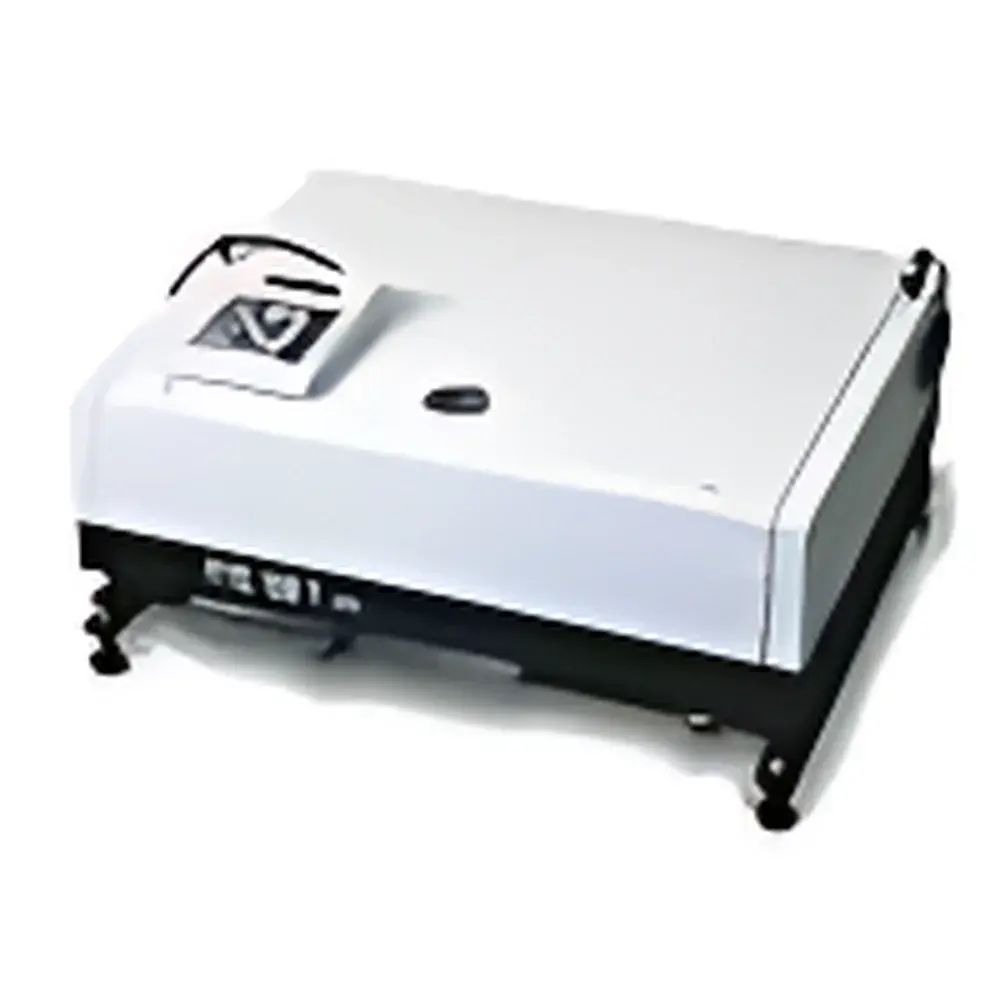
Ekspla PG500 Series Picosecond Optical Parametric Generator (OPG) Pumped by Second-Harmonic-Frequency Nd:YAG Laser
| Brand | Ekspla |
|---|---|
| Origin | Lithuania |
| Manufacturer Type | Original Equipment Manufacturer (OEM) |
| Product Category | Imported Instrument |
| Model | PG500 |
| Core Component | Solid-State Laser System |
| Tuning Range | 0.68–16 µm |
| Spectral Linewidth | < 6 cm⁻¹ |
| Pump Compatibility | SHG-Nd:YAG (532 nm), e.g., PL2140 Series |
| Pulse Duration | Picosecond |
| Control Interface | LabVIEW Drivers, Remote Operation Capable |
| Design | Compact, Integrated OPG Architecture |
Overview
The Ekspla PG500 Series Picosecond Optical Parametric Generator (OPG) is a solid-state, non-linear optical source engineered for broadband, wavelength-tunable mid-infrared and near-infrared generation in ultrafast laser laboratories. It operates on the principle of optical parametric amplification (OPA) and difference-frequency generation (DFG), pumped by the second-harmonic output (532 nm) of a mode-locked picosecond Nd:YAG laser—most commonly the Ekspla PL2140 series. Unlike femtosecond OPGs, the PG500 leverages picosecond pump pulses to achieve high pulse-to-pulse energy stability and narrow spectral linewidth (< 6 cm⁻¹), making it especially suitable for time-resolved spectroscopy, molecular fingerprinting, and pump–probe experiments requiring precise temporal overlap and reproducible spectral output. Its tuning range spans 0.68–16 µm, covering critical atmospheric transmission windows and vibrational absorption bands of organic and inorganic compounds. The system is designed as a turnkey, integrated unit—comprising the OPG crystal assembly, harmonic separation optics, motorized wavelength tuning stage, and thermal management subsystem—ensuring mechanical and thermal stability essential for long-duration measurements.
Key Features
- Full spectral coverage from visible (680 nm) to far-infrared (16 µm) via angle- and temperature-tuned non-linear crystals (e.g., BBO, KTA, ZnGeP₂)
- Optimized for picosecond pump lasers: compatible with Ekspla PL2140 series (532 nm, ≤50 ps, 10–100 Hz repetition rate), delivering ±1.5% pulse energy stability (rms) and ±1% pulse duration stability (StDev)
- Narrow intrinsic linewidth (< 6 cm⁻¹), enabling high-resolution absorption and emission spectroscopy without external cavity filtering
- Compact, monolithic optical layout with rigid kinematic mounts and low-drift alignment architecture for minimal realignment over extended operation cycles
- Integrated LabVIEW-compatible drivers and RS-232/Ethernet interfaces for automated wavelength scanning, power monitoring, and remote triggering
- No liquid nitrogen or cryogenic cooling required; all crystals operate at ambient or thermoelectrically stabilized temperatures
Sample Compatibility & Compliance
The PG500 is routinely deployed in research-grade spectroscopic setups where sample integrity, measurement repeatability, and regulatory traceability are critical. Its stable, narrow-linewidth output supports quantitative analysis compliant with ISO 17025-accredited laboratory practices. While not a medical or industrial process instrument per se, its output characteristics align with ASTM E1421 (Standard Practice for Describing and Measuring Performance of Fourier Transform Infrared (FTIR) Spectrometers) when used as a tunable source in custom IR spectrometers. All optical coatings, crystal mounts, and housing materials meet RoHS Directive 2011/65/EU requirements. The system’s electromagnetic compatibility (EMC) conforms to EN 61326-1:2013 for laboratory use, and laser safety compliance follows IEC 60825-1:2014 (Class 4 laser product), with interlock-ready design for integration into certified laser enclosures.
Software & Data Management
Ekspla provides native LabVIEW VIs (version 2015–2023) for full bidirectional control: wavelength setpoint, crystal angle positioning, pump energy monitoring, and synchronization with external detectors or delay stages. Data acquisition logs include timestamped wavelength, estimated signal/idler power (via calibrated photodiode feedback), and system status flags (e.g., temperature deviation, interlock state). Export formats include CSV and HDF5, supporting interoperability with Python (NumPy, SciPy), MATLAB, and Igor Pro for post-processing. Audit trails—including user login, parameter changes, and calibration events—are retained locally and exportable for GLP/GMP-aligned documentation. Firmware updates are delivered via secure HTTPS portal with SHA-256 signature verification.
Applications
- Time-resolved infrared (TRIR) spectroscopy of catalytic intermediates and photoactive proteins
- Gas-phase molecular spectroscopy in environmental monitoring (e.g., CH₄, CO, NO₂, N₂O detection between 2–12 µm)
- Nonlinear optical characterization of 2D materials (e.g., carrier dynamics in MoS₂, WS₂ via pump–OPG-probe)
- Standoff detection systems requiring eye-safe, tunable mid-IR illumination (3–5 µm atmospheric window)
- Calibration source for FTIR and grating-based spectrometers operating beyond 5 µm
- Seed source for OPCPA (optical parametric chirped-pulse amplification) systems targeting multi-terawatt IR pulses
FAQ
What pump laser specifications are required for optimal PG500 performance?
The PG500 is optimized for 532 nm picosecond pulses with durations ≤50 ps, energies 1–10 mJ, and repetition rates of 10–100 Hz. The Ekspla PL2140 series meets all critical stability criteria (±1.5% energy, ±1% pulse width StDev) and includes built-in SHG conversion.
Can the PG500 be upgraded to include DFG capability for extended IR coverage?
Yes—optional DFG modules (e.g., using AgGaSe₂ or GaSe crystals) can extend coherent output beyond 16 µm up to ~20 µm when paired with appropriate idler beam routing and vacuum-compatible beam paths.
Is factory calibration traceable to NIST or other national metrology institutes?
Wavelength calibration is performed using HeNe and Hg/Ar spectral lamps referenced to NIST-traceable line positions; full calibration reports with uncertainty budgets (k=2) are provided with each unit.
Does the system support synchronization with external delay generators or streak cameras?
Yes—TTL-compatible trigger outputs (sync out, pump sync, OPG sync) with <1 ns jitter are available, and timing offsets are software-adjustable within ±500 ps resolution.
What maintenance is required during typical laboratory operation?
No routine optical realignment or consumable replacement is needed. Annual verification of crystal temperature stability, encoder linearity, and photodiode responsivity is recommended and supported under Ekspla’s Extended Service Plan.





