
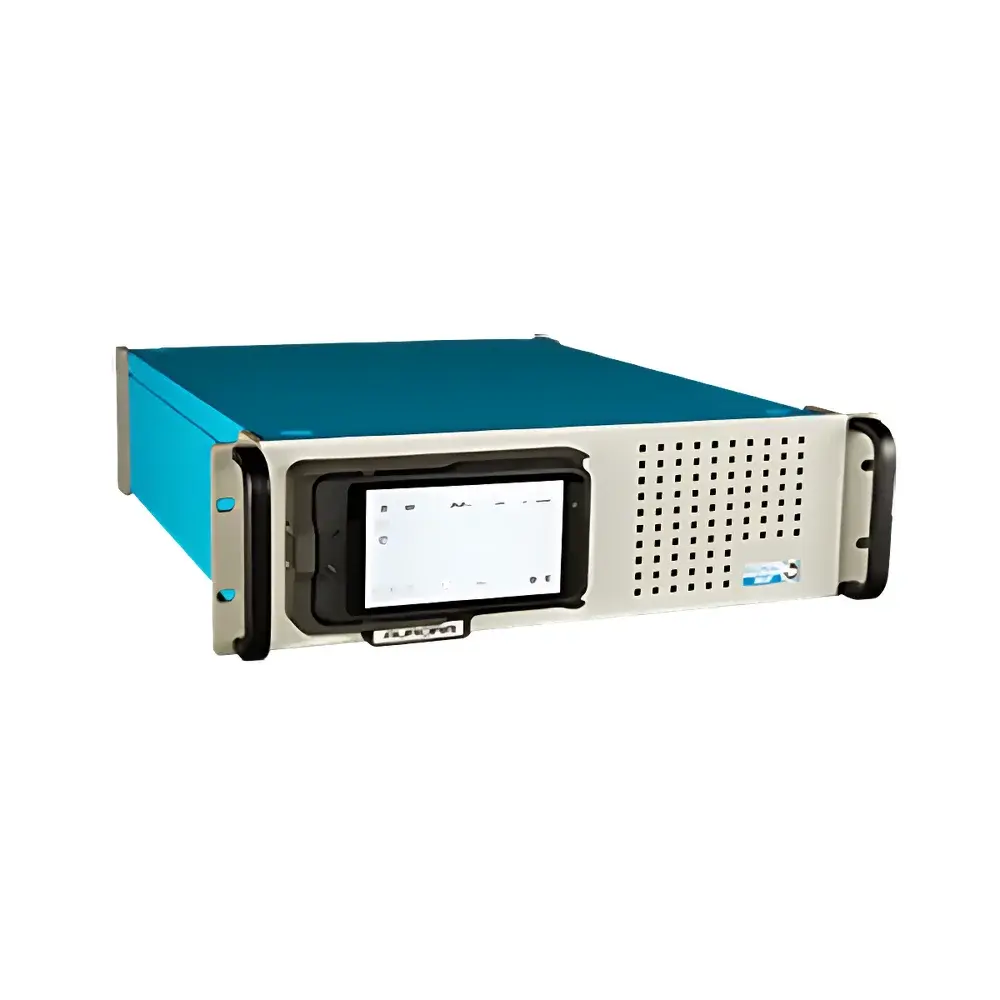
Signal AURORA 4th Generation Online Paramagnetic Oxygen Analyzer
| Brand | Signal |
|---|---|
| Origin | UK |
| Model | AURORA |
| Instrument Type | Online Gas Analyzer |
| Measurement Principle | Paramagnetic Detection |
| Oxygen Range Options | 0–5% O₂, 0–10% O₂, 0–25% O₂ |
| Response Time (T₉₀) | < 2.5 s |
| Resolution | 0.1% O₂ |
| Linearity | ±0.1% O₂ full scale |
| Display | Color TFT Touchscreen Interface |
| Connectivity | Ethernet (Dedicated IP Address), Remote Web-Based Configuration & Diagnostics |
| Power Supply | 100–240 VAC, 50/60 Hz |
| Enclosure Rating | IP65 (Optional for Industrial Installation) |
| Compliance | CE Marked, RoHS Compliant, Designed for ISO 17025 and GLP/GMP Environments |
Overview
The Signal AURORA 4th Generation Online Paramagnetic Oxygen Analyzer is a high-stability, industrial-grade gas analysis system engineered for continuous, unattended measurement of oxygen concentration in process streams, combustion exhausts, inerting systems, and environmental monitoring applications. Unlike electrochemical or zirconia-based sensors—whose performance degrades over time due to electrolyte depletion or thermal aging—the AURORA employs the physical paramagnetic property of molecular oxygen: O₂ molecules are strongly attracted to magnetic fields, enabling highly selective, drift-free quantification without consumables or chemical reagents. This fundamental principle ensures long-term baseline stability, minimal calibration drift (<0.05% O₂/year), and immunity to cross-interference from CO₂, CO, NOₓ, hydrocarbons, and moisture—critical for regulatory-compliant reporting and process safety integrity.
Key Features
- True paramagnetic detection core with dual-chamber differential magnetometer design, delivering inherent selectivity for O₂ without optical filters or catalytic scrubbers
- Three factory-configurable measurement ranges (0–5%, 0–10%, 0–25% O₂) with automatic range switching and seamless zero/span validation protocols
- Color TFT touchscreen interface with intuitive menu navigation, real-time trend graphs, and on-device alarm logging (up to 1,000 events)
- Dedicated Ethernet port with static or DHCP-assigned IP address; supports remote access via standard web browser (HTTPS) for configuration, diagnostics, and firmware updates
- Programmable dry-contact I/O (4 inputs / 4 outputs) for integration with PLCs, safety shutdown systems, or sample conditioning units (e.g., flow switches, pressure interlocks)
- Robust stainless-steel sample cell and temperature-compensated electronics, rated for continuous operation at ambient temperatures from 0 to 50 °C and relative humidity up to 95% non-condensing
- No consumables, no electrolytes, no annual sensor replacement—designed for >10 years of field service life with only biannual verification recommended per ISO 17025 traceability guidelines
Sample Compatibility & Compliance
The AURORA accepts sample gas at pressures from 0.8 to 1.2 bar abs, flow rates of 0.5–2.0 L/min, and particulate loadings <1 µm (filtered inlet recommended). It is compatible with dry or humidified gases—including flue gas, nitrogen blanketing streams, pharmaceutical purge air, and biogas—provided condensate is removed upstream. The analyzer complies with EN 61326-1 (EMC), EN 61000-6-2/6-4, and carries CE marking under the EU Machinery Directive. Its architecture supports audit-ready data integrity: all configuration changes, calibration actions, and alarm events are timestamped and logged locally with optional export to CSV or Modbus TCP for integration into SCADA or LIMS platforms. For regulated environments (e.g., pharmaceutical cleanrooms or EPA Method 3A-aligned stack monitoring), the system can be validated per IQ/OQ protocols and configured to meet FDA 21 CFR Part 11 requirements when deployed with secure network authentication and electronic signature workflows.
Software & Data Management
Signal’s proprietary AURORA Web Server provides browser-based access to real-time measurement values, historical trends (7-day onboard buffer), and diagnostic status (sample flow, cell temperature, magnet current, signal-to-noise ratio). Users may schedule automated zero/span calibrations, define custom alarm thresholds (high/low, rate-of-change), and export raw data with ISO 8601 timestamps. The embedded web server logs all user sessions and critical events with SHA-256 hash integrity verification—enabling full traceability during internal audits or regulatory inspections. Optional SignalLink software enables centralized fleet management across multiple AURORA units, supporting batch report generation aligned with ISO 5725 repeatability/reproducibility criteria.
Applications
- Combustion optimization in boilers, kilns, and incinerators (O₂ trim control per EN 14181 QA/QC requirements)
- Inerting atmosphere monitoring in lithium battery manufacturing, grain silos, and chemical reactors
- Pharmaceutical nitrogen purge validation and lyophilizer chamber O₂ leak testing
- Environmental emissions monitoring (CEMS) for continuous oxygen reporting alongside NOₓ and SO₂ analyzers
- Research-grade gas mixture certification in metrology labs and national standards institutes
- Biogas upgrading plant O₂ safety interlock (per IEC 61511 SIL-2 capable when integrated with certified SIS)
FAQ
What makes paramagnetic detection superior to electrochemical O₂ sensors for continuous process use?
Electrochemical cells require periodic replacement (typically every 12–24 months), exhibit temperature-dependent drift, and suffer from poisoning by H₂S or Cl₂. Paramagnetic measurement relies on a fundamental physical property of O₂—no chemical reaction occurs, eliminating sensor fatigue and ensuring stable calibration over multi-year intervals.
Can the AURORA be integrated into an existing DCS or PLC system?
Yes—via 4–20 mA analog outputs (fully isolated, HART-enabled optional), Modbus RTU/TCP, or discrete relay outputs. All communication protocols support standard industrial addressing and error-handling conventions.
Is routine calibration required, and how is it performed?
Zero calibration uses certified nitrogen (99.999% purity); span calibration uses certified air (20.946% O₂). Both are executed automatically via built-in solenoid valves and logged with full metadata. Annual verification against NIST-traceable standards is recommended for ISO 17025 compliance.
Does the analyzer require sample conditioning?
For most clean, dry gas streams, no. However, for flue gas or high-humidity applications, a heated sample line and condensate trap are advised to prevent dew point-related errors and ensure mechanical protection of the magnetic cell.
What cybersecurity measures are implemented in the web interface?
HTTPS encryption, configurable password policies (min. 8 chars, expiry, history), session timeout (default 15 min), and role-based access control (Operator, Engineer, Administrator) align with IEC 62443-3-3 Level 1 requirements.
Related Products







