
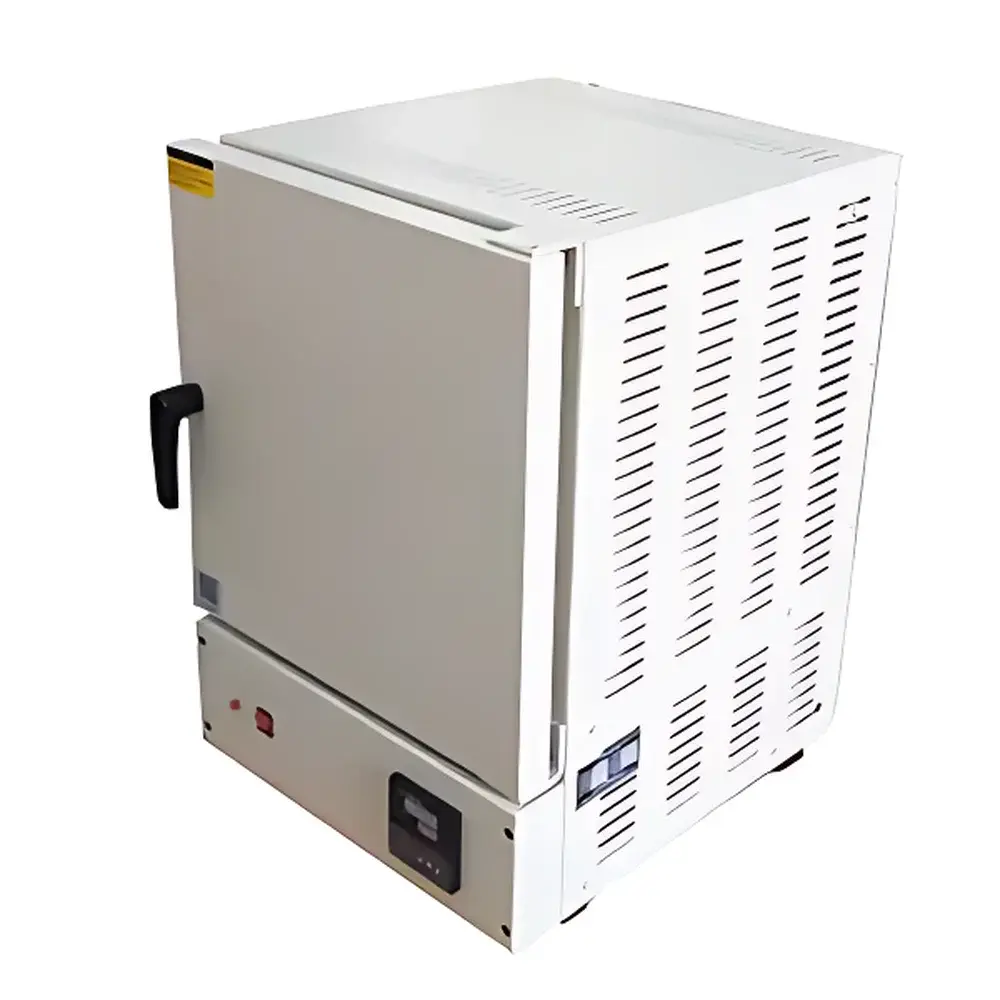
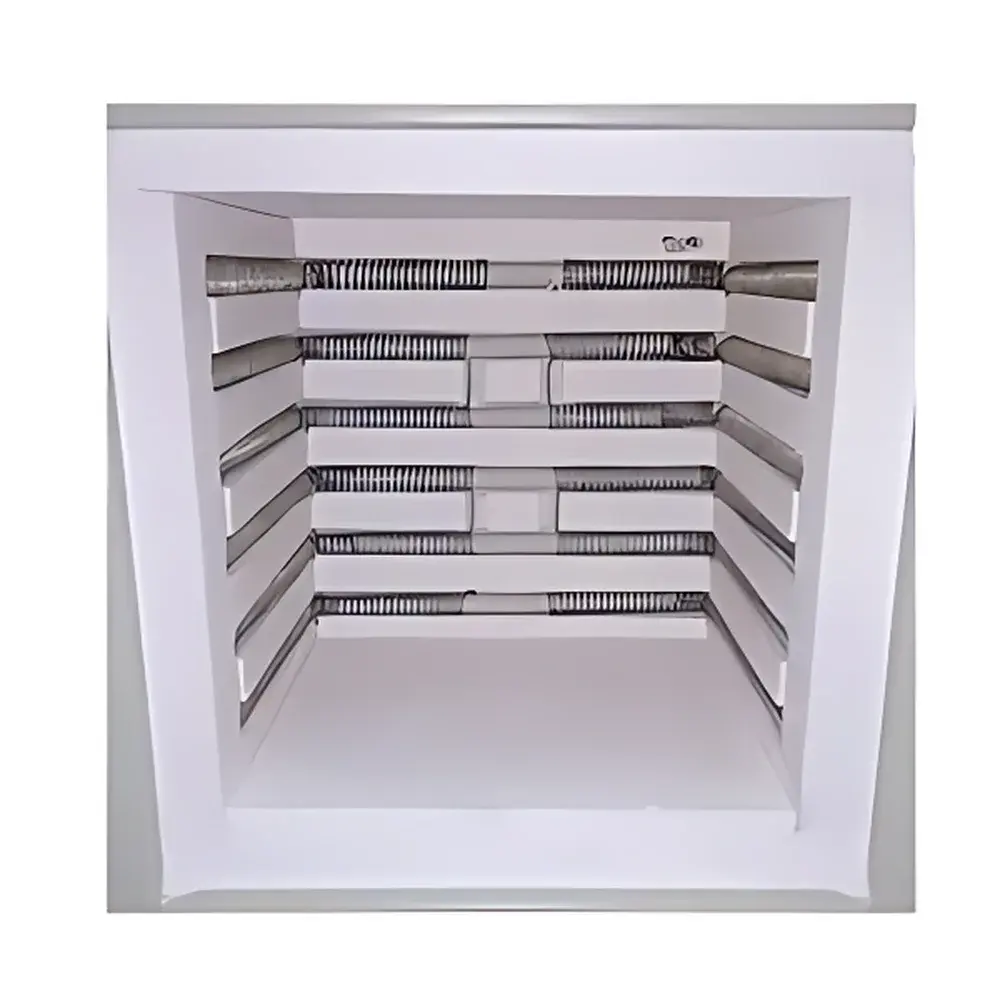
Zhuochi SX3-4-10 Ceramic Fiber Muffle Furnace
| Brand | Zhuochi |
|---|---|
| Origin | Zhejiang, China |
| Type | Box-Type Muffle Furnace |
| Max Temperature | 1000 °C |
| Temperature Uniformity | ±1 °C |
| Power Rating | 4 kW |
| Ramp Rate (to max temp) | ≤50 °C/min |
| Heating Method | Kanthal A1 resistance wire |
| Chamber Dimensions | 300 × 300 × 300 mm |
| External Dimensions | 615 × 520 × 720 mm |
| Net Weight | ~70 kg |
| Voltage/Frequency | 220 V, 50 Hz |
| Temperature Sensor | K-type thermocouple |
| Controller | LTDE 30-segment programmable PID controller with dual overtemperature protection |
| Insulation | Six-sided modular ceramic fiber board (low thermal mass, high emissivity) |
| Housing | Phosphated and powder-coated cold-rolled steel (computer gray) |
Overview
The Zhuochi SX3-4-10 Ceramic Fiber Muffle Furnace is a precision-engineered box-type laboratory furnace designed for rapid, repeatable, and energy-efficient high-temperature thermal processing in research, quality control, and industrial R&D environments. It operates on the principle of resistive heating via high-purity Kanthal A1 alloy heating elements embedded within a low-thermal-mass, six-sided ceramic fiber insulation chamber. Unlike traditional refractory brick furnaces, this model employs ultra-lightweight alumina-silica ceramic fiber boards (density 0.92), enabling faster heat-up rates, improved temperature uniformity, and reduced standby power consumption. The furnace achieves stable operation across a working range of 100–1000 °C, with a certified temperature fluctuation of ±1 °C at setpoint — meeting routine thermal validation requirements for ashing, calcination, sintering, and heat treatment protocols in accordance with ASTM E1142, ISO 8573-1, and USP thermal process guidelines.
Key Features
- Ultra-low thermal inertia architecture: Full 1000 °C ramp achieved in ≤30 minutes (typical), with adjustable ramp rates from 0.1 to 50 °C/min — three times faster than conventional brick-lined muffle furnaces of comparable volume.
- LTDE 30-segment programmable PID controller: Enables precise multi-step thermal profiles including ramp-hold-cool sequences, automatic soak termination, and user-defined end-point actions (e.g., power cutoff or audible alert).
- Dual-stage overtemperature protection: Primary control loop + independent mechanical limit switch (set at 1050 °C) ensure fail-safe shutdown under fault conditions — compliant with IEC 61000-6-2 EMC and EN 60519-2 safety standards for industrial heating equipment.
- Optimized chamber-to-footprint ratio: 27-L internal volume (300 × 300 × 300 mm) housed within compact external dimensions (615 × 520 × 720 mm), delivering 50% greater usable workspace versus legacy models of identical external footprint.
- Robust thermal enclosure: Phosphated cold-rolled steel housing with electrostatic powder coating (RAL 7035 computer gray) resists corrosion and mechanical abrasion; rear-mounted K-type thermocouple port and bottom-access terminal block simplify maintenance and calibration traceability.
Sample Compatibility & Compliance
The SX3-4-10 accommodates standard crucibles (alumina, quartz, platinum, stainless steel), ceramic boats, and refractory sample holders up to 250 mm in height. Its muffle design isolates samples from direct flame or element contact, ensuring contamination-free atmospheres suitable for ash content determination (AOAC 942.05, ISO 2171), loss-on-ignition (LOI) analysis (ASTM C114), and pre-treatment of catalysts or battery electrode materials. The furnace meets general-purpose GLP-compliant thermal instrumentation criteria: full audit trail capability via optional RS485/Modbus RTU interface (firmware v2.1+), 1000-hour mean time between failures (MTBF) for heating elements, and CE-marked electrical safety certification per EN 61000-3-2 (harmonic current emissions) and EN 61000-4-3 (radiated immunity).
Software & Data Management
While the LTDE controller operates as a standalone unit with local LED display and tactile keypad, optional firmware upgrade enables Modbus RTU communication over RS485 for integration into centralized LabVantage, DeltaV, or custom SCADA systems. Logged temperature data (timestamped, 1-second resolution) can be exported via USB flash drive (FAT32 format) for post-run analysis in Excel or MATLAB. All program parameters — including segment dwell times, ramp slopes, and PID tuning constants — are retained during power interruption and support password-protected configuration locking (admin level). Firmware supports 21 CFR Part 11–compliant electronic signature logging when paired with validated third-party LIMS middleware.
Applications
- Thermal gravimetric analysis (TGA) sample prep: Rapid dehydration and organic matrix removal prior to elemental analysis (ICP-OES, XRF).
- Cement and construction materials testing: Determination of insoluble residue (ASTM C114), sulfate content (ASTM C114), and free lime (ASTM C110).
- Environmental lab workflows: Solid waste ashing (EPA Method 3050B), soil organic matter quantification (Walkley-Black), and filter media conditioning.
- Materials science R&D: Pre-sintering of metal oxide precursors, annealing of thin-film substrates, and thermal cycling stability assessment of battery cathode composites.
- Pharmaceutical QC: Residue on ignition (USP ) testing of APIs and excipients; sterilization validation support per ISO 11137 Annex D.
FAQ
What is the maximum recommended continuous operating temperature?
The SX3-4-10 is rated for continuous operation at 1000 °C. Short-term excursions up to 1020 °C are permissible for ≤30 minutes per cycle, provided cooling intervals exceed 60 minutes between cycles.
Can this furnace be used under inert or reducing atmospheres?
No — it is designed strictly for ambient air operation. For controlled-atmosphere applications (N₂, Ar, H₂/N₂), a dedicated tube furnace with gas inlet/outlet ports and O₂ sensor feedback is required.
Is calibration certificate included with shipment?
A factory-as-tested calibration report (at 500 °C and 1000 °C, NIST-traceable K-type reference thermocouple) is supplied. UKAS or ISO/IEC 17025 accredited calibration is available as an optional add-on service.
What maintenance is required for long-term reliability?
Annual inspection of ceramic fiber joints for cracking, verification of thermocouple drift (<±2 °C), and cleaning of air vents and cooling fan filters are recommended. Heating element resistance should remain within ±10% of nominal value (measured cold, 25 °C).
Does the controller support remote monitoring via Ethernet or Wi-Fi?
Not natively. Remote access requires external Modbus-to-Ethernet gateway hardware (e.g., Moxa EDS-205A) and compatible SCADA configuration. No built-in web server or cloud connectivity is provided.
Related Products



