
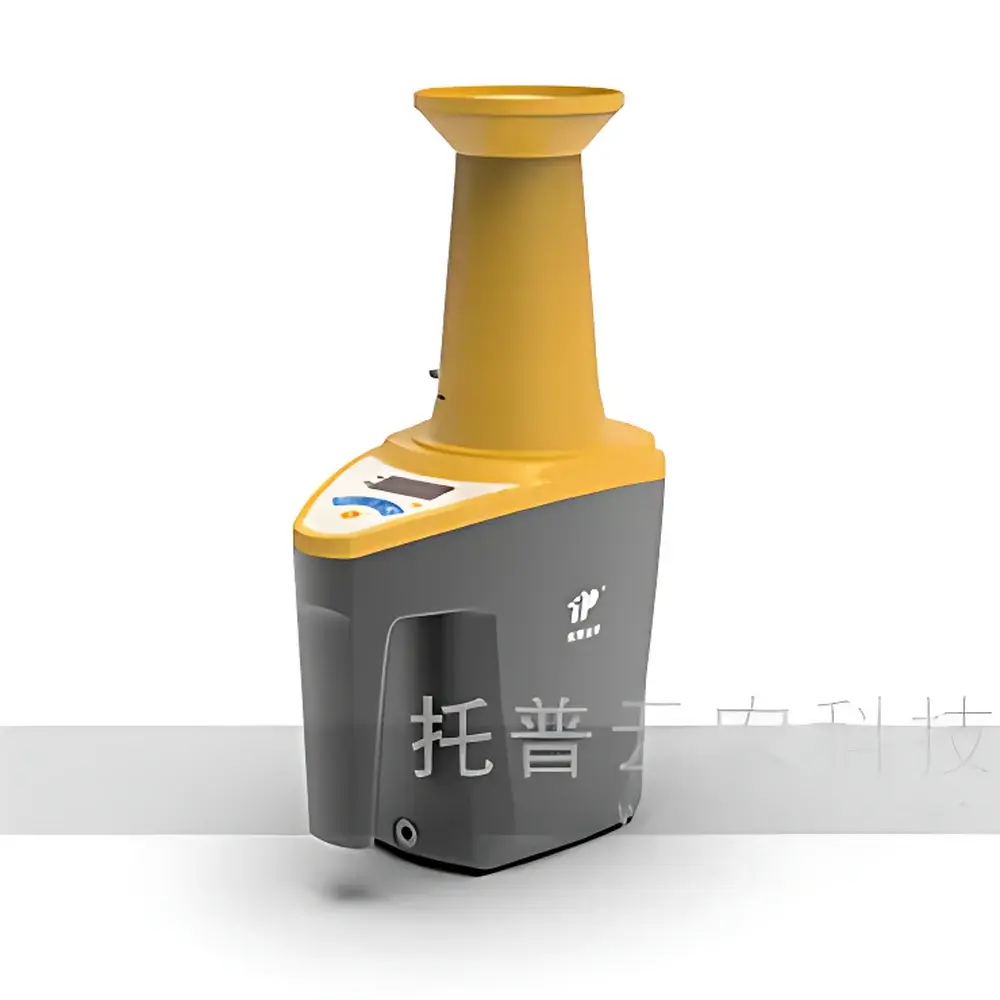
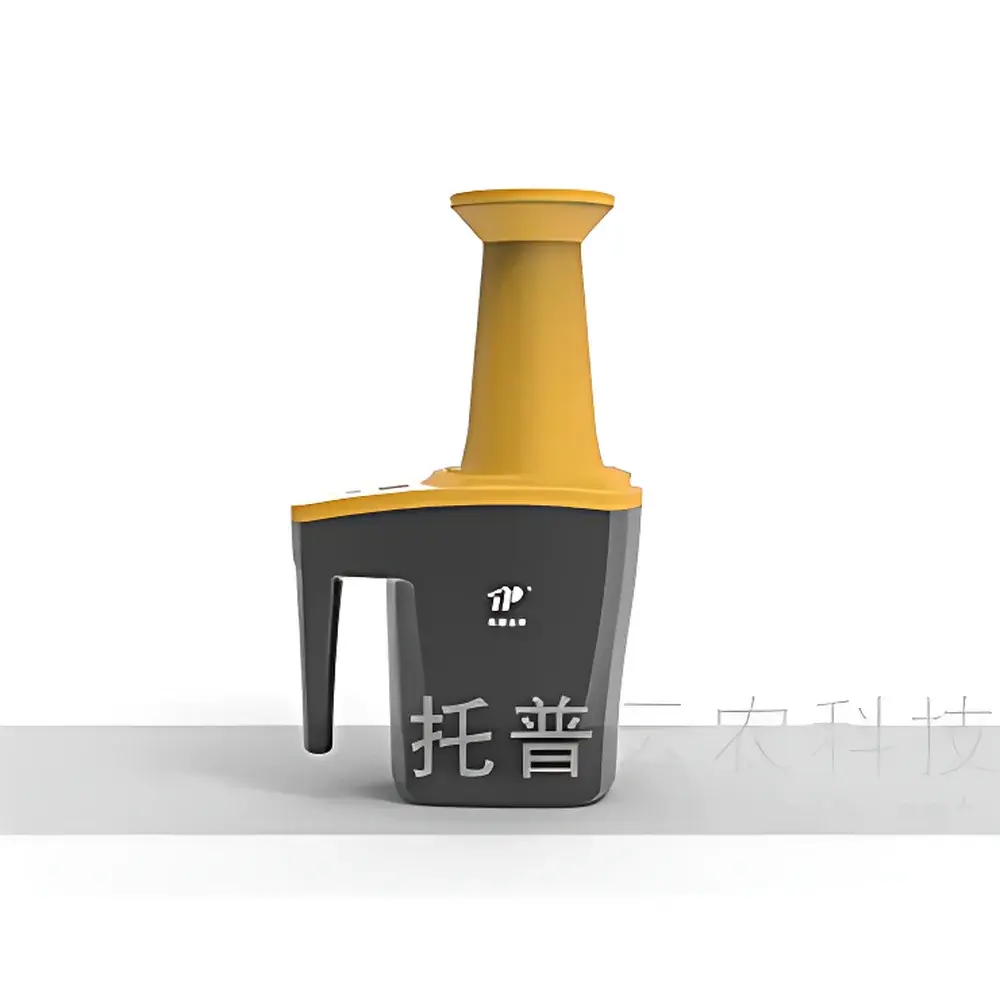
Top Cloud-agri LDS-1H Digital Grain Moisture Analyzer
| Brand | Top Cloud-agri |
|---|---|
| Origin | Zhejiang, China |
| Manufacturer Type | Direct Manufacturer |
| Country of Origin | China |
| Model | LDS-1H |
| Price | USD 260 (FOB) |
| Measurement Range | 3–35% w.b. |
| Accuracy | ≤ ±0.5% (within primary moisture range) |
| Repeatability | ≤ 0.2% |
| Sample Weight | 150 g (fixed-weight mode) |
| Measurement Time | ≤ 10 s |
| Operating Temperature | 0–40 °C |
| Power Supply | 4 × AA alkaline batteries |
| Net Weight | 860 g |
| Calibration Method | Floating three-point calibration (pre-loaded cultivar-specific curves for rice, soybean, wheat, rapeseed, maize, barley, indica rice, and milled rice) |
| Auto Functions | Auto-tare, auto-temperature compensation, auto-measurement, auto-shutdown after 3 min inactivity |
Overview
The Top Cloud-agri LDS-1H Digital Grain Moisture Analyzer is a dedicated, portable moisture measurement instrument engineered for rapid, non-destructive quantification of moisture content in bulk agricultural seeds and grains using resistive impedance principle. Unlike oven-drying or Karl Fischer titration methods, the LDS-1H employs calibrated electrical conductivity and dielectric response correlation with water activity—optimized specifically for intact, unground cereal and oilseed matrices. Its microprocessor-controlled architecture integrates real-time temperature compensation and dynamic sensor response normalization to mitigate environmental drift and batch-to-batch variability. Designed for field-deployable use in seed certification labs, grain procurement centers, and on-farm quality control stations, the analyzer complies with foundational principles outlined in ISO 712:2017 (Cereals and cereal products — Determination of moisture content — Reference method) and supports alignment with national grain grading standards (e.g., GB/T 5497–1985 in China). It does not replace official reference methods for regulatory submission but serves as a high-throughput screening tool with traceable calibration traceability.
Key Features
- Integrated precision load cell with automatic tare function ensures consistent 150 g sample mass application—critical for reproducible impedance readings across heterogeneous grain lots.
- Real-time ambient temperature compensation algorithm adjusts calibration curves dynamically within 0–40 °C operating range, minimizing seasonal or location-based bias.
- Floating three-point calibration architecture allows users to generate or refine cultivar-specific moisture models without proprietary software; preloaded profiles cover rice (indica & japonica), soybean, wheat, maize, barley, rapeseed, and milled rice.
- Auto-shutdown after 180 seconds of inactivity conserves battery life while maintaining readiness for sequential measurements during harvest sampling campaigns.
- DC-only operation via four standard AA alkaline cells enables uninterrupted use in off-grid storage facilities, mobile testing vans, or remote collection points without AC infrastructure dependency.
- Self-diagnostic startup sequence verifies sensor integrity, battery voltage threshold (>4.2 V), and internal reference stability prior to measurement initiation.
Sample Compatibility & Compliance
The LDS-1H is validated for intact, whole-grain samples with minimal surface moisture and no visible mold or thermal damage. It accommodates standard cereal and leguminous seeds including paddy rice, hulled barley, dent maize kernels, and rapeseed—provided particle size distribution remains within nominal 2–8 mm diameter range. Samples must be free of metallic contaminants, excessive dust, or clumping that could distort electrode contact geometry. While not compliant with FDA 21 CFR Part 11 for electronic records in GMP environments, its calibration logs, user-defined offsets, and measurement timestamps meet GLP documentation requirements for internal QA/QC workflows. Instrument validation protocols align with ISO/IEC 17025:2017 clause 7.7 (Sampling) and clause 7.8.2 (Reporting of results) when used in accredited laboratories.
Software & Data Management
The LDS-1H operates as a standalone embedded system with no external software dependency. All calibration parameters, user offsets, and measurement history are retained in non-volatile memory (EEPROM) with write-cycle endurance exceeding 100,000 cycles. Each measurement stores timestamp (RTC-based), ambient temperature, raw impedance value, compensated moisture result, and active cultivar ID. Data export is not supported via USB or Bluetooth; however, manual transcription into LIMS or Excel is facilitated by standardized 7-digit alphanumeric result display (e.g., “13.25%”). Calibration verification reports can be generated by executing built-in diagnostic mode (press MODE + ▲ for 3 s), which outputs baseline resistance, temperature coefficient deviation, and last calibration date.
Applications
- Pre-storage moisture verification to prevent mycotoxin development during silo holding periods.
- In-field seed lot segregation prior to conditioning or drying—enabling targeted energy allocation.
- Post-harvest quality audits at cooperative collection hubs under time-constrained operational windows.
- Seed certification support for national variety release programs requiring rapid moisture stratification.
- Educational use in agricultural extension training modules on post-harvest physiology and safe moisture thresholds.
FAQ
Does the LDS-1H require grinding or sample homogenization before measurement?
No. The instrument is designed for whole-kernel analysis; grinding invalidates factory calibration and introduces particle-size-dependent error.
Can the device measure moisture in parboiled or steamed rice?
Not recommended. Thermal processing alters starch gelatinization and dielectric properties beyond the scope of existing cultivar models.
How often should calibration verification be performed?
Daily verification using certified reference grain samples (e.g., NIST SRM 1567a wheat flour) is advised for critical QA applications; otherwise, weekly checks suffice for routine grading.
Is battery replacement possible without recalibration?
Yes. The EEPROM retains all calibration coefficients and user offsets across power cycles and battery changes.
What is the warranty coverage and service support structure?
Top Cloud-agri provides 18 months limited hardware warranty and remote technical guidance via ISO 9001-certified engineering team; no on-site service network exists outside mainland China.



