
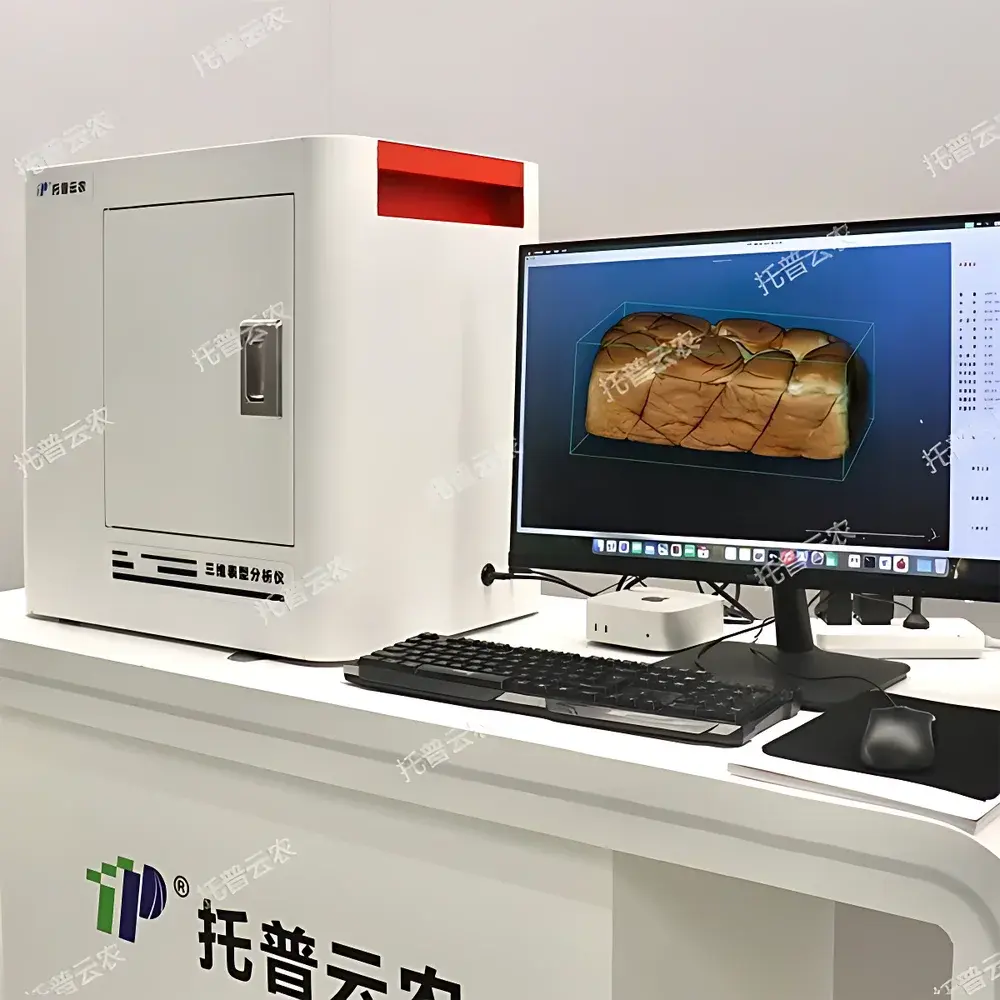
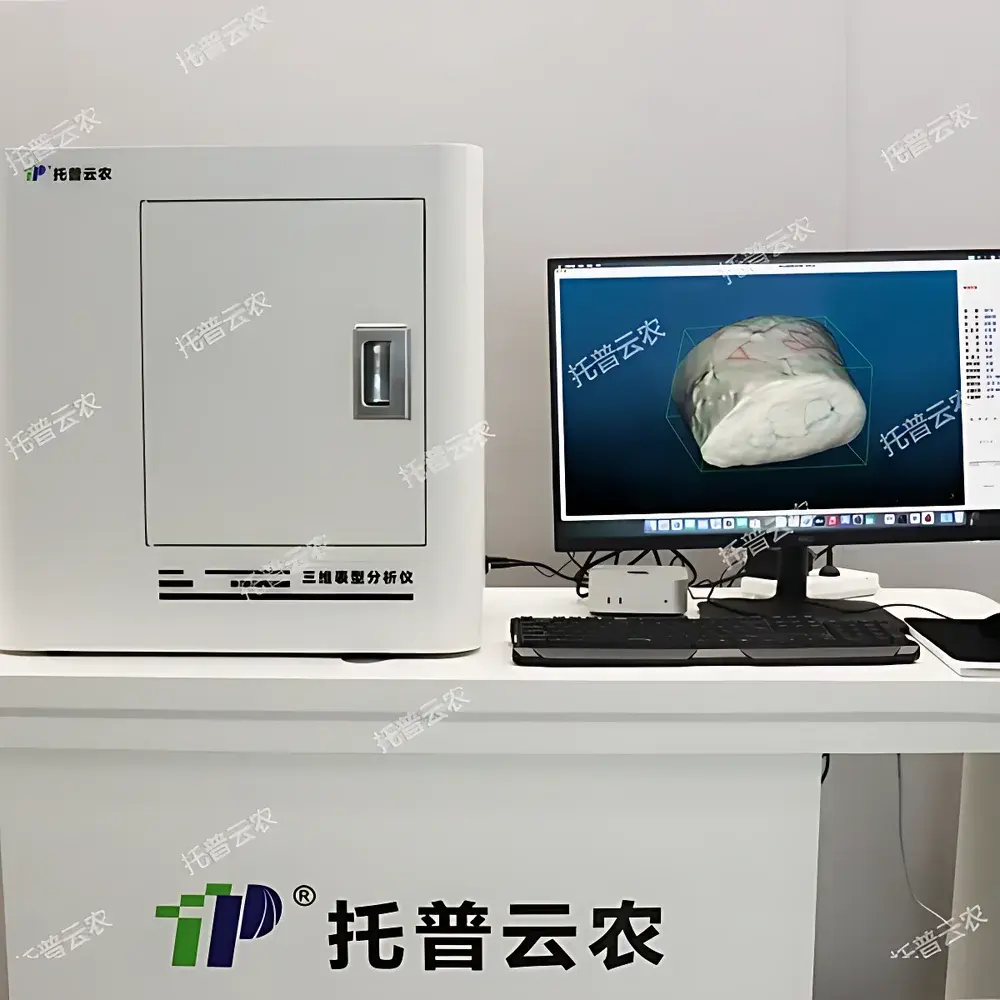
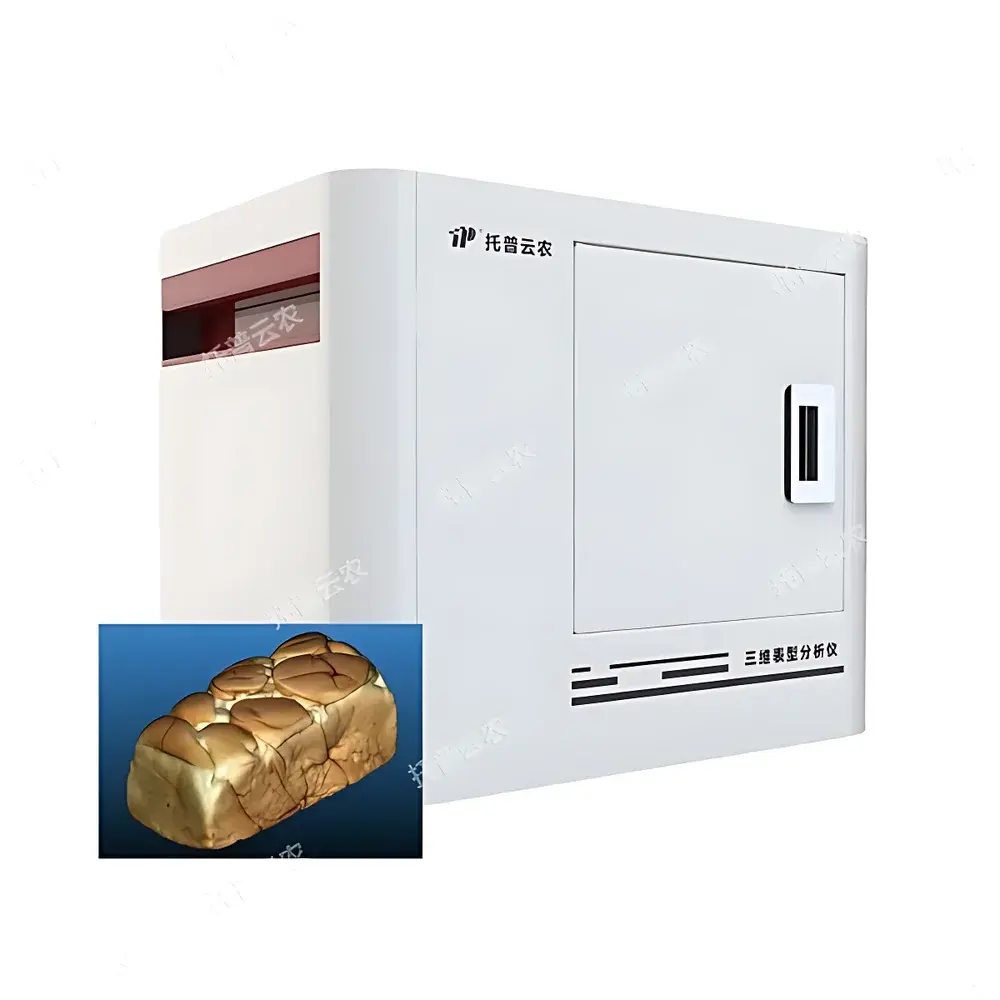
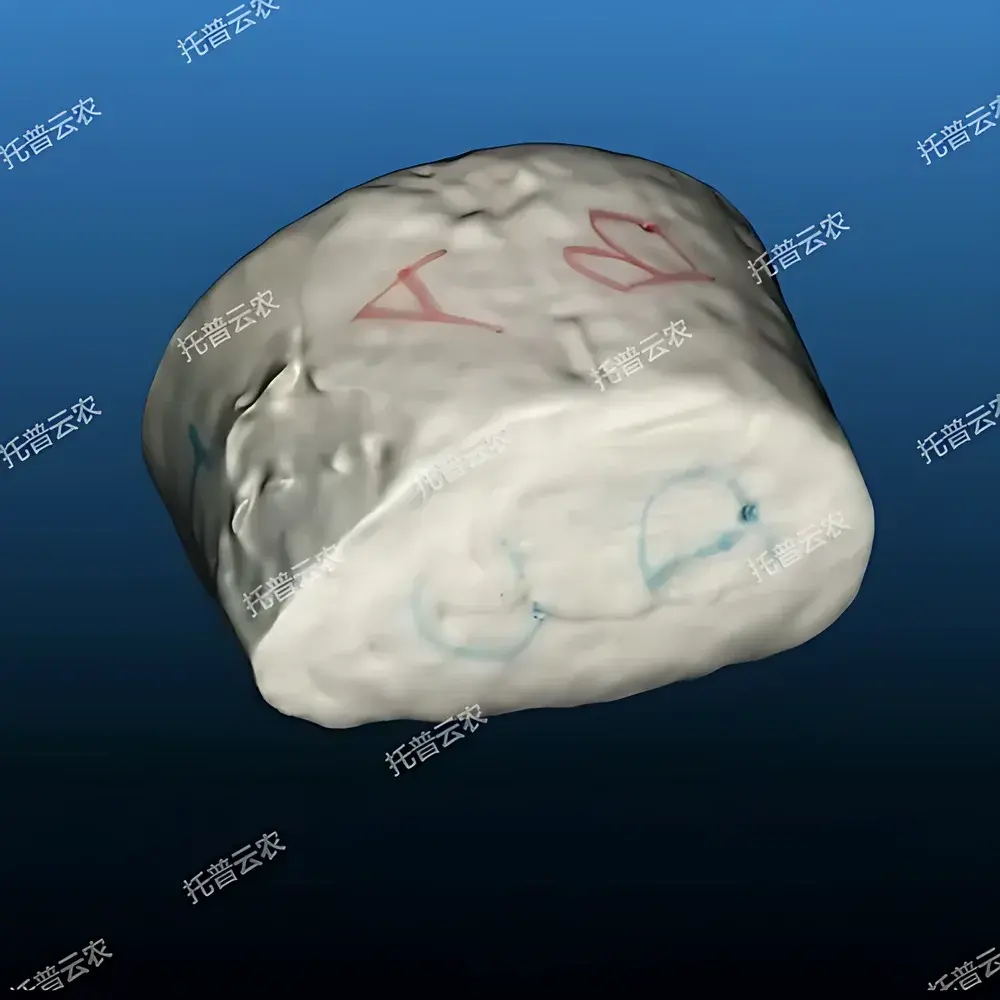
Top Cloud-agri TP-XT3D-GM Digital Bread Volume & Quality Analysis System
| Brand | Top Cloud-agri |
|---|---|
| Origin | Zhejiang, China |
| Manufacturer Type | Manufacturer |
| Product Origin | Domestic (China) |
| Model | TP-XT3D-GM |
| Price | Upon Request |
| Measurement Accuracy | Distance ±0.5 mm or 2%, Area ±2%, Volume ±2% |
| Resolution | 0.1 mm (distance), 2% (area/volume) |
| Imaging Light Source | Uniform diffused LED illumination |
| RGB Camera Sensor | 11 MP |
| Image Resolution | 3840 × 2880 pixels |
| Rotational Stage | Motorized 360° turntable |
| Integrated Scale | 2000 g capacity, 0.1 g readability |
| Power Consumption | <100 W |
Overview
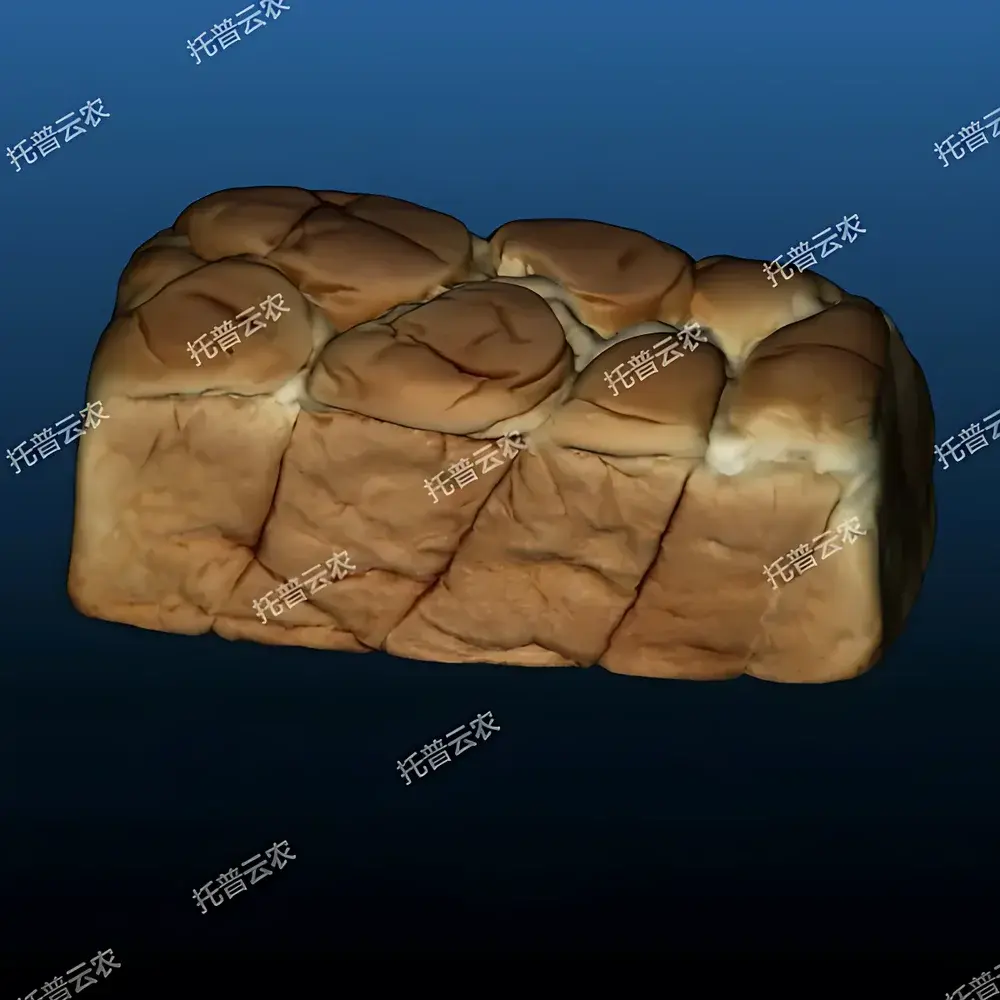
The Top Cloud-agri TP-XT3D-GM Digital Bread Volume & Quality Analysis System is a non-contact, vision-based metrology platform engineered for objective, repeatable quantification of bread morphological and surface quality traits. It operates on the principle of multi-view structured light triangulation combined with calibrated photogrammetry, enabling high-fidelity 3D reconstruction of baked goods without physical contact or sample deformation. Unlike manual caliper-based or water-displacement methods—both prone to operator variability and structural compromise—the TP-XT3D-GM delivers traceable, audit-ready dimensional data aligned with food science standards for process validation, formulation optimization, and QC benchmarking. Designed specifically for cereal-based leavened products, the system supports standardized evaluation across R&D labs, pilot bakeries, and industrial quality assurance environments where consistency, throughput, and regulatory documentation are critical.
Key Features
- Integrated dark-chamber enclosure with front-access sliding door—minimizes ambient light interference and streamlines sample loading/unloading.
- Motorized precision rotation stage (360° continuous, programmable angular step)—enables synchronized multi-perspective image capture under consistent illumination.
- Calibrated dual-function sensor suite: 11-megapixel RGB camera (3840 × 2880 resolution) paired with an embedded high-stability load cell (2000 g / 0.1 g resolution), allowing simultaneous acquisition of geometric and mass parameters in a single workflow.
- Uniform diffused LED ring lighting system—engineered to eliminate specular highlights and shadow artifacts, ensuring color fidelity (CIE L*a*b* compliant) and consistent surface reflectance for robust texture and crumb structure analysis.
- Onboard AI-accelerated 3D point cloud generation—reconstructs full-surface topology from ≥12 orthographic views; outputs mesh models compatible with STL, OBJ, and PLY formats for downstream metrological inspection or archival.
Sample Compatibility & Compliance
The TP-XT3D-GM is validated for standard commercial and artisanal bread forms—including baguettes, sandwich loaves, buns, rolls, and sourdough boules—within dimensions up to 350 mm (L) × 180 mm (W) × 150 mm (H). Its non-destructive imaging protocol complies with ISO 21502:2020 (Sensory analysis—Methodology—General guidance for product description) and supports GLP-aligned data integrity through timestamped metadata embedding (EXIF + custom JSON schema). All measurement algorithms are internally validated against NIST-traceable dimensional standards; calibration coefficients are user-definable and persistently applied across sessions per ASTM E29-23 guidelines for significant digits and rounding.
Software & Data Management
The proprietary PhenotypeStudio v3.2 software provides a deterministic, audit-trail-enabled interface compliant with FDA 21 CFR Part 11 requirements for electronic records and signatures. Each analysis session generates a self-contained project file (.tps3d) containing raw images, reconstructed meshes, tabulated metrics (volume, L/W/H, surface area, centroid coordinates, dominant hue/saturation/value, weight), and full calibration history. Export options include CSV (for statistical analysis in JMP or Minitab), PDF reports (with configurable templates), MP4 360° flyaround videos (up to 4K resolution), and annotated 3D model viewers supporting distance/angle measurements between arbitrary vertices. Role-based access control, encrypted local storage, and optional network synchronization ensure data governance in regulated environments.
Applications
- Yeast activity profiling: Correlating loaf expansion kinetics with fermentation time/temperature profiles.
- Baking process validation: Quantifying oven spring, crust formation uniformity, and collapse behavior under controlled humidity gradients.
- Flour functionality assessment: Benchmarking gas retention capacity across wheat varieties or enzyme-modified blends.
- QC pass/fail automation: Defining tolerance bands for volume-to-weight ratio (specific volume), symmetry index, and surface defect density per internal SOPs.
- Consumer sensory correlation: Mapping objective shape descriptors (e.g., aspect ratio, convexity index) to hedonic test outcomes.
FAQ
Does the system require external calibration tools or reference objects for routine operation?
No—user-defined calibration coefficients (e.g., pixel-to-mm scaling factor, lens distortion parameters) are stored per instrument profile and auto-applied during acquisition. A certified ceramic calibration board (included) is used only during initial setup or after optical module servicing.
Can the software export measurement data directly into LIMS or SAP QM modules?
Yes—via configurable RESTful API endpoints and ODBC-compliant database connectors; prebuilt adapters available for LabWare LIMS and Siemens Opcenter Quality.
Is the 3D reconstruction algorithm capable of resolving internal crumb structure?
No—the system captures only external surface geometry and colorimetry. Crumb porosity analysis requires complementary techniques such as X-ray micro-CT or acoustic resonance tomography.
What environmental conditions are required for optimal performance?
Ambient temperature: 15–30°C; relative humidity: 30–70% non-condensing; stable vibration-free benchtop; no direct sunlight or fluorescent flicker within the imaging chamber vicinity.
Related Products




