
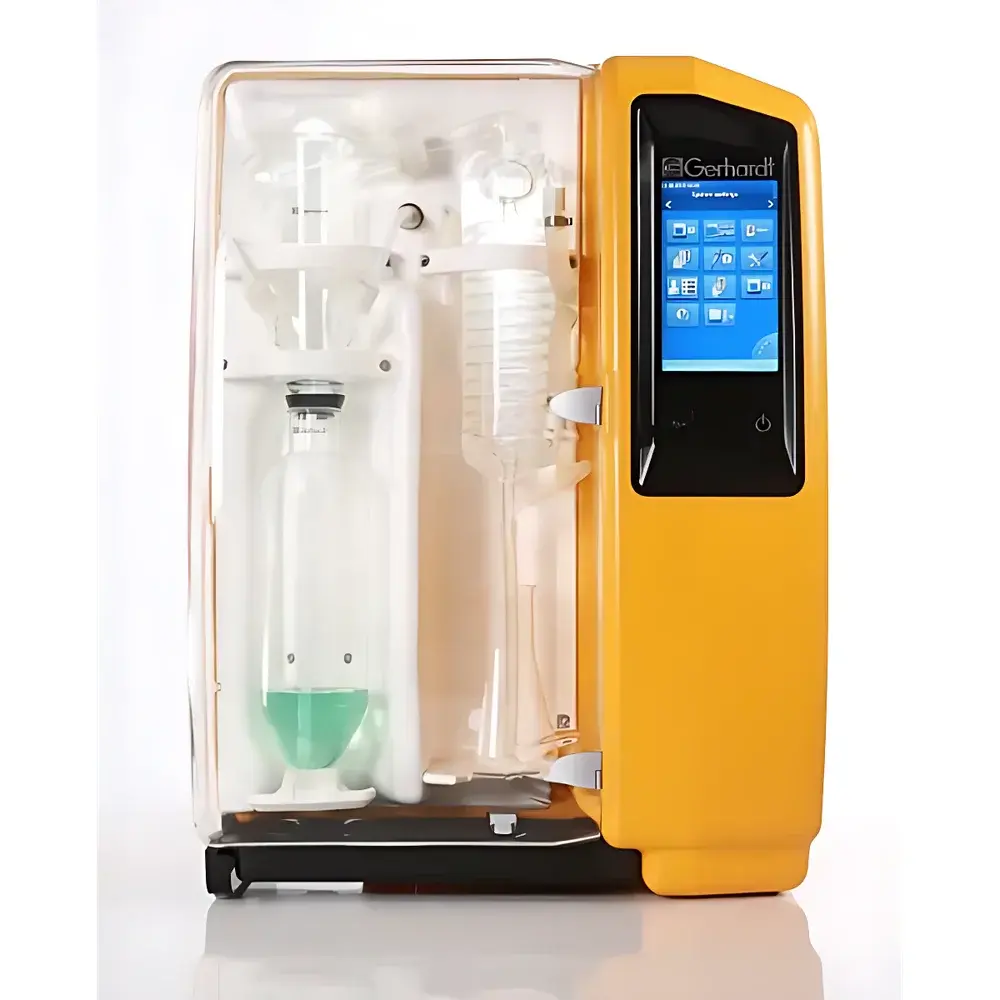
Gerhardt VAP200 Acidification-Rapid Distillation System for Sulfide Analysis
| Brand | Gerhardt |
|---|---|
| Origin | Germany |
| Manufacturer | C. Gerhardt GmbH & Co. KG |
| Model | VAP 200 |
| Instrument Type | Laboratory Benchtop Distillation Unit |
| Water Consumption | ~5 L/min |
| Distillation Time | 2–4 min |
| Power Rating | 2200 W |
| Supply Frequency | 50/60 Hz |
| Dimensions (W×D×H) | 527 × 390 × 697 mm |
| Net Weight | 25 kg |
| Repeatability | ±1% |
| Detection Limit | 0.1 mg sulfide |
| Recovery Rate | ≥99.5% |
| Power Supply | 230 V AC |
| Compliance | EN ISO 9001 certified manufacturing |
Overview
The Gerhardt VAP200 is a benchtop acidification-rapid distillation system engineered for precise, reproducible sulfide quantification in aqueous environmental matrices—primarily wastewater, surface water, groundwater, and sludge digester liquors. It implements the standardized acidification-distillation-absorption principle (e.g., EPA Method 376.1, ISO 16595:2015, DIN 38405-11), wherein sample sulfide is liberated as hydrogen sulfide gas under controlled acidic conditions, swept by steam into an alkaline absorber, and subsequently determined via spectrophotometric or titrimetric analysis. As the foundational model in Gerhardt’s Vapodest series, the VAP200 delivers robust automation for low-to-moderate throughput laboratories requiring method compliance, operational transparency, and long-term reliability—without compromising on German-engineered precision or regulatory traceability.
Key Features
- Automated reagent dosing: Programmable acid addition ensures stoichiometric control and eliminates manual pipetting errors.
- Adjustable steam generation: Steam output is continuously tunable from 10% to 100%, enabling optimization for varying sample volumes and matrix complexity (e.g., high-solids sludge extracts).
- Integrated process monitoring: Backlit LCD display provides real-time visualization of each distillation phase—including acid addition, heating ramp, distillation duration, and cooling—alongside diagnostic codes for immediate fault identification.
- High recovery fidelity: Validated ≥99.5% H2S recovery across diverse water types confirms minimal analyte loss during transfer, critical for meeting ISO 16595 performance criteria.
- EN ISO 9001–compliant manufacturing: Every unit undergoes full traceability from component sourcing through final calibration and functional verification at Gerhardt’s Heidelberg facility.
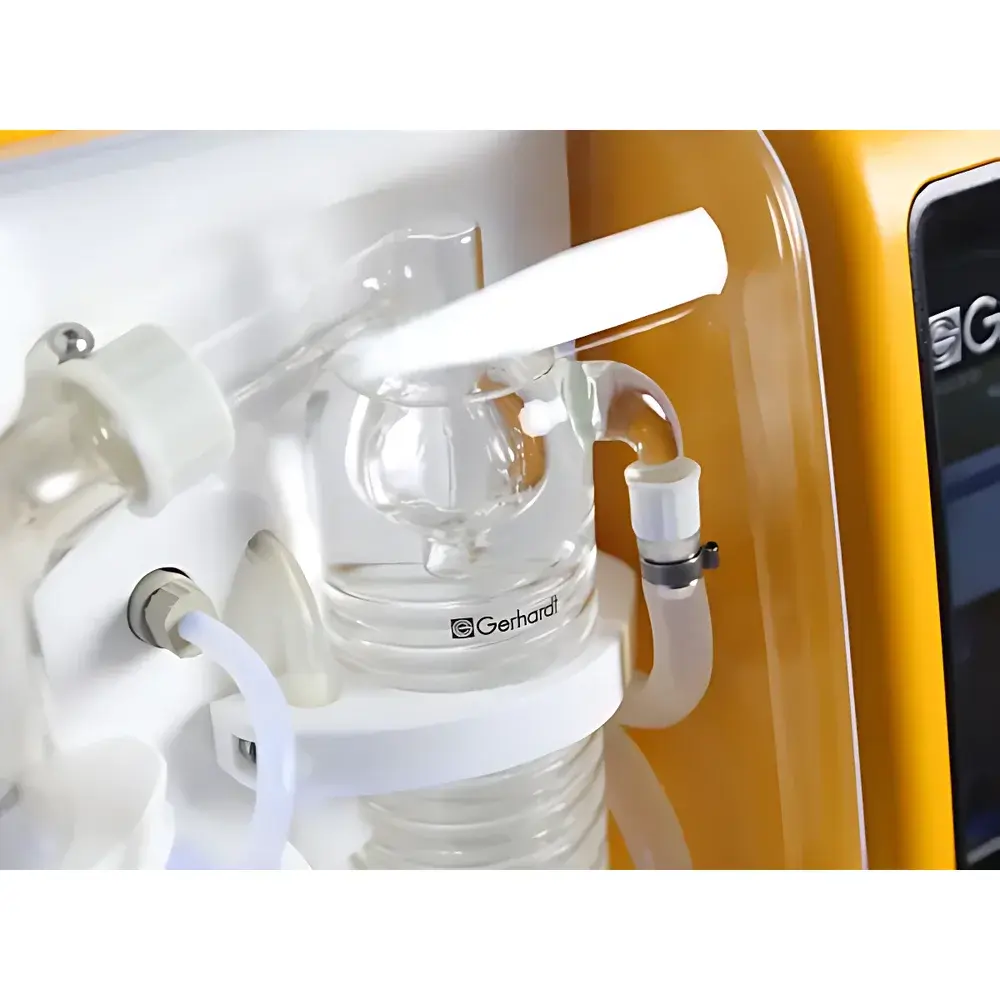
- Durable thermal architecture: Stainless-steel reaction chamber and corrosion-resistant steam pathways ensure >10-year service life under daily laboratory use, consistent with Gerhardt’s 180-year legacy in distillation engineering.
Sample Compatibility & Compliance
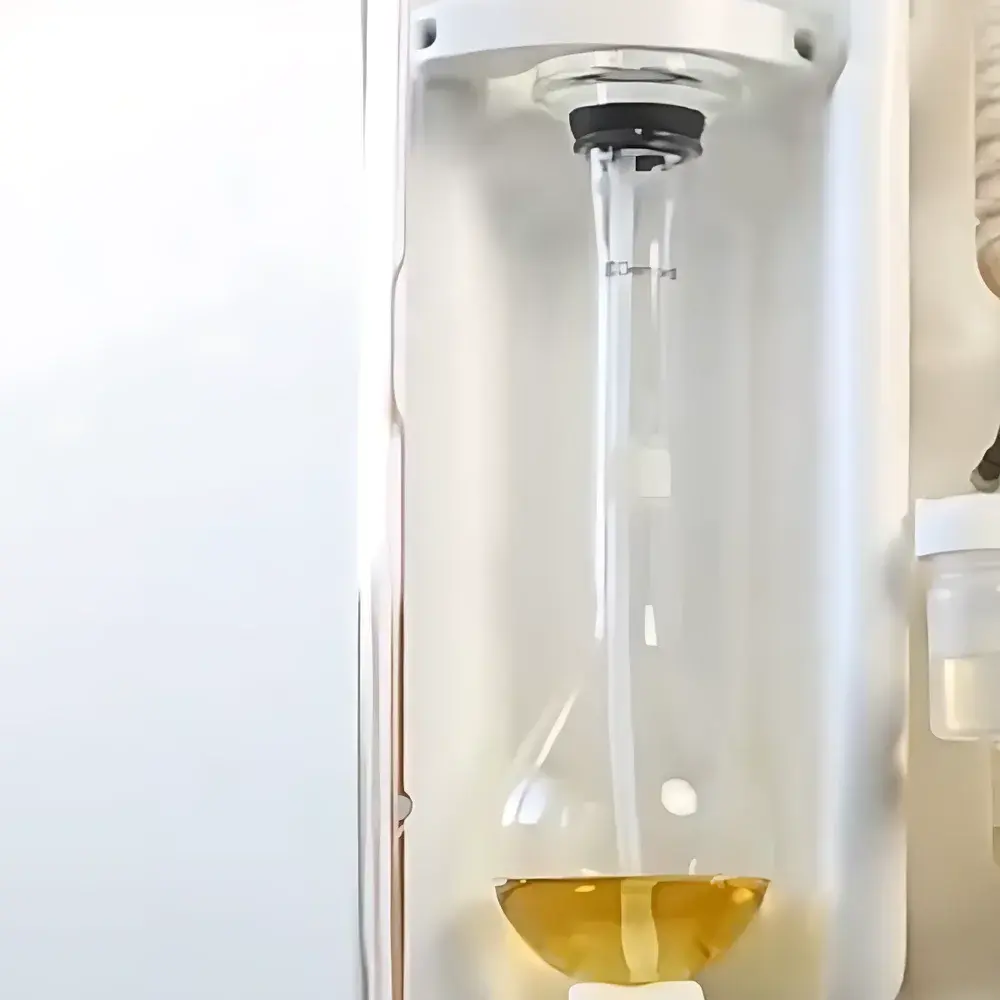
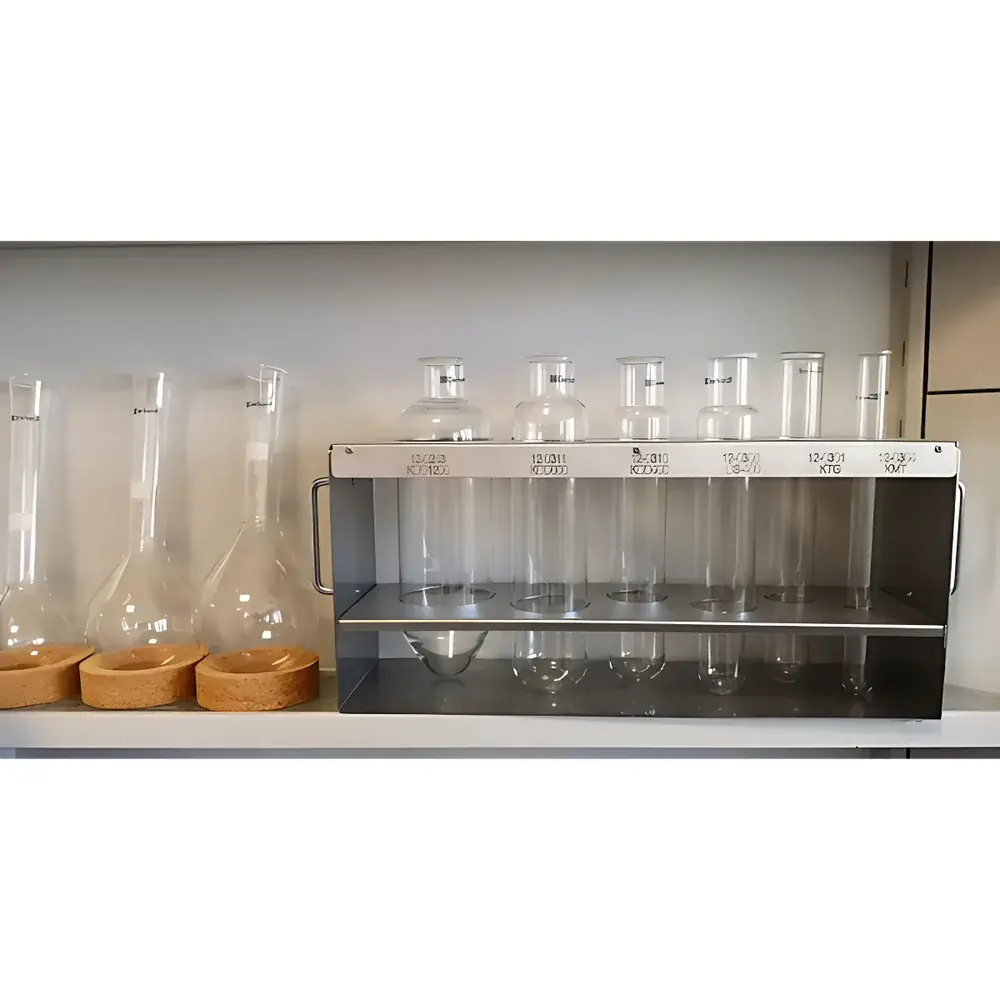
The VAP200 accommodates standard 500 mL borosilicate distillation flasks and integrates seamlessly with common absorber configurations (e.g., 50 mL NaOH traps). It supports sample volumes ranging from 50 to 500 mL, accommodating both low-concentration environmental waters and concentrated industrial effluents after appropriate dilution. The system complies with core regulatory frameworks governing sulfide analysis, including U.S. EPA Methods 376.1 and 376.2, ISO 16595:2015 (Water quality — Determination of sulfide — Method using acid distillation and spectrophotometric detection), and DIN 38405-11. Its design inherently supports GLP documentation requirements: all operational parameters (steam setpoint, distillation time, acid volume) are user-configurable and repeatable, and error logs are retained per run for audit readiness.
Software & Data Management
While the VAP200 operates via embedded firmware without external PC dependency, its programmable logic controller (PLC) stores up to 20 customizable distillation protocols—including acid concentration, steam intensity profile, and hold times—with timestamped execution history. Each protocol can be assigned descriptive IDs (e.g., “Wastewater_Sewage_Std”) for lab-specific SOP alignment. All error events (e.g., low coolant flow, overtemperature, lid open during distillation) generate alphanumeric fault codes displayed on the LCD and logged internally with date/time stamps—enabling root-cause analysis during internal QA reviews or regulatory inspections. For laboratories implementing 21 CFR Part 11–compliant workflows, the VAP200 serves as a validated, stand-alone pre-analytical module; final sulfide quantification data is captured externally (e.g., UV-Vis spectrometer or titrator) with full chain-of-custody documentation.
Applications
- Regulatory compliance testing for municipal wastewater treatment plants (effluent discharge monitoring per EU Urban Wastewater Directive or U.S. NPDES permits).
- Industrial pretreatment verification in chemical, pulp & paper, and food processing facilities.
- Research-grade sulfide speciation studies in anaerobic digestion kinetics and sediment porewater profiling.
- Educational laboratory instruction on classical wet-chemistry separation techniques and method validation principles.
- Reference method implementation in accredited environmental testing labs pursuing ISO/IEC 17025:2017 accreditation.
FAQ
What sample matrices are validated for use with the VAP200?
The system is validated for liquid environmental samples including raw and treated wastewater, surface water, groundwater, leachates, and clarified sludge supernatants. High-turbidity or particulate-laden samples require prior filtration (0.45 µm) to prevent clogging.
Is the VAP200 compatible with automated post-distillation analysis systems?
Yes—it outputs distilled H2S quantitatively into standard absorbers compatible with autosamplers for UV-Vis (e.g., Hach DR6000) or potentiometric titrators (e.g., Metrohm 916 Ti-Touch), enabling fully integrated workflow automation.
How is calibration verified on the VAP200?
Calibration is performed using certified sulfide reference standards (e.g., NIST-traceable Na2S solutions); recovery checks are conducted per batch using spiked matrix blanks, with results documented per ISO/IEC 17025 clause 7.7.
Does the VAP200 require external cooling water?
Yes—it uses tap water for condenser cooling at ~5 L/min flow rate; optional recirculating chillers may be integrated for temperature-sensitive applications or where municipal water supply is unstable.
Related Products







