
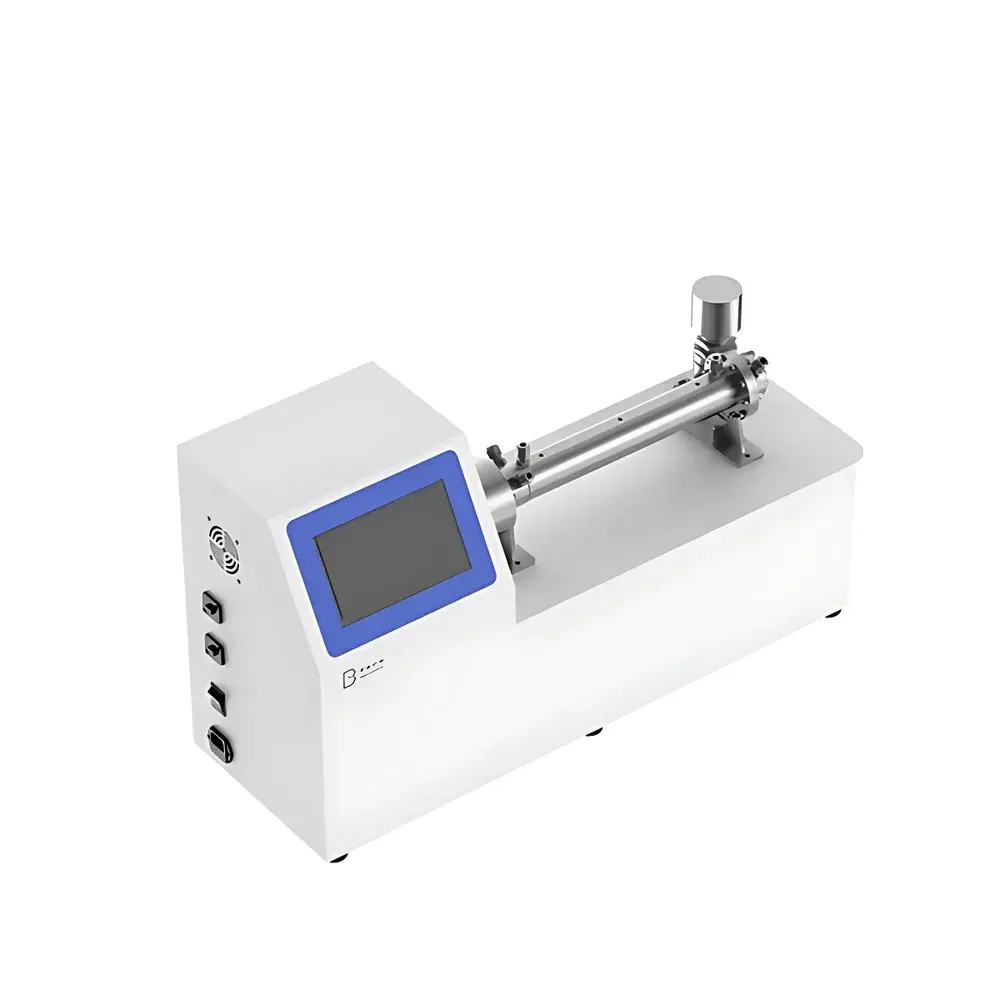
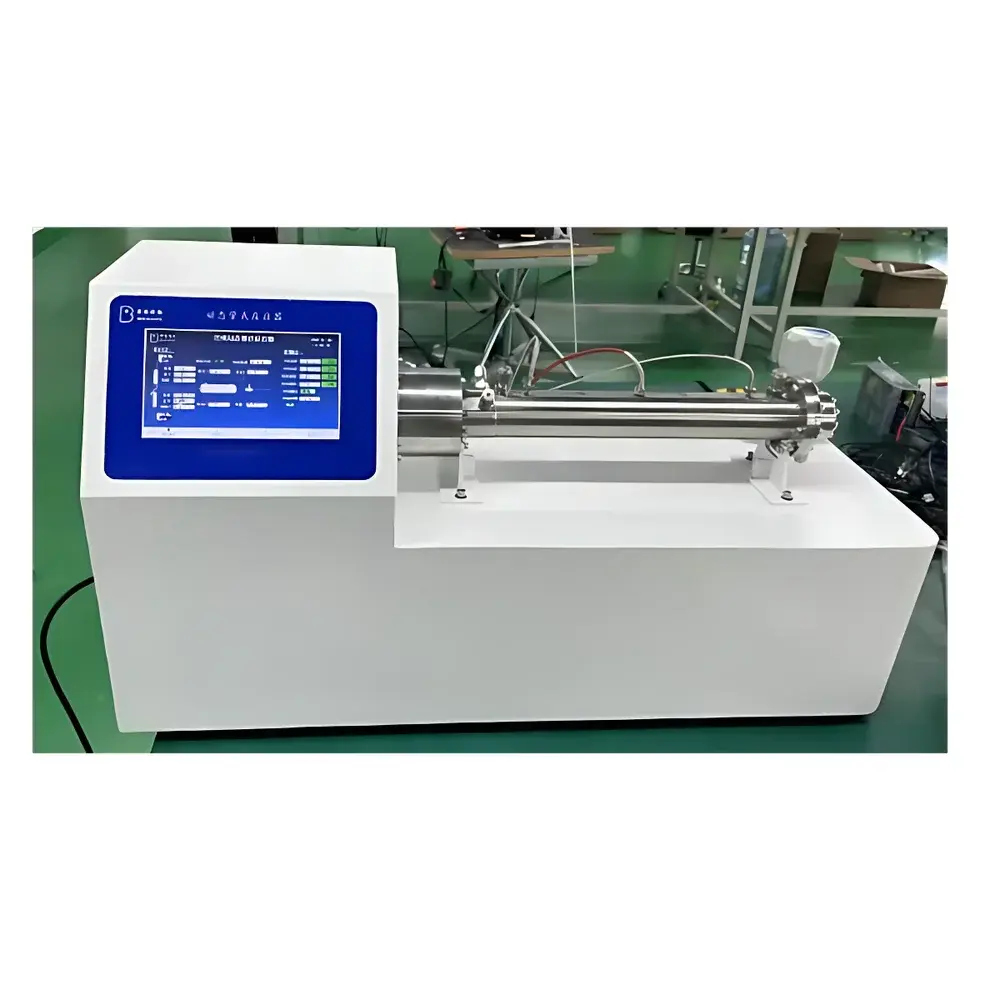
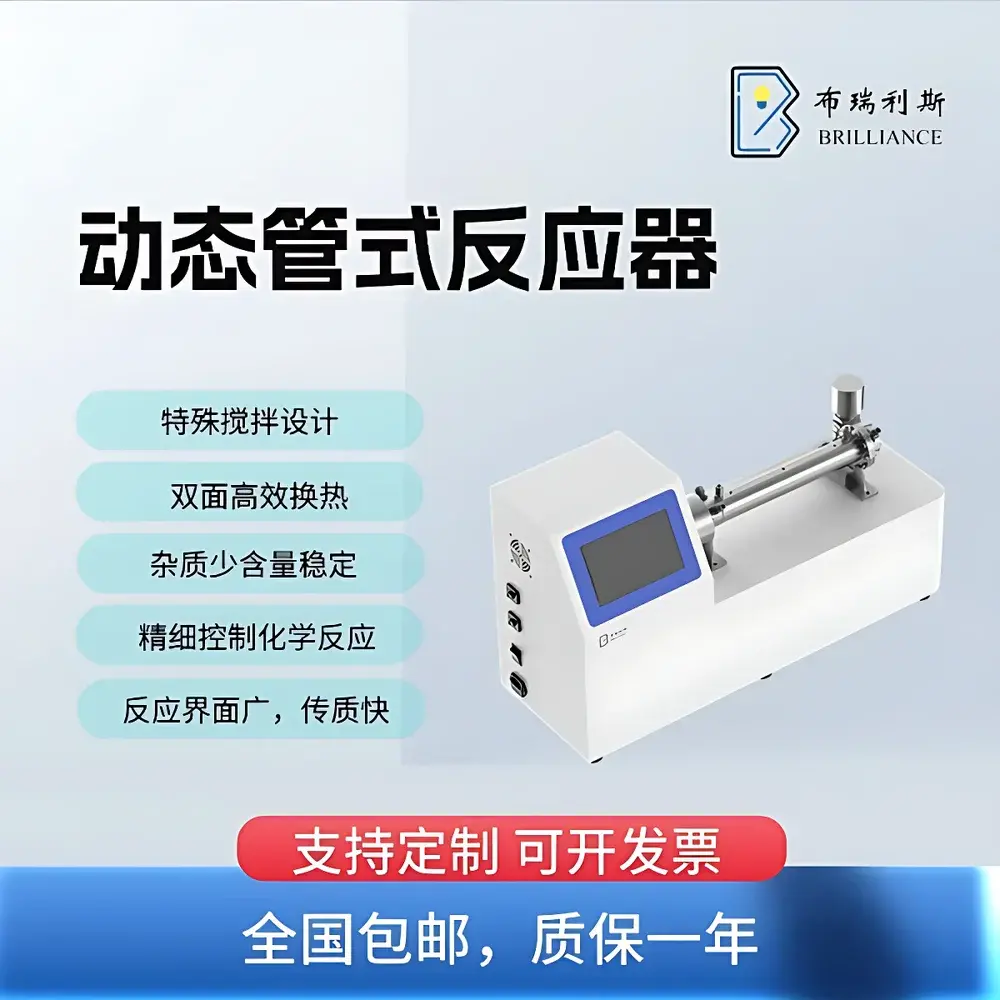
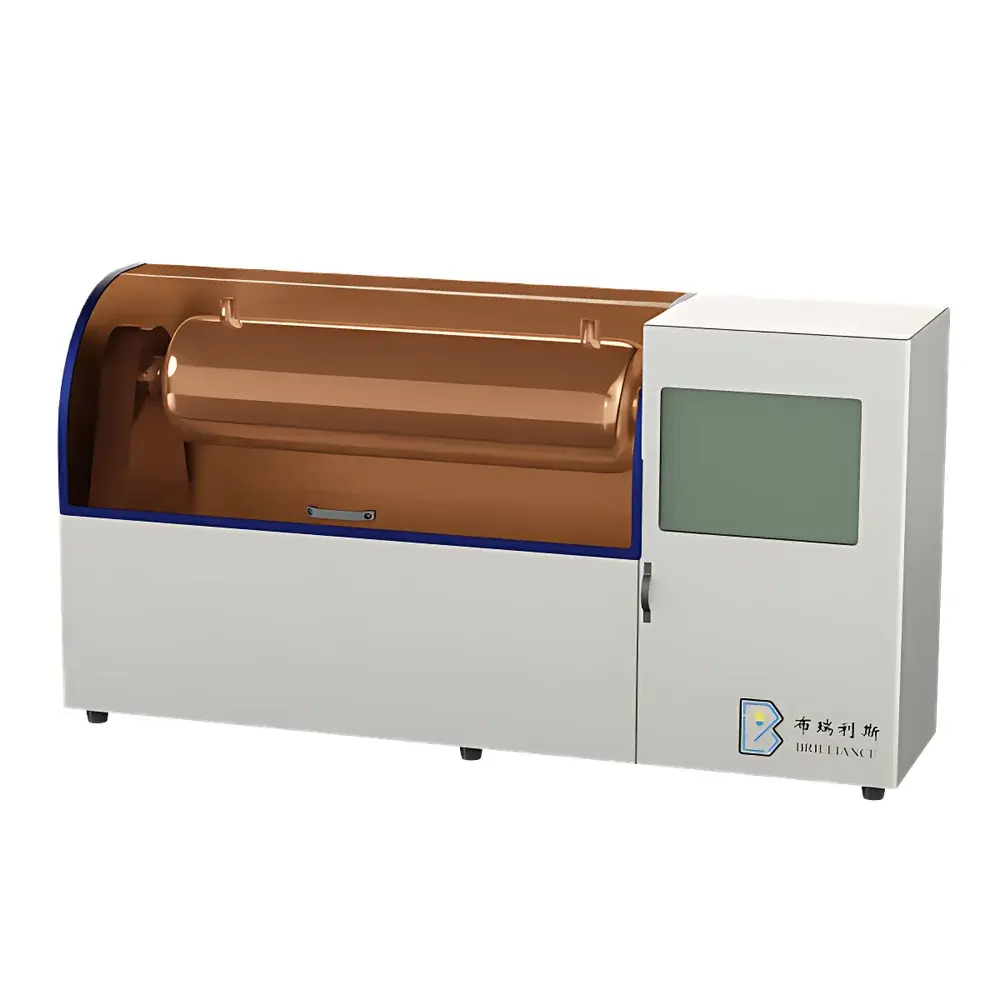
Brilliance Bri-CF-D Dynamic Tubular Reactor
| Brand | Brilliance |
|---|---|
| Model | Bri-CF-D |
| Type | Dynamic Tubular Reactor |
| Construction Material | 316L Stainless Steel / Hastelloy C-276 / Titanium Alloy / Nickel Alloy |
| Sealing | Mechanical Seal or Magnetic Coupling |
| Hold-up Volume | 100–2000 mL |
| Max Operating Pressure | ≤ 4 MPa |
| Temp. Range | −20 to 240 °C |
| Heat Exchange | External Jacket (external chiller/heater not included) |
| Agitation | Internally Mounted Stirring Shaft |
| Motor Power | 0.75–2.2 kW |
| Max Solid Content | 10–20 wt% |
| Max Particle Size | 0.2–0.5 mm |
| Temperature Sensors | 3–5 pts |
| Pressure Sensors | 1 pt |
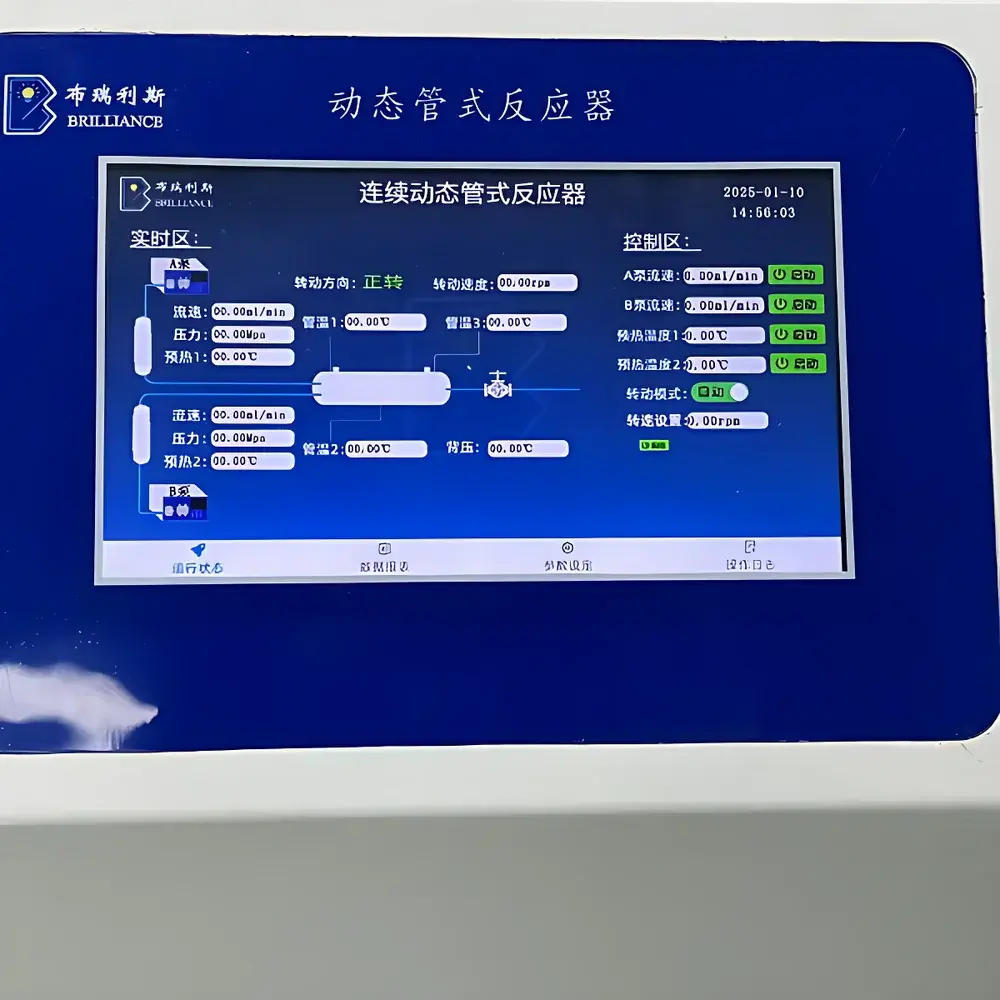
| Control System | PLC with Touchscreen HMI |
| Compliance | Designed for GLP-compliant continuous reaction workflows |
| Application Scope | Gas–Liquid–Solid (G-L-S) multiphase reactions, high-viscosity systems, high-solid-loading suspensions, and kinetically demanding homogeneous/heterogeneous syntheses |
Overview
The Brilliance Bri-CF-D Dynamic Tubular Reactor is an engineered continuous-flow chemical reactor designed for precise control of residence time distribution, thermal management, and mass transfer in gas–liquid–solid (G-L-S), liquid–solid (L-S), and high-viscosity reaction systems. Unlike conventional plug-flow or stirred-tank reactors, the Bri-CF-D integrates axial mechanical agitation within a tubular geometry—enabling dynamic flow conditioning while preserving near-plug-flow hydrodynamics. Its core principle relies on controlled radial mixing via internal stirring elements, coupled with laminar-to-turbulent transition zones induced by dual heat exchange surfaces (inner wall + external jacket). This architecture ensures minimal back-mixing, uniform radial velocity profiles, and axial-only variation of concentration and reaction rate—making it especially suitable for kinetic studies, catalyst screening, and scalable process intensification under steady-state operation.
Key Features
- Dynamic axial agitation system with customizable impeller geometry (e.g., pitched-blade, anchor, or helical ribbed designs) to accommodate varying rheology—from Newtonian liquids to non-Newtonian slurries with up to 20 wt% solids.
- Dual-mode thermal management: inner-wall convection combined with external jacketed heating/cooling, enabling rapid temperature response and high heat-transfer coefficients even under low-flow or high-viscosity conditions.
- Low-pressure-drop design optimized for multiphase operation: validated for concurrent gas sparging, solid suspension, and liquid-phase reactions without channeling or sedimentation at flow rates from 0.1 to 5 L/min.
- Modular construction using ASTM-certified 316L stainless steel, Hastelloy C-276, titanium alloy, or nickel-based alloys—ensuring compatibility with corrosive reagents (e.g., halogenated solvents, strong acids/bases) and elevated temperatures up to 240 °C.
- Integrated real-time monitoring: up to five calibrated Pt100 RTD sensors distributed axially and radially, plus one high-stability piezoresistive pressure transducer, all fed into a CE-marked PLC controller with 7″ industrial touchscreen interface.
- Compliance-ready architecture: supports audit trails, user-level access control, parameter locking, and electronic signature functionality per FDA 21 CFR Part 11 when paired with optional data logging software.
Sample Compatibility & Compliance
The Bri-CF-D accommodates a broad range of chemistries, including but not limited to hydrogenations, oxidations, nitration, amidation, and heterogeneous catalytic couplings. It handles slurries with particle sizes up to 0.5 mm and viscosities exceeding 5,000 cP without compromising suspension stability or heat transfer efficiency. All wetted parts conform to ASME BPE-2022 surface finish standards (Ra ≤ 0.4 µm for sanitary variants). The reactor design aligns with ISO 14040 (life cycle assessment of chemical processes), ASTM E2500-13 (verification of pharmaceutical equipment), and ICH Q5D (cell substrate characterization for biologics manufacturing support applications).
Software & Data Management
The onboard PLC supports deterministic scan cycles (<100 ms) and stores operational logs (temperature, pressure, agitation speed, feed rates) in CSV format on removable SD card. Optional Ethernet/IP or Modbus TCP connectivity enables integration into DCS or MES platforms (e.g., Siemens PCS7, Rockwell FactoryTalk). For advanced analytics, Brilliance provides the FlowSynchro™ Desktop Suite—featuring residence time distribution (RTD) modeling, kinetic parameter estimation (via nonlinear regression against axial concentration gradients), and automated calibration traceability compliant with ISO/IEC 17025 requirements.
Applications
- Continuous hydrogenation of unsaturated compounds using Pd/C or Raney Ni catalysts under precisely controlled H₂ partial pressure and residence time.
- Exothermic nitrations requiring tight thermal control across multiple reaction zones—enabled by segmented jacket temperature zoning.
- Crystallization and polymorph screening where supersaturation profile must be maintained along the axial coordinate.
- Enzymatic transformations in aqueous–organic biphasic systems, leveraging enhanced interfacial area from dynamic agitation without emulsion over-stabilization.
- Photochemical flow reactions when coupled with external LED arrays mounted on transparent reactor sections (optional quartz liner).
FAQ
What distinguishes the Bri-CF-D from a standard CSTR or PFR?
Unlike ideal CSTRs (perfect mixing) or PFRs (zero radial dispersion), the Bri-CF-D achieves controlled intermediate mixing—retaining narrow residence time distribution while enabling efficient heat/mass transfer in viscous or particulate-laden media.
Can the reactor be validated for GMP production use?
Yes—when equipped with IQ/OQ documentation packages, 3Q-compliant sensors, and 21 CFR Part 11-enabled software, it meets baseline requirements for Phase II–III clinical material synthesis.
Is retrofitting possible for existing pilot plants?
All Bri-CF-D units feature standardized DIN 2817 flange interfaces (DN25–DN50), modular mounting brackets, and configurable I/O protocols—facilitating drop-in replacement or hybrid integration with peristaltic pumps, back-pressure regulators, and inline IR/UV analyzers.
How is cleaning-in-place (CIP) performed?
The reactor supports full CIP via integrated flush ports, compatible with heated caustic or solvent recirculation loops; surface roughness and drainability are certified per EHEDG Doc. 8 guidelines.
What third-party certifications are available?
CE, PED 2014/68/EU (for pressure equipment), ATEX Zone 1 (optional explosion-proof motor variant), and RoHS/REACH declarations are provided upon request.



