
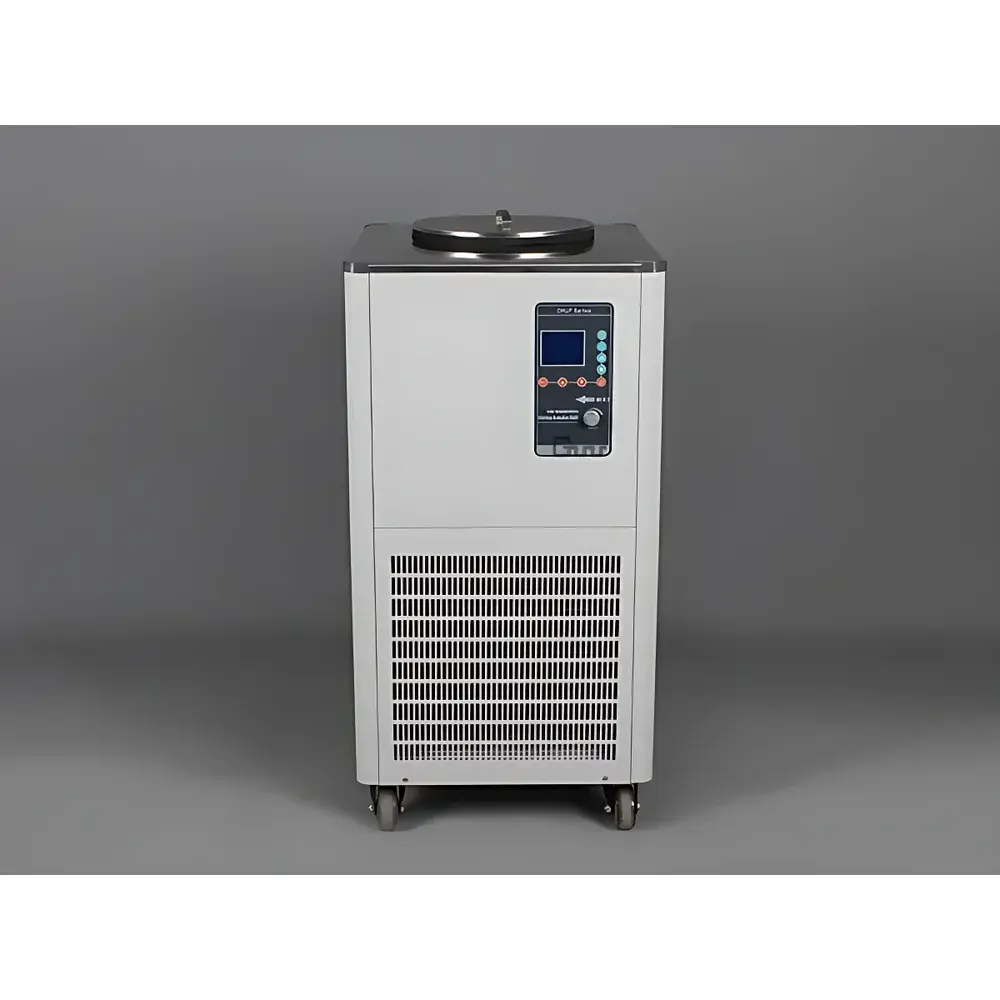
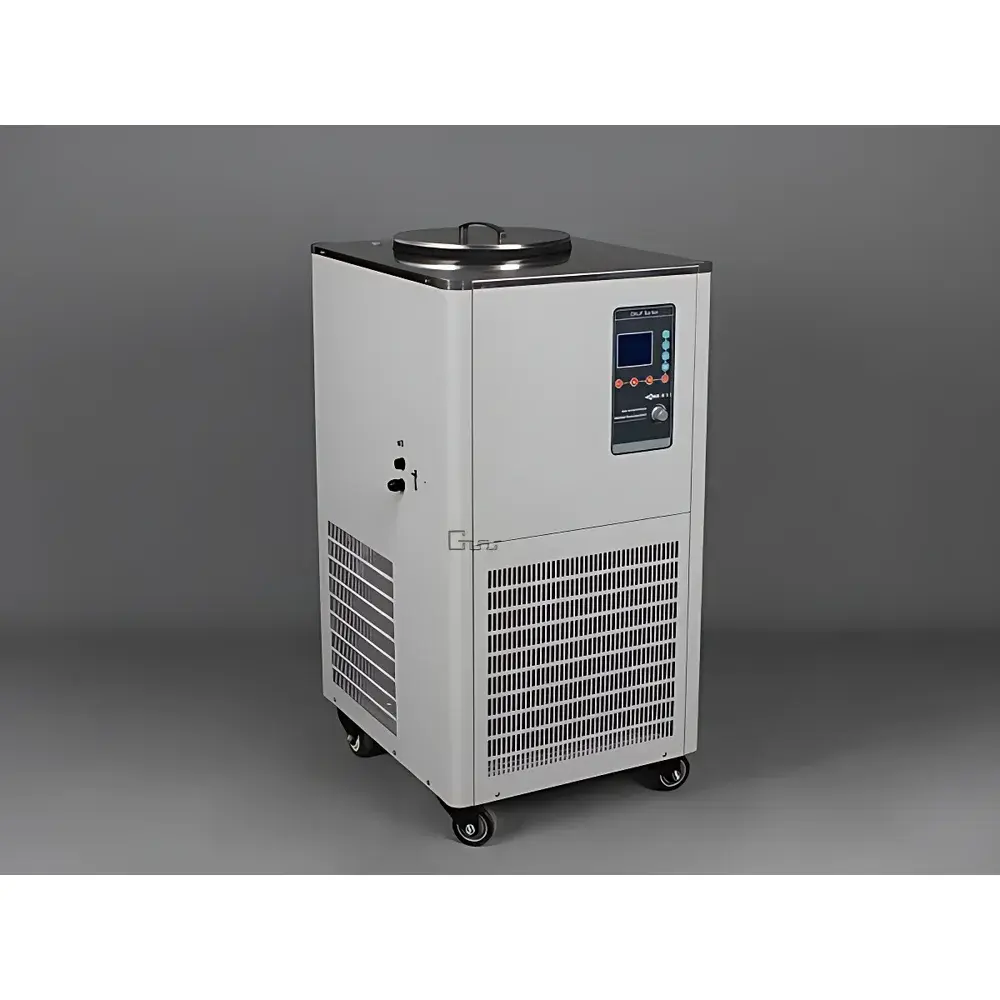
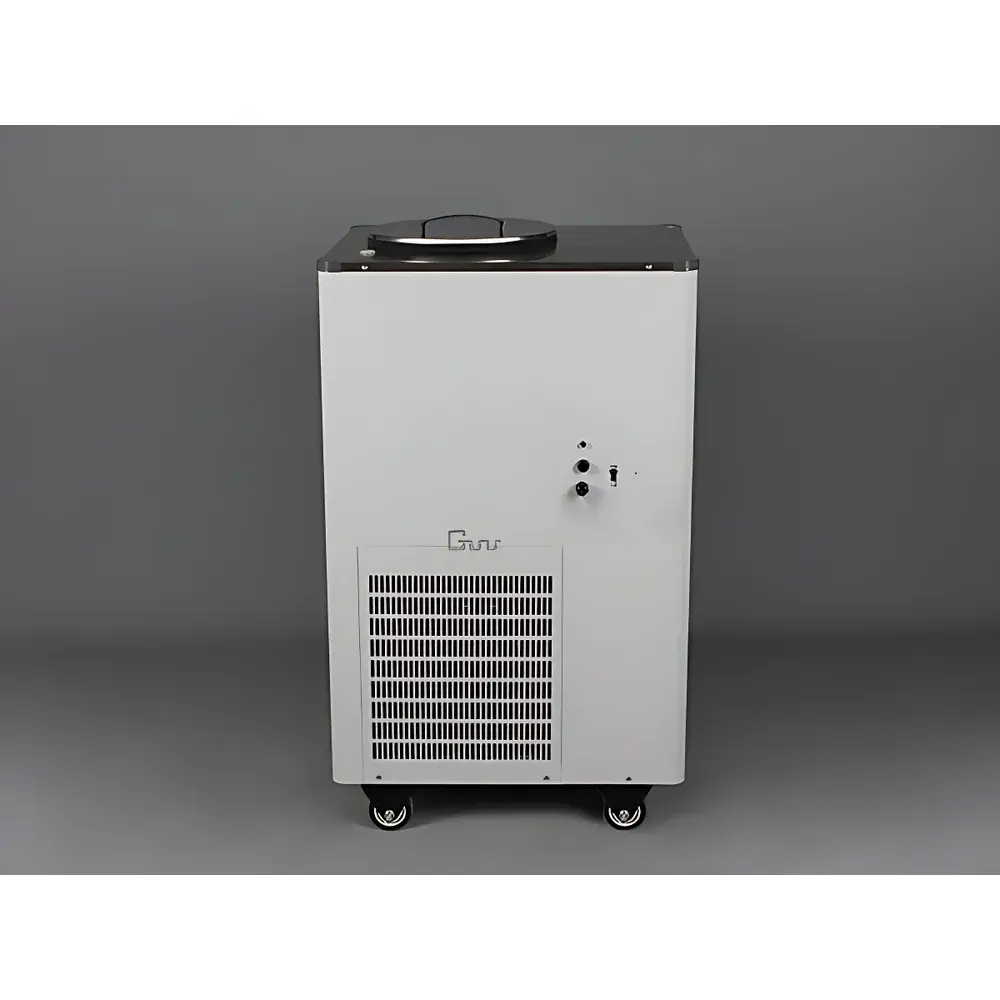
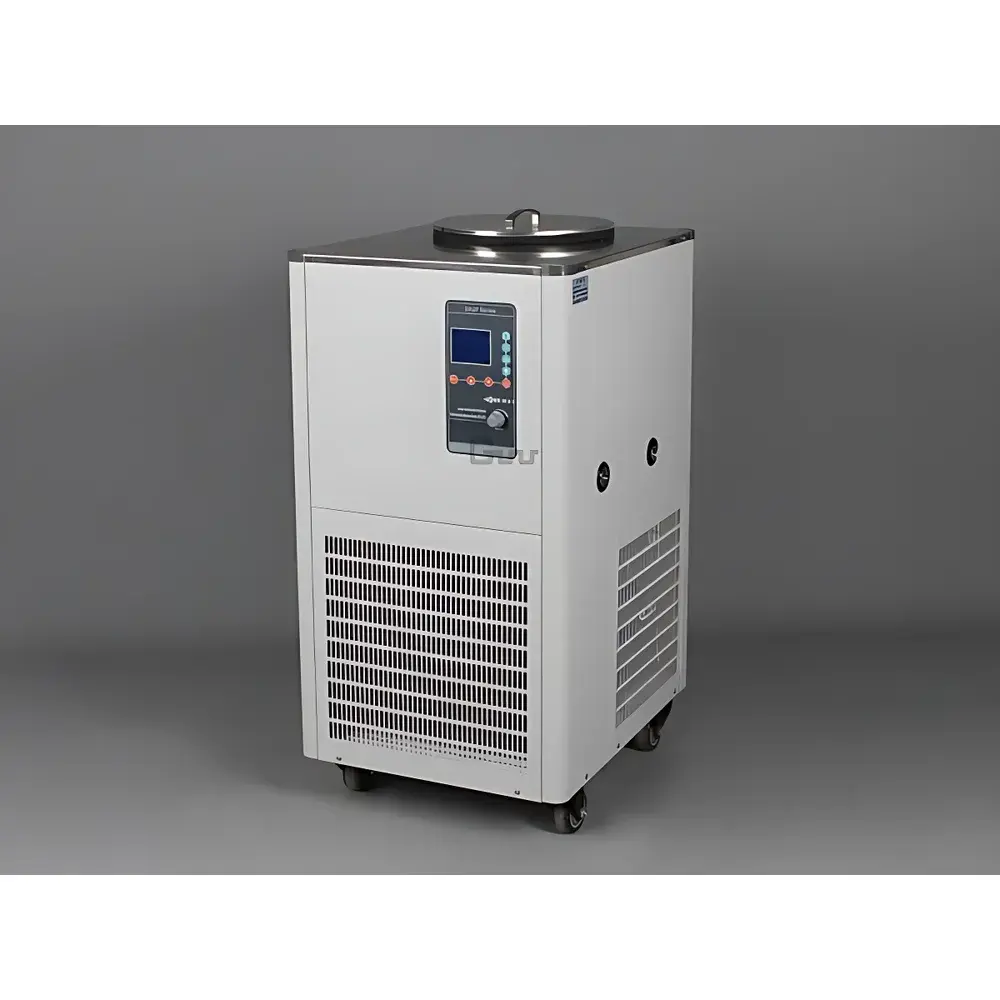
Great Wall DHJF-4020 Low-Temperature Circulating Stirred Bath
| Brand | The Great Wall |
|---|---|
| Origin | Henan, China |
| Manufacturer Type | Direct Manufacturer |
| Country of Origin | China |
| Model | DHJF-4020 |
| Price | Upon Request |
| Refrigerant | R404A |
| Bath Volume | 20 L |
| Temperature Range | −40 °C to +99 °C |
| Temperature Stability | ±0.5 °C |
| Ambient Operating Conditions | 5–35 °C, ≤70% RH |
| Power Supply | 220–240 V~, 50 Hz |
| Total Power Consumption | 2870 W |
| Heating Power | 1500 W |
| Cooling Capacity | 2100 W (at 10 °C), 1750 W (at 0 °C), 1300 W (at −10 °C), 900 W (at −20 °C), 480 W (at −30 °C), 150 W (at −40 °C) |
| Circulation Pump | Stainless-steel shielded pump, 100 W, 20 L/min @ 0.4 bar |
| Stirring | Internal magnetic stirring, 50 W, 100–1000 rpm |
| Stirring Port Opening | Φ280 mm |
| Inner Bath Dimensions | Φ300 × 300 mm |
| Max Flask Capacity | 5000 mL (user-supplied) |
| Bath Material | 304 stainless steel |
| External Footprint | 535 W × 595 D × 1010 H mm |
| Net Weight | 95 kg |
Overview
The Great Wall DHJF-4020 Low-Temperature Circulating Stirred Bath is an integrated thermal management system engineered for precise temperature control and homogeneous mixing in laboratory-scale chemical synthesis, reaction kinetics studies, and low-temperature material testing. Unlike standalone chillers or heating circulators, this unit combines refrigeration, electric heating, magnetic stirring, and closed-loop external circulation within a single robust chassis—enabling simultaneous cryogenic cooling and active agitation across a wide operational range from −40 °C to +99 °C. Its core thermodynamic architecture employs a dual-mode vapor-compression cycle with R404A refrigerant—a zeotropic blend compliant with international environmental regulations (EN 378, ISO 5149) and selected for its balanced performance at sub-zero temperatures. The bath’s thermal stability of ±0.5 °C is maintained via a digital PID controller with real-time feedback from a high-accuracy Pt100 sensor immersed directly in the heat-transfer medium, ensuring minimal thermal drift during extended experiments.
Key Features
- Hermetically sealed Tecumseh (original import) piston compressor delivering long-term reliability and consistent refrigeration output under continuous duty cycles.
- High-efficiency finned-tube air-cooled condenser with oxygen-free copper spiral tubing and proprietary tube-expansion bonding technology—optimized for compactness and service accessibility.
- 304 stainless-steel coiled evaporator fully submerged in the bath reservoir; designed to withstand complete freezing of heat-transfer fluid without mechanical failure or microcrack formation.
- Danfoss thermostatic expansion valve (TXV) with removable cartridge assembly—enabling field replacement without refrigerant recovery or brazing, preserving system integrity and minimizing downtime.
- Danfoss DML-series desiccant filter with 3Å molecular sieve core—reducing acid formation and moisture ingress to <10 ppm, critical for maintaining lubricant stability and preventing copper plating in refrigeration circuits.
- Stainless-steel shielded circulation pump rated for sustained operation below −30 °C, coupled with 304 stainless-steel fluid pathways to eliminate corrosion and leaching risks in aggressive solvent environments.
- Integrated internal magnetic stirrer (50 W, 100–1000 rpm) with torque-sensing feedback, supporting viscosity ranges up to 10,000 mPa·s while maintaining laminar flow profiles in standard 5-L jacketed reactors.
Sample Compatibility & Compliance
The DHJF-4020 accommodates a broad spectrum of laboratory vessels—including standard 5-L round-bottom flasks, jacketed glass reactors, and custom-engineered test cells—via its Φ280 mm open-top configuration and reinforced 304 stainless-steel bath chamber. Its non-reactive wetted materials (304 SS, fluoropolymer seals, ceramic stir bar coatings) ensure compatibility with common organic solvents (e.g., THF, acetone, chloroform), aqueous buffers, and low-temperature cryogens (e.g., ethanol/dry ice slurries). From a regulatory standpoint, the unit conforms to IEC 61010-1:2010 for electrical safety in laboratory equipment and incorporates multiple redundant safeguards: compressor delay protection (3-min restart lockout), earth-leakage circuit interruption (<30 mA), overcurrent tripping (dual-pole MCB), and dual-stage thermal cutoff (bath sensor + compressor discharge limit). While not certified for GMP production use, its audit-ready documentation package supports GLP-compliant validation protocols per ASTM E2500 and ISO/IEC 17025 requirements.
Software & Data Management
The DHJF-4020 operates via an embedded microcontroller-based PID interface featuring full-digitized Chinese-language display (configurable to English firmware upon request), intuitive soft-key navigation, and real-time parameter logging to internal non-volatile memory (up to 10,000 timestamped records). Though it lacks Ethernet or USB host capability, optional RS-485 Modbus RTU communication enables integration into centralized lab automation platforms (e.g., LabVIEW, DeltaV, or custom SCADA systems) for remote setpoint adjustment, alarm forwarding, and trend analysis. All temperature and stirring data are traceable with second-level timestamps, satisfying basic 21 CFR Part 11 record-keeping prerequisites when paired with validated third-party data acquisition software and electronic signature workflows.
Applications
- Exothermic reaction control in fine chemical synthesis, including Grignard, lithiation, and hydrogenation processes requiring sub-zero initiation temperatures.
- Crystallization studies where precise nucleation onset and polymorph selection depend on controlled ramp-and-hold thermal profiles.
- Material property evaluation—e.g., dynamic viscosity measurements of polymer melts or battery electrolytes across extended low-temperature ranges.
- Calibration and verification of secondary temperature sensors (thermocouples, RTDs) against NIST-traceable references in metrology labs.
- Preconditioning of optical components, semiconductor wafers, or MEMS devices prior to cryogenic characterization.
FAQ
What types of heat-transfer fluids are compatible with the DHJF-4020?
Ethylene glycol/water mixtures (up to 60% vol), silicone oils (e.g., DC200 series), and low-viscosity alcohols (e.g., ethanol, isopropanol) are recommended. Avoid chloride-containing brines or highly acidic/basic solutions.
Can the unit operate continuously at −40 °C?
Yes—provided ambient conditions remain within specification (5–35 °C, ≤70% RH) and the bath is fully filled with appropriate low-pour-point fluid. Continuous operation at minimum temperature requires adequate ventilation around the condenser.
Is external circulation mandatory for temperature uniformity?
No—the internal magnetic stirrer ensures sufficient homogeneity for most applications; however, external recirculation is required when connecting to jacketed reactors or when thermal mass exceeds 5 L.
Does the system support programmable temperature ramps?
Not natively—the PID controller supports fixed setpoints only. Ramp functionality requires external programmable logic controllers (PLCs) or PC-based interfaces via Modbus.
What maintenance intervals are recommended for long-term reliability?
Compressor oil inspection every 24 months; desiccant filter replacement every 18 months under continuous operation; annual verification of refrigerant charge and electrical insulation resistance.



