
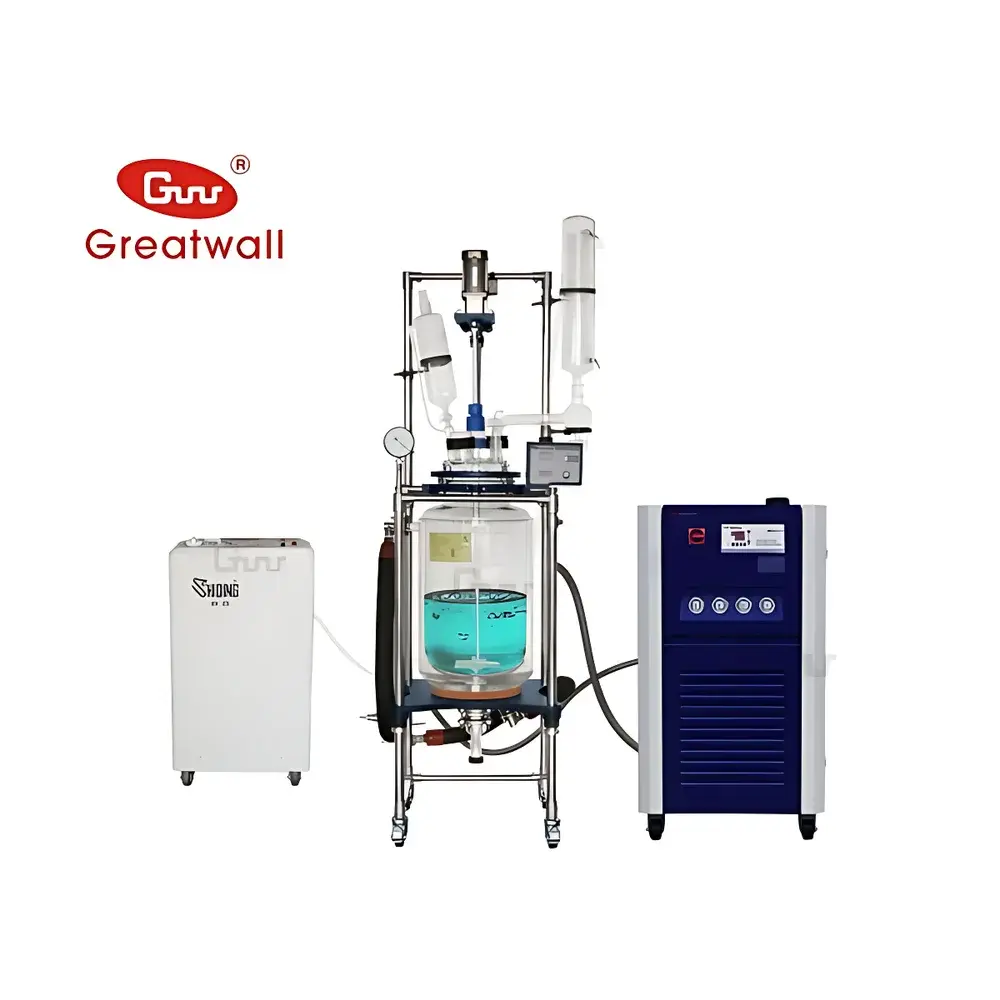
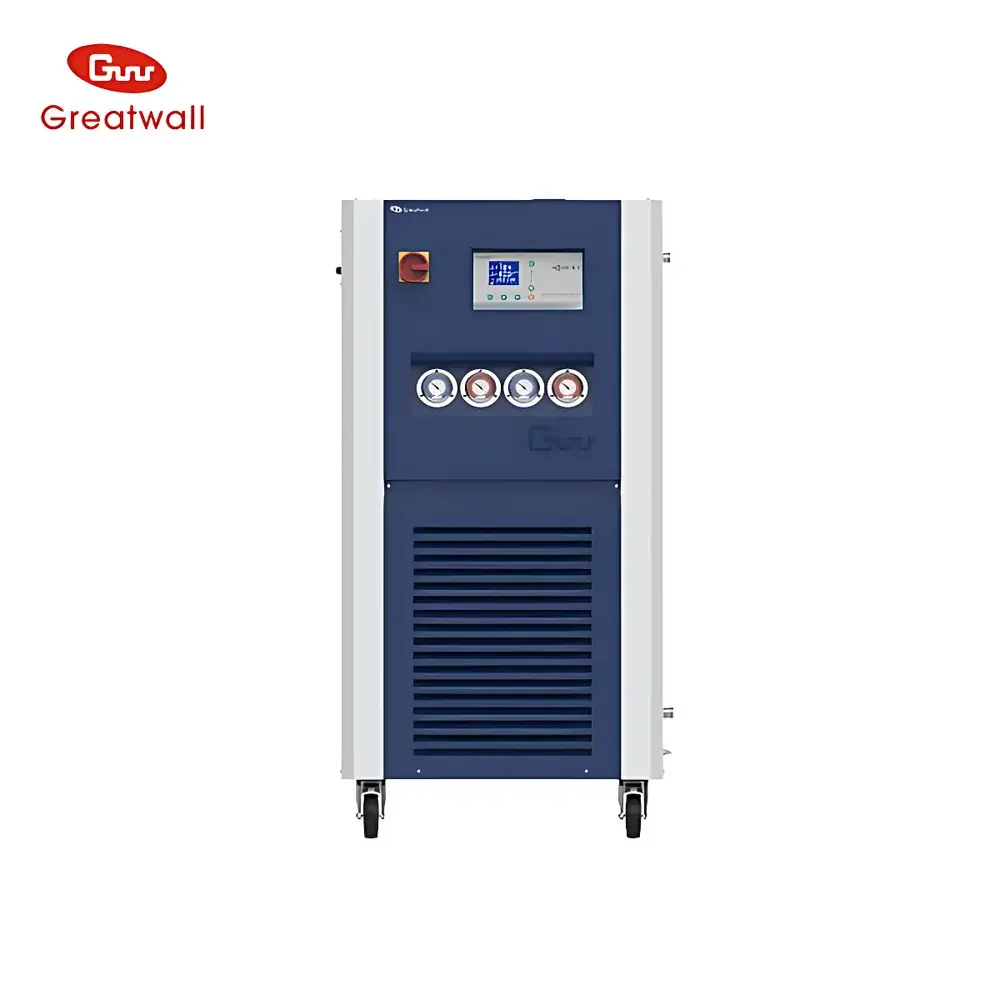
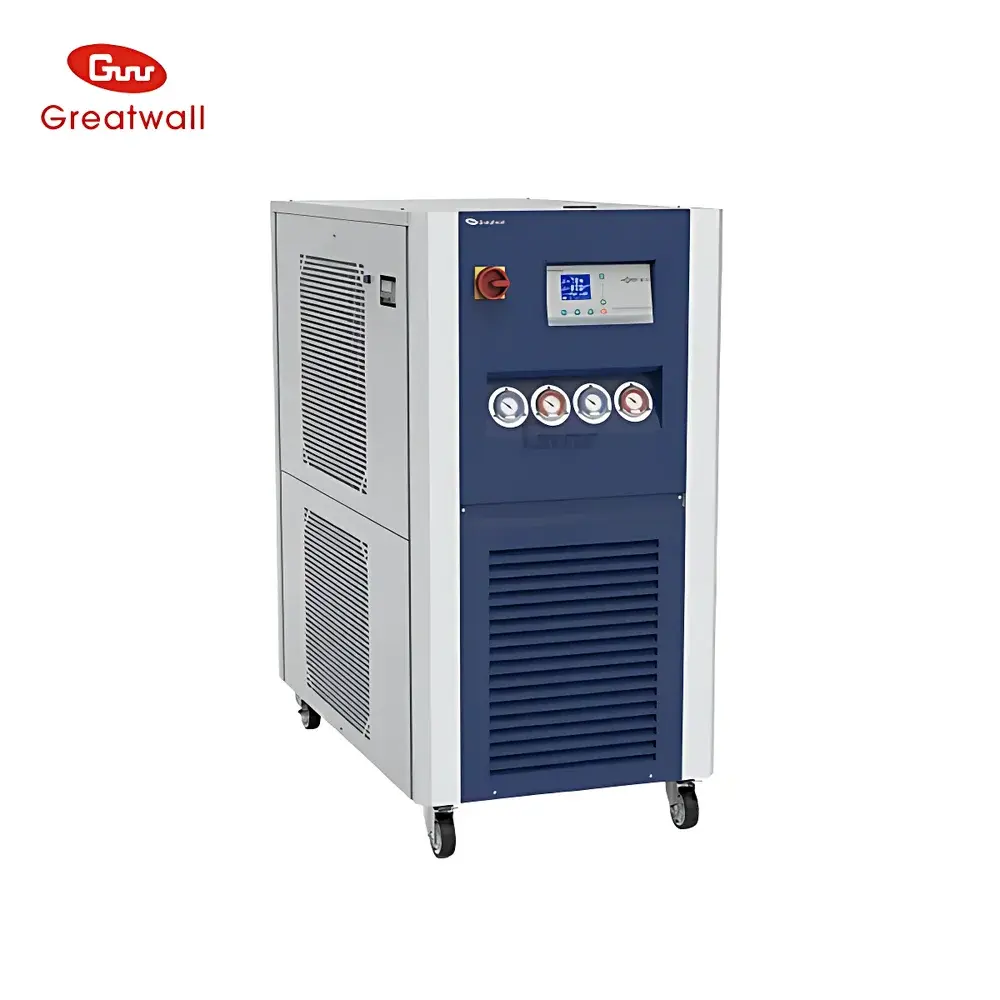
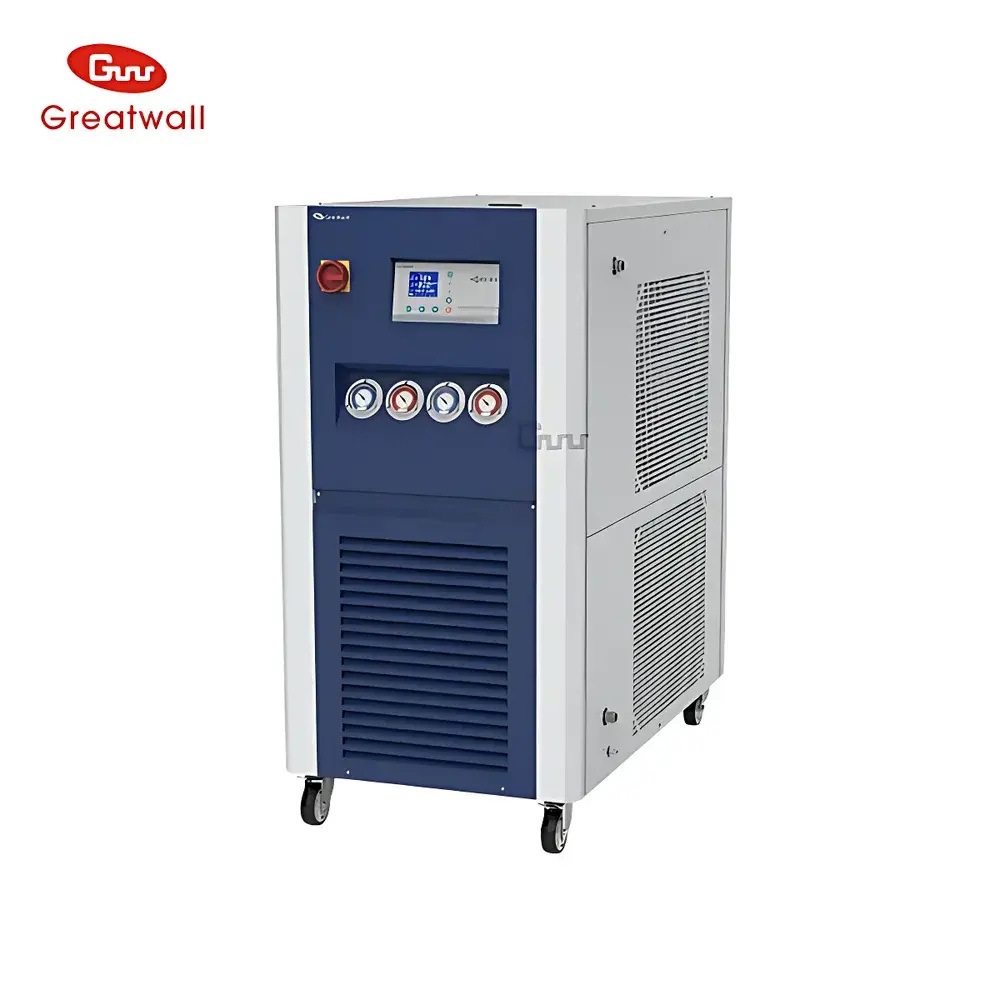
The Great Wall LT-50-80 Ultra-Low Temperature Circulating Chiller
| Brand | The Great Wall |
|---|---|
| Origin | Henan, China |
| Manufacturer Type | Direct Manufacturer |
| Product Type | Integrated Circulating Chiller |
| Cooling Method | Air-Cooled |
| Temperature Range | −80 °C to −40 °C |
| Refrigeration Capacity | 5 kW @ −40 °C |
| Temperature Stability | ±2 °C |
| Circulating Pump Pressure | 1.0 bar |
| Circulating Pump Flow Rate | 30 L/min |
| Operation Mode | Continuous Duty |
Overview
The Great Wall LT-50-80 Ultra-Low Temperature Circulating Chiller is an engineered solution for precise, stable, and continuous thermal management in demanding laboratory and pilot-scale applications. Designed around a robust air-cooled vapor-compression refrigeration cycle, it delivers reliable sub-zero cooling performance without requiring external water infrastructure or chilled water loops. Its operational range of −80 °C to −40 °C enables direct integration with jacketed reactors, calorimeters, spectroscopic cryostats, and material testing chambers—supporting exothermic reaction control, low-temperature polymerization, cryogenic stability studies, and accelerated aging protocols. Unlike conventional chillers limited to −40 °C or higher, the LT-50-80 employs a multi-stage cascade refrigeration architecture with optimized refrigerant charge and high-efficiency scroll compressors to sustain stable output at extreme setpoints while maintaining mechanical integrity under prolonged continuous operation.
Key Features
- Integrated air-cooled design eliminates dependency on facility cooling water, reducing installation complexity and site requirements.
- Hermetically sealed closed-loop circulation system minimizes thermal fluid oxidation and moisture ingress—critical for long-term use of silicone oils or specialized low-temperature heat transfer fluids (e.g., Dowtherm J, Therminol VP-1).
- Comprehensive compressor protection suite: phase-sequence monitoring, delayed startup logic (≥3 min inter-cycle), thermal overload cutoff, overcurrent tripping, and high-pressure safety shutoff (HP resettable switch).
- Automatic overfill safeguard: integrated level sensor triggers controlled drain valve actuation when fluid volume exceeds nominal tank capacity—preventing pump cavitation and seal damage.
- Stainless steel reservoir and wetted components ensure compatibility with aggressive solvents and corrosion-resistant process fluids.
- Front-panel digital interface with real-time display of bath temperature, outlet/inlet ΔT, pump status, and active fault codes—enabling rapid diagnostics without external software.
Sample Compatibility & Compliance
The LT-50-80 is compatible with standard laboratory thermal fluids rated for operation below −80 °C, including synthetic hydrocarbon blends and low-viscosity silicone oils meeting ASTM D1120 and ISO 6743-20 specifications. Its closed-loop architecture supports GLP-compliant documentation workflows when paired with external data loggers (e.g., compliant with FDA 21 CFR Part 11 audit trail requirements). While not certified to UL/CSA or CE for standalone medical device use, the unit conforms to IEC 61000-6-3 (EMC emission) and IEC 61000-6-2 (immunity) standards. It is routinely deployed in GMP-aligned pharmaceutical development labs for controlled crystallization, lyophilization support, and API stability testing per ICH Q1A(R2) guidelines.
Software & Data Management
The LT-50-80 operates as a stand-alone instrument with no embedded Ethernet or USB host capability; however, its analog 0–10 VDC and 4–20 mA process outputs allow seamless integration into centralized SCADA or DCS platforms (e.g., Siemens Desigo, Honeywell Experion). Optional RS485 Modbus RTU communication module (sold separately) enables remote parameter setting, real-time telemetry streaming, and event-triggered logging—supporting automated batch records and electronic lab notebook (ELN) synchronization. All temperature setpoints, run durations, and alarm histories are retained in non-volatile memory for post-run traceability, fulfilling basic ALCOA+ data integrity principles (Attributable, Legible, Contemporaneous, Original, Accurate, Complete, Consistent, Enduring, Available).
Applications
- Temperature control of glass- or stainless-steel jacketed reactors during low-T hydrogenations, Grignard additions, or organolithium chemistry.
- Cryogenic conditioning of composite materials, elastomers, and battery electrode films prior to tensile, DMA, or thermal expansion coefficient (CTE) measurement.
- Thermal simulation of storage or transport conditions for biologics, vaccines, and mRNA-lipid nanoparticle formulations.
- Stabilization of high-resolution NMR probe preamplifiers and CCD detectors in spectroscopy suites.
- Process validation support for freeze-drying cycle development, including shelf temperature ramp profiling and condenser load characterization.
FAQ
What thermal fluids are recommended for operation at −80 °C?
Dow Corning DC-704 silicone oil or Shell Thermia E20 synthetic heat transfer fluid are validated for continuous use in this range. Avoid ethylene glycol–water mixtures, which freeze solid below −40 °C.
Can the LT-50-80 be used with open-bath systems?
No—it is engineered exclusively for closed-loop circulation. Open baths introduce moisture contamination, fluid degradation, and uncontrolled evaporation, compromising temperature stability and voiding warranty coverage.
Is external insulation of the circulation lines required?
Yes. Uninsulated tubing will induce significant parasitic heat gain above −60 °C. We recommend vacuum-jacketed or multilayer reflective insulation (e.g., Armacell Tubolit Cryo) for sustained performance at −80 °C.
Does the unit support external temperature feedback control?
Yes—via optional PID controller input terminals accepting PT100 or thermocouple signals from user-mounted process sensors, enabling cascade control of reactor jacket temperature independent of chiller bath setpoint.
What maintenance intervals are specified for compressor oil and filter replacement?
Under continuous operation at −60 °C or lower, replace the refrigeration oil and dryer filter every 12 months or 8,000 operating hours—whichever occurs first—as documented in the OEM service manual (Revision 3.2, 2023).



