
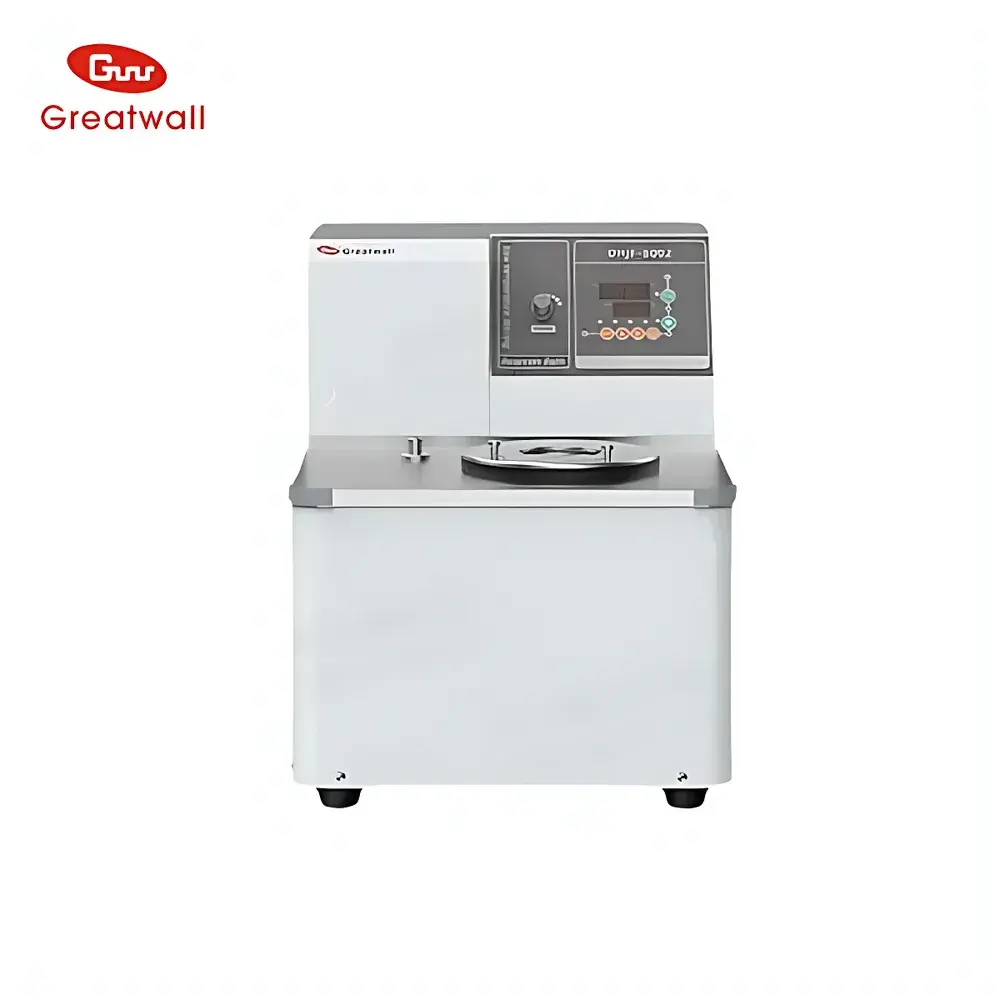
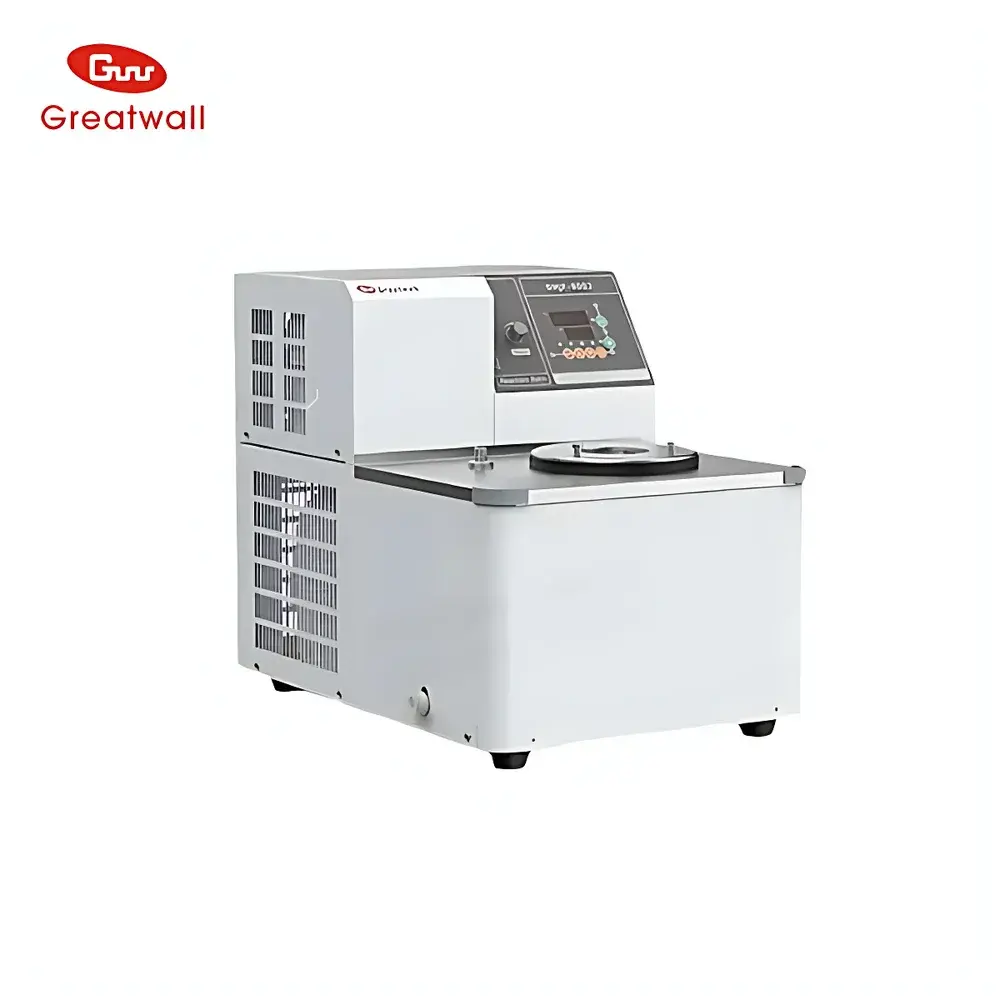
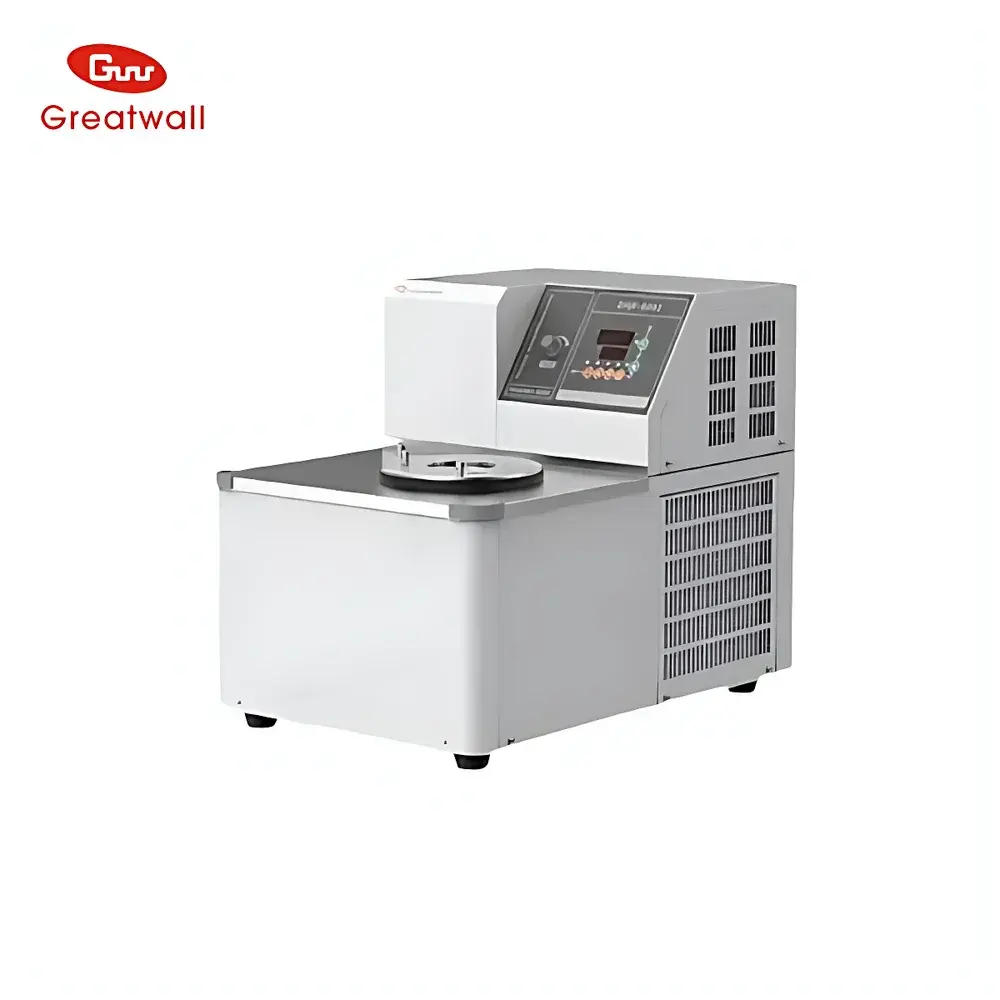
The Great Wall DHJF-8002W Horizontal Low-Temperature Constant-Temperature Stirred Reaction Bath
| Brand | The Great Wall |
|---|---|
| Model | DHJF-8002W |
| Type | Horizontal stirred reaction bath with integrated refrigeration and heating |
| Temperature Range | −80 °C to +10 °C |
| Temperature Stability | ±2 °C |
| Bath Capacity | 2 L |
| Refrigerants | R404A / R23 |
| Cooling Capacity | 200 W at −40 °C, 120 W at −60 °C, 60 W at −80 °C |
| Heating Function | Yes (with dry-run protection) |
| Magnetic Stirring Power | 50 W |
| Stirring Speed | 100–1000 rpm |
| Bath Opening Diameter | Ø140 mm |
| Bath Internal Dimensions | Ø160 mm × 105 mm depth |
| Max Vessel Capacity | 500 mL |
| Bath Material | 304 stainless steel |
| Overall Dimensions (W×D×H) | 410 × 610 × 495 mm |
| Net Weight | 68 kg |
| Power Supply | 220 V~, 50 Hz |
| Ambient Operating Conditions | 5–35 °C, ≤70% RH |
| Safety Protections | Delayed startup, overcurrent, overtemperature, dry-run (heating mode only) |
Overview
The Great Wall DHJF-8002W Horizontal Low-Temperature Constant-Temperature Stirred Reaction Bath is an integrated thermal management platform engineered for precise temperature control and homogeneous mixing in laboratory-scale chemical synthesis, kinetic studies, low-temperature catalysis, and cryogenic sample conditioning. Unlike vertical or open-bath configurations, its horizontal layout provides enhanced ergonomic access, improved stability for mounted glassware, and optimized thermal mass distribution—critical for maintaining stable sub-zero setpoints during extended exothermic or endothermic reactions. The system combines dual-mode thermoregulation (refrigeration and resistive heating) with a built-in high-torque magnetic stirrer, enabling simultaneous temperature control and agitation within the same fluid medium (e.g., ethanol, methanol, or silicone oil). Its operation relies on a closed-loop PID-controlled refrigeration circuit using a cascade two-stage compressor system charged with environmentally compliant refrigerants (R404A for primary stage, R23 for ultra-low secondary stage), allowing sustained operation down to −80 °C without external chiller dependency.
Key Features
- Horizontal bath geometry with reinforced 304 stainless steel reservoir (Ø160 mm × 105 mm depth) ensures mechanical rigidity and corrosion resistance against common organic solvents and cryogenic fluids.
- PID-based digital temperature controller delivers ±2 °C stability across the full operating range (−80 °C to +10 °C), with real-time monitoring via front-panel LED display and manual setpoint adjustment.
- Integrated 50 W magnetic stirrer supports continuous rotation from 100 to 1000 rpm, driving both bath-level stir bars and internal reactor stir bars—ensuring uniform thermal transfer and minimizing thermal gradients in reaction mixtures.
- Adjustable telescopic lid with variable aperture (up to Ø140 mm) minimizes cryogen evaporation and ambient heat ingress, improving energy efficiency and long-term temperature consistency during unattended operation.
- Dedicated mounting rail and universal fixed bracket accommodate standardized lab accessories—including burettes, pH electrodes, temperature probes, reflux condensers, and addition funnels—without compromising bath integrity or safety clearance.
- Comprehensive safety architecture includes delayed compressor restart, overcurrent cutoff, overtemperature shutdown, and heater-specific dry-run protection to prevent thermal damage during low-fluid conditions.
Sample Compatibility & Compliance
The DHJF-8002W accommodates standard laboratory glassware up to 500 mL volume, including round-bottom flasks, jacketed reactors, and test tubes, when used with appropriate adapter rings or support clamps. Its stainless steel bath and sealed refrigeration loop are compatible with non-aqueous heat-transfer media such as ethylene glycol/water mixtures, isopropyl alcohol, and low-viscosity silicone oils (cSt < 50 at −80 °C). While not certified to IEC 61010-1 or UL 61010B as a standalone medical device, the unit complies with general-purpose laboratory equipment requirements under GB/T 25135–2010 (Chinese national standard for low-temperature thermostats) and incorporates design elements aligned with ISO/IEC 17025:2017 clause 6.4.2 regarding environmental condition control for testing laboratories. It is suitable for use in GLP-compliant environments when integrated into validated SOPs governing temperature mapping, stir speed calibration, and maintenance log retention.
Software & Data Management
The DHJF-8002W operates via embedded firmware with no native PC connectivity or data logging capability. However, analog output signals (0–5 V or 4–20 mA) for bath temperature and stir speed are available upon optional configuration, enabling integration with third-party data acquisition systems (e.g., LabVIEW, Delta Tau PMAC, or Siemens Simatic S7 PLCs) for time-stamped thermal profiling and audit-trail generation. For regulated environments requiring electronic records, users may deploy external calibrated PT100 sensors with FDA 21 CFR Part 11–compliant logging hardware to capture and archive temperature/stir parameters—supporting traceability requirements in pharmaceutical development, polymerization QC, and academic research reporting.
Applications
- Cryogenic Grignard and organolithium reagent preparation requiring strict −78 °C or −80 °C control.
- Enzymatic assays and protein folding studies where thermal homogeneity and minimal thermal drift are essential.
- Low-temperature photochemical reactions using UV-transparent quartz vessels immersed in chilled baths.
- Calibration of differential scanning calorimeters (DSC) and thermogravimetric analyzers (TGA) using NIST-traceable reference materials.
- Controlled crystallization experiments in fine chemical and agrochemical process development.
- Pre-cooling of GC injectors, HPLC columns, or FTIR sampling cells prior to analytical runs.
FAQ
What heat-transfer fluids are recommended for operation below −60 °C?
Methanol, 99.9% purity, or specialized low-temperature silicone oils (e.g., DC-704, viscosity ~20 cSt at −80 °C) are preferred. Avoid aqueous solutions due to freezing and phase separation.
Can the unit maintain −80 °C continuously with a 500 mL flask immersed?
Yes—provided the flask is partially submerged (≥60% immersion depth), the bath fluid volume remains ≥1.8 L, and ambient conditions stay within specification (≤30 °C, ≤60% RH). Continuous −80 °C operation requires ≥4-hour thermal equilibration after initial cooldown.
Is the magnetic stirring function active during refrigeration-only mode?
Yes. Stirring operates independently of heating/cooling cycles and remains fully functional across the entire temperature range.
Does the system support external temperature feedback control?
Not natively—but the optional analog output interface allows connection to external PID controllers for probe-in-flask or jacket-sensor feedback loops.
What maintenance intervals are recommended for long-term reliability?
Compressor oil inspection every 12 months; refrigerant leak check annually; stainless steel bath cleaning with citric acid solution after solvent exposure; stir motor brush replacement every 5,000 operating hours.



