
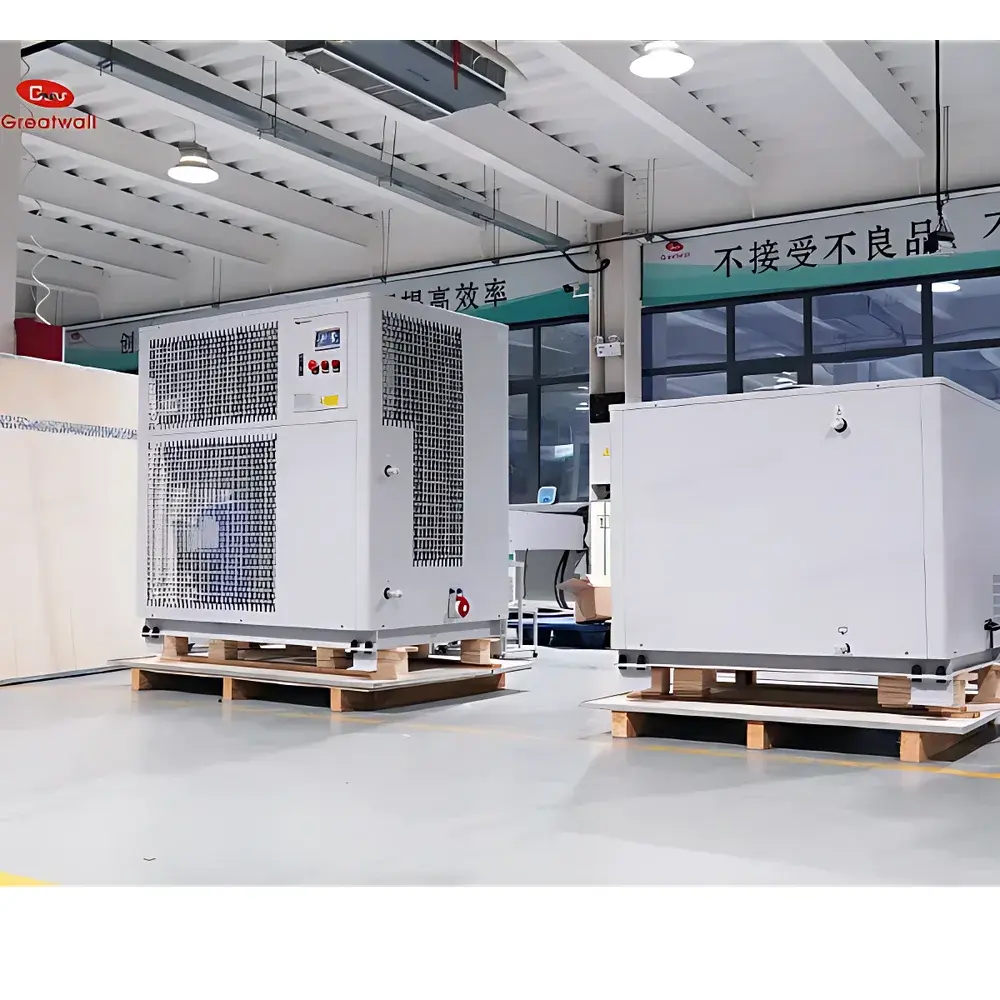
Great Wall DLSB-200/30 Low-Temperature Circulating Chiller
| Brand | The Great Wall |
|---|---|
| Origin | Henan, China |
| Manufacturer Type | Direct Manufacturer |
| Instrument Type | Split-System |
| Cooling Method | Air-Cooled |
| Temperature Range | −30 °C to +10 °C |
| Refrigeration Capacity | 3.5 kW to 28 kW |
| Temperature Stability | ±2 °C |
| Circulating Pump Pressure | 2.2 bar |
| Circulating Pump Flow Rate | 67 L/min |
| Reservoir Volume | 200 L |
| Operation Mode | Continuous Duty |
Overview
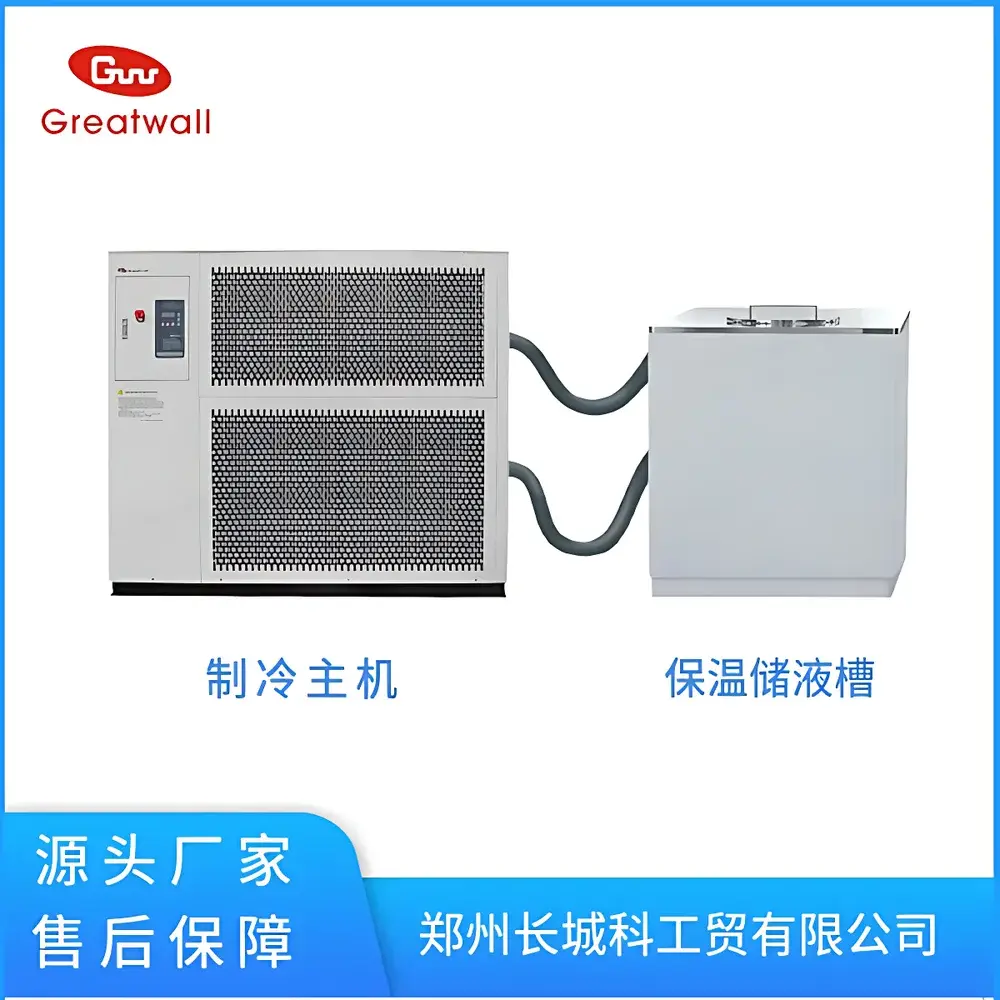
The Great Wall DLSB-200/30 Low-Temperature Circulating Chiller is an engineered solution for precise thermal management in demanding laboratory and pilot-scale applications. Designed around a robust air-cooled vapor-compression refrigeration cycle, it delivers stable low-temperature coolant circulation across extended operational periods. Its core function is to maintain consistent thermal conditions for external equipment—including rotary evaporators, spectrophotometers, vacuum deposition systems, cryogenic reactors, and analytical instrumentation—by circulating temperature-controlled heat-transfer fluid (typically water–glycol mixtures) through closed-loop external circuits. Unlike integrated chillers, the DLSB-200/30 adopts a split-system architecture: the refrigeration unit (compressor, condenser, expansion device, and evaporator) is physically separated from the insulated 200 L reservoir tank. This configuration enables flexible spatial deployment in laboratories or production environments where floor space, ventilation, or proximity to sensitive instruments must be carefully managed.
Key Features
- Split-system design facilitates independent placement of refrigeration module and reservoir—optimizing lab layout, simplifying coolant filling/maintenance, and reducing vibration transmission to connected instruments.
- High-capacity insulated reservoir (200 L) minimizes temperature overshoot during transient load changes and supports extended runtime without refilling.
- Wide operating temperature range (−30 °C to +10 °C) accommodates diverse experimental protocols—from cryogenic synthesis to controlled exothermic reaction quenching.
- High-flow, high-pressure circulation pump (67 L/min at 2.2 bar) ensures sufficient head pressure to overcome hydraulic resistance in long tubing runs or multi-instrument manifolds.
- Comprehensive safety architecture includes high-pressure cut-off switches, compressor delay-start logic (preventing short-cycling), ground-fault circuit interruption (GFCI), and thermal overload protection on critical components.
- Energy-efficient insulation on the reservoir reduces standby heat ingress, lowering overall power consumption during temperature hold phases.
Sample Compatibility & Compliance
The DLSB-200/30 is compatible with standard heat-transfer fluids meeting ASTM D1384 (corrosion inhibition for cooling systems) and ISO 21052 (coolant compatibility for laboratory equipment). It supports both deionized water and aqueous ethylene glycol solutions (up to 50% v/v), enabling operation down to −30 °C without freezing. While not certified to UL/CSA or CE for standalone medical device use, its electrical and mechanical design adheres to IEC 61010-1:2010 safety requirements for laboratory equipment. The unit is routinely deployed in GLP-compliant research settings, and its stable temperature control supports method validation under ISO/IEC 17025-accredited testing laboratories. Optional documentation packages—including factory calibration reports and traceable temperature verification logs—can be provided upon request to support internal audit readiness.
Software & Data Management
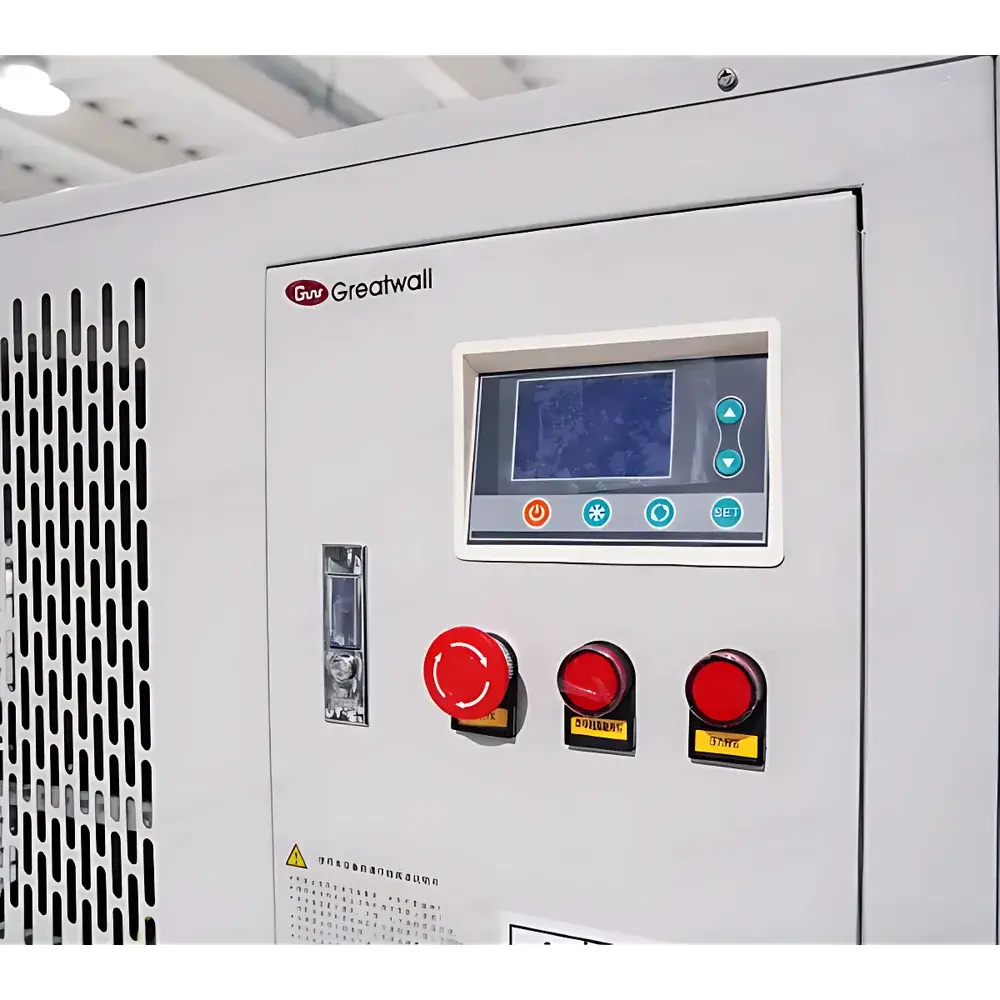
The DLSB-200/30 operates via an embedded microcontroller-based interface with dual digital displays for setpoint and actual bath temperature. It does not include network connectivity or proprietary software; instead, it features analog (0–10 V) and digital (RS-485 Modbus RTU) output interfaces for integration into centralized building management systems (BMS) or SCADA platforms. These outputs enable remote monitoring of real-time temperature, pump status, and fault codes—supporting compliance with FDA 21 CFR Part 11 when paired with validated third-party data acquisition software that enforces electronic signature, audit trail, and user access control. No firmware updates are required during normal service life; all operational parameters are field-configurable via front-panel keypad.
Applications
- Continuous cooling of rotary evaporation systems during solvent recovery at sub-ambient temperatures.
- Thermal stabilization of high-vacuum coating chambers (e.g., magnetron sputtering, e-beam evaporation) requiring stable −20 °C to 5 °C coolant supply.
- Temperature control for calorimeters, viscometers, and laser spectroscopy setups sensitive to thermal drift.
- Process cooling in pilot-scale pharmaceutical crystallization and lyophilization development.
- Support for environmental simulation chambers and accelerated aging studies requiring repeatable low-temperature exposure profiles.
- Coolant supply to multiple instruments via manifold distribution—enabled by its high flow rate and pressure margin.
FAQ
What is the minimum recommended coolant concentration for operation at −30 °C?
A 45–50% (v/v) ethylene glycol–deionized water mixture is required to prevent freezing and ensure adequate viscosity at −30 °C. Propylene glycol alternatives may be used where toxicity concerns exist, though freeze-point depression is slightly less efficient.
Can the unit be configured for water-cooled condensation?
Yes—custom configurations with water-cooled condensers are available upon request to accommodate facilities with limited ambient airflow or elevated ambient temperatures (>35 °C).
Is the reservoir volume adjustable or expandable?
No—the 200 L stainless steel reservoir is fixed-volume and non-modular. For larger capacity needs, Great Wall offers the DLSB-300/30 and DLSB-500/30 series with correspondingly scaled reservoirs and refrigeration systems.
Does the chiller include a built-in filtration system?
It does not include inline particulate or chemical filtration. Users are advised to install external 5–10 µm particulate filters and corrosion inhibitors appropriate to their coolant formulation and application duration.
What maintenance intervals are recommended for continuous operation?
Compressor oil and refrigerant levels should be verified annually; condenser coils require bi-weekly cleaning in dusty environments. The circulation pump impeller and seals are rated for >15,000 hours of continuous duty and do not require scheduled replacement under normal operating conditions.
Related Products



