
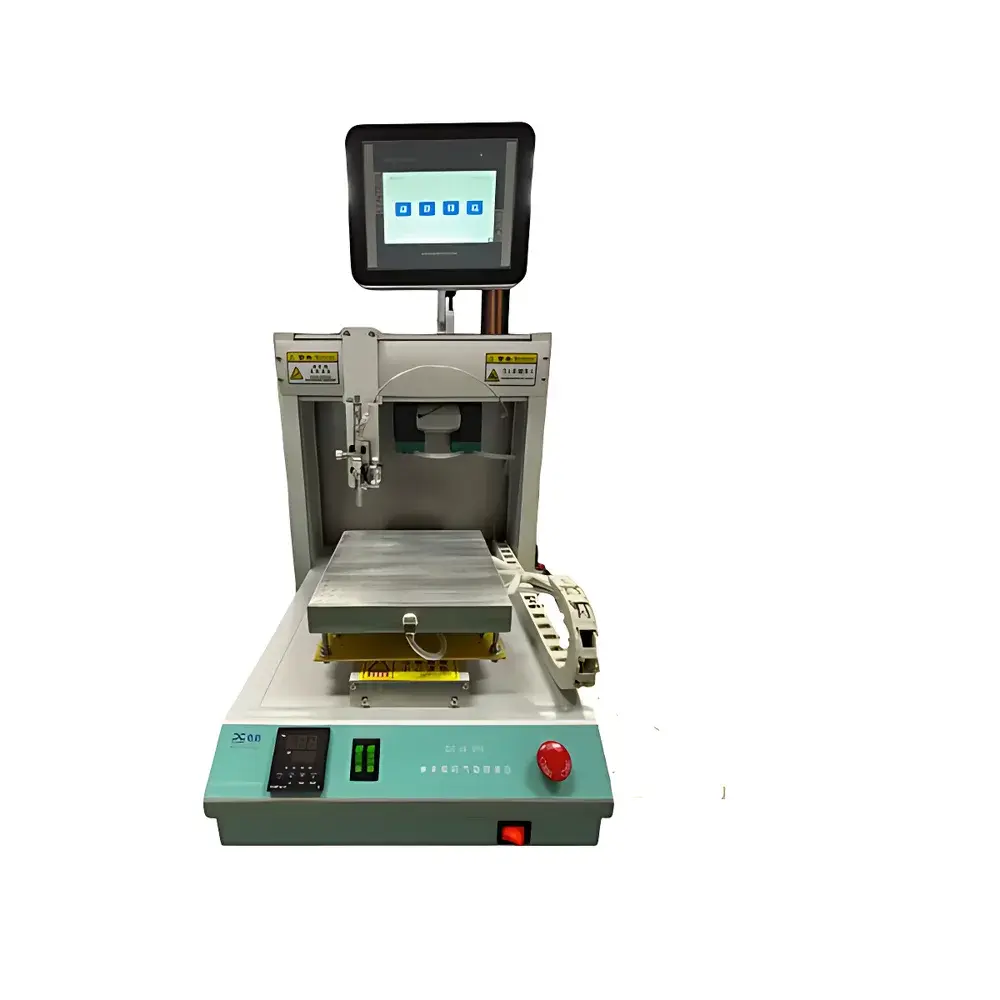
DC IS-200 Nano-Slurry Pneumatic Spray Coater by dc-energies
| Brand | dc-energies |
|---|---|
| Model | DC IS-200 |
| Maximum Coating Area | 190 × 190 mm² |
| XY Travel Range | 190 × 190 mm |
| Z-Axis Manual Adjustment Range | 50 mm |
| Pneumatic Atomization Nozzle | High-Precision Imported |
| Heating Capability | >100 °C with Vacuum-Assisted Substrate Holding |
| Control Interface | Touchscreen Programmable Controller |
| Applicable Processes | GDE, CCM, Thermal Transfer Coating |
| Liquid Utilization Efficiency | >95% |
| Compliance | Designed for R&D and Pilot-Scale Electrode Fabrication under GLP-Informed Lab Practices |
Overview
The DC IS-200 Nano-Slurry Pneumatic Spray Coater is a precision-engineered benchtop deposition system designed for controlled, uniform application of functional nanoscale slurries onto porous and planar substrates. It operates on the principle of pneumatic atomization—using inert carrier gas (e.g., N₂ or Ar) to nebulize viscous catalyst inks, forming fine droplets with narrow size distribution. These droplets are directed via a high-stability nozzle mounted on an XY-programmable gantry, enabling deterministic spatial patterning across substrates such as proton exchange membranes (PEMs), gas diffusion layers (GDLs), current collectors, silicon wafers, and glass slides. Unlike thermal or ultrasonic spray methods, this system maintains slurry integrity without thermal degradation or shear-induced particle aggregation—critical for preserving nanoparticle dispersion, catalytic surface area, and binder functionality in electrochemical electrode fabrication.
Key Features
- Programmable XY-stage with 190 × 190 mm travel range, supporting both raster and vector-based spray trajectories with sub-millimeter positional repeatability.
- Manually adjustable Z-axis nozzle height (0–50 mm range) allows optimization of standoff distance for consistent droplet impaction energy and film morphology control.
- High-precision pneumatic nozzle engineered for low-clogging operation with viscosities up to 1500 mPa·s; flow rate dynamically regulated via pressure-controlled air supply.
- Integrated heated platen (operable up to >100 °C) combined with vacuum substrate fixation ensures rapid solvent evaporation and minimal ink spreading—enabling high-resolution feature definition and reduced drying time per layer.
- Touchscreen HMI with intuitive graphical interface supports recipe storage, real-time parameter monitoring (air pressure, temperature, stage position), and audit-ready event logging.
- Liquid utilization efficiency exceeds 95%, minimizing material waste and reducing operational cost—particularly valuable when processing precious-metal-loaded inks or proprietary nanocomposites.
Sample Compatibility & Compliance
The DC IS-200 accommodates substrates up to 200 × 200 mm in footprint and thicknesses ranging from 50 µm (e.g., PEMs) to 3 mm (e.g., ceramic substrates or metal foams). It is routinely deployed in laboratories adhering to ASTM D7234 (for coating adhesion assessment), ISO 15649 (fuel cell component qualification), and USP guidelines for analytical instrument qualification. While not a GMP-certified production tool, its programmable logic, parameter traceability, and hardware stability support GLP-compliant documentation workflows—including electronic signature-capable data export (CSV/Excel) and configurable alarm thresholds for critical process deviations.
Software & Data Management
The embedded controller firmware provides native support for standard coating protocols: single-pass linear scans, multi-layer stacking with interlayer dwell timing, and concentric ring deposition for circular electrodes. All motion sequences, temperature setpoints, and pneumatic pressure profiles are stored as encrypted .prj files with timestamped revision history. Exported datasets include stage coordinates, elapsed time, heater temperature logs, and trigger events—structured for downstream integration with LIMS platforms or MATLAB/Python-based analysis pipelines. The system does not require external PC connectivity for basic operation but offers optional RS-232/USB-C interfaces for remote diagnostics and batch reporting.
Applications
- Fuel cell R&D: Fabrication of catalyst-coated membranes (CCMs) and gas diffusion electrodes (GDEs) for PEMEC and PEMFC testing.
- Battery materials development: Scalable preparation of cathode/anode slurries on Al/Cu foil, including Ni-rich NMC, LFP, and Si-C composites.
- Electrocatalyst screening: Rapid deposition of library-style ink arrays on rotating disk electrodes or microelectrode arrays for high-throughput activity mapping.
- Functional membrane engineering: Surface modification of ultrafiltration or reverse osmosis membranes with TiO₂, MOF, or graphene oxide dispersions.
- Optoelectronic device prototyping: Uniform coating of perovskite precursors, quantum dot inks, or conductive polymer solutions on ITO/glass substrates.
- Thin-film sensor fabrication: Controlled deposition of enzyme-loaded hydrogels or metal oxide semiconductors for biosensing and gas detection platforms.
FAQ
What types of slurries are compatible with the DC IS-200?
Aqueous and organic-based nanosuspensions (e.g., Pt/C, IrO₂, NiFe-LDH, PEDOT:PSS) with solid loadings up to 30 wt% and viscosities ≤1500 mPa·s have been validated. Aggressive solvents (e.g., DMF, NMP) require compatibility verification with O-rings and wetted materials (stainless steel 316, PTFE, FKM).
Is vacuum pump included with the system?
No—the DC IS-200 requires an externally connected vacuum source (≥−80 kPa, ≥10 L/min flow) for substrate immobilization. A recommended industrial-grade diaphragm pump is specified in the installation manual.
Can the system be integrated into automated glovebox environments?
Yes—its pneumatic actuation, low heat dissipation, and absence of internal combustion components make it suitable for inert-atmosphere integration. Optional feedthrough kits for gas lines and power cables are available upon request.
Does the controller support third-party scripting (e.g., Python API)?
Not natively—but RS-232 serial commands for motion start/stop, temperature query, and error status are documented in the technical reference guide, enabling custom automation via external microcontrollers or LabVIEW.





