
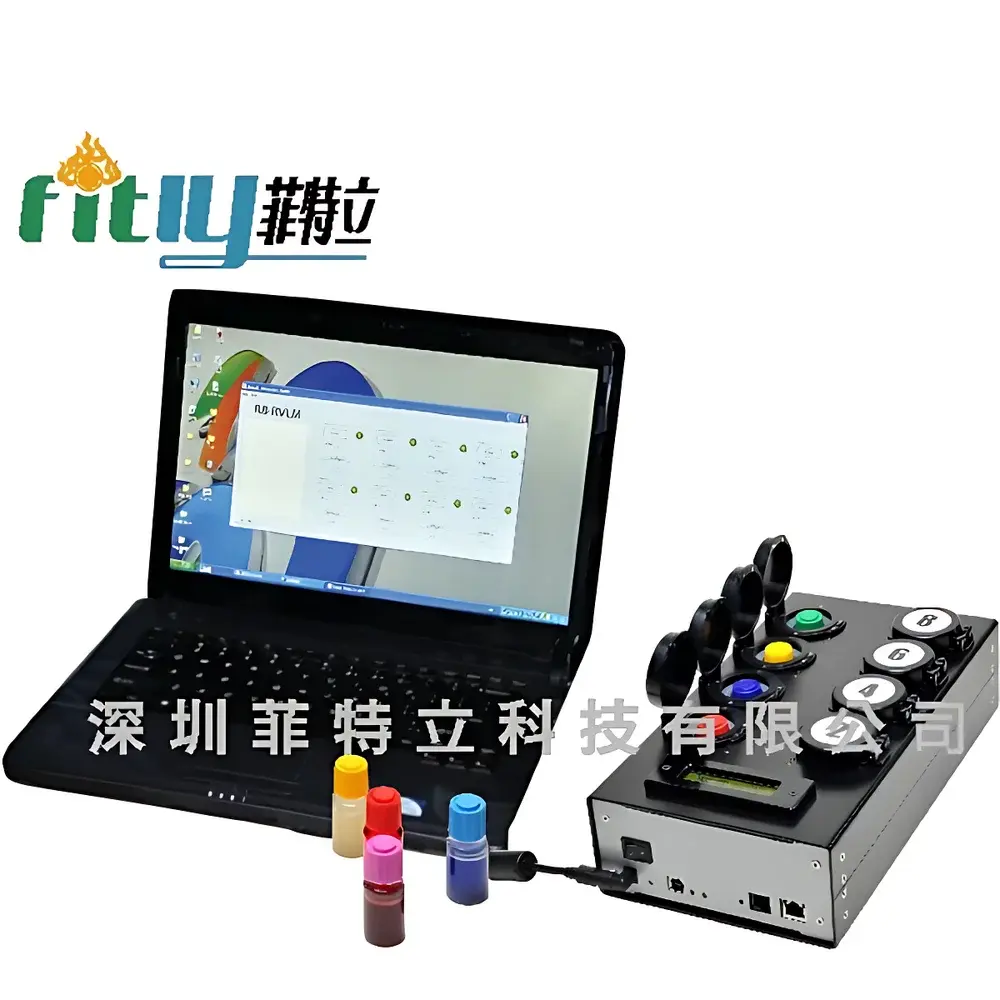
Royal Biotech GmbH RVLM ATP Bioluminescence Microbial Rapid Detection System
| Brand | Royal Biotech GmbH |
|---|---|
| Origin | Italy |
| Manufacturer Type | Authorized Distributor |
| Origin Category | Imported |
| Model | RVLM |
| Price | Upon Request |
Overview
The Royal Biotech GmbH RVLM ATP Bioluminescence Microbial Rapid Detection System is a CE-marked, ISO 16140:2003-validated platform engineered for quantitative microbiological analysis in food safety, environmental hygiene, and quality control laboratories. It employs adenosine triphosphate (ATP) bioluminescence as its primary detection principle—measuring light emission generated by the enzymatic reaction between microbial ATP and luciferase/luciferin—and integrates complementary analytical modalities including enzymatic (e.g., β-glucuronidase activity), immunoassay (antigen capture), and nucleic acid–based target amplification (gene search) within proprietary single-use detection vials. This multi-modal architecture enables simultaneous discrimination and quantification of viable microorganisms without reliance on conventional culture-based incubation. The system is designed for direct sample introduction—no enrichment, centrifugation, filtration, or dilution is required—making it suitable for real-time, on-site assessment under HACCP, ISO 22000, and FDA Food Safety Modernization Act (FSMA) frameworks.
Key Features
- Eight independent, temperature-controlled detection channels with programmable thermal profiles (range: 25–45 °C), enabling concurrent analysis of heterogeneous samples and pathogens
- Triple-wavelength optical detection (450 nm blue, 520 nm green, 620 nm red) for spectral discrimination of luminescent signals and suppression of background interference
- Integrated photoprotection mechanism: automatic assay termination upon lid opening, ensuring operator safety and measurement integrity
- Self-sterilizing detection vials: post-assay UV-C activation eliminates residual bioburden, supporting safe disposal per EU Directive 2008/98/EC
- USB 2.0 interface with Java-based acquisition software; supports networked deployment across multiple instruments via centralized PC workstation
- Minimal sample requirement: 0.1–1.0 mL (liquid) or 0.1–1.0 g (solid/surface swab eluate); no pre-treatment or extraction steps
- Quantitative reporting engine generating ISO/IEC 17025-compliant audit trails, including timestamped raw luminescence values, calibration logs, and user authentication records
Sample Compatibility & Compliance
The RVLM system accepts diverse sample matrices without modification: liquid foods (beverages, dairy, sauces), solid foods (meat, produce, baked goods), environmental swabs (food contact surfaces, HVAC filters), water (potable, process, wastewater), and cosmetic/pharmaceutical raw materials. It has been validated per ISO 16140:2003 for equivalence to reference methods for Escherichia coli, Enterobacteriaceae, Staphylococcus aureus, Pseudomonas aeruginosa, Salmonella spp., Listeria monocytogenes, Enterococcus spp., and total viable count (TVC). All detection vials are manufactured under ISO 13485-certified conditions and comply with EU Regulation (EC) No 396/2005 for residue monitoring support. The instrument’s firmware and software meet ALCOA+ data integrity principles and support 21 CFR Part 11-compliant electronic signatures when deployed in GMP/GLP environments.
Software & Data Management
The RVLM Control Suite operates in a Java Runtime Environment (JRE 8+) and provides role-based access control (RBAC), automated report generation (PDF/CSV), and configurable pass/fail thresholds aligned with Codex Alimentarius limits. Raw photon-count data is stored with embedded metadata—including instrument ID, operator credentials, environmental sensor readings (ambient temperature/humidity), and vial lot traceability. Audit logs record all user actions (login/logout, method edits, result overrides) with immutable timestamps. Data export supports LIMS integration via HL7 v2.5 or ASTM E1384-compliant interfaces. Software validation documentation (IQ/OQ/PQ protocols) is available upon request for regulated laboratory deployment.
Applications
- Routine hygiene monitoring in food manufacturing: conveyor belts, slicers, mixing tanks, packaging lines
- Environmental pathogen screening in ready-to-eat (RTE) production zones per FDA Environmental Assessment Protocol
- Water system validation in pharmaceutical facilities (USP , EP 2.6.12)
- Raw material release testing for spices, herbs, and dried ingredients where traditional plating yields low recovery
- Post-cleaning verification in hospital kitchens and catering operations under EC No 852/2004
- Field-deployable surveillance for outbreak investigations by public health agencies (e.g., ECDC, CDC Waterborne Disease Surveillance)
- Accelerated stability testing of probiotic formulations via real-time viability tracking
FAQ
What regulatory standards does the RVLM system comply with?
The RVLM platform conforms to ISO 16140:2003 for alternative method validation and supports compliance with ISO/IEC 17025:2017, FDA 21 CFR Part 11, and EU Annex 11 requirements when configured with appropriate procedural controls.
Can the system quantify viable vs. dead cells?
Yes—the ATP bioluminescence signal originates exclusively from metabolically active cells; detection vials include selective lysis agents and enzyme inhibitors to suppress extracellular ATP and non-viable cell contributions.
Is method transfer possible between different RVLM units?
Yes—inter-instrument reproducibility is maintained through factory-calibrated photomultiplier tube (PMT) gain settings and standardized vial optical path geometry, verified per ISO 5725-2 precision protocols.
How is data integrity ensured during networked operation?
All communications use TLS 1.2 encryption; database writes are transaction-locked and checksum-verified; offline operation stores encrypted buffers synchronized upon reconnection.
Are detection vials supplied sterile and certified?
Each vial lot undergoes sterility testing per ISO 11737-1 and endotoxin quantification per USP ; CoA and CoC documentation accompany every shipment.






