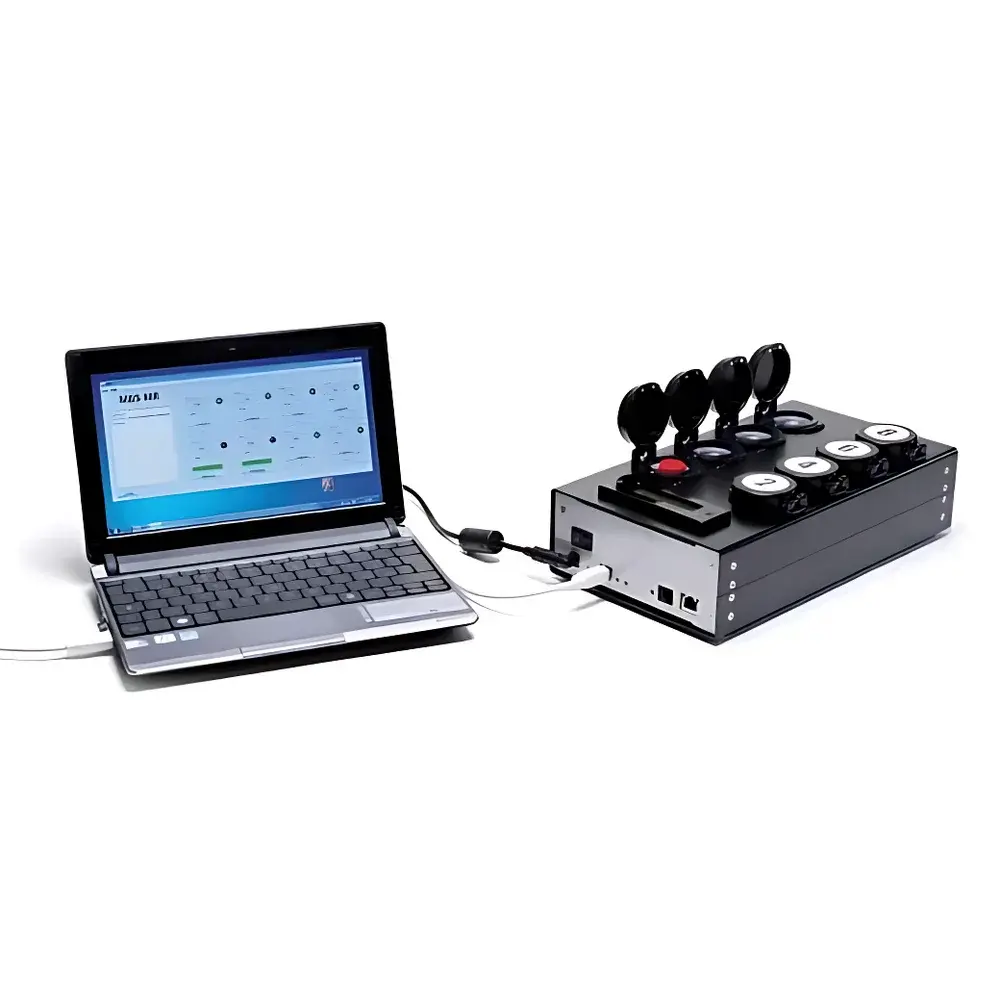
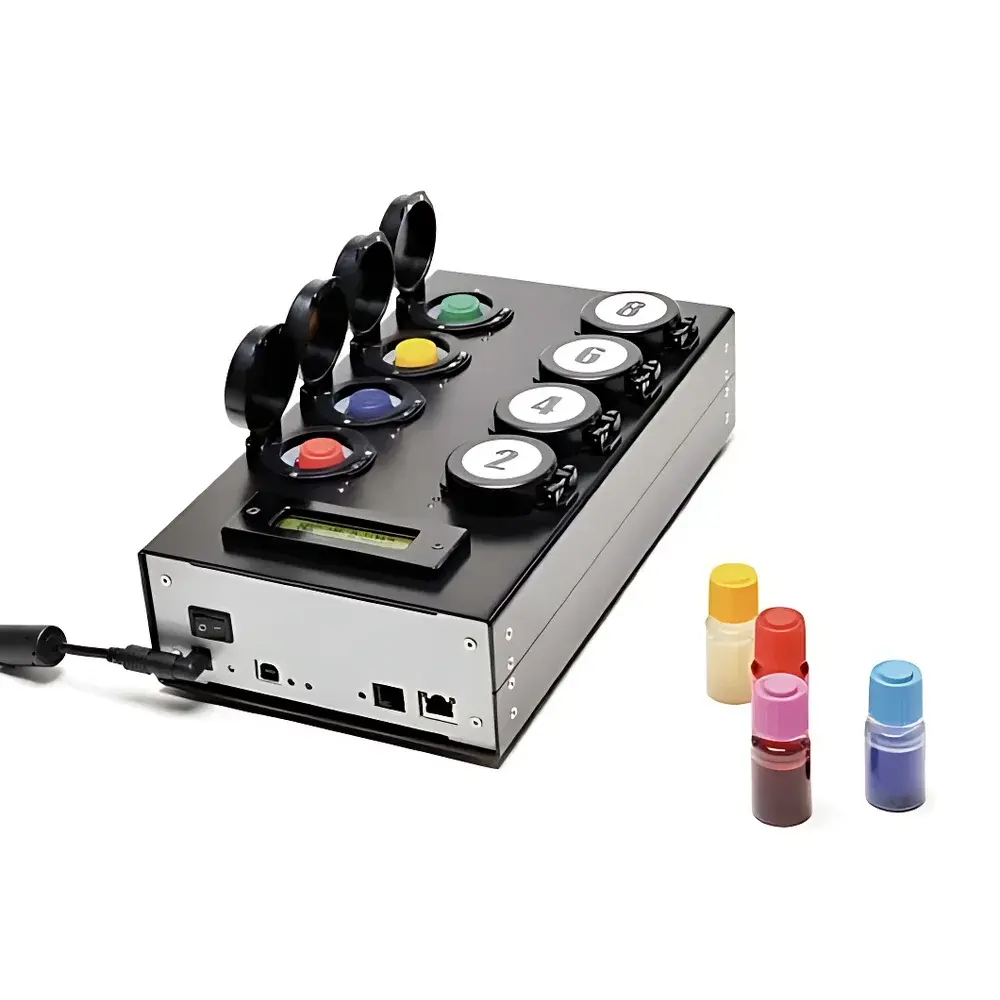
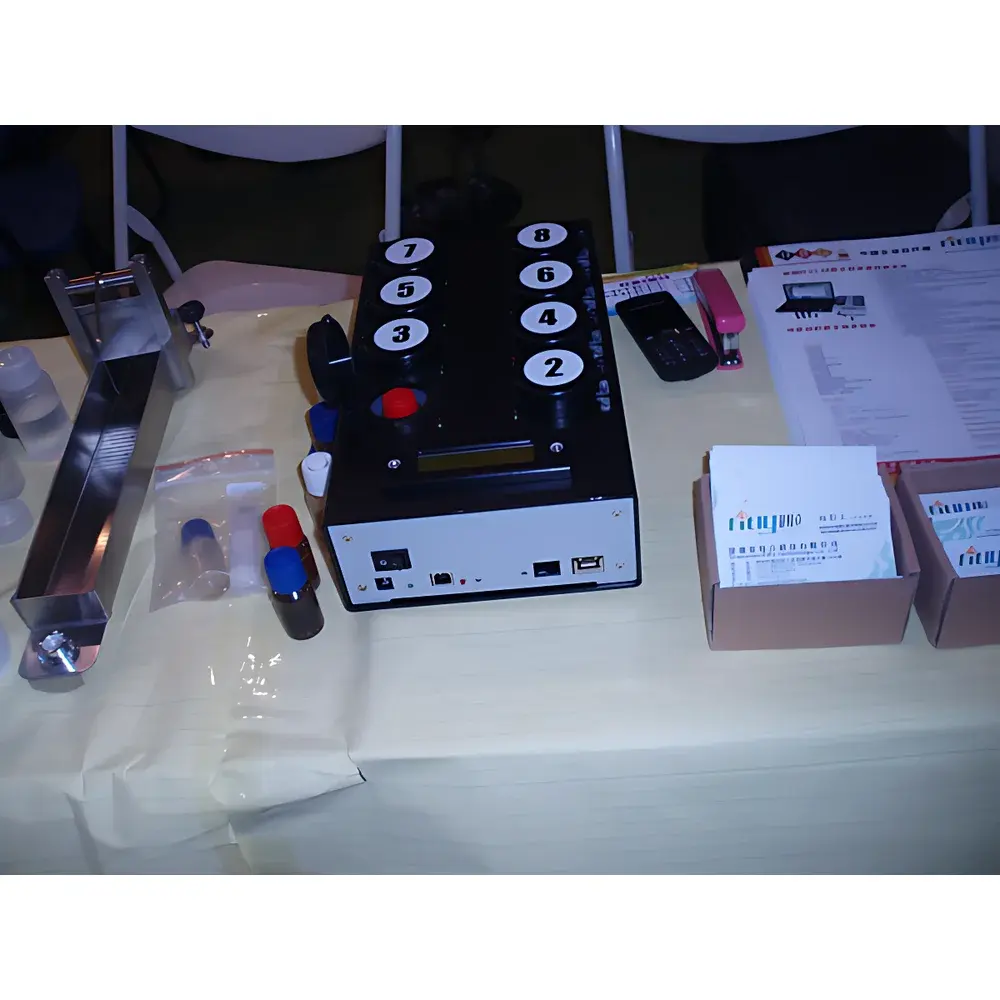
MBS Fitlylab Microbial Rapid Detection System
| Brand | MBS.SRL |
|---|---|
| Country of Origin | Italy |
| Model | MBS(Fitlylab) |
| Detection Method | Chromogenic Enzyme-Substrate Assay Coupled with Redox-Based Colorimetric Monitoring |
| Target Microorganisms | Escherichia coli, Staphylococcus aureus, Salmonella spp., Pseudomonas aeruginosa, Listeria monocytogenes, Enterococcus faecalis, Total Viable Count, Coliforms, E. coli (specific), Fecal Coliforms, Enterobacteriaceae, Yeasts |
| Sample Types | Solid, Liquid, Surface Swabs, Paste, Slurry |
| Detection Speed | 2–10× faster than conventional culture-based methods |
| Throughput | 8 independent, temperature-controlled detection channels |
| Sensitivity | ≥1 CFU per test |
| Specificity | >99.999% |
| Compliance | ISO 16140:2003 (Microbiology of Food and Animal Feeding Stuffs — Validation of Alternative Methods), ISO/IEC 17025:2005 (General Requirements for the Competence of Testing and Calibration Laboratories) |
Overview
The MBS Fitlylab Microbial Rapid Detection System is an integrated, portable platform engineered for quantitative and qualitative microbial analysis in food safety, environmental monitoring, pharmaceutical quality control, and public health laboratories. It operates on a patented multi-modal detection principle combining chromogenic enzyme-substrate chemistry (e.g., β-glucuronidase for E. coli, β-galactosidase for coliforms), selective enrichment media, redox-sensitive dye kinetics, and real-time trichromatic optical monitoring. Unlike endpoint plate counting or PCR-based systems, the MBS system measures dynamic metabolic activity—specifically, the rate of electron flux through the respiratory chain—as a direct proxy for viable cell concentration. In aerobic conditions, oxygen consumption correlates linearly with microbial load; under anaerobic or microaerophilic conditions, endogenous electron acceptor reduction yields equivalent kinetic signatures. The VL detection vial contains tailored nutrients, selective inhibitors, and a proprietary redox mediator that shuttles electrons past cytochrome c without interference from ambient O2. As target organisms metabolize, the redox-sensitive chromophore undergoes progressive, quantifiable color shifts across the visible spectrum.
Key Features
- Eight thermally isolated, independently programmable detection channels—each capable of simultaneous incubation at user-defined temperatures (20–45 °C) and real-time optical interrogation.
- Trichromatic photometric detection using synchronized blue (450 nm), green (530 nm), and red (630 nm) LED sources—minimizing scattering artifacts from turbid or particulate samples (e.g., ground meat, dairy slurries, surface swabs).
- Detection sensitivity down to 1 CFU per assay with analytical specificity exceeding 99.999%, validated per ISO 16140:2003 for equivalence to reference culture methods.
- Minimal sample preparation: most solid, liquid, or swabbed samples require only direct inoculation (1 g or 1 mL) into pre-sterilized, single-use VL vials—no centrifugation, filtration, or enrichment step needed.
- Fully automated workflow: from incubation initiation to report generation—including time-to-threshold calculation, CFU/mL or CFU/g interpolation, and audit-trail logging compliant with GLP/GMP data integrity requirements.
- Self-sterilizing VL vials: integrated thermal/chemical inactivation post-assay enables safe disposal as non-hazardous laboratory waste per EU Directive 2000/54/EC and US EPA 40 CFR Part 797 guidelines.
- Fitlylab software suite (English & Chinese localized) supports FDA 21 CFR Part 11-compliant electronic signatures, role-based access control, and raw-data export in CSV, PDF, and XML formats.
Sample Compatibility & Compliance
The system accommodates diverse matrices without matrix-specific method revalidation: homogenized food products (meat, produce, dairy), potable and wastewater, pharmaceutical excipients, cosmetic emulsions, environmental surface swabs (ISO 18593:2018), and clinical rinse samples. Each VL vial formulation is analyte-specific and pre-qualified against ISO 16140:2003 validation protocols for alternative method acceptance. Internal verification studies conducted by the Nanjing National Light Industry Food Quality Supervision & Inspection Station confirm equivalence to ISO 6579 (Salmonella), ISO 11290-1 (Listeria), and ISO 16649-2 (E. coli) reference procedures. The MBS-MR instrument itself meets IEC 61010-1:2012 safety standards for laboratory equipment and carries CE marking for conformity with EU Medical Device Regulation (MDR) Annex II Class I criteria when used for environmental and food testing applications.
Software & Data Management
Fitlylab software provides full lifecycle data governance—from method configuration and calibration management to statistical process control (SPC) charting and trend analysis. All optical intensity time-series data (RGB channel differentials) are stored with immutable timestamps, operator IDs, instrument serial numbers, and environmental metadata (ambient temperature/humidity). Audit trails comply with ISO/IEC 17025:2005 clause 7.11.2 and support regulatory inspections under FDA, EFSA, and BfR frameworks. Customizable reporting templates include HACCP action-level alerts, batch release certificates, and LIMS-integrated HL7 or ASTM E1384 message exports. Software updates are delivered automatically over secure HTTPS; perpetual license includes no subscription fees.
Applications
This system serves as a field-deployable or fixed-laboratory solution for rapid pathogen screening across regulated sectors. In food manufacturing, it enables same-shift verification of environmental swabs post-clean-in-place (CIP) cycles and real-time lot release testing for ready-to-eat (RTE) products. Public health labs use it for outbreak response—detecting S. aureus enterotoxin producers in suspected foodborne illness clusters within 8–16 hours. Water utilities deploy it for routine compliance monitoring of P. aeruginosa in distribution networks per WHO Guidelines for Drinking-water Quality. Pharmaceutical QA teams apply it to bioburden assessment of non-sterile APIs and excipients per USP and Ph. Eur. 2.6.12. Its portability supports mobile inspection units for border control, catering hygiene audits, and farm-to-fork traceability programs.
FAQ
What regulatory standards does the MBS Fitlylab system meet?
It is validated per ISO 16140:2003 for equivalence to ISO reference methods and conforms to ISO/IEC 17025:2005 for testing laboratory competence.
Can the system quantify mixed microbial populations in one vial?
No—each VL vial is analyte-specific and optimized for a single target organism or group (e.g., total coliforms vs. E. coli). Multiplexing requires parallel assays across dedicated channels.
Is offline operation supported?
Yes—the MBS-MR host stores full datasets locally for ≥10,000 assays; synchronization with Fitlylab cloud occurs only upon network connection.
How is temperature uniformity maintained across all eight channels?
Each channel features a Peltier-based thermoelectric module with PID feedback control and NTC sensor redundancy, ensuring ±0.3 °C stability across the 20–45 °C range.
Are VL vials reusable?
No—they are single-use, sterile, and designed for integrated post-assay deactivation; reuse would compromise specificity and violate ISO 16140 validation parameters.