
MVSystems Reel-to-Reel Cassette Cluster Tool for Flexible Thin-Film Deposition
| Brand | MVSystems |
|---|---|
| Origin | USA |
| Model | Reel-to-Reel Cassette System |
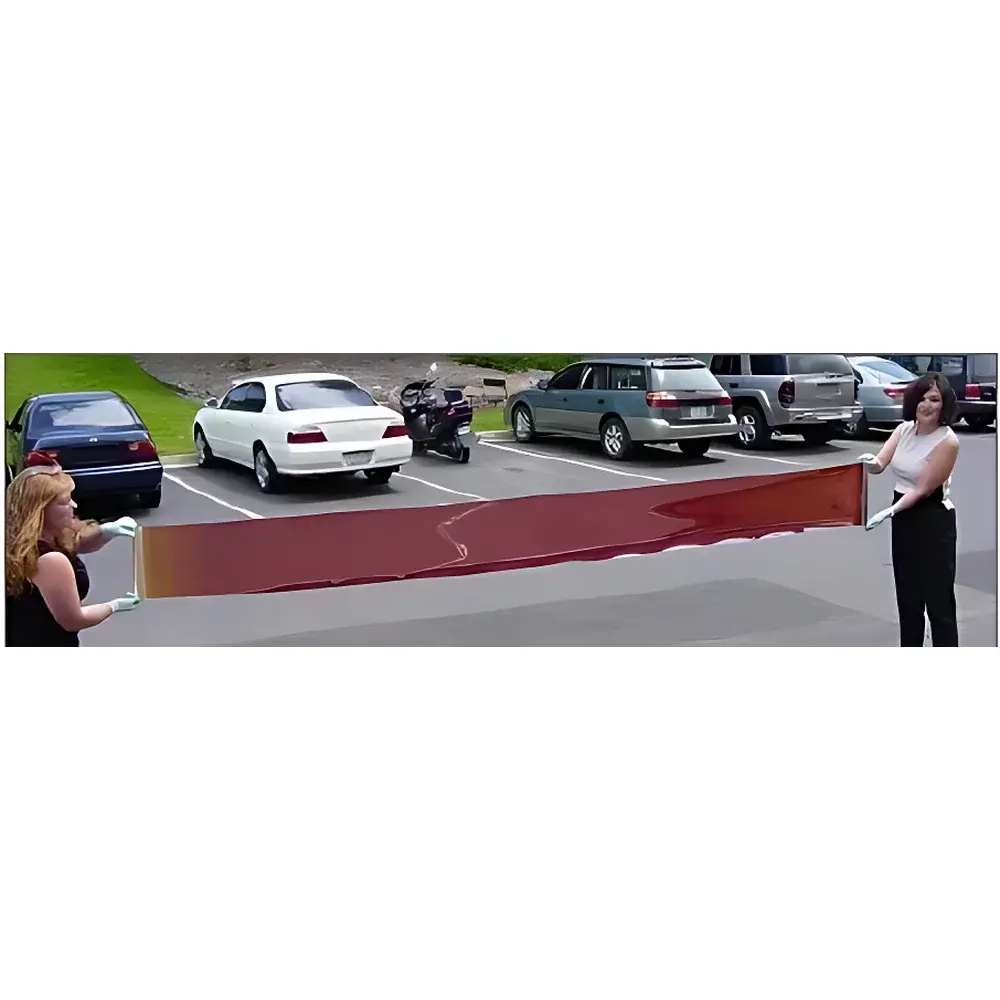
| Web Width | 15 cm – 30 cm |
| Process Capabilities | PECVD, HWCVD, Sputtering |
| Patent | US Patent No. 6,258,408B1 |
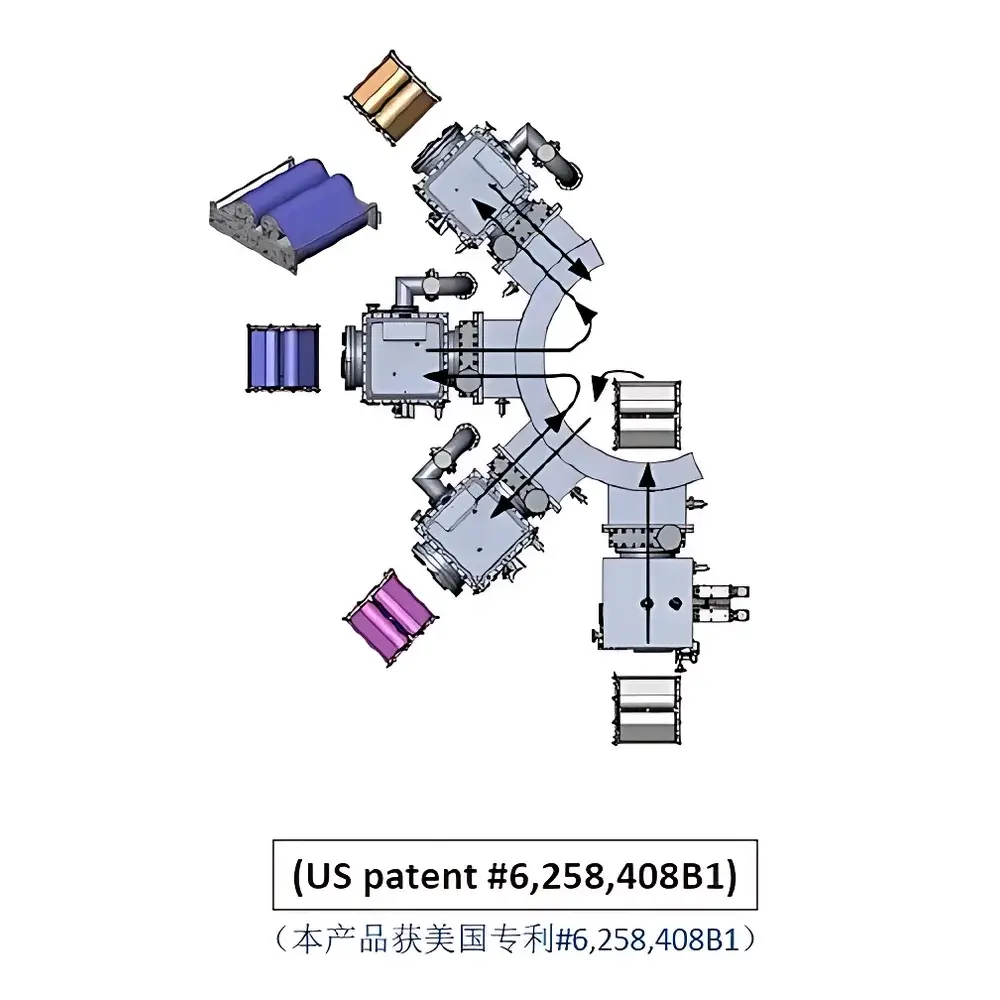
| Architecture | 8-Port Cluster Tool with Robotic Cassette Transport |
| Control | Fully Computer-Controlled |
| Chamber Independence | Individual Chamber Servicing Enabled |
| Cross-Contamination Mitigation | Cassette-Based Isolation Between Process Steps |
| Compliance | Designed for GLP/GMP-aligned thin-film R&D environments |
Overview
The MVSystems Reel-to-Reel Cassette Cluster Tool is an engineered platform for high-integrity, multi-step thin-film deposition on flexible substrates—designed specifically for research laboratories and pilot-scale development of organic photovoltaics (OPV), flexible OLEDs, barrier coatings, and next-generation printed electronics. Unlike conventional roll-to-roll (R2R) systems relying on continuous web transport under vacuum, this system employs a cassette-based architecture where flexible substrate rolls are housed in sealed, transferable cassettes. Each cassette serves as a self-contained substrate carrier that maintains environmental integrity between process steps. Cassettes are moved between up to eight independently pumped and controlled process chambers—including PECVD, hot-wire CVD (HWCVD), and magnetron sputtering modules—via a UHV-compatible robotic handler. This discrete, chamber-isolated transport mechanism eliminates gas-phase cross-talk and inter-chamber contamination, enabling precise sequential deposition of chemically sensitive multilayer stacks (e.g., ZnO/PEDOT:PSS/Perovskite/MoO₃) without interfacial degradation.
Key Features
- Cassette-centric architecture with vacuum-sealed substrate containment—ensures inert handling of oxygen- and moisture-sensitive films (e.g., perovskites, alkali metal interlayers)
- Modular 8-port cluster configuration supporting simultaneous integration of PECVD, HWCVD, DC/RF sputtering, thermal evaporation, and in-situ metrology modules
- Robotic cassette transport system with sub-millimeter positioning repeatability and integrated load-lock staging for rapid cassette exchange
- Independent vacuum control and real-time pressure monitoring per chamber—enabling differential pumping strategies for incompatible chemistries (e.g., silane vs. oxygen plasmas)
- Computer-controlled synchronization of web tension, substrate temperature (up to 200 °C), gas flow ratios, RF power delivery, and plasma ignition timing across all modules
- Full audit trail logging compliant with 21 CFR Part 11 requirements—recording operator actions, parameter setpoints, alarm events, and chamber history
Sample Compatibility & Compliance
The system accommodates flexible substrates ranging from 15 cm to 30 cm in web width, including PET, PEN, PI, stainless steel foils, and ultrathin glass. Substrate thickness tolerance spans 25 µm to 250 µm, with tension control optimized for low-modulus polymers. All wet-processed or solution-deposited layers must be pre-dried prior to cassette loading; the tool itself operates exclusively in dry, vacuum-based processes. The design conforms to ISO 14644-1 Class 5 cleanroom integration standards and supports qualification protocols aligned with ASTM F2625 (Standard Practice for R2R Thin-Film Device Manufacturing) and IEC 61215 (for PV reliability testing). Electrical safety complies with UL 61010-1 and CE machinery directives.
Software & Data Management
Operation is managed through MVSystems’ proprietary R2R-Cluster Control Suite—a Windows-based application built on LabVIEW Real-Time and SQL Server backend. The interface provides synchronized timeline-based recipe programming, live chamber status dashboards (pressure, power, temperature, gas flow), and automated fault-response sequencing (e.g., plasma quench + vent-on-abort). All process data—including sensor traces, actuator positions, and cassette ID logs—are timestamped, digitally signed, and archived in encrypted .tdms format. Export options include CSV, HDF5, and direct integration with LIMS platforms via OPC UA. Audit trails meet FDA 21 CFR Part 11 requirements for electronic records and signatures, including user authentication, role-based access control, and immutable event logging.
Applications
This system is routinely deployed in academic and industrial labs for: fabrication of tandem OPV devices requiring spatially resolved interlayer deposition; development of flexible transparent conductive electrodes (e.g., Ag nanowire/ITO hybrid stacks); synthesis of high-quality SiNₓ and SiOₓ barrier layers for flexible displays; and prototyping of solid-state electrolyte bilayers for stretchable batteries. Its cassette isolation capability makes it uniquely suited for combinatorial studies—where multiple substrate batches undergo distinct process permutations (e.g., varying H₂ dilution in PECVD-SiNx while holding sputtered Mo back contact constant)—all within a single system run.
FAQ
What substrate materials are compatible with this system?
PET, PEN, polyimide (PI), stainless steel foil, and ultrathin alkali-free glass (≤100 µm thick) are routinely processed. Substrates must be pre-cleaned and fully dried before cassette loading.
Can the system deposit both organic and inorganic layers in sequence?
Yes—cassette isolation prevents organic precursor carryover into inorganic sputter or PECVD chambers, enabling robust hybrid multilayer fabrication without purge delays.
Is remote operation supported?
The control suite includes secure TLS-encrypted remote desktop access and real-time telemetry streaming via configurable MQTT endpoints.
How is maintenance downtime minimized?
Each chamber features independent vacuum isolation valves and service ports, allowing leak checking, target replacement, or electrode cleaning without breaking vacuum in adjacent modules.
Does the system support in-situ diagnostics?
Optional integration includes residual gas analyzers (RGA), optical emission spectroscopy (OES) ports, and inline ellipsometry—configured per chamber during system build-out.
Related Products



