
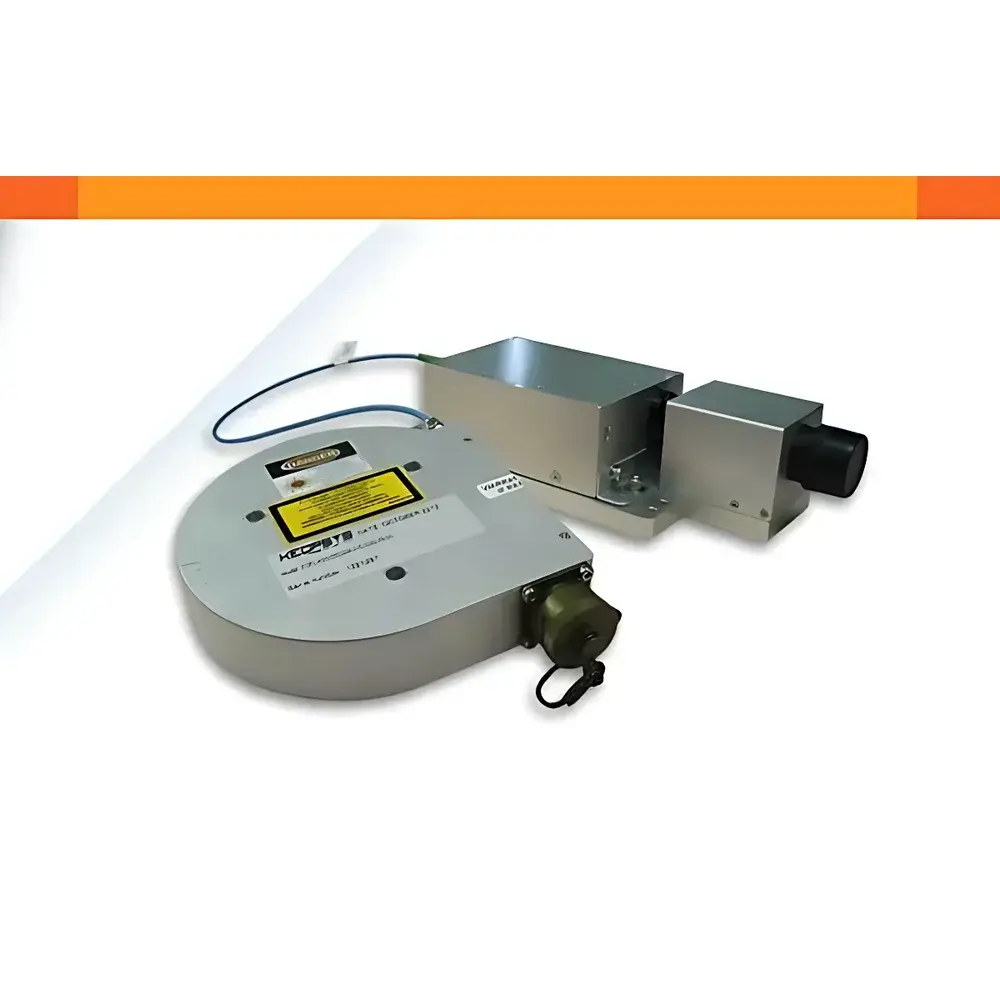
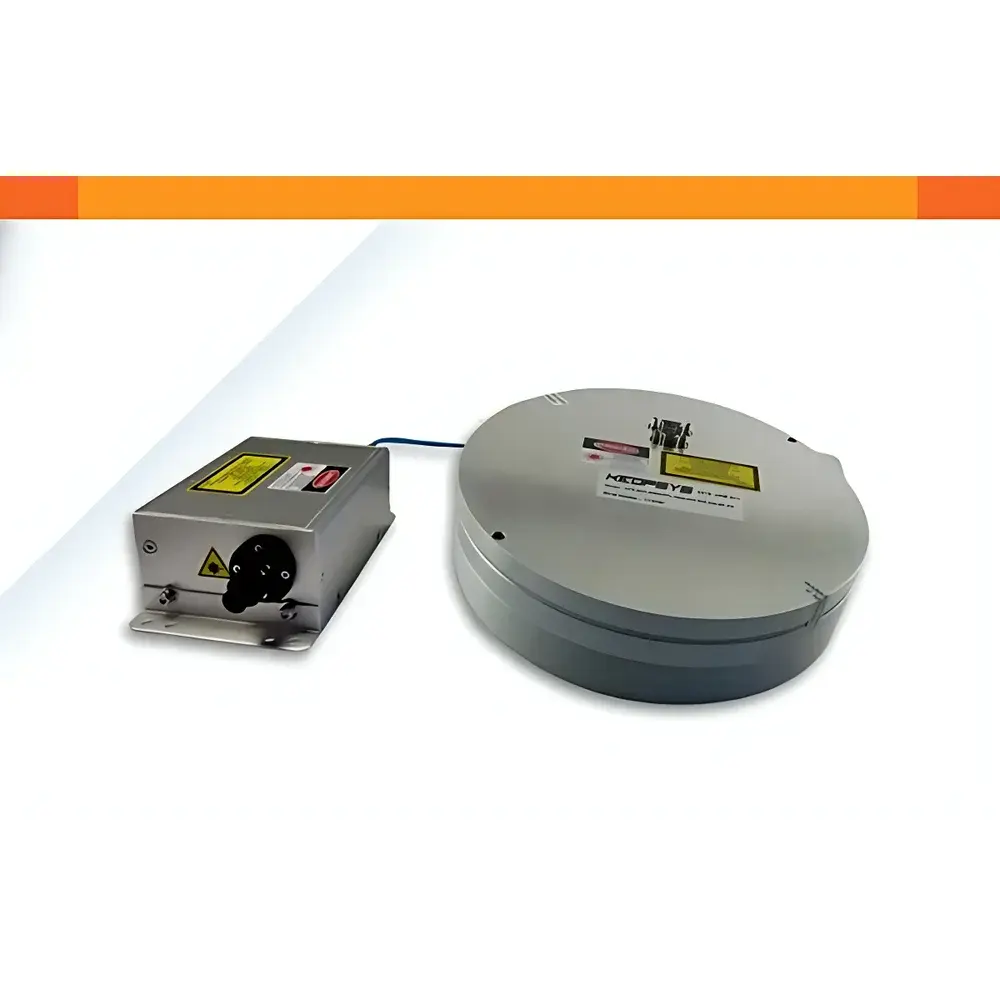
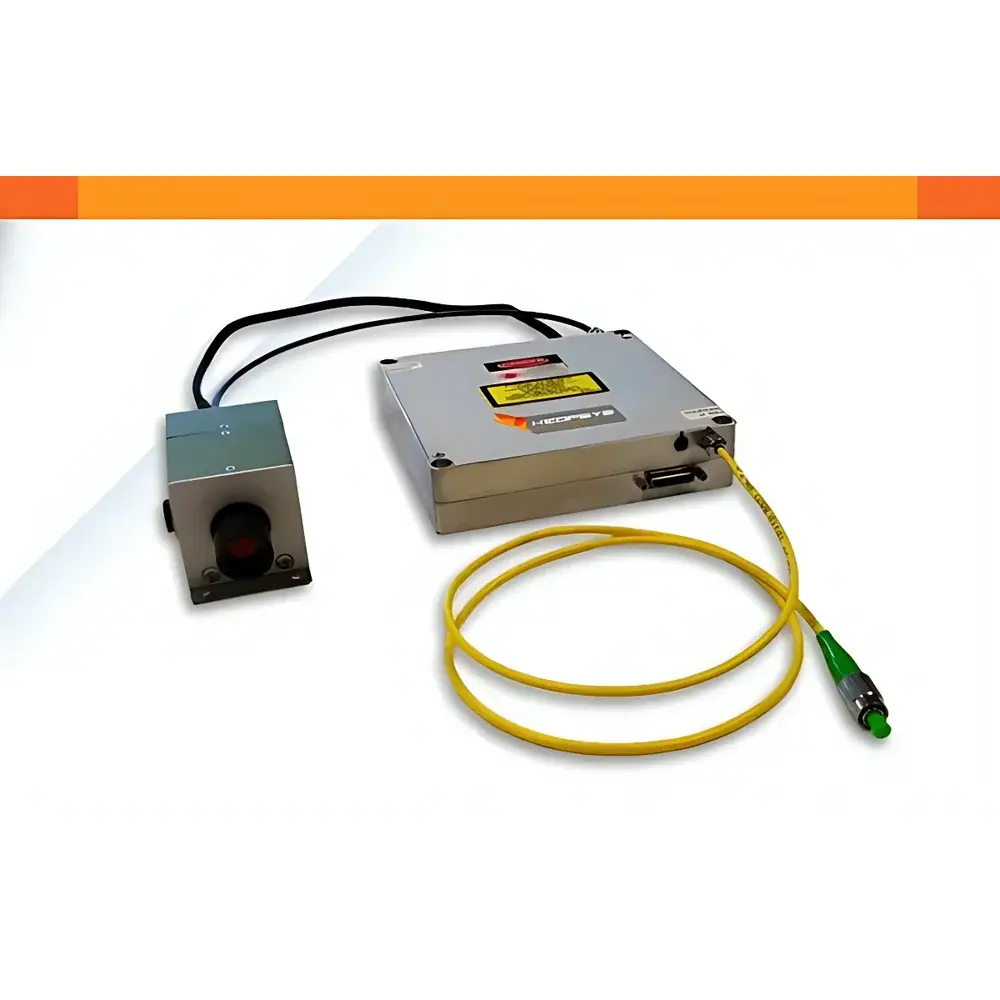
TURACO 532 nm High-Power Pulsed Green Laser Module
| Origin | France |
|---|---|
| Manufacturer Type | Authorized Distributor |
| Origin Category | Imported |
| Model | TURACO |
| Core Technology | Er/Yb-Doped Nanosecond Fiber Laser with Integrated Second-Harmonic Generation (SHG) |
| Pulse Energy | Up to 50 µJ |
| Peak Power | Up to 15 kW |
| Average Output Power | Up to 2 W |
| Repetition Rate | 10–200 kHz |
| Beam Quality | Diffraction-Limited (M² < 1.3) |
| Wavelength | 532 nm (frequency-doubled) |
| Operating Voltage | +24 V DC |
| Power Consumption | < 12 W |
| Weight | < 650 g |
| Cooling | Conductive, Fanless |
| Compliance | CE, RoHS, IEC 60825-1:2014 Class 4 Laser Product |
Overview
The TURACO 532 nm high-power pulsed green laser module is an OEM-optimized solid-state fiber laser system engineered for precision photonic applications requiring stable, eye-safe–wavelength (532 nm) nanosecond pulses in a compact, low-SWaP (Size, Weight and Power) package. Built upon KEOPSYS’ KULT Gen 2 platform, the TURACO integrates an Er/Yb-doped double-clad fiber oscillator-amplifier chain with a monolithically aligned, thermally stabilized second-harmonic generation (SHG) crystal module—enabling efficient, robust conversion from 1064 nm fundamental emission to 532 nm green output. Unlike bulk-optic Q-switched Nd:YAG lasers, this all-fiber architecture eliminates alignment sensitivity and delivers intrinsic long-term stability without active realignment or periodic maintenance. Its diffraction-limited beam (M² < 1.3), narrow pulse width (< 1.5 ns FWHM), and precisely controllable repetition rate (10–200 kHz) make it suitable for time-of-flight (ToF)-based ranging, coherent detection, and high-resolution spatial sampling where spectral purity, temporal fidelity, and beam pointing stability are critical.
Key Features
- Compact OEM form factor: Total mass < 650 g; footprint < 120 × 85 × 35 mm — optimized for integration into UAV payloads, handheld LIDAR units, and embedded metrology platforms.
- High electro-optical efficiency: < 12 W total power consumption at 2 W average green output — enabling battery-operated or thermally constrained deployments.
- Passive thermal management: Conductive cooling only; no fans or liquid loops required — ensuring silent, vibration-free operation and high reliability in shock/vibration environments.
- Factory-calibrated pulse timing jitter < ±50 ps RMS over temperature (−10 °C to +50 °C), supporting synchronous multi-channel acquisition in distributed sensor networks.
- Integrated TTL/RS-422 trigger interface with programmable delay (0–100 µs, 1 ns resolution) for precise synchronization with cameras, scanners, or data acquisition systems.
- Hermetically sealed aluminum housing with IP54-rated ingress protection — qualified for outdoor and marine-adjacent operation per MIL-STD-810G environmental test profiles.
Sample Compatibility & Compliance
The TURACO laser complies with international laser safety standards IEC 60825-1:2014 (Class 4) and carries CE marking under the EU Machinery Directive and RoHS 2011/65/EU. Its 532 nm output exhibits strong water absorption coefficient (~0.02 cm⁻¹ in clear seawater), making it particularly effective for underwater optical ranging and bathymetric profiling. For airborne mapping and wind sensing (e.g., coherent Doppler wind LIDAR), the laser meets spectral linewidth requirements ( 20 dB) specified in ASTM E2937-22 for remote atmospheric sensing instrumentation. The device supports GLP-compliant traceability via embedded firmware logging of operating hours, thermal history, and pulse energy drift trends — facilitating audit-ready documentation for ISO/IEC 17025-accredited calibration labs.
Software & Data Management
The TURACO module includes a USB-C–enabled control interface compatible with Windows, Linux, and real-time OS platforms (VxWorks, QNX). A vendor-provided SDK (C/C++, Python bindings) provides full access to internal diagnostics—including diode current monitoring, SHG crystal temperature feedback, and pulse-to-pulse energy normalization. All operational parameters (repetition rate, pulse width, trigger delay) are adjustable via ASCII command protocol over serial or CAN bus. Firmware supports secure boot and cryptographic signature verification (SHA-256), meeting baseline cybersecurity requirements for industrial IoT deployment. Audit trails—including parameter changes, error logs, and firmware updates—are timestamped and stored in non-volatile memory with optional export to CSV or HDF5 for traceability under FDA 21 CFR Part 11–aligned workflows.
Applications
- Underwater LIDAR and bathymetric surveying: High peak power (15 kW) and 532 nm wavelength enable penetration through turbid coastal waters up to 30 m depth in typical conditions.
- Autonomous vehicle perception: Integrated into flash LIDAR or scanning architectures for short-range 3D point cloud generation (< 100 m) with sub-centimeter depth resolution.
- Wind profiling and aerosol backscatter detection: Used as transmitter in coherent Doppler LIDAR systems compliant with WMO GAW recommendations for boundary layer monitoring.
- Industrial metrology: Enables high-speed triangulation-based displacement sensing in robotic welding guidance and precision assembly verification.
- Scientific time-resolved fluorescence: Serves as excitation source for pump-probe spectroscopy and lifetime imaging where nanosecond-scale gating is required.
FAQ
Is the TURACO laser compatible with standard OEM mounting interfaces?
Yes — it features four M3 threaded holes on the baseplate conforming to common optomechanical breadboard spacing (25 mm grid), and includes kinematic alignment reference surfaces (±5 µm flatness) for repeatable integration.
Can pulse energy be externally modulated in real time?
No — pulse energy is factory-set and stabilized via closed-loop pump diode current control; however, external TTL gating allows burst-mode operation at user-defined duty cycles.
What is the expected lifetime under continuous operation?
Rated for > 20,000 hours MTBF at 25 °C ambient, validated per Telcordia GR-468-CORE reliability testing for fiber-coupled optoelectronic modules.
Does the laser support analog modulation of repetition rate?
No — repetition rate is digitally programmed via serial interface; analog voltage input is not supported to preserve timing integrity and jitter performance.
Is OEM firmware customization available?
Yes — KEOPSYS offers extended firmware development services including custom trigger logic, embedded health monitoring algorithms, and protocol adaptation for proprietary host systems (NDA required).




