
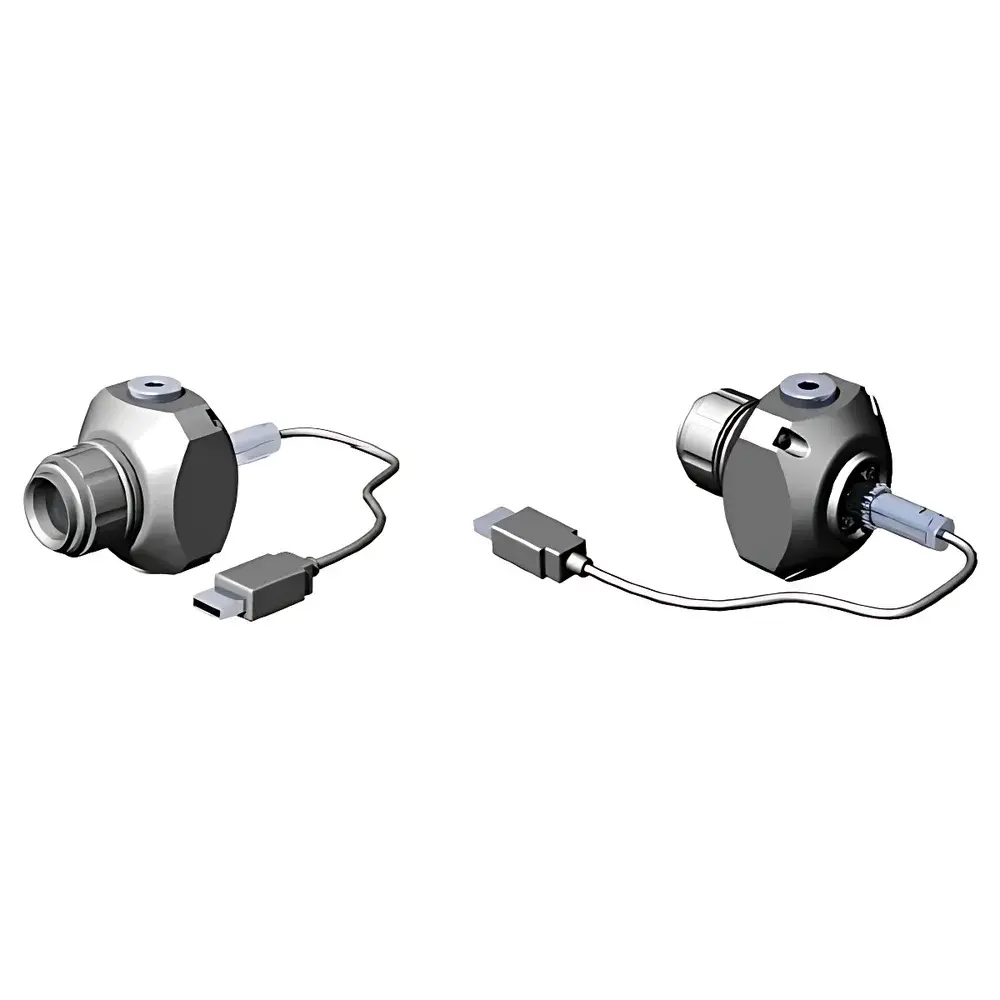
ElectroOptic CONTOUR-IR Near-Infrared CMOS Digital Camera
| Brand | ElectroOptic |
|---|---|
| Origin | Belarus |
| Manufacturer Type | Authorized Distributor |
| Import Status | Imported |
| Model | CONTOUR-IR |
| Interface | USB 2.0 (480 Mbps nominal, 400 MB/s effective) |
| Sensor Format | 1/3" CMOS |
| Spectral Range | 400–1700 nm |
| Lens Mount | C-mount |
| Lens Specification | f/1.4, 26 mm |
| Field of View | 25° |
| Resolution (Format 1) | 1280 × 1024 @ 15 Hz (or 7 Hz) |
| Resolution (Format 2) | 640 × 480 @ 60 Hz (or 30 Hz) |
| Frame Rate | Up to 60 fps (subsampled), CCIR-compliant 25 fps (interlaced) |
| Dynamic Range / SNR | 48 dB |
| Bit Depth | 8-bit luminance output |
| Sensitivity | 300 µW/cm² @ 1310 nm |
| Included Accessories | IR filter set, spacer rings, calibration tools |
Overview
The ElectroOptic CONTOUR-IR is a high-sensitivity near-infrared (NIR) digital imaging camera engineered for precise, real-time visualization and quantitative analysis of electromagnetic radiation across an exceptionally broad spectral band—from visible light at 400 nm through the short-wave infrared (SWIR) region up to 1700 nm. Unlike conventional silicon-based CCD or CMOS cameras limited to ~1100 nm, the CONTOUR-IR utilizes an optimized back-illuminated CMOS sensor architecture with integrated microlens arrays and cascaded gain stages, enabling photon detection efficiency far beyond standard visible-light sensors in the NIR-SWIR regime. Its USB 2.0 interface delivers sustained data throughput up to 400 MB/s—sufficient to support full-frame 1280 × 1024 acquisition at 15 Hz or high-speed 640 × 480 streaming at 60 Hz—making it suitable for dynamic process monitoring, laser beam profiling, and low-light spectroscopic coupling. Designed as a plug-and-play peripheral, the camera operates without external power supplies, drawing all required power and communication bandwidth via a single USB cable—reducing system complexity while maintaining signal integrity and timing stability.
Key Features
- Extended spectral response from 400 nm to 1700 nm, covering key laser wavelengths including 808 nm, 980 nm, 1064 nm, 1310 nm, 1550 nm, and 1700 nm
- 1/3-inch CMOS sensor with on-chip microlens enhancement and multi-stage analog gain, delivering high quantum efficiency in NIR without thermoelectric cooling
- C-mount lens interface compatible with industry-standard optics; supplied with f/1.4, 26 mm fixed-focus lens yielding 25° field of view
- Configurable frame formats: native 1280 × 1024 (15 Hz) for spatial resolution-critical applications or subsampled 640 × 480 (60 Hz) for high-temporal-resolution tracking
- Real-time parameter control via host PC—including exposure time, digital gain, white balance, and gamma correction—without firmware reload or hardware reset
- 8-bit monochrome output with 48 dB signal-to-noise ratio (SNR), calibrated for radiometric consistency across the operational spectrum
- WDM-class Windows driver support ensures seamless integration with third-party software environments including MATLAB Image Acquisition Toolbox, LabVIEW IMAQ, HALCON, and OpenCV
Sample Compatibility & Compliance
The CONTOUR-IR is designed for non-contact, passive NIR imaging under ambient or controlled laboratory conditions. It supports direct coupling to microscopes (via C-mount adapters), fiber-optic interfaces, collimated laser diagnostics setups, and macro-scale industrial inspection stations. While not classified as a medical device per FDA 21 CFR Part 820, its optical performance aligns with common requirements for ISO 13694 (laser beam profiling), ASTM E1316 (non-destructive testing terminology), and IEC 62471 (photobiological safety assessments). The camera’s USB 2.0 interface complies with USB-IF certification standards for electromagnetic compatibility (EMC) and interoperability. All firmware and driver binaries are digitally signed and support Windows 10/11 x64 architectures with optional Linux UVC kernel module compatibility (v5.4+).
Software & Data Management
The CONTOUR-IR ships with ElectroOptic’s proprietary CaptureStudio SDK—a lightweight, cross-platform API supporting C/C++, Python (via ctypes bindings), and .NET frameworks. The SDK provides full access to low-level sensor registers, enabling custom trigger synchronization, ROI binning, and pixel-level dark-frame subtraction. For regulated environments, optional audit-trail logging modules comply with GLP/GMP documentation requirements, recording timestamped metadata (exposure, gain, temperature drift estimates) alongside each acquired frame. Raw image buffers are delivered in uncompressed BMP or packed 8-bit linear format; optional TIFF export includes embedded EXIF tags referencing spectral calibration coefficients traceable to NIST-traceable reference sources.
Applications
- Laser alignment and beam quality analysis for diode-pumped solid-state (DPSS), fiber, and quantum cascade lasers
- SWIR microscopy of semiconductor wafers, photovoltaic cells, and transparent polymer laminates
- Machine vision inspection of food moisture content, pharmaceutical tablet coating uniformity, and plastic sorting
- Thermal signature pre-screening in low-contrast scenarios where mid-wave IR systems lack resolution or portability
- Educational demonstration of NIR reflectance spectroscopy, fluorescence lifetime imaging (FLIM), and optical coherence tomography (OCT) pathlength calibration
- Astronomical guide-camera use for adaptive optics systems operating in J-, H-, and K-band atmospheric windows
FAQ
Does the CONTOUR-IR require external power or cooling?
No. The camera is bus-powered exclusively via USB 2.0 and operates without thermoelectric coolers—relying on optimized CMOS readout architecture for thermal noise suppression.
Is the 1700 nm upper limit spectrally sharp or gradual?
The quantum efficiency drops to 10% of peak response at ~1680 nm and reaches noise floor by 1720 nm; spectral responsivity curves are provided in the calibration certificate.
Can it be synchronized with external TTL triggers?
Yes—via optional GPIO expansion board (sold separately), supporting master/slave pulse delay resolution down to 1 µs.
What is the maximum cable length for stable USB 2.0 operation?
Up to 5 meters using certified high-speed shielded cables; active repeaters extend range to 20 meters without latency penalty.
Are factory calibration files included with each unit?
Yes—each camera ships with individual spectral responsivity, dark current, and flat-field correction maps referenced to serial-numbered NIST-traceable irradiance standards.





